How to Choose the Best Rated CoQ10 Supplements
The best rated coq10 supplements pair strong user feedback with a clear dose, reliable quality checks, and a form that is easy to absorb. As you compare six options in this guide, look beyond the star rating: liposomal liquids, water-soluble formulas, and oil-based softgels can deliver CoQ10 differently. No one form is best for everyone.
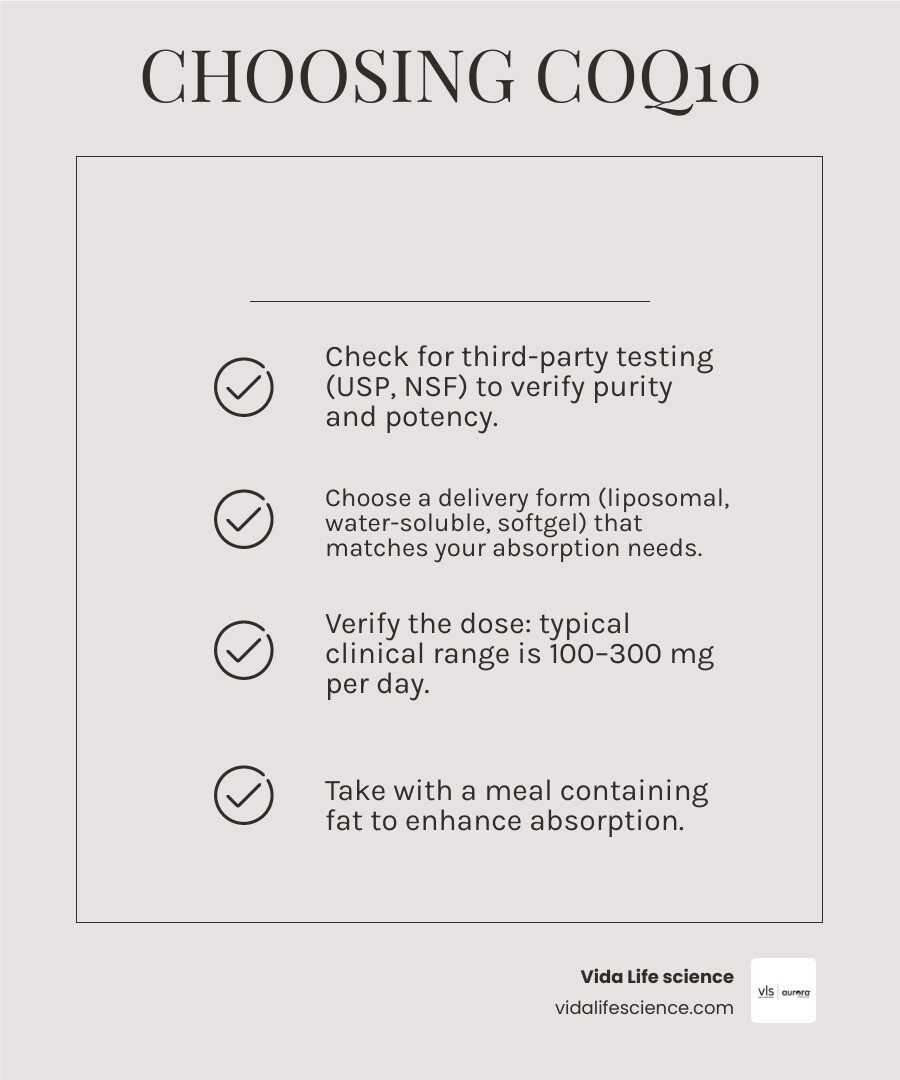
CoQ10 helps your cells make energy, but your body may make less of it with age. It is also fat-soluble, so how you take it matters. A good first step is to choose a clearly labeled product and follow its directions for taking it with food.
We’re Vida Life Science, the exclusive U.S. distributor of Aurora Nutrascience’s liposomal supplements. Our work with nutrient delivery shapes how we evaluate the best rated coq10 supplements, starting with absorption as well as reviews.
What Makes CoQ10 Supplements Effective? Ubiquinol vs. Ubiquinone
Coenzyme Q10 is an essential compound located within the inner mitochondrial membrane of virtually every cell in your body. It plays a critical role in the electron transport chain, generating adenosine triphosphate (ATP)—the primary energy currency that powers cellular activity. Beyond energy production, it serves as a potent fat-soluble antioxidant, safeguarding cellular membranes, proteins, and lipids from oxidative stress.
When researching coq10, you will encounter two primary molecular forms:
-
Ubiquinone: The oxidized form of CoQ10. This is the traditional, widely studied form used in extensive long-term clinical trials. Once ingested and absorbed through the intestinal wall, the body converts more than 90% of ubiquinone into ubiquinol.
-
Ubiquinol: The reduced, active antioxidant form of CoQ10. It requires no enzymatic conversion to perform its antioxidant duties in the bloodstream.
A common industry debate centers around which form delivers superior outcomes. In young, healthy individuals, the body efficiently converts ubiquinone into ubiquinol. Research published in ConsumerLab.com independent reviews and Supplement Scored 2026 evaluations shows that circulating blood levels of ubiquinol reach approximately 90% regardless of whether ubiquinone or ubiquinol is consumed.
However, as we age past 40, our endogenous synthesis of CoQ10 drops, and the enzymatic efficiency required to convert ubiquinone to ubiquinol can decline. While clinical studies, such as a comparative bioavailability trial in older adults, show that specialized delivery technologies often impact absorption far more than raw molecular form alone, ubiquinol remains an exceptional choice for those needing immediate antioxidant support without relying on digestive conversion.
Standard crystalline CoQ10 is notoriously difficult for the human digestive tract to absorb due to its large molecular weight (863 g/mol) and hydrophobic (water-repelling) structure. Unformulated powder capsules often yield absorption rates below 5%. To solve this challenge, advanced formulations utilize distinct delivery technologies:
-
Liposomal Delivery: Encapsulates CoQ10 inside protective phospholipid bilayers, mimicking natural cell membranes to facilitate rapid, direct uptake through the intestinal mucosa.
-
Water-Soluble Syrups & Micro-Emulsions: Use hydrophilic carrier complexes to disperse CoQ10 molecules in water, bypassing traditional bile-salt breakdown.
-
Oil-Suspended Softgels: Dissolve CoQ10 in carrier oils (such as medium-chain triglycerides, rice bran, or sunflower oil) to enhance intestinal uptake.
-
Bio-Enhanced Formulations: Pair CoQ10 with natural thermogenic enhancers like black pepper extract (piperine) to slow hepatic clearance and enhance intestinal transit absorption.
To explore how advanced phospholipid shields protect delicate nutrients from stomach acid degradation, our deep dive into Coenzyme Q10 Liposomal delivery outlines the underlying cellular mechanics.
The supplement market offers diverse formulations tailored to specific biological needs, absorption challenges, and budgets. The table below compares the six leading formulation categories based on clinical bioavailability benchmarks, average daily cost ranges, and primary user profiles:
| Formulation Category |
Primary Delivery Technology |
Bioavailability Profile |
Average Cost per 100 mg Dose |
Best Suited For |
| 1. Advanced Liposomal CoQ10 |
Phospholipid Bilayer Emulsion |
Highest cellular uptake; bypasses standard digestive breakdown |
$0.60 – $0.95 |
Individuals with compromised digestion, fatigue, or high cellular energy needs |
| 2. Bioavailability-Enhanced Ubiquinol |
Piperine (Black Pepper Extract) + Oil Softgel |
High intestinal absorption; reduced metabolic clearance |
$0.45 – $0.80 |
Active adults seeking rapid systemic antioxidant protection |
| 3. Pure Ubiquinol Softgels |
Yeast-Fermented Reduced CoQ10 in Lipid Base |
2x–3x higher plasma uptake than standard dry powder |
$0.25 – $0.70 |
Adults over 40 and individuals taking statin medications |
| 4. Water-Soluble Liquid Syrups |
Hydrophilic Inclusion Complexes / Micro-emulsions |
2.4-fold higher bioavailability compared to standard dry ubiquinone |
$0.50 – $0.85 |
Seniors and individuals who prefer liquids over swallowing softgels |
| 5. Synergistic CoQ10 + PQQ & Curcumin |
Multi-Nutrient Mitochondrial Complex |
Enhanced mitochondrial biogenesis and vascular support |
$0.75 – $1.20 |
Migraine sufferers, cognitive health support, and cardiovascular recovery |
| 6. High-Potency Prenatal Blends |
High-Dose Ubiquinol with Essential Reproductive Nutrients |
Targeted follicular and cellular energy support |
$0.80 – $1.30 |
Men and women preparing for conception and reproductive support |
Liposomal formulations represent the cutting edge of nutrient delivery. By encapsulating CoQ10 within microscopic spheres composed of non-GMO soy or sunflower phospholipids, the nutrient is shielded against the harsh, acidic environment of the stomach.
These lipid nano-spheres fuse directly with the lipid bilayer of intestinal cells, allowing the CoQ10 payload to enter circulation without relying heavily on digestive emulsification. This approach delivers reliable cellular uptake for those seeking comprehensive heart health supplements.
Combining the pre-converted active antioxidant state of ubiquinol with a patented black pepper extract (piperine) provides a dual-action benefit. Piperine enhances nutrient transport across the intestinal brush border and temporarily inhibits glucuronidation—a metabolic process that normally tags CoQ10 for elimination.
This synergistic pairing is especially beneficial when supporting cellular energy alongside cofactors discussed in our coq10 and PQQ guide.
Pure Ubiquinol Softgels
Pure ubiquinol softgels utilize biologically identical, yeast-fermented active CoQ10 suspended in healthy carrier oils such as rice bran or olive oil. Because this form requires no metabolic conversion to become an active radical scavenger, it is favored by individuals over 40 and those taking statins who want to quickly restore circulating plasma levels.
Maintaining adequate CoQ10 levels works hand-in-hand with foundational nutrients, as detailed in our guide on the best vitamins and minerals for heart health.
Water-Soluble and Liquid CoQ10 Syrups
Clinical pharmacokinetic research shows that specialized water-soluble syrup delivery systems can achieve a 2.4-fold higher bioavailability (95% CI: 1.3–4.5; p = 0.002) compared to standard dry ubiquinone capsules.
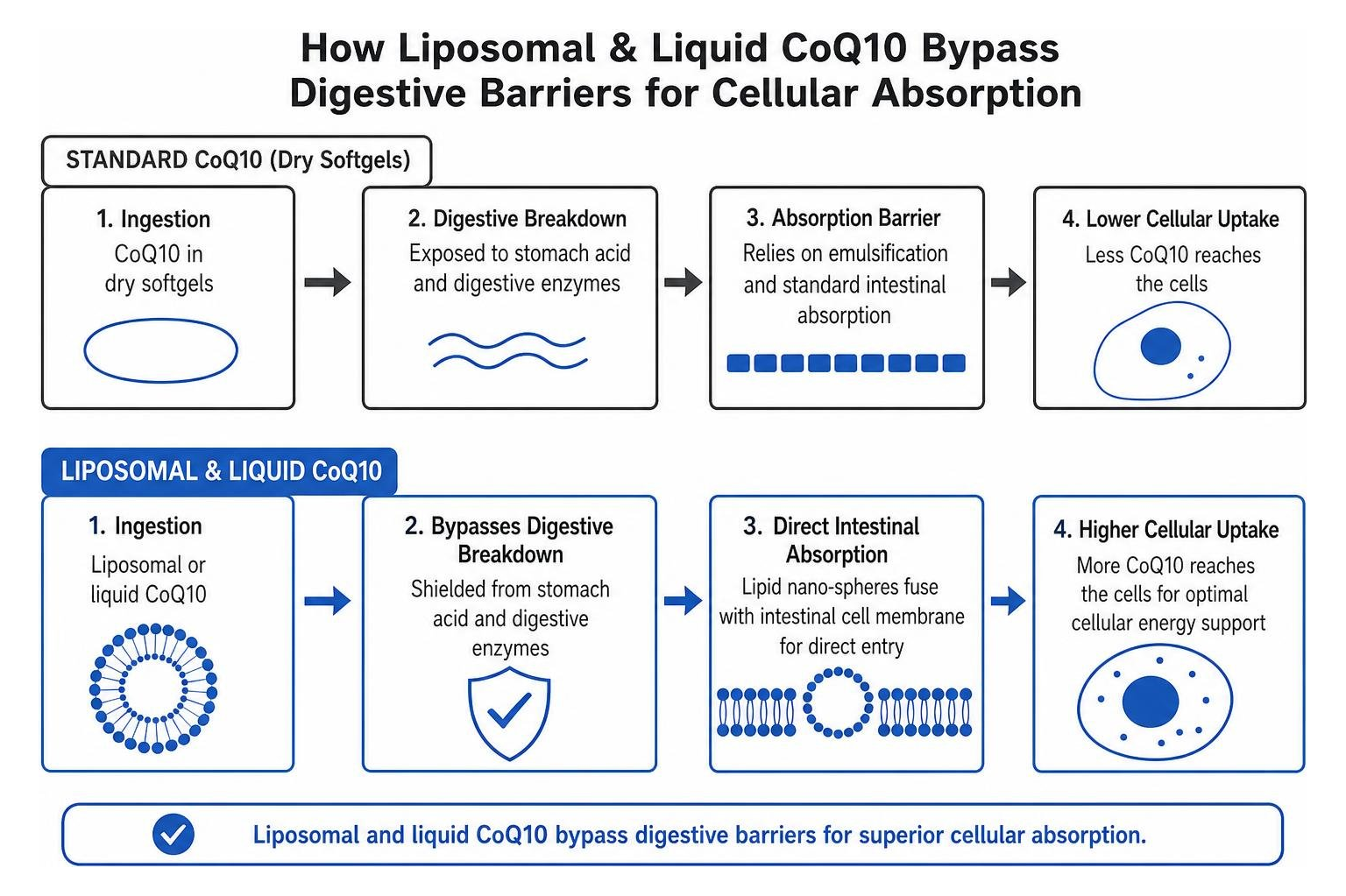
These hydrophilic liquid complexes disperse evenly in water or juice, offering an easy-to-swallow solution for seniors and individuals who experience difficulty with large softgels.
Combining CoQ10 with Pyrroloquinoline Quinone (PQQ) and standardized curcumin extract addresses mitochondrial performance from multiple angles. While CoQ10 fuels existing mitochondria and curcumin manages vascular inflammation, PQQ stimulates mitochondrial biogenesis—the creation of brand-new cellular powerplants.
This combination is frequently used by individuals exploring targeted dietary protocols, such as using coq10 and PQQ for migraine relief.
High-Potency Prenatal and Fertility CoQ10 Blends
Oocytes (egg cells) and sperm cells require vast amounts of cellular energy for maturation, motility, and fertilization. As maternal age advances, follicular fluid CoQ10 concentrations decline, making mitochondrial support a top priority in reproductive wellness.
High-potency ubiquinol formulas provide focused cellular energy support, which is why they are central when evaluating the best prenatal vitamins with CoQ10.
Proven Health Benefits and Clinical Dosage Guidelines
Extensive clinical research across tens of thousands of participants highlights CoQ10’s therapeutic value:
-
Cardiovascular Support: The landmark Q-SYMBIO randomized controlled trial demonstrated that long-term CoQ10 supplementation significantly reduced major adverse cardiovascular events in individuals with chronic heart failure while improving functional exercise capacity.
-
Metabolic Health & Glycemic Balance: Clinical studies indicate that CoQ10 supplementation supports insulin sensitivity, producing statistically significant improvements in hemoglobin A1c (HbA1c) and fasting blood glucose levels in adults with Type 2 diabetes.
-
Polycystic Ovary Syndrome (PCOS): Supplementation in women with PCOS has been shown to improve fasting insulin, total cholesterol, triglycerides, and testosterone balance.
-
Fibromyalgia & Chronic Pain: Clinical trials using 300 mg daily for 40 days showed marked improvements in depressive symptoms, while 400 mg daily over six months significantly reduced physical pain and tender point scores.
Typical dosage protocols vary by individual goal:
-
General Wellness & Healthy Aging: 100 mg to 200 mg daily.
-
Statin Support & Muscle Comfort: 100 mg to 200 mg daily (preferably ubiquinol or liposomal CoQ10).
-
Cardiovascular & Clinical Therapeutic Support: 200 mg to 400 mg daily (often divided into two 200 mg doses).
Safety, Statin Interactions, and Maximizing Absorption
CoQ10 exhibits an exceptional safety profile. Human clinical trials report no significant adverse effects even with chronic daily doses up to 900 mg, and specialized protocols have safely utilized up to 3,000 mg per day. Single-dose toxicity testing in animal models established lethal thresholds exceeding 5 g/kg, demonstrating a vast safety margin.
Statin Medications and Myopathy
HMG-CoA reductase inhibitors (statins) lower cholesterol by inhibiting the mevalonate pathway. Unfortunately, this identical pathway is responsible for the endogenous biosynthesis of CoQ10. As a result, statin therapy can deplete circulating CoQ10 levels by up to 40%. Supplementing with 100 mg to 200 mg daily helps replenish these cellular stores and frequently alleviates statin-associated muscle fatigue and aches.
Important Drug Interactions
CoQ10 is structurally similar to menaquinone (Vitamin K2). Consequently, it may exhibit mild pro-coagulant activity and reduce the blood-thinning effectiveness of warfarin. Individuals taking warfarin should monitor their INR levels closely when starting or adjusting CoQ10 supplementation.
Best Practices to Maximize Absorption
-
Pair with Dietary Fats: If taking standard softgels, consume them alongside a meal containing healthy fats (such as avocado, olive oil, eggs, or nuts) to stimulate bile acid release.
-
Split Higher Doses: Doses greater than 100 mg absorb more efficiently when divided into two daily servings (e.g., morning and afternoon).
-
Choose Liposomal or Liquid Formats: If you have low stomach acid or compromised bile production, utilize liposomal or water-soluble formulations to bypass fat-emulsification bottlenecks.
-
Avoid Late-Night Dosing: Because CoQ10 stimulates ATP energy synthesis, taking it right before bed may cause mild alertness in sensitive individuals; morning or lunchtime dosing is ideal.
Frequently Asked Questions About CoQ10 Supplementation
Who Benefits Most from the Best Rated CoQ10 Supplements?
Adults over 40, individuals taking statin medications, people managing cardiovascular or metabolic conditions, migraine sufferers, and couples preparing for conception typically gain the most measurable benefits from high-quality CoQ10 supplementation.
What Is the Difference Between Ubiquinol and Ubiquinone?
Ubiquinone is the stable, oxidized form of CoQ10 that the body converts into ubiquinol after absorption. Ubiquinol is the pre-converted, active antioxidant form. While both raise systemic CoQ10 levels, ubiquinol is generally preferred for older adults whose natural conversion efficiency has slowed.
How Long Does It Take to Experience Results from CoQ10?
Because CoQ10 works at the cellular level within mitochondrial membranes, tissue saturation takes time. Initial improvements in subjective energy or muscle comfort are often reported within 2 to 4 weeks, while measurable cardiovascular, metabolic, and clinical outcomes typically manifest between 8 and 12 weeks of consistent daily use.
Conclusion
Finding the right supplement comes down to matching your personal health goals with the most bioavailable delivery method. While conventional dry powder softgels remain an economical starting point, modern delivery technologies—including water-soluble syrups, enhanced ubiquinol complexes, and advanced liposomal delivery—ensure that your cells receive the full therapeutic value of this vital antioxidant.
At Vida Lifescience, we deliver high-potency Aurora Nutrascience formulas utilizing pure, non-GMO phospholipid liposomes to maximize cellular uptake. Whether you are aiming to revitalize everyday vitality, restore levels depleted by medications, or support long-term cardiovascular performance, you can discover more about supporting heart health with CoQ10 and curcumin supplements to build an effective daily regimen.


The 6 Best Rated CoQ10 Supplements Backed by Real User Reviews
How to Choose the Best Rated CoQ10 Supplements
The best rated coq10 supplements pair strong user feedback with a clear dose, reliable quality checks, and a form that is easy to absorb. As you compare six options in this guide, look beyond the star rating: liposomal liquids, water-soluble formulas, and oil-based softgels can deliver CoQ10 differently. No one form is best for everyone.
CoQ10 helps your cells make energy, but your body may make less of it with age. It is also fat-soluble, so how you take it matters. A good first step is to choose a clearly labeled product and follow its directions for taking it with food.
We’re Vida Life Science, the exclusive U.S. distributor of Aurora Nutrascience’s liposomal supplements. Our work with nutrient delivery shapes how we evaluate the best rated coq10 supplements, starting with absorption as well as reviews.
What Makes CoQ10 Supplements Effective? Ubiquinol vs. Ubiquinone
Coenzyme Q10 is an essential compound located within the inner mitochondrial membrane of virtually every cell in your body. It plays a critical role in the electron transport chain, generating adenosine triphosphate (ATP)—the primary energy currency that powers cellular activity. Beyond energy production, it serves as a potent fat-soluble antioxidant, safeguarding cellular membranes, proteins, and lipids from oxidative stress.
When researching coq10, you will encounter two primary molecular forms:
A common industry debate centers around which form delivers superior outcomes. In young, healthy individuals, the body efficiently converts ubiquinone into ubiquinol. Research published in ConsumerLab.com independent reviews and Supplement Scored 2026 evaluations shows that circulating blood levels of ubiquinol reach approximately 90% regardless of whether ubiquinone or ubiquinol is consumed.
However, as we age past 40, our endogenous synthesis of CoQ10 drops, and the enzymatic efficiency required to convert ubiquinone to ubiquinol can decline. While clinical studies, such as a comparative bioavailability trial in older adults, show that specialized delivery technologies often impact absorption far more than raw molecular form alone, ubiquinol remains an exceptional choice for those needing immediate antioxidant support without relying on digestive conversion.
What Delivery Formats Define the Best Rated CoQ10 Supplements?
Standard crystalline CoQ10 is notoriously difficult for the human digestive tract to absorb due to its large molecular weight (863 g/mol) and hydrophobic (water-repelling) structure. Unformulated powder capsules often yield absorption rates below 5%. To solve this challenge, advanced formulations utilize distinct delivery technologies:
To explore how advanced phospholipid shields protect delicate nutrients from stomach acid degradation, our deep dive into Coenzyme Q10 Liposomal delivery outlines the underlying cellular mechanics.
Top 6 Best Rated CoQ10 Supplements by Formulation Category
The supplement market offers diverse formulations tailored to specific biological needs, absorption challenges, and budgets. The table below compares the six leading formulation categories based on clinical bioavailability benchmarks, average daily cost ranges, and primary user profiles:
Advanced Liposomal CoQ10 Formulations
Liposomal formulations represent the cutting edge of nutrient delivery. By encapsulating CoQ10 within microscopic spheres composed of non-GMO soy or sunflower phospholipids, the nutrient is shielded against the harsh, acidic environment of the stomach.
These lipid nano-spheres fuse directly with the lipid bilayer of intestinal cells, allowing the CoQ10 payload to enter circulation without relying heavily on digestive emulsification. This approach delivers reliable cellular uptake for those seeking comprehensive heart health supplements.
Bioavailability-Enhanced Ubiquinol with Black Pepper Extract
Combining the pre-converted active antioxidant state of ubiquinol with a patented black pepper extract (piperine) provides a dual-action benefit. Piperine enhances nutrient transport across the intestinal brush border and temporarily inhibits glucuronidation—a metabolic process that normally tags CoQ10 for elimination.
This synergistic pairing is especially beneficial when supporting cellular energy alongside cofactors discussed in our coq10 and PQQ guide.
Pure Ubiquinol Softgels
Pure ubiquinol softgels utilize biologically identical, yeast-fermented active CoQ10 suspended in healthy carrier oils such as rice bran or olive oil. Because this form requires no metabolic conversion to become an active radical scavenger, it is favored by individuals over 40 and those taking statins who want to quickly restore circulating plasma levels.
Maintaining adequate CoQ10 levels works hand-in-hand with foundational nutrients, as detailed in our guide on the best vitamins and minerals for heart health.
Water-Soluble and Liquid CoQ10 Syrups
Clinical pharmacokinetic research shows that specialized water-soluble syrup delivery systems can achieve a 2.4-fold higher bioavailability (95% CI: 1.3–4.5; p = 0.002) compared to standard dry ubiquinone capsules.
These hydrophilic liquid complexes disperse evenly in water or juice, offering an easy-to-swallow solution for seniors and individuals who experience difficulty with large softgels.
Synergistic CoQ10 Formulations with PQQ and Curcumin
Combining CoQ10 with Pyrroloquinoline Quinone (PQQ) and standardized curcumin extract addresses mitochondrial performance from multiple angles. While CoQ10 fuels existing mitochondria and curcumin manages vascular inflammation, PQQ stimulates mitochondrial biogenesis—the creation of brand-new cellular powerplants.
This combination is frequently used by individuals exploring targeted dietary protocols, such as using coq10 and PQQ for migraine relief.
High-Potency Prenatal and Fertility CoQ10 Blends
Oocytes (egg cells) and sperm cells require vast amounts of cellular energy for maturation, motility, and fertilization. As maternal age advances, follicular fluid CoQ10 concentrations decline, making mitochondrial support a top priority in reproductive wellness.
High-potency ubiquinol formulas provide focused cellular energy support, which is why they are central when evaluating the best prenatal vitamins with CoQ10.
Proven Health Benefits and Clinical Dosage Guidelines
Extensive clinical research across tens of thousands of participants highlights CoQ10’s therapeutic value:
Typical dosage protocols vary by individual goal:
Safety, Statin Interactions, and Maximizing Absorption
CoQ10 exhibits an exceptional safety profile. Human clinical trials report no significant adverse effects even with chronic daily doses up to 900 mg, and specialized protocols have safely utilized up to 3,000 mg per day. Single-dose toxicity testing in animal models established lethal thresholds exceeding 5 g/kg, demonstrating a vast safety margin.
Statin Medications and Myopathy
HMG-CoA reductase inhibitors (statins) lower cholesterol by inhibiting the mevalonate pathway. Unfortunately, this identical pathway is responsible for the endogenous biosynthesis of CoQ10. As a result, statin therapy can deplete circulating CoQ10 levels by up to 40%. Supplementing with 100 mg to 200 mg daily helps replenish these cellular stores and frequently alleviates statin-associated muscle fatigue and aches.
Important Drug Interactions
CoQ10 is structurally similar to menaquinone (Vitamin K2). Consequently, it may exhibit mild pro-coagulant activity and reduce the blood-thinning effectiveness of warfarin. Individuals taking warfarin should monitor their INR levels closely when starting or adjusting CoQ10 supplementation.
Best Practices to Maximize Absorption
Frequently Asked Questions About CoQ10 Supplementation
Who Benefits Most from the Best Rated CoQ10 Supplements?
Adults over 40, individuals taking statin medications, people managing cardiovascular or metabolic conditions, migraine sufferers, and couples preparing for conception typically gain the most measurable benefits from high-quality CoQ10 supplementation.
What Is the Difference Between Ubiquinol and Ubiquinone?
Ubiquinone is the stable, oxidized form of CoQ10 that the body converts into ubiquinol after absorption. Ubiquinol is the pre-converted, active antioxidant form. While both raise systemic CoQ10 levels, ubiquinol is generally preferred for older adults whose natural conversion efficiency has slowed.
How Long Does It Take to Experience Results from CoQ10?
Because CoQ10 works at the cellular level within mitochondrial membranes, tissue saturation takes time. Initial improvements in subjective energy or muscle comfort are often reported within 2 to 4 weeks, while measurable cardiovascular, metabolic, and clinical outcomes typically manifest between 8 and 12 weeks of consistent daily use.
Conclusion
Finding the right supplement comes down to matching your personal health goals with the most bioavailable delivery method. While conventional dry powder softgels remain an economical starting point, modern delivery technologies—including water-soluble syrups, enhanced ubiquinol complexes, and advanced liposomal delivery—ensure that your cells receive the full therapeutic value of this vital antioxidant.
At Vida Lifescience, we deliver high-potency Aurora Nutrascience formulas utilizing pure, non-GMO phospholipid liposomes to maximize cellular uptake. Whether you are aiming to revitalize everyday vitality, restore levels depleted by medications, or support long-term cardiovascular performance, you can discover more about supporting heart health with CoQ10 and curcumin supplements to build an effective daily regimen.