How to Choose Heart Health Supplements Safely
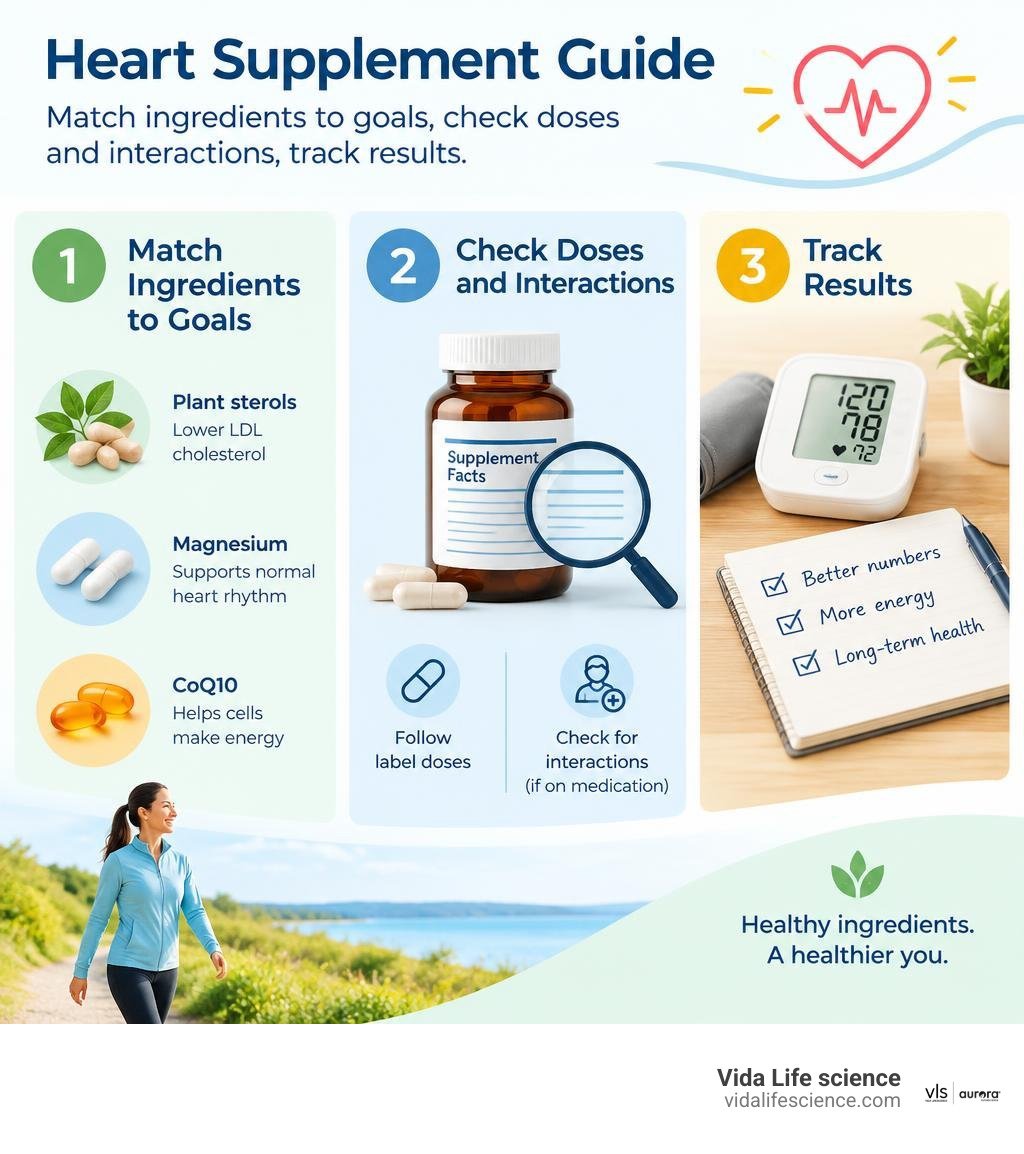
Start with your goal, not a “heart health” claim. Plant sterols can help lower LDL cholesterol at effective doses. Magnesium supports normal heart rhythm, especially if your intake is low. CoQ10 helps cells make energy, but it is not a proven substitute for blood pressure treatment.
Check the ingredient amounts and follow the label. If you take prescription medicine, ask a healthcare professional about interactions before adding a supplement. Food, movement, and regular blood pressure and cholesterol checks still matter more than any capsule.
We’re Vida Life Science, a U.S. distributor of liposomal nutrients, including CoQ10. Our experience with nutrient delivery shapes how we evaluate heart health supplements; next, we’ll look at what each ingredient can and cannot do.
Key Ingredients in Proven Heart Health Supplements
Navigating the supplement aisle can feel overwhelming. With hundreds of bottles promising cardiovascular vitality, separating proven biological mechanisms from clever marketing is essential. When formulating targeted regimens, three cornerstone compounds consistently emerge across clinical literature: Coenzyme Q10, phytosterols, and magnesium.

CoQ10 for Cellular Energy and Blood Flow
Your heart muscle beats around 100,000 times each day without taking a single break. To sustain this demanding workload, cardiac tissue requires a tremendous amount of adenosine triphosphate (ATP)—the primary energy currency of human cells.
Coenzyme Q10 (CoQ10) is an essential, fat-soluble antioxidant located within the inner mitochondrial membrane. It plays a pivotal role in the electron transport chain, facilitating the conversion of dietary fats and sugars into usable cellular energy. Beyond generating cellular fuel, CoQ10 preserves endothelial function by neutralizing free radicals and increasing nitric oxide availability. This helps blood vessels relax and dilate properly, supporting healthy circulation and balanced blood pressure.
Because standard CoQ10 crystals are notoriously difficult for the digestive tract to absorb, choosing an advanced liposomal CoQ10 formulation can dramatically increase bioavailability by shielding the nutrient inside protective phospholipid spheres. For individuals seeking comprehensive metabolic energy support, combining this nutrient with pyrroloquinoline quinone provides dual mitochondrial defense, as explored in our guide on mitochondrial health with CoQ10 and PQQ.
Phytosterols for Cholesterol Balance
Phytosterols, or plant sterols, are naturally occurring compounds found in unrefined vegetable oils, whole grains, nuts, and legumes. Their molecular structure closely mimics dietary and biliary cholesterol.
When consumed with meals, phytosterols compete directly with cholesterol for absorption inside the small intestine:
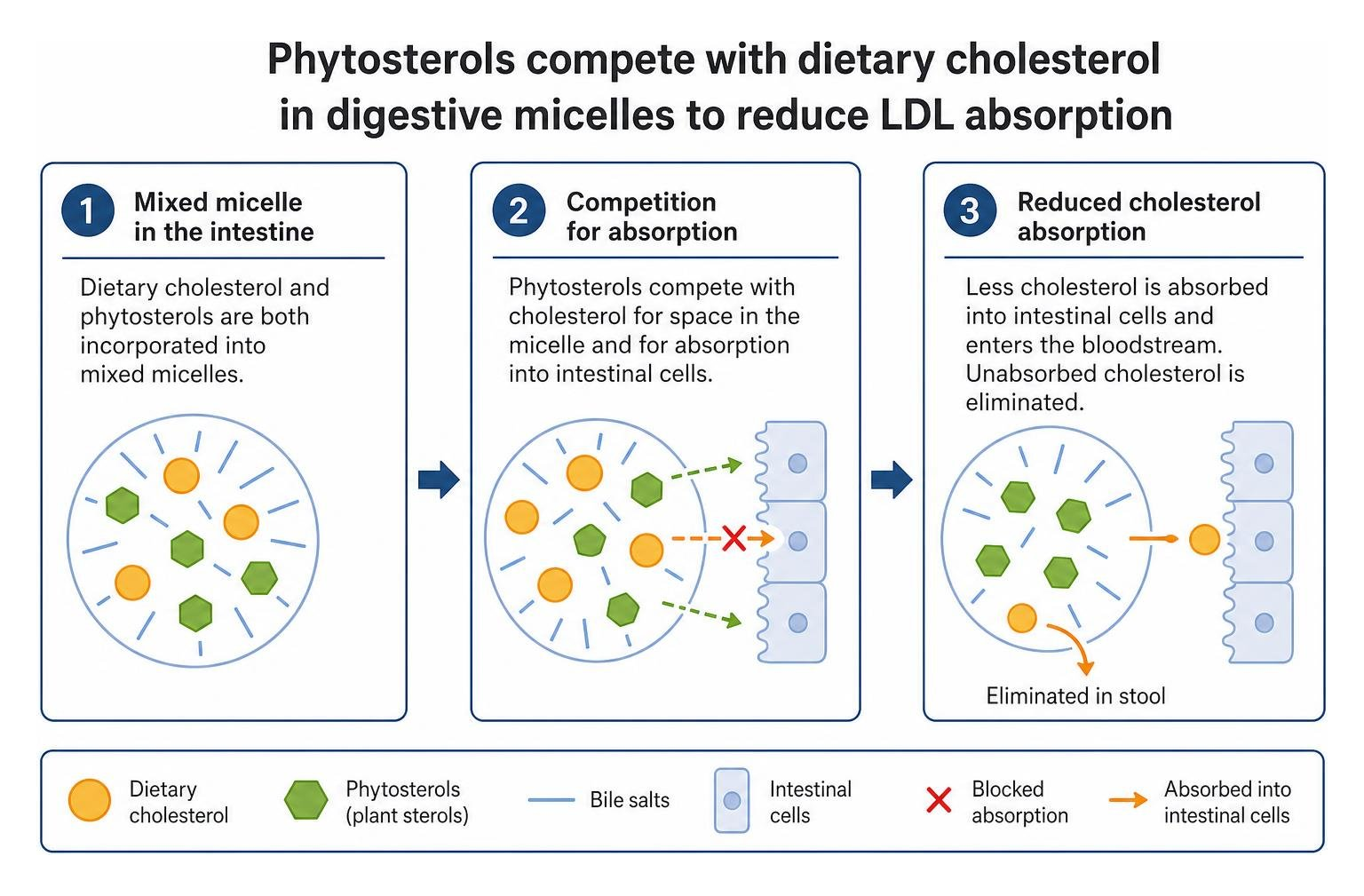
By displacing cholesterol molecules in mixed micelles, phytosterols reduce the total amount of circulating low-density lipoprotein (LDL) entering your bloodstream. The unabsorbed cholesterol is simply eliminated through normal digestive processes. Clinical evaluations, such as the Johns Hopkins evaluation of supplement efficacy, highlight that consuming 1.5 to 2 grams of plant sterols daily can help reduce LDL cholesterol levels alongside a heart-healthy diet.
Magnesium for Steady Heart Rhythm
Magnesium acts as the master electrical conductor of your cardiovascular system. As an intracellular electrolyte, it regulates the movement of calcium and potassium ions across myocardial cell membranes. This process dictates the precise contraction and relaxation cycle of every heartbeat.
Without sufficient magnesium, excess intracellular calcium can cause vascular smooth muscle to constrict and cardiac electrical pathways to become hyper-excitable, leading to palpitations or irregular rhythms. Ensuring adequate intake of this mineral helps soothe vascular tone and promotes steady electrical conduction. You can review our full breakdown of essential vitamins and minerals for cardiovascular function to see how magnesium works in tandem with daily micronutrients.
Synergistic Nutrients: Vitamins D3, K2, and Antioxidants
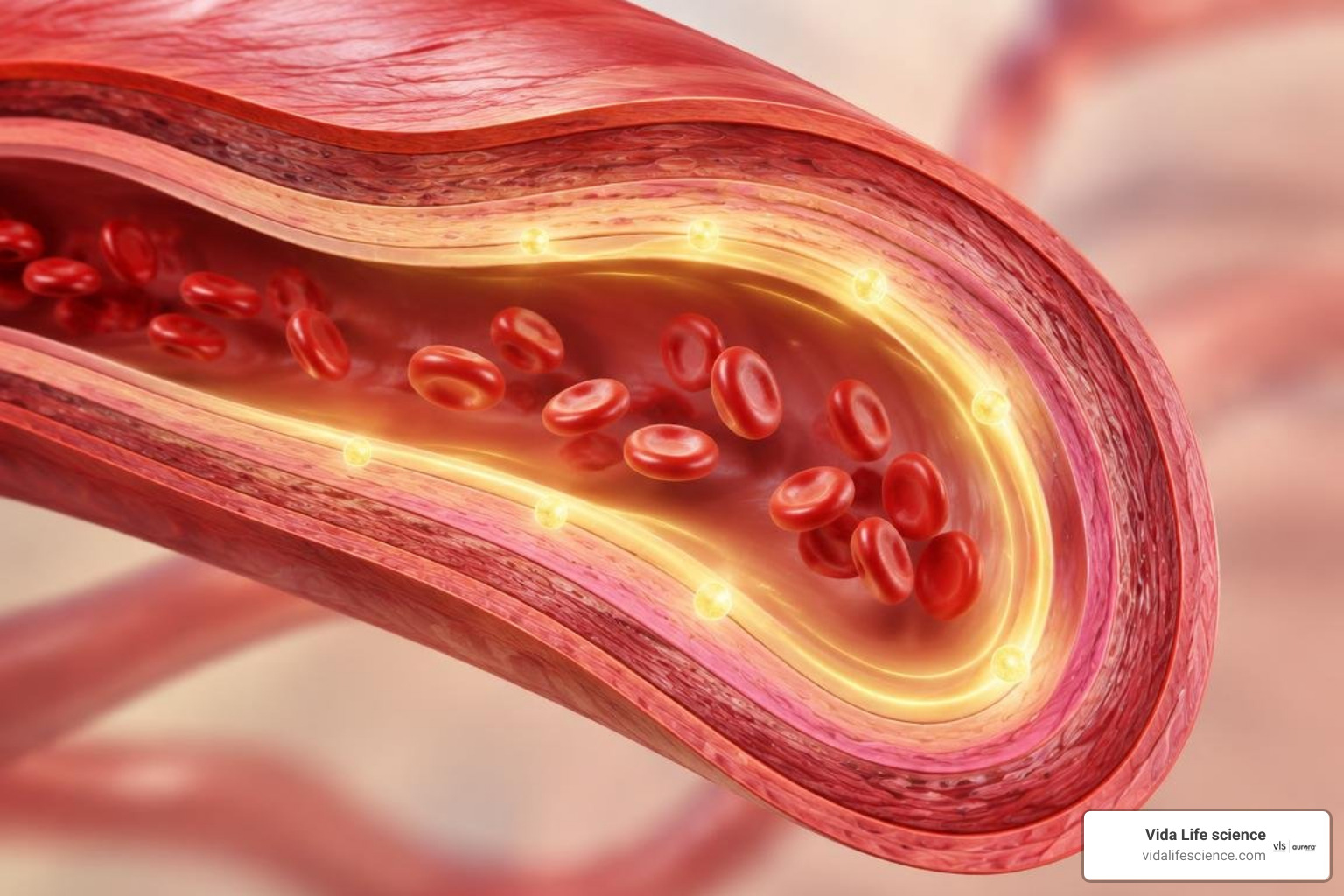
While CoQ10 and magnesium maintain energy and rhythm, keeping your arterial pathways pliable and free from calcium buildup is equally critical. For decades, calcium was considered purely a bone nutrient. However, modern cardiology reveals that unmanaged calcium frequently deposits inside arterial walls, contributing to vascular stiffness.
This is where the dynamic pairing of vitamins D3 and K2 proves vital. Vitamin D3 stimulates the synthesis of calcium-binding proteins, while vitamin K2 (particularly as menaquinone-7) activates Matrix Gla Protein (MGP). Active MGP binds circulating calcium and guides it away from delicate arterial linings and directly into the bone matrix.
According to the latest clinical insights on vitamin D3 and K2, pairing these fat-soluble vitamins prevents arterial hardening and protects microvascular flexibility. Using advanced nutrient delivery, such as our liposomal vitamin D3 with K2 benefits, ensures these delicate compounds survive harsh stomach acids intact.
Understanding your baseline vascular calcification can guide your daily nutrition. Diagnostic tools like coronary artery calcium (CAC) scoring provide clear visibility into your arterial health, a practice examined in recent Northwestern Medicine research on coronary calcium.
How Heart Health Supplements Fit Into Cardiovascular Wellness
Supplements are designed to complement—never replace—foundational lifestyle practices. A daily nutrient capsule cannot outwork a diet high in ultra-processed fats, chronic stress, or a lack of physical activity.
To help clarify how different supplement categories support your cardiovascular system, we have summarized their primary biological targets below:
| Supplement Category |
Primary Target |
Primary Mechanism of Action |
Ideal Lifestyle Integration |
| Coenzyme Q10 (CoQ10) |
Cellular energy & blood flow |
Enhances mitochondrial ATP production and boosts nitric oxide bioavailability |
Pair with morning meals containing healthy dietary fats |
| Phytosterols (Plant Sterols) |
LDL cholesterol management |
Competes with intestinal cholesterol absorption to lower systemic LDL |
Take directly alongside your largest daily meals |
| Magnesium (Citrate/Glycinate) |
Heart rhythm & blood pressure |
Regulates calcium flow across cardiac cells and relaxes vascular walls |
Take in the evening to support muscular relaxation and rest |
| Vitamins D3 & K2 |
Arterial elasticity & calcium flow |
Activates Matrix Gla Protein (MGP) to prevent vascular calcification |
Take with lunch or breakfast alongside fat-soluble vitamins |
| Omega-3 Fatty Acids (EPA/DHA) |
Triglycerides & systemic inflammation |
Lowers hepatic triglyceride synthesis and balances inflammatory eicosanoids |
Combine with a Mediterranean-style, whole-food dietary plan |
Before adding any new compound to your morning pill organizer, review expert perspectives such as the PeaceHealth overview of cardiovascular supplements to ensure your routine focuses on clinically supported choices. Aligning your daily routine with established American Heart Association cardiovascular guidelines—including maintaining regular aerobic movement, managing stress, and consuming plenty of dietary fiber—creates the optimal foundation for any supplement protocol.
Quality, Dosages, and Safety Considerations
Who Should Take Heart Health Supplements and Proper Dosing
Nutritional needs evolve as we age. Endogenous production of vital compounds like CoQ10 naturally begins to decline after age 40. Furthermore, individuals taking statin medications frequently experience reduced natural CoQ10 synthesis, because statins inhibit the HMG-CoA reductase pathway responsible for producing both cholesterol and CoQ10.
When establishing your routine, respect established clinical dosages:
-
CoQ10: Standard maintenance ranges from 100 mg to 200 mg daily. High-absorption liposomal forms provide robust systemic levels at standard doses.
-
Phytosterols: Aim for 1,000 mg to 2,000 mg of total plant sterols daily, divided across your primary meals.
-
Magnesium: A supplemental dose of 100 mg to 350 mg per day provides nutritional balance without exceeding the recommended upper intake levels for supplements.
Never exceed the suggested serving size on a product label under the assumption that "more is always better." High doses of minerals or fat-soluble compounds can overwhelm your metabolism and digestive tract.
How to Choose Safe Heart Health Supplements and Avoid Side Effects
The supplement market in North America operates under distinct manufacturing regulations. To protect your well-being, prioritize products manufactured in cGMP-certified facilities that provide verifiable third-party testing for purity, potency, and heavy metals.
Standard dietary supplements often break down prematurely in the stomach, leading to digestive upset or poor nutrient uptake. Liposomal delivery technology encapsulates active nutrients within non-GMO phospholipid bilayers. This structure protects ingredients through the gastrointestinal tract and facilitates direct transport into your cells.
Always check for potential pharmaceutical interactions. For example, high-dose vitamin K can counteract prescription blood thinners like warfarin, and concurrent use of high-dose magnesium with calcium channel blockers may cause blood pressure to drop lower than intended. Always share your complete supplement list with your primary physician.
Frequently Asked Questions About Cardiovascular Supplements
Can I take more than the recommended dosage on the product label?
No. You should always follow the explicit serving instructions printed on the product label unless your physician provides tailored instructions. Exceeding recommended dosages of fat-soluble vitamins (like Vitamin D) can lead to tissue accumulation and toxicity over time, while excessive elemental magnesium can cause digestive distress or loose stools. If you feel your current dose is insufficient, schedule a consultation with your doctor to review your blood markers before making changes.
How long does it take to see measurable results from heart supplements?
Nutritional compounds work gradually by nourishing cellular pathways rather than forcing rapid physiological shifts. For cholesterol management with phytosterols, measurable changes in lipid panels typically appear within 4 to 8 weeks of consistent daily use. CoQ10 and magnesium generally require 8 to 12 weeks of continuous supplementation to optimize tissue levels and support energy and vascular tone. Tracking your progress via routine blood pressure logs and quarterly lab tests provides objective proof of efficacy.
Do heart supplements interact with prescription medications?
Yes, interactions are possible. While CoQ10 is widely used by individuals taking statin medications to replenish natural coenzyme levels, it can alter the effectiveness of blood-thinning agents like warfarin. Similarly, taking high doses of phytosterols alongside cholesterol-absorption inhibitors may require clinical dosage adjustments. Always consult your prescribing healthcare professional before combining dietary supplements with cardiovascular prescriptions.
Conclusion
Safeguarding your cardiovascular wellness requires a thoughtful, multi-faceted strategy. By pairing whole-food nutrition and daily physical activity with clinically validated nutrients like CoQ10, phytosterols, and magnesium, you provide your cardiovascular system with the essential tools it needs to thrive.
At Vida Lifescience, we are committed to helping you get the most out of your wellness routine through advanced Aurora Nutrascience liposomal absorption technology. Explore our complete guide to comprehensive heart health strategies with CoQ10 and curcumin to discover how advanced nutrient delivery can support your long-term cardiovascular vitality.


A Practical Guide to Safe Heart Health Supplements
How to Choose Heart Health Supplements Safely
Start with your goal, not a “heart health” claim. Plant sterols can help lower LDL cholesterol at effective doses. Magnesium supports normal heart rhythm, especially if your intake is low. CoQ10 helps cells make energy, but it is not a proven substitute for blood pressure treatment.
Check the ingredient amounts and follow the label. If you take prescription medicine, ask a healthcare professional about interactions before adding a supplement. Food, movement, and regular blood pressure and cholesterol checks still matter more than any capsule.
We’re Vida Life Science, a U.S. distributor of liposomal nutrients, including CoQ10. Our experience with nutrient delivery shapes how we evaluate heart health supplements; next, we’ll look at what each ingredient can and cannot do.
Key Ingredients in Proven Heart Health Supplements
Navigating the supplement aisle can feel overwhelming. With hundreds of bottles promising cardiovascular vitality, separating proven biological mechanisms from clever marketing is essential. When formulating targeted regimens, three cornerstone compounds consistently emerge across clinical literature: Coenzyme Q10, phytosterols, and magnesium.
CoQ10 for Cellular Energy and Blood Flow
Your heart muscle beats around 100,000 times each day without taking a single break. To sustain this demanding workload, cardiac tissue requires a tremendous amount of adenosine triphosphate (ATP)—the primary energy currency of human cells.
Coenzyme Q10 (CoQ10) is an essential, fat-soluble antioxidant located within the inner mitochondrial membrane. It plays a pivotal role in the electron transport chain, facilitating the conversion of dietary fats and sugars into usable cellular energy. Beyond generating cellular fuel, CoQ10 preserves endothelial function by neutralizing free radicals and increasing nitric oxide availability. This helps blood vessels relax and dilate properly, supporting healthy circulation and balanced blood pressure.
Because standard CoQ10 crystals are notoriously difficult for the digestive tract to absorb, choosing an advanced liposomal CoQ10 formulation can dramatically increase bioavailability by shielding the nutrient inside protective phospholipid spheres. For individuals seeking comprehensive metabolic energy support, combining this nutrient with pyrroloquinoline quinone provides dual mitochondrial defense, as explored in our guide on mitochondrial health with CoQ10 and PQQ.
Phytosterols for Cholesterol Balance
Phytosterols, or plant sterols, are naturally occurring compounds found in unrefined vegetable oils, whole grains, nuts, and legumes. Their molecular structure closely mimics dietary and biliary cholesterol.
When consumed with meals, phytosterols compete directly with cholesterol for absorption inside the small intestine:
By displacing cholesterol molecules in mixed micelles, phytosterols reduce the total amount of circulating low-density lipoprotein (LDL) entering your bloodstream. The unabsorbed cholesterol is simply eliminated through normal digestive processes. Clinical evaluations, such as the Johns Hopkins evaluation of supplement efficacy, highlight that consuming 1.5 to 2 grams of plant sterols daily can help reduce LDL cholesterol levels alongside a heart-healthy diet.
Magnesium for Steady Heart Rhythm
Magnesium acts as the master electrical conductor of your cardiovascular system. As an intracellular electrolyte, it regulates the movement of calcium and potassium ions across myocardial cell membranes. This process dictates the precise contraction and relaxation cycle of every heartbeat.
Without sufficient magnesium, excess intracellular calcium can cause vascular smooth muscle to constrict and cardiac electrical pathways to become hyper-excitable, leading to palpitations or irregular rhythms. Ensuring adequate intake of this mineral helps soothe vascular tone and promotes steady electrical conduction. You can review our full breakdown of essential vitamins and minerals for cardiovascular function to see how magnesium works in tandem with daily micronutrients.
Synergistic Nutrients: Vitamins D3, K2, and Antioxidants
While CoQ10 and magnesium maintain energy and rhythm, keeping your arterial pathways pliable and free from calcium buildup is equally critical. For decades, calcium was considered purely a bone nutrient. However, modern cardiology reveals that unmanaged calcium frequently deposits inside arterial walls, contributing to vascular stiffness.
This is where the dynamic pairing of vitamins D3 and K2 proves vital. Vitamin D3 stimulates the synthesis of calcium-binding proteins, while vitamin K2 (particularly as menaquinone-7) activates Matrix Gla Protein (MGP). Active MGP binds circulating calcium and guides it away from delicate arterial linings and directly into the bone matrix.
According to the latest clinical insights on vitamin D3 and K2, pairing these fat-soluble vitamins prevents arterial hardening and protects microvascular flexibility. Using advanced nutrient delivery, such as our liposomal vitamin D3 with K2 benefits, ensures these delicate compounds survive harsh stomach acids intact.
Understanding your baseline vascular calcification can guide your daily nutrition. Diagnostic tools like coronary artery calcium (CAC) scoring provide clear visibility into your arterial health, a practice examined in recent Northwestern Medicine research on coronary calcium.
How Heart Health Supplements Fit Into Cardiovascular Wellness
Supplements are designed to complement—never replace—foundational lifestyle practices. A daily nutrient capsule cannot outwork a diet high in ultra-processed fats, chronic stress, or a lack of physical activity.
To help clarify how different supplement categories support your cardiovascular system, we have summarized their primary biological targets below:
Before adding any new compound to your morning pill organizer, review expert perspectives such as the PeaceHealth overview of cardiovascular supplements to ensure your routine focuses on clinically supported choices. Aligning your daily routine with established American Heart Association cardiovascular guidelines—including maintaining regular aerobic movement, managing stress, and consuming plenty of dietary fiber—creates the optimal foundation for any supplement protocol.
Quality, Dosages, and Safety Considerations
Who Should Take Heart Health Supplements and Proper Dosing
Nutritional needs evolve as we age. Endogenous production of vital compounds like CoQ10 naturally begins to decline after age 40. Furthermore, individuals taking statin medications frequently experience reduced natural CoQ10 synthesis, because statins inhibit the HMG-CoA reductase pathway responsible for producing both cholesterol and CoQ10.
When establishing your routine, respect established clinical dosages:
Never exceed the suggested serving size on a product label under the assumption that "more is always better." High doses of minerals or fat-soluble compounds can overwhelm your metabolism and digestive tract.
How to Choose Safe Heart Health Supplements and Avoid Side Effects
The supplement market in North America operates under distinct manufacturing regulations. To protect your well-being, prioritize products manufactured in cGMP-certified facilities that provide verifiable third-party testing for purity, potency, and heavy metals.
Standard dietary supplements often break down prematurely in the stomach, leading to digestive upset or poor nutrient uptake. Liposomal delivery technology encapsulates active nutrients within non-GMO phospholipid bilayers. This structure protects ingredients through the gastrointestinal tract and facilitates direct transport into your cells.
Always check for potential pharmaceutical interactions. For example, high-dose vitamin K can counteract prescription blood thinners like warfarin, and concurrent use of high-dose magnesium with calcium channel blockers may cause blood pressure to drop lower than intended. Always share your complete supplement list with your primary physician.
Frequently Asked Questions About Cardiovascular Supplements
Can I take more than the recommended dosage on the product label?
No. You should always follow the explicit serving instructions printed on the product label unless your physician provides tailored instructions. Exceeding recommended dosages of fat-soluble vitamins (like Vitamin D) can lead to tissue accumulation and toxicity over time, while excessive elemental magnesium can cause digestive distress or loose stools. If you feel your current dose is insufficient, schedule a consultation with your doctor to review your blood markers before making changes.
How long does it take to see measurable results from heart supplements?
Nutritional compounds work gradually by nourishing cellular pathways rather than forcing rapid physiological shifts. For cholesterol management with phytosterols, measurable changes in lipid panels typically appear within 4 to 8 weeks of consistent daily use. CoQ10 and magnesium generally require 8 to 12 weeks of continuous supplementation to optimize tissue levels and support energy and vascular tone. Tracking your progress via routine blood pressure logs and quarterly lab tests provides objective proof of efficacy.
Do heart supplements interact with prescription medications?
Yes, interactions are possible. While CoQ10 is widely used by individuals taking statin medications to replenish natural coenzyme levels, it can alter the effectiveness of blood-thinning agents like warfarin. Similarly, taking high doses of phytosterols alongside cholesterol-absorption inhibitors may require clinical dosage adjustments. Always consult your prescribing healthcare professional before combining dietary supplements with cardiovascular prescriptions.
Conclusion
Safeguarding your cardiovascular wellness requires a thoughtful, multi-faceted strategy. By pairing whole-food nutrition and daily physical activity with clinically validated nutrients like CoQ10, phytosterols, and magnesium, you provide your cardiovascular system with the essential tools it needs to thrive.
At Vida Lifescience, we are committed to helping you get the most out of your wellness routine through advanced Aurora Nutrascience liposomal absorption technology. Explore our complete guide to comprehensive heart health strategies with CoQ10 and curcumin to discover how advanced nutrient delivery can support your long-term cardiovascular vitality.