Why Alpha Lipoic Acid and Resveratrol Are Often Paired
Alpha lipoic acid and resveratrol are antioxidant compounds often paired to support cellular energy, metabolic health, and the body's defenses against oxidative stress. Alpha-lipoic acid supports mitochondrial enzyme activity and helps regenerate antioxidant systems, while resveratrol is studied for its effects on AMPK and SIRT1, two pathways involved in energy use and metabolic signaling.
Quick answer: This combination is promising, but the evidence is still early.
- Small human studies suggest potential benefits for body composition and glucose-related measures in specific groups, including women with PCOS.
- Lab and animal research suggests the two compounds may work through complementary antioxidant, anti-inflammatory, and cell-signaling pathways.
- It is not a proven replacement for medical care, nutrition, movement, or prescribed treatment.
- Absorption matters: both ingredients can have bioavailability limits, so formulation, dose, timing, and product quality deserve attention.
The most useful way to view this pair is not as a magic shortcut, but as a targeted supplement combination with plausible biology and limited, growing clinical research.
Vida Life Science is a US-based distributor of advanced nutritional supplements with a focus on phosphatidylcholine-based liposomal delivery. Our experience with alpha lipoic acid and resveratrol centers on helping health-conscious adults understand ingredient quality, absorption challenges, and the evidence behind antioxidant support.

How Alpha Lipoic Acid and Resveratrol Work Together
When we talk about cellular wellness, we are really talking about keeping our cells' internal power generators—the mitochondria—running cleanly and efficiently. Every time your cells produce energy from the food you eat, they generate reactive oxygen species (ROS), commonly known as free radicals. In small amounts, free radicals act as signaling molecules. But when they accumulate unchecked, they create oxidative stress, damaging cellular membranes, lipids, proteins, and DNA.

This is where combining alpha lipoic acid and resveratrol creates a powerful partnership. Rather than relying on a single mechanism, these two natural compounds tackle cellular aging and metabolic fatigue from complementary angles.
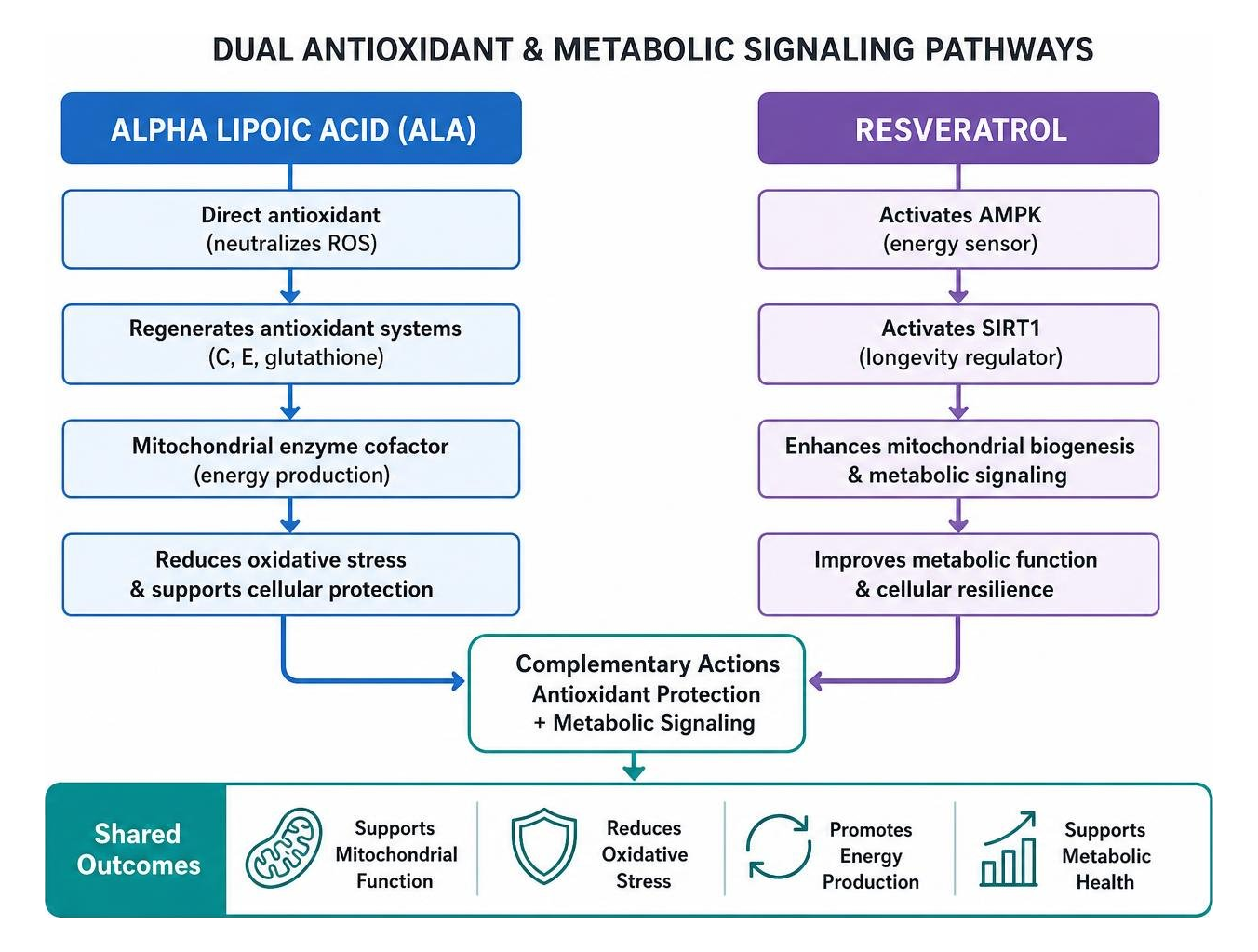
Alpha-lipoic acid (ALA) acts inside the mitochondria as a vital metabolic coenzyme and direct free-radical neutralizer. Meanwhile, resveratrol acts as a signaling catalyst, switching on survival and energy-regulating genes. Together, they create a biological synergy that protects existing cellular structures while prompting the body to build stronger, more resilient metabolic pathways.
Cellular Mechanisms of Alpha Lipoic Acid
Alpha-lipoic acid is often called the "master antioxidant" because of a unique chemical property: it is soluble in both water and fat. Most antioxidants are restricted to one domain—for instance, Vitamin C works primarily in aqueous cell fluids, while Vitamin E protects fatty lipid membranes. Because ALA operates effortlessly across both environments, it can penetrate every organ, nerve, and cellular compartment in the human body, including crossing the blood-brain barrier.
Beyond its role as a universal radical scavenger, ALA triggers crucial cell-signaling pathways:
-
PI3K/Akt Pathway Activation: ALA stimulates the phosphatidylinositol 3-kinase (PI3K)/Akt pathway, mimicking insulin signal transduction. This promotes the translocation of Glucose Transporter 4 (GLUT4) vesicles to cellular membranes, allowing muscle and adipose cells to absorb glucose from the bloodstream efficiently.
-
Endogenous Antioxidant Recycling: Once antioxidants like Vitamin C, Vitamin E, and glutathione neutralize a free radical, they become oxidized and temporarily inactive. According to reviews on the molecular mechanisms of alpha lipoic acid, ALA and its reduced form, dihydrolipoic acid (DHLA), donate electrons to regenerate these antioxidants back into their active forms.
-
Mitochondrial Coenzyme Role: ALA is an indispensable cofactor for α-ketoacid dehydrogenase complexes within the mitochondrial matrix, directly driving the Krebs cycle to generate adenosine triphosphate (ATP).
-
Nrf2 Transcription Factor Induction: Rather than acting solely as a direct chemical scavenger, research shows ALA activates the Nrf2 pathway, stimulating your cells to produce their own endogenous defense enzymes, including glutathione peroxidase and superoxide dismutase.
To learn more about how internal antioxidant recycling keeps your cellular energy high, check out our guide on Antioxidants for a Healthier You: Exploring Liposomal Glutathione.
How Resveratrol Complements Lipoic Acid
If alpha-lipoic acid is the worker fuel inside the mitochondrial engine, resveratrol is the smart thermostat regulating the entire climate. Resveratrol is a natural stilbenoid polyphenol found in the skins of red grapes, berries, and Japanese knotweed (Polygonum cuspidatum). In nature, plants produce resveratrol as a protective phytoalexin to survive environmental stressors like ultraviolet radiation and fungal infection.
When ingested by humans, trans-resveratrol—the biologically active chemical isomer—triggers profound metabolic responses:
-
SIRT1 Activation: Resveratrol directly stimulates Sirtuin 1 (SIRT1), an NAD+-dependent enzyme known as the "longevity gene." SIRT1 deacetylates key proteins involved in DNA repair, mitochondrial biogenesis, and caloric-restriction signaling.
-
AMPK Stimulation: Resveratrol activates Adenosine Monophosphate-Activated Protein Kinase (AMPK), the cell's master energy sensor. When AMPK is activated, it signals tissues to burn fatty acids, improve insulin sensitivity, and inhibit lipid synthesis.
-
Adipose Tissue Remodeling: Through AMPK and SIRT1 pathways, resveratrol encourages white adipose tissue (WAT)—the type that stores excess energy around abdominal organs—to convert into brown-like or "beige" adipose tissue. Beige fat contains dense concentrations of mitochondria that burn excess energy as heat.
By combining trans-resveratrol's genetic activation with alpha-lipoic acid's direct enzymatic and recycling support, co-supplementation offers a comprehensive approach to metabolic defense. For a deeper breakdown of SIRT1 pathways and polyphenol synergy, explore our NAD Resveratrol Ultimate Guide 2026.
Metabolic dysfunction rarely occurs in isolation. Conditions like insulin resistance, systemic low-grade inflammation, and abdominal adiposity frequently intersect with hormonal imbalances, impacting both cardiovascular health and reproductive performance. Combining alpha lipoic acid and resveratrol addresses these interlinked mechanisms at their cellular origin.
Synergy of Alpha Lipoic Acid and Resveratrol in PCOS
Polycystic Ovary Syndrome (PCOS) is one of the most common endocrine disorders, affecting between 5% and 15% of reproductive-aged women globally. While traditionally viewed through the lens of reproductive hormones, PCOS is fundamentally tied to metabolic health, driven by peripheral insulin resistance, hyperinsulinemia, and enlarged visceral fat stores.
For years, supplementation protocols relied heavily on inositol compounds. However, a landmark 12-week clinical pilot study evaluated a non-inositol formulation combining resveratrol (38.5 mg) and alpha-lipoic acid (24 mg) taken twice daily by overweight women with PCOS. Using precision bioimpedance analysis alongside standard anthropometric tracking, researchers discovered significant improvements across key metabolic parameters:
-
Body Mass Index (BMI): Decreased from a baseline mean of 34.78 ± 4.1 kg/m² down to 32.12 ± 2.9 kg/m².
-
Waist Circumference: Reduced dramatically from 114.8 ± 8.15 cm to 109.57 ± 4.17 cm, signaling a direct loss of central adiposity.
-
Waist-to-Hip Ratio (WHR): Improved from 0.89 ± 0.08 to 0.83 ± 0.05.
-
Trunk Fat Level: Percentage of upper-body adipose tissue dropped from 45.43 ± 5.03% to 41.31 ± 6.22%.
-
Visceral Fat Level: The dangerous deep fat surrounding abdominal organs dropped from 23.57 ± 5.4% down to 20.07 ± 5.99%.
These clinical outcomes stem from dual cellular mechanisms: resveratrol activates AMPK to facilitate white-to-brown fat conversion and GLUT translocation, while alpha-lipoic acid acts simultaneously via the PI3K/Akt pathway to lower peripheral insulin resistance. You can review the complete data in the published PCOS study on combined resveratrol and alpha lipoic acid.
-
BMI: 34.78 kg/m² ➔ 32.12 kg/m² (-2.66 kg/m²)
-
Waist Circumference: 114.8 cm ➔ 109.57 cm (-5.23 cm)
-
Trunk Fat Concentration: 45.43% ➔ 41.31% (-4.12%)
-
Visceral Fat Rating: 23.57% ➔ 20.07% (-3.50%)
Glycemic Control and Gestational Diabetes
The glucose-regulating power of alpha lipoic acid and resveratrol extends into gestational diabetes mellitus (GDM)—a condition affecting roughly 10% of pregnancies worldwide, driven by acute insulin resistance and metabolic stress.
In a retrospective clinical trial examining pregnant women between 24 and 28 weeks of gestation, researchers evaluated the impact of adding a combined resveratrol and alpha-lipoic acid supplement to standard diet and lifestyle modifications. The findings revealed significant glycemic support:
-
Reduction in Insulin Dependency: The proportion of patients requiring exogenous insulin therapy dropped dramatically from 37.5% in the lifestyle-only control group down to 15.0% in the co-supplemented group.
-
Lower Required Dosage: For women who still required insulin, the daily required dose was significantly lower in the antioxidant group (11 ± 2 IU vs. 14 ± 3 IU).
-
Fasting Blood Glucose: Fasting blood sugar levels dropped significantly to 87 ± 4 mg/dL compared to 93 ± 5 mg/dL in control subjects.
At the molecular level, gene expression analysis showed that co-administering resveratrol and ALA down-regulates Sterol Regulatory Element-Binding Protein 1 (SREBP-1 or SREBF1) in hepatic tissues far more effectively than single compounds. By suppressing SREBP-1, the combination reduces unwanted liver lipid accumulation while optimizing cellular insulin receptor sensitivity.
To explore the clinical data on gestational outcomes, read the full clinical trial on gestational diabetes complications. To understand how maintaining healthy glucose dynamics protects long-term metabolic health, see our detailed review on NAD and Anti-Aging: How to Turn Back the Clock with Supplementation.
Radioprotective, Neuroprotective, and Anti-Inflammatory Synergy
Beyond daily metabolic support, scientific focus has turned toward how alpha lipoic acid and resveratrol shield delicate nervous and germline tissues from extreme oxidative stress, environmental toxins, and physical trauma.
Radioprotection and Male Reproductive Health
Ionizing radiation poses a severe threat to biological tissues by lysing intracellular water molecules and releasing a flood of toxic hydroxyl radicals. Testicular tissue is among the most radiosensitive organs in the body; radiation exposure as low as 0.3 Gy can trigger germ cell apoptosis, basal lamina thickening, and temporary or permanent infertility.
In controlled preclinical research using NMRI mouse models exposed to 2 Gy gamma radiation, researchers tested the radioprotective capacity of oral resveratrol (100 mg/kg) and alpha-lipoic acid (200 mg/kg):
-
Johnsen Score Restoration: Ionizing radiation crushed the Johnsen score (a standard histopathological measure of spermatogenesis health where 10 represents maximum sperm production) from a normal 9.00 ± 0.00 down to 4.00 ± 0.63. Pre-treatment with either resveratrol or alpha-lipoic acid significantly protected germline tissue, restoring Johnsen scores back up to 6.00 ± 0.00.
-
Spermatogonia Count: Radiation reduced the average number of healthy spermatogonia per seminiferous tubule from 172.16 ± 34.1 down to 90 ± 5. Treatment with resveratrol or ALA rebounded these counts to 138 ± 8.27 and 138.5 ± 8.13, respectively.
-
Histopathological Nuance: Interestingly, while both antioxidants effectively protected sperm density and reduced basal membrane thickening, individual treatments were more effective at preventing epididymal vacuolation than certain combined stacks. This highlights the importance of precise ingredient ratios when targeting tissue-specific recovery.
Combining Alpha Lipoic Acid and Resveratrol for Neuroprotection
The central nervous system is exceptionally vulnerable to oxidative stress due to its high oxygen consumption, high lipid content, and limited native antioxidant defenses. When stroke, physical trauma, or severe post-traumatic stress occurs, free radicals trigger rapid neuronal cell death.
Research demonstrates that combining low, sub-threshold doses of alpha lipoic acid and resveratrol produces potent neuroprotective synergy, achieving therapeutic results that neither compound can deliver alone at low levels:
-
Stroke and Ischemia-Reperfusion Recovery: During an ischemic stroke, blood flow restriction followed by reperfusion floods brain tissue with reactive oxygen species. A groundbreaking rat study revealed that co-administering low doses of resveratrol ($2 \times 10^{-6}$ mg/kg) and alpha-lipoic acid (0.005 mg/kg)—doses so low that neither provided protection on its own—dramatically reduced cerebral infarct volume and apoptotic brain cell loss. Synthesizing a 1:1 molecular hybrid compound (UPEI-201) similarly yielded potent, dose-dependent stroke protection. For complete experimental data, see the synergistic neuroprotection study.
-
Stress-Related Disorders and CBD Synergy: In chronic stress and Post-Traumatic Stress Disorder (PTSD) models, pairing low-dose cannabidiol (CBD at 2.5 mg/kg) with alpha-lipoic acid (10 mg/kg) or resveratrol (20 mg/kg) achieved remarkable behavioral recovery:
-
Aggression Reduction: In resident-intruder social isolation tests, isolated controls displayed violent aggression. Combining low-dose CBD with ALA or resveratrol cut the average number of aggressive attacks from 10.00 ± 1.19 down to 4.8 ± 0.86 and 4.8 ± 1.59, matching the performance of high-dose CBD (10 mg/kg).
-
Antidepressant Effects: In the tail suspension test, adding 10 mg/kg of alpha-lipoic acid to sub-effective CBD reduced immobility time from 74.38 ± 3.49 seconds down to 32.50 ± 11.86 seconds, indicating potent antidepressant-like synergy.
To discover how liposomal delivery enhances systemic antioxidant defense across neural and immune tissues, check out Unlocking the Power of Liposomal Vitamin C: A Game-Changer in Immune Health.
Dosages, Bioavailability, and Supplementation Guide
Understanding the theoretical benefits of alpha lipoic acid and resveratrol is one thing; getting effective, active concentrations into your bloodstream and cells is another. Both nutrients present distinct biochemical absorption challenges that demand smart dosing strategies.
| Target Health Focus |
Daily Alpha-Lipoic Acid (ALA) |
Daily Trans-Resveratrol |
Recommended Form / Protocol |
Key Clinical Outcome |
| General Wellness & Energy |
100 – 300 mg |
100 – 250 mg |
R-LA + Trans-Resveratrol |
Antioxidant recycling, SIRT1 activation |
| Metabolic Health & PCOS |
300 – 600 mg |
75 – 200 mg |
Split doses (Morning / Evening) |
Reduced BMI, lower visceral adiposity |
| Glycemic Support & Peripheral Nerves |
600 – 1,200 mg |
250 – 500 mg |
Liposomal or Sodium R-LA |
Improved nerve conduction, lower fasting glucose |
| Advanced Neuro / Radioprotection |
600 – 1,800 mg |
250 – 1,000 mg |
Liposomal Delivery |
Synergistic central nervous system protection |
Dosing Guidelines and Clinical Protocols
When choosing an alpha-lipoic acid supplement, form matters. Commercial ALA typically comes as a 50/50 racemic mixture of two enantiomers: R-alpha-lipoic acid (R-LA) and S-alpha-lipoic acid (S-LA).
-
R-Lipoic Acid (R-LA): The natural form synthesized by plants and animals. It serves as the active cofactor for mitochondrial enzymes. Human trials show that oral R-LA achieves plasma concentrations 40% to 50% higher than S-LA.
-
Sodium R-LA (Na-RLA): Binding R-LA to a sodium salt prevents heat-induced polymerization, boosting peak plasma levels ($C_{max}$) up to 20-fold compared to standard free acid mixtures.
For clinical applications like diabetic peripheral neuropathy, meta-analyses published in research on alpha lipoic acid combination therapies confirm that therapeutic oral doses range between 600 mg and 1,800 mg per day. Standard oral administration over 14 to 28 days yields improvements in motor and sensory nerve conduction velocities.
For resveratrol, always select trans-resveratrol. The cis-resveratrol isomer is biologically inactive and does not stimulate SIRT1 longevity pathways.
When building your daily routine, consult our dedicated guides on R-Alpha-Lipoic Acid Dosage Guide 2026 and R-Lipoic Acid Dosage to select the right daily amounts for your health goals.
Safety Note: Because alpha-lipoic acid enhances cellular glucose uptake, individuals taking insulin or oral hypoglycemic medications should monitor their blood sugar levels carefully. Health Canada safety reviews highlight that ALA can occasionally trigger insulin autoimmune syndrome or low blood sugar (hypoglycemia) in sensitive individuals.
Bioavailability Challenges and Liposomal Delivery
Despite their powerful cell-signaling potential, both ingredients suffer from poor oral bioavailability when consumed in standard powder, capsule, or tablet forms:
-
Resveratrol's Barrier: Classified as a Biopharmaceutical Classification System (BCS) Class II compound, resveratrol has high membrane permeability but extremely poor water solubility. Ingesting standard oral resveratrol powder results in rapid hepatic first-pass metabolism; over 70% is converted into inactive glucuronide and sulfate metabolites before ever reaching systemic circulation.
-
Alpha-Lipoic Acid's Barrier: Unformulated oral ALA tablets exhibit low gastrointestinal absorption (roughly 20% to 40%). ALA is unstable in stomach acid, suffers from a short plasma half-life (about 30 minutes), and faces competition from food nutrients on monocarboxylate transporters.

This is precisely where liposomal delivery technology changes the game.
Liposomal encapsulation wraps active nutrient molecules—like trans-resveratrol and R-lipoic acid—inside a protective double layer of essential phospholipids (phosphatidylcholine). Because liposomes mimic the exact structure of human cell membranes, they offer remarkable physiological advantages:
-
Protection from Gastric Acid: Liposomes shield delicate antioxidants from degradation in the harsh, acidic stomach environment.
-
Bypassing Hepatic Clearance: Liposomes absorb through the lymphatic system in the gut, shielding active compounds from immediate liver metabolism.
-
Enhanced Cellular Fusion: Liposomes fuse directly with cell membranes throughout the vascular system, delivering active payloads directly into target tissues.
At Vida Life Science, as the exclusive distributor of Aurora Nutrascience products in the USA and Canada, we utilize multi-stage liposomal manufacturing to ensure maximum nutrient stability, superior bioavailability, and cellular delivery.
Frequently Asked Questions about Alpha Lipoic Acid and Resveratrol
What are the main benefits of taking alpha lipoic acid and resveratrol together?
Combining alpha lipoic acid and resveratrol creates dual-action support for energy metabolism and antioxidant defense. Alpha-lipoic acid works inside the mitochondria as a coenzyme while regenerating Vitamin C, Vitamin E, and glutathione. Resveratrol activates SIRT1 and AMPK signaling pathways, supporting cellular longevity, glucose regulation, and white-to-brown fat conversion. Together, they provide comprehensive support for insulin sensitivity, cardiovascular function, nerve health, and cellular resilience.
Can alpha lipoic acid and resveratrol help with weight loss and PCOS?
Yes, clinical pilot research indicates that combining resveratrol and alpha-lipoic acid can improve body composition in overweight women with PCOS. In a 12-week clinical study, patients taking this combination experienced significant reductions in BMI (dropping from 34.78 to 32.12 kg/m²), waist circumference (reducing by over 5 cm), trunk fat percentage, and visceral adipose tissue ratings without requiring inositol supplementation.
Are there any side effects or blood sugar risks with this combination?
Both compounds are generally well-tolerated when taken within recommended therapeutic ranges (300–1,200 mg for ALA; 100–500 mg for trans-resveratrol). However, because both alpha-lipoic acid and resveratrol enhance insulin sensitivity and promote cellular glucose uptake, people with diabetes or those taking blood-sugar-lowering medications should monitor their blood glucose levels closely to avoid hypoglycemia. Mild gastrointestinal upset can occasionally occur with high oral doses of unencapsulated powders, which can be minimized by using liposomal formulations.
Conclusion
The combination of alpha lipoic acid and resveratrol represents a forward-thinking, scientifically backed approach to cellular health, weight management, and metabolic resilience. By targeting complementary pathways—ALA through mitochondrial coenzyme support, PI3K/Akt signaling, and antioxidant recycling; resveratrol through SIRT1 activation, AMPK stimulation, and adipose tissue remodeling—this pair delivers benefits that go beyond single-ingredient supplementation.
From reducing visceral fat in women with PCOS to optimizing glycemic control in gestational diabetes and protecting delicate neural tissues against oxidative stress, the scientific evidence continues to grow. While current clinical pilot studies are promising, larger randomized controlled trials will further clarify optimal dosing strategies across diverse patient populations.
To overcome traditional bioavailability limitations, choosing high-quality, advanced formulations is essential. At Vida Life Science, we are committed to providing superior liposomal supplements that protect delicate active nutrients, ensuring maximum absorption and cellular delivery.
Ready to optimize your metabolic health and cellular longevity? Explore our comprehensive resource, the NAD Resveratrol Ultimate Guide 2026, to discover how liposomal antioxidant technology can support your daily wellness journey.


The Ultimate Guide to Alpha Lipoic Acid and Resveratrol Supplements
Why Alpha Lipoic Acid and Resveratrol Are Often Paired
Alpha lipoic acid and resveratrol are antioxidant compounds often paired to support cellular energy, metabolic health, and the body's defenses against oxidative stress. Alpha-lipoic acid supports mitochondrial enzyme activity and helps regenerate antioxidant systems, while resveratrol is studied for its effects on AMPK and SIRT1, two pathways involved in energy use and metabolic signaling.
Quick answer: This combination is promising, but the evidence is still early.
The most useful way to view this pair is not as a magic shortcut, but as a targeted supplement combination with plausible biology and limited, growing clinical research.
Vida Life Science is a US-based distributor of advanced nutritional supplements with a focus on phosphatidylcholine-based liposomal delivery. Our experience with alpha lipoic acid and resveratrol centers on helping health-conscious adults understand ingredient quality, absorption challenges, and the evidence behind antioxidant support.
How Alpha Lipoic Acid and Resveratrol Work Together
When we talk about cellular wellness, we are really talking about keeping our cells' internal power generators—the mitochondria—running cleanly and efficiently. Every time your cells produce energy from the food you eat, they generate reactive oxygen species (ROS), commonly known as free radicals. In small amounts, free radicals act as signaling molecules. But when they accumulate unchecked, they create oxidative stress, damaging cellular membranes, lipids, proteins, and DNA.
This is where combining alpha lipoic acid and resveratrol creates a powerful partnership. Rather than relying on a single mechanism, these two natural compounds tackle cellular aging and metabolic fatigue from complementary angles.
Alpha-lipoic acid (ALA) acts inside the mitochondria as a vital metabolic coenzyme and direct free-radical neutralizer. Meanwhile, resveratrol acts as a signaling catalyst, switching on survival and energy-regulating genes. Together, they create a biological synergy that protects existing cellular structures while prompting the body to build stronger, more resilient metabolic pathways.
Cellular Mechanisms of Alpha Lipoic Acid
Alpha-lipoic acid is often called the "master antioxidant" because of a unique chemical property: it is soluble in both water and fat. Most antioxidants are restricted to one domain—for instance, Vitamin C works primarily in aqueous cell fluids, while Vitamin E protects fatty lipid membranes. Because ALA operates effortlessly across both environments, it can penetrate every organ, nerve, and cellular compartment in the human body, including crossing the blood-brain barrier.
Beyond its role as a universal radical scavenger, ALA triggers crucial cell-signaling pathways:
To learn more about how internal antioxidant recycling keeps your cellular energy high, check out our guide on Antioxidants for a Healthier You: Exploring Liposomal Glutathione.
How Resveratrol Complements Lipoic Acid
If alpha-lipoic acid is the worker fuel inside the mitochondrial engine, resveratrol is the smart thermostat regulating the entire climate. Resveratrol is a natural stilbenoid polyphenol found in the skins of red grapes, berries, and Japanese knotweed (Polygonum cuspidatum). In nature, plants produce resveratrol as a protective phytoalexin to survive environmental stressors like ultraviolet radiation and fungal infection.
When ingested by humans, trans-resveratrol—the biologically active chemical isomer—triggers profound metabolic responses:
By combining trans-resveratrol's genetic activation with alpha-lipoic acid's direct enzymatic and recycling support, co-supplementation offers a comprehensive approach to metabolic defense. For a deeper breakdown of SIRT1 pathways and polyphenol synergy, explore our NAD Resveratrol Ultimate Guide 2026.
Metabolic and Reproductive Benefits of Antioxidant Co-Supplementation
Metabolic dysfunction rarely occurs in isolation. Conditions like insulin resistance, systemic low-grade inflammation, and abdominal adiposity frequently intersect with hormonal imbalances, impacting both cardiovascular health and reproductive performance. Combining alpha lipoic acid and resveratrol addresses these interlinked mechanisms at their cellular origin.
Synergy of Alpha Lipoic Acid and Resveratrol in PCOS
Polycystic Ovary Syndrome (PCOS) is one of the most common endocrine disorders, affecting between 5% and 15% of reproductive-aged women globally. While traditionally viewed through the lens of reproductive hormones, PCOS is fundamentally tied to metabolic health, driven by peripheral insulin resistance, hyperinsulinemia, and enlarged visceral fat stores.
For years, supplementation protocols relied heavily on inositol compounds. However, a landmark 12-week clinical pilot study evaluated a non-inositol formulation combining resveratrol (38.5 mg) and alpha-lipoic acid (24 mg) taken twice daily by overweight women with PCOS. Using precision bioimpedance analysis alongside standard anthropometric tracking, researchers discovered significant improvements across key metabolic parameters:
These clinical outcomes stem from dual cellular mechanisms: resveratrol activates AMPK to facilitate white-to-brown fat conversion and GLUT translocation, while alpha-lipoic acid acts simultaneously via the PI3K/Akt pathway to lower peripheral insulin resistance. You can review the complete data in the published PCOS study on combined resveratrol and alpha lipoic acid.
Key Metabolic Improvements from 12-Week PCOS Co-Supplementation
Glycemic Control and Gestational Diabetes
The glucose-regulating power of alpha lipoic acid and resveratrol extends into gestational diabetes mellitus (GDM)—a condition affecting roughly 10% of pregnancies worldwide, driven by acute insulin resistance and metabolic stress.
In a retrospective clinical trial examining pregnant women between 24 and 28 weeks of gestation, researchers evaluated the impact of adding a combined resveratrol and alpha-lipoic acid supplement to standard diet and lifestyle modifications. The findings revealed significant glycemic support:
At the molecular level, gene expression analysis showed that co-administering resveratrol and ALA down-regulates Sterol Regulatory Element-Binding Protein 1 (SREBP-1 or SREBF1) in hepatic tissues far more effectively than single compounds. By suppressing SREBP-1, the combination reduces unwanted liver lipid accumulation while optimizing cellular insulin receptor sensitivity.
To explore the clinical data on gestational outcomes, read the full clinical trial on gestational diabetes complications. To understand how maintaining healthy glucose dynamics protects long-term metabolic health, see our detailed review on NAD and Anti-Aging: How to Turn Back the Clock with Supplementation.
Radioprotective, Neuroprotective, and Anti-Inflammatory Synergy
Beyond daily metabolic support, scientific focus has turned toward how alpha lipoic acid and resveratrol shield delicate nervous and germline tissues from extreme oxidative stress, environmental toxins, and physical trauma.
Radioprotection and Male Reproductive Health
Ionizing radiation poses a severe threat to biological tissues by lysing intracellular water molecules and releasing a flood of toxic hydroxyl radicals. Testicular tissue is among the most radiosensitive organs in the body; radiation exposure as low as 0.3 Gy can trigger germ cell apoptosis, basal lamina thickening, and temporary or permanent infertility.
In controlled preclinical research using NMRI mouse models exposed to 2 Gy gamma radiation, researchers tested the radioprotective capacity of oral resveratrol (100 mg/kg) and alpha-lipoic acid (200 mg/kg):
Combining Alpha Lipoic Acid and Resveratrol for Neuroprotection
The central nervous system is exceptionally vulnerable to oxidative stress due to its high oxygen consumption, high lipid content, and limited native antioxidant defenses. When stroke, physical trauma, or severe post-traumatic stress occurs, free radicals trigger rapid neuronal cell death.
Research demonstrates that combining low, sub-threshold doses of alpha lipoic acid and resveratrol produces potent neuroprotective synergy, achieving therapeutic results that neither compound can deliver alone at low levels:
To discover how liposomal delivery enhances systemic antioxidant defense across neural and immune tissues, check out Unlocking the Power of Liposomal Vitamin C: A Game-Changer in Immune Health.
Dosages, Bioavailability, and Supplementation Guide
Understanding the theoretical benefits of alpha lipoic acid and resveratrol is one thing; getting effective, active concentrations into your bloodstream and cells is another. Both nutrients present distinct biochemical absorption challenges that demand smart dosing strategies.
Dosing Guidelines and Clinical Protocols
When choosing an alpha-lipoic acid supplement, form matters. Commercial ALA typically comes as a 50/50 racemic mixture of two enantiomers: R-alpha-lipoic acid (R-LA) and S-alpha-lipoic acid (S-LA).
For clinical applications like diabetic peripheral neuropathy, meta-analyses published in research on alpha lipoic acid combination therapies confirm that therapeutic oral doses range between 600 mg and 1,800 mg per day. Standard oral administration over 14 to 28 days yields improvements in motor and sensory nerve conduction velocities.
For resveratrol, always select trans-resveratrol. The cis-resveratrol isomer is biologically inactive and does not stimulate SIRT1 longevity pathways.
When building your daily routine, consult our dedicated guides on R-Alpha-Lipoic Acid Dosage Guide 2026 and R-Lipoic Acid Dosage to select the right daily amounts for your health goals.
Safety Note: Because alpha-lipoic acid enhances cellular glucose uptake, individuals taking insulin or oral hypoglycemic medications should monitor their blood sugar levels carefully. Health Canada safety reviews highlight that ALA can occasionally trigger insulin autoimmune syndrome or low blood sugar (hypoglycemia) in sensitive individuals.
Bioavailability Challenges and Liposomal Delivery
Despite their powerful cell-signaling potential, both ingredients suffer from poor oral bioavailability when consumed in standard powder, capsule, or tablet forms:
This is precisely where liposomal delivery technology changes the game.
Liposomal encapsulation wraps active nutrient molecules—like trans-resveratrol and R-lipoic acid—inside a protective double layer of essential phospholipids (phosphatidylcholine). Because liposomes mimic the exact structure of human cell membranes, they offer remarkable physiological advantages:
At Vida Life Science, as the exclusive distributor of Aurora Nutrascience products in the USA and Canada, we utilize multi-stage liposomal manufacturing to ensure maximum nutrient stability, superior bioavailability, and cellular delivery.
Frequently Asked Questions about Alpha Lipoic Acid and Resveratrol
What are the main benefits of taking alpha lipoic acid and resveratrol together?
Combining alpha lipoic acid and resveratrol creates dual-action support for energy metabolism and antioxidant defense. Alpha-lipoic acid works inside the mitochondria as a coenzyme while regenerating Vitamin C, Vitamin E, and glutathione. Resveratrol activates SIRT1 and AMPK signaling pathways, supporting cellular longevity, glucose regulation, and white-to-brown fat conversion. Together, they provide comprehensive support for insulin sensitivity, cardiovascular function, nerve health, and cellular resilience.
Can alpha lipoic acid and resveratrol help with weight loss and PCOS?
Yes, clinical pilot research indicates that combining resveratrol and alpha-lipoic acid can improve body composition in overweight women with PCOS. In a 12-week clinical study, patients taking this combination experienced significant reductions in BMI (dropping from 34.78 to 32.12 kg/m²), waist circumference (reducing by over 5 cm), trunk fat percentage, and visceral adipose tissue ratings without requiring inositol supplementation.
Are there any side effects or blood sugar risks with this combination?
Both compounds are generally well-tolerated when taken within recommended therapeutic ranges (300–1,200 mg for ALA; 100–500 mg for trans-resveratrol). However, because both alpha-lipoic acid and resveratrol enhance insulin sensitivity and promote cellular glucose uptake, people with diabetes or those taking blood-sugar-lowering medications should monitor their blood glucose levels closely to avoid hypoglycemia. Mild gastrointestinal upset can occasionally occur with high oral doses of unencapsulated powders, which can be minimized by using liposomal formulations.
Conclusion
The combination of alpha lipoic acid and resveratrol represents a forward-thinking, scientifically backed approach to cellular health, weight management, and metabolic resilience. By targeting complementary pathways—ALA through mitochondrial coenzyme support, PI3K/Akt signaling, and antioxidant recycling; resveratrol through SIRT1 activation, AMPK stimulation, and adipose tissue remodeling—this pair delivers benefits that go beyond single-ingredient supplementation.
From reducing visceral fat in women with PCOS to optimizing glycemic control in gestational diabetes and protecting delicate neural tissues against oxidative stress, the scientific evidence continues to grow. While current clinical pilot studies are promising, larger randomized controlled trials will further clarify optimal dosing strategies across diverse patient populations.
To overcome traditional bioavailability limitations, choosing high-quality, advanced formulations is essential. At Vida Life Science, we are committed to providing superior liposomal supplements that protect delicate active nutrients, ensuring maximum absorption and cellular delivery.
Ready to optimize your metabolic health and cellular longevity? Explore our comprehensive resource, the NAD Resveratrol Ultimate Guide 2026, to discover how liposomal antioxidant technology can support your daily wellness journey.