Why Getting Your R-Alpha Lipoic Acid Dosage Right Actually Matters
R-alpha lipoic acid dosage is one of the most searched supplement questions — and for good reason. Take too little and you may not feel anything. Take too much and you risk unnecessary side effects. Finding the right amount is the whole game.
Quick Answer: R-ALA Dosage by Goal
| Goal |
Typical R-ALA Dose |
Frequency |
| General antioxidant support |
50-200 mg |
Once daily |
| Metabolic / mitochondrial support |
300-600 mg |
Once or twice daily |
| Diabetic peripheral neuropathy |
300-600 mg |
Once or twice daily |
| Severe neuropathy (clinical) |
Up to 600 mg |
Twice daily |
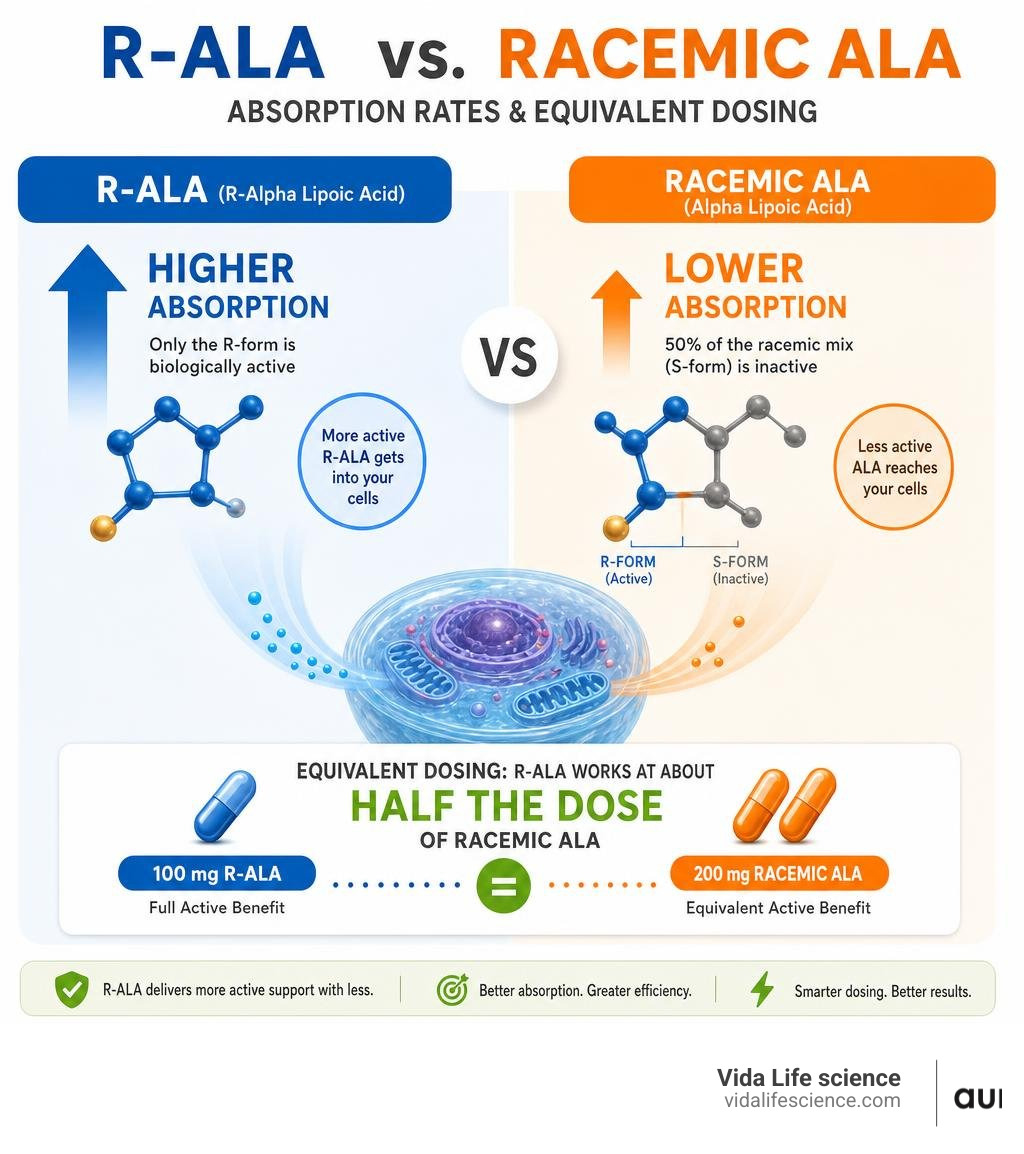
Key rule of thumb: Because R-ALA is the biologically active form, it works at roughly half the dose of standard (racemic) alpha-lipoic acid supplements.
R-ALA is a fascinating compound. Your mitochondria actually make it naturally — it acts as a cofactor for the enzymes that convert food into cellular energy. But the amounts your body produces on its own are rarely enough to produce a therapeutic effect, which is why supplementation is so widely studied.
The challenge? Most clinical trials were run on racemic ALA — a 50/50 mix of the active R-form and the inactive S-form. That makes translating research doses into practical R-ALA dosing genuinely confusing for most people.
This guide cuts through that confusion.
At Vida Lifescience, we specialize in advanced nutrient delivery technology and work exclusively with high-grade supplements like Aurora Nutrascience's R-Alpha Lipoic Acid — so we understand the real-world impact that formulation quality and correct R-alpha lipoic acid dosage have on your results. That hands-on experience shapes everything we share in this guide.
Determining Your Ideal R-Alpha Lipoic Acid Dosage
When it comes to supplementing with R-Alpha Lipoic Acid (R-ALA), there is no single "correct" dose for everyone. Instead, we look at a therapeutic range that shifts depending on what your body needs. Are you looking to keep your cellular engines humming smoothly as you age, or are you trying to manage persistent, uncomfortable nerve pain?
To determine where you fit on this spectrum, we have to look at the underlying science. In clinical settings, researchers have evaluated alpha-lipoic acid across a wide spectrum of doses, ranging from 200 mg to 1,800 mg per day. These studies show that the human body can tolerate quite a bit of this compound, but higher doses do not always yield better results. In fact, going above standard clinical recommendations often just increases the likelihood of a mild stomach ache rather than boosting the supplement's therapeutic benefits.
According to the Clinical guidelines on Alpha-Lipoic Acid, oral dosing between 600 mg and 1,800 mg daily of standard ALA has been safely utilized in trials for up to six months. However, when we isolate the pure, biologically active R-enantiomer (R-ALA), we can achieve the same cellular impact with a significantly lower daily milligram intake.
For general antioxidant support, a modest daily dose is usually plenty to help neutralize free radicals and recycle other essential antioxidants like vitamins C and E — the same recycling relationship we cover in our guide on glutathione and vitamin C. If you are targeting metabolic concerns, blood sugar management, or neuropathic pain, your ideal dose will naturally sit higher on the scale. Let's break these categories down so you can find your own "Goldilocks" zone.
Standard R-Alpha Lipoic Acid Dosage for Neuropathy
If you are dealing with the burning, tingling, or numbness associated with neuropathy, finding the right r alpha lipoic acid dosage is incredibly important. Neuropathy — whether it is diabetic peripheral neuropathy or idiopathic small fiber neuropathy — is driven largely by oxidative stress and microvascular damage that starves your nerves of oxygen.
Clinical research has established that standard alpha-lipoic acid is highly effective at managing these positive neuropathic symptoms. For instance, intravenous infusions of 600 mg of ALA daily have been shown to rapidly improve neuropathic deficits. When translating this to oral supplements, especially with the highly bioavailable R-form, consistency is key.
For diabetic peripheral neuropathy and idiopathic small fiber neuropathy, the standard oral R-ALA dosage typically ranges from 300 mg to 600 mg daily.
-
Mild to Moderate Symptoms: 300 mg of R-ALA taken once daily in the morning is a common starting point.
-
Severe Symptoms: 600 mg daily, which can be taken as a single dose or split into 300 mg twice daily (once in the morning and once in the evening).
Real-world experiences mirror these clinical numbers. In patient discussions on platforms like Mayo Clinic Connect, individuals dealing with idiopathic neuropathy frequently report that taking 600 mg of R-ALA daily provides noticeable relief. Some users prefer starting with a lower dose of 200 mg to 300 mg to ensure their stomach tolerates it well, before gradually titrating up to the full 600 mg therapeutic dose.
By supporting mitochondrial function within the nerve cells, R-ALA helps promote nerve regeneration and improves microcirculation.
General Antioxidant and Mitochondrial Support Dosing
You do not need to be experiencing nerve pain to benefit from R-ALA. Because it is both water- and fat-soluble, it has been dubbed the "universal antioxidant." It can enter every part of your cells to neutralize free radicals, support mitochondrial health, and promote healthy aging.
When your goal is general wellness, cellular energy production, and systemic antioxidant defense, a much lower r alpha lipoic acid dosage is required:
-
General Maintenance: 50 mg to 100 mg daily is highly effective for basic antioxidant recycling.
-
Enhanced Mitochondrial Support: 200 mg to 300 mg daily is ideal for those looking to optimize metabolic health, protect against age-related cognitive decline, or support cardiovascular function.
At these lower doses, R-ALA acts as a gentle metabolic spark plug. It assists the enzymes inside your mitochondria that turn glucose into ATP (cellular energy). Furthermore, research indicates that even modest doses of ALA can have targeted benefits; for example, a daily oral dose of 300 mg of standard ALA over three months has been shown to maintain and improve functional vision in patients with type 1 and type 2 diabetes.
By keeping your cellular defense systems active, a daily maintenance dose helps protect your tissues from the slow, cumulative wear and tear of oxidative stress.
R-ALA vs. Racemic ALA: Bioavailability and Potency
If you have ever looked closely at a supplement shelf, you have probably noticed a massive price difference between standard "Alpha-Lipoic Acid" and "R-Alpha Lipoic Acid." To understand why, we have to look at the chemistry of these molecules.
Alpha-lipoic acid exists in two mirror-image forms, known as enantiomers:
-
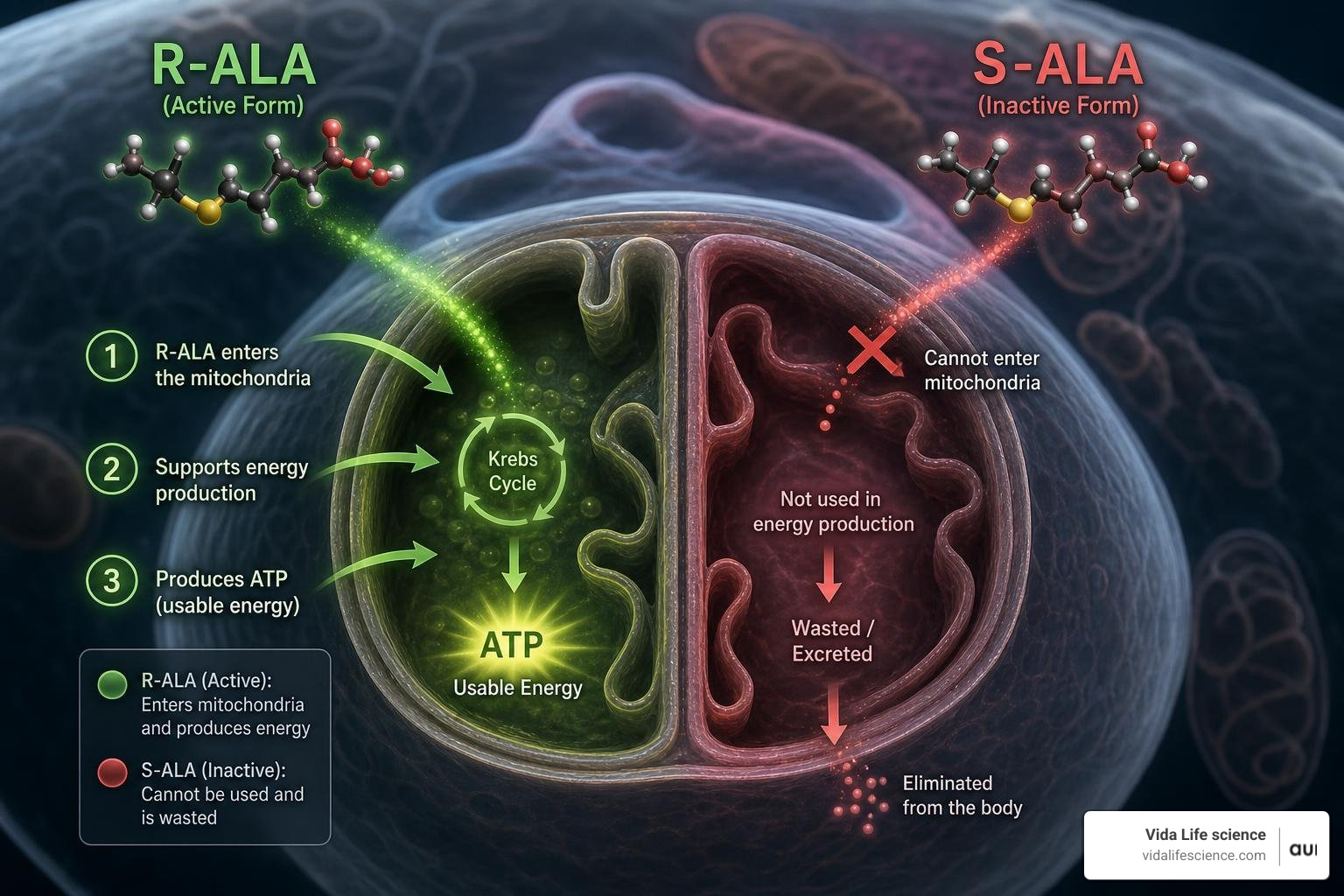
R-Alpha-Lipoic Acid (R-ALA): The naturally occurring, biologically active form synthesized by plants and animals. This is the exact shape your mitochondria recognize and use as an enzyme cofactor.
-
S-Alpha-Lipoic Acid (S-ALA): The synthetic, mirror-image byproduct of chemical manufacturing. It is not found in nature, and your body has a very difficult time utilizing it.
Standard, inexpensive ALA supplements are "racemic" mixtures — meaning they contain a 50/50 blend of the R and S forms. Because the S-form is essentially biological "junk space," a 600 mg capsule of standard ALA only gives you 300 mg of the active R-form.
Here is how the main forms of lipoic acid compare in terms of stability, absorption, and typical dosing:
| Feature |
Racemic ALA (R + S) |
Pure R-ALA |
Sodium R-ALA (Na-RALA) |
| Composition |
50% R-isomer, 50% S-isomer |
100% active R-isomer |
100% active R-isomer stabilized with sodium |
| Source |
Synthetic chemical synthesis |
Isolated natural form |
Stabilized salt form |
| Bioavailability |
Low to Moderate (30-40%) |
Moderate to High (40-60%) |
Very High (up to 3x higher peak levels) |
| Stability |
Highly stable |
Highly unstable (polymerizes in heat) |
Highly stable |
| Typical Daily Dose |
600 mg – 1,800 mg |
300 mg – 600 mg |
100 mg – 300 mg |
Why Your R-Alpha Lipoic Acid Dosage is Lower Than Racemic ALA
Because pure R-ALA is highly bioavailable, your required r alpha lipoic acid dosage is much lower than the doses of standard ALA used in older clinical trials. If a study suggests taking 1,200 mg of standard racemic ALA for metabolic support, you can generally achieve the same, if not better, biological effect with just 300 mg to 600 mg of pure, high-quality R-ALA.
Furthermore, R-ALA has a very short half-life in the human body — typically lasting only about 30 minutes to an hour in your bloodstream.
How to Safely Take R-ALA: Timing, Side Effects, and Interactions
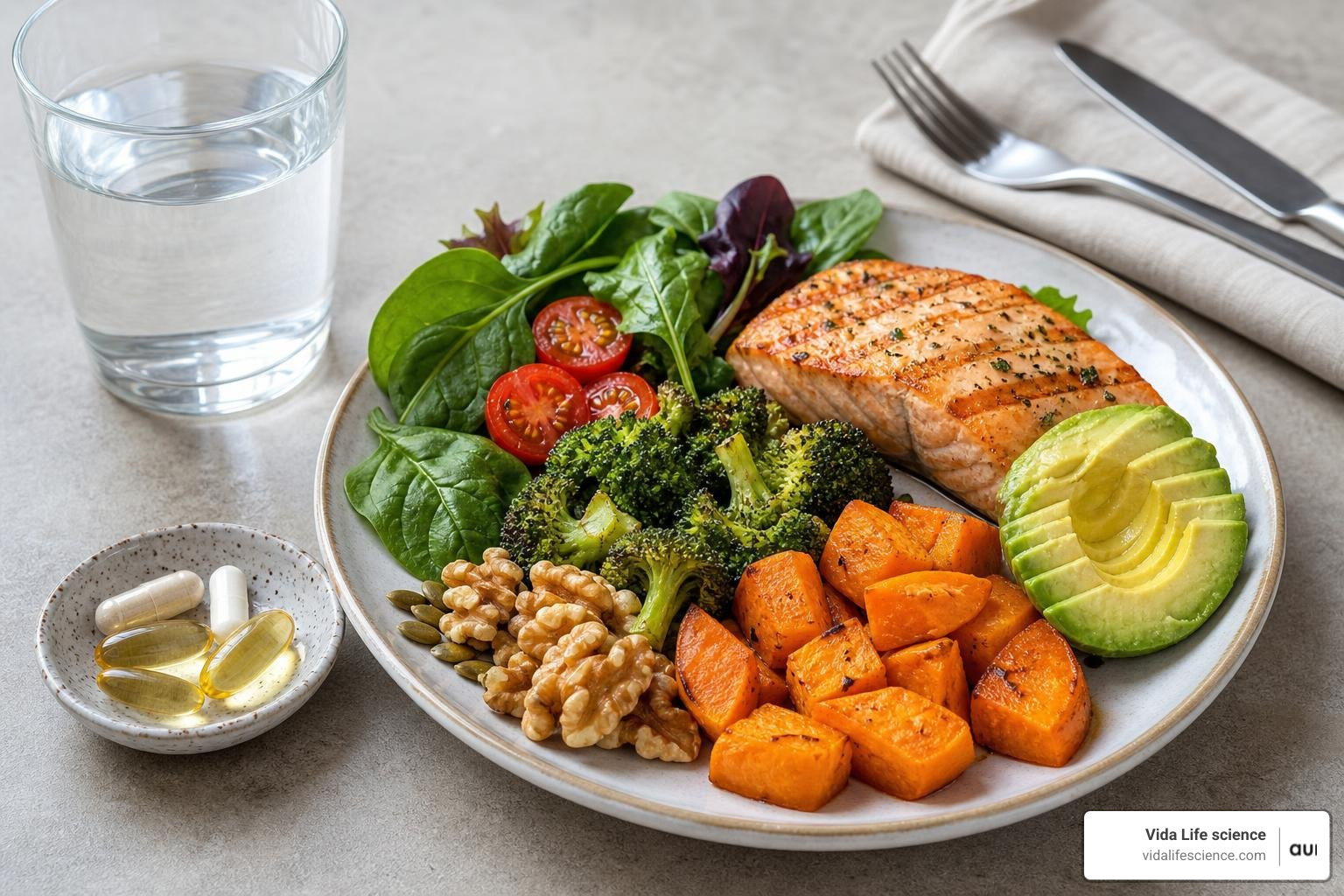
The golden rule of R-ALA supplementation is simple: Take it on an empty stomach.
Research shows that taking alpha-lipoic acid alongside food reduces its bioavailability by approximately 25% to 30%. For the absolute best results, you should aim to take your supplement:
- At least 30 to 60 minutes before breakfast or lunch, OR
- At least 2 hours after a meal.
If you are taking a high therapeutic r alpha lipoic acid dosage (such as 600 mg daily) to manage neuropathy, we highly recommend splitting your intake into two daily doses — 300 mg in the morning before breakfast, and 300 mg in the evening before dinner.
Synergistic Nutrients and Drug Interactions
R-ALA works beautifully when paired with specific nutrients, but it can also interact with certain medications.
1. The Biotin Connection
Because R-alpha-lipoic acid shares a structurally similar transport system with biotin (Vitamin B7), taking high doses of R-ALA over a long period can compete with biotin uptake in your intestines. To prevent a deficiency, we recommend co-administering a modest daily dose of biotin (around 100 mcg to 300 mcg) if you plan on taking R-ALA consistently for several months.
2. Perfect Partners: ALCAR and B-Vitamins
For nerve health, R-ALA acts synergistically with Acetyl-L-Carnitine (ALCAR) and B-complex vitamins — especially B12 and Benfotiamine, a fat-soluble form of B1.
3. Medication Interactions to Watch
-
Diabetes Medications: Because R-ALA improves insulin sensitivity and helps lower blood sugar, taking it alongside insulin or oral hypoglycemic drugs can increase your risk of hypoglycemia. Work closely with your physician to monitor your blood glucose levels.
-
Thyroid Medications: R-ALA can slightly reduce the conversion of thyroid hormone (T4 to T3). Separate your R-ALA dose from your thyroid medication by at least 2 to 3 hours.
-
Chemotherapy: ASCO advises against using antioxidant supplements like ALA during active chemotherapy treatments.
Frequently Asked Questions about R-ALA Dosing
How long does it typically take to see benefits from R-ALA?
Patience is key when starting R-ALA. Noticeable improvements typically take 3 to 5 weeks of consistent daily use.
Can I take R-ALA with gabapentin or other medications?
Yes, many individuals successfully combine R-ALA with gabapentin. However, because of R-ALA's insulin-sensitizing properties, you must always consult your primary care physician before combining supplements with prescription drugs.
What is the maximum safe daily dose of R-ALA?
For the vast majority of adults, a daily oral dose of up to 2,400 mg of standard alpha-lipoic acid (equivalent to roughly 1,200 mg of pure R-ALA) has been established as safe. Keep lipoic acid securely out of reach of children and pets, as it can be highly toxic to children even at relatively low doses.
Conclusion: Finding Your Goldilocks Dose
When it comes to finding your ideal r alpha lipoic acid dosage, the "Goldilocks" approach is always best: start low, monitor how your body responds, and gradually adjust until you find the amount that is just right for your unique health goals.
But remember, the milligram number on your bottle only matters if your body can actually absorb the nutrient. At Vida Lifescience, we distribute Aurora Nutrascience's advanced liposomal supplements, wrapping pure R-Alpha Lipoic Acid in protective, organic liposomes to shield the nutrient through your digestive tract and ensure maximum absorption.
Shop Aurora Nutrascience Liposomal R-ALA Capsules →
📩 Want more guides like this?
Get our free supplement guide — dosing breakdowns, ingredient science, and what to actually look for on a label — delivered straight to your inbox. Sign up here.
Related reading: Why Glutathione and Vitamin C Are 2026's Antioxidant Power Pairing · Vitamin B12 Deficiency: Signs, Causes & 2026 Solutions


The Goldilocks Guide to R-Alpha Lipoic Acid Dosage
🛒 Shop This Article: Aurora Nutrascience Liposomal R-ALA Capsules — pure R-Alpha Lipoic Acid at the clinically relevant doses discussed below, wrapped in liposomal delivery for maximum absorption.
Why Getting Your R-Alpha Lipoic Acid Dosage Right Actually Matters
R-alpha lipoic acid dosage is one of the most searched supplement questions — and for good reason. Take too little and you may not feel anything. Take too much and you risk unnecessary side effects. Finding the right amount is the whole game.
Quick Answer: R-ALA Dosage by Goal
R-ALA is a fascinating compound. Your mitochondria actually make it naturally — it acts as a cofactor for the enzymes that convert food into cellular energy. But the amounts your body produces on its own are rarely enough to produce a therapeutic effect, which is why supplementation is so widely studied.
The challenge? Most clinical trials were run on racemic ALA — a 50/50 mix of the active R-form and the inactive S-form. That makes translating research doses into practical R-ALA dosing genuinely confusing for most people.
This guide cuts through that confusion.
At Vida Lifescience, we specialize in advanced nutrient delivery technology and work exclusively with high-grade supplements like Aurora Nutrascience's R-Alpha Lipoic Acid — so we understand the real-world impact that formulation quality and correct R-alpha lipoic acid dosage have on your results. That hands-on experience shapes everything we share in this guide.
Determining Your Ideal R-Alpha Lipoic Acid Dosage
When it comes to supplementing with R-Alpha Lipoic Acid (R-ALA), there is no single "correct" dose for everyone. Instead, we look at a therapeutic range that shifts depending on what your body needs. Are you looking to keep your cellular engines humming smoothly as you age, or are you trying to manage persistent, uncomfortable nerve pain?
To determine where you fit on this spectrum, we have to look at the underlying science. In clinical settings, researchers have evaluated alpha-lipoic acid across a wide spectrum of doses, ranging from 200 mg to 1,800 mg per day. These studies show that the human body can tolerate quite a bit of this compound, but higher doses do not always yield better results. In fact, going above standard clinical recommendations often just increases the likelihood of a mild stomach ache rather than boosting the supplement's therapeutic benefits.
According to the Clinical guidelines on Alpha-Lipoic Acid, oral dosing between 600 mg and 1,800 mg daily of standard ALA has been safely utilized in trials for up to six months. However, when we isolate the pure, biologically active R-enantiomer (R-ALA), we can achieve the same cellular impact with a significantly lower daily milligram intake.
For general antioxidant support, a modest daily dose is usually plenty to help neutralize free radicals and recycle other essential antioxidants like vitamins C and E — the same recycling relationship we cover in our guide on glutathione and vitamin C. If you are targeting metabolic concerns, blood sugar management, or neuropathic pain, your ideal dose will naturally sit higher on the scale. Let's break these categories down so you can find your own "Goldilocks" zone.
Standard R-Alpha Lipoic Acid Dosage for Neuropathy
If you are dealing with the burning, tingling, or numbness associated with neuropathy, finding the right r alpha lipoic acid dosage is incredibly important. Neuropathy — whether it is diabetic peripheral neuropathy or idiopathic small fiber neuropathy — is driven largely by oxidative stress and microvascular damage that starves your nerves of oxygen.
Clinical research has established that standard alpha-lipoic acid is highly effective at managing these positive neuropathic symptoms. For instance, intravenous infusions of 600 mg of ALA daily have been shown to rapidly improve neuropathic deficits. When translating this to oral supplements, especially with the highly bioavailable R-form, consistency is key.
For diabetic peripheral neuropathy and idiopathic small fiber neuropathy, the standard oral R-ALA dosage typically ranges from 300 mg to 600 mg daily.
Real-world experiences mirror these clinical numbers. In patient discussions on platforms like Mayo Clinic Connect, individuals dealing with idiopathic neuropathy frequently report that taking 600 mg of R-ALA daily provides noticeable relief. Some users prefer starting with a lower dose of 200 mg to 300 mg to ensure their stomach tolerates it well, before gradually titrating up to the full 600 mg therapeutic dose.
By supporting mitochondrial function within the nerve cells, R-ALA helps promote nerve regeneration and improves microcirculation.
General Antioxidant and Mitochondrial Support Dosing
You do not need to be experiencing nerve pain to benefit from R-ALA. Because it is both water- and fat-soluble, it has been dubbed the "universal antioxidant." It can enter every part of your cells to neutralize free radicals, support mitochondrial health, and promote healthy aging.
When your goal is general wellness, cellular energy production, and systemic antioxidant defense, a much lower r alpha lipoic acid dosage is required:
At these lower doses, R-ALA acts as a gentle metabolic spark plug. It assists the enzymes inside your mitochondria that turn glucose into ATP (cellular energy). Furthermore, research indicates that even modest doses of ALA can have targeted benefits; for example, a daily oral dose of 300 mg of standard ALA over three months has been shown to maintain and improve functional vision in patients with type 1 and type 2 diabetes.
By keeping your cellular defense systems active, a daily maintenance dose helps protect your tissues from the slow, cumulative wear and tear of oxidative stress.
R-ALA vs. Racemic ALA: Bioavailability and Potency
If you have ever looked closely at a supplement shelf, you have probably noticed a massive price difference between standard "Alpha-Lipoic Acid" and "R-Alpha Lipoic Acid." To understand why, we have to look at the chemistry of these molecules.
Alpha-lipoic acid exists in two mirror-image forms, known as enantiomers:
Standard, inexpensive ALA supplements are "racemic" mixtures — meaning they contain a 50/50 blend of the R and S forms. Because the S-form is essentially biological "junk space," a 600 mg capsule of standard ALA only gives you 300 mg of the active R-form.
Here is how the main forms of lipoic acid compare in terms of stability, absorption, and typical dosing:
Why Your R-Alpha Lipoic Acid Dosage is Lower Than Racemic ALA
Because pure R-ALA is highly bioavailable, your required r alpha lipoic acid dosage is much lower than the doses of standard ALA used in older clinical trials. If a study suggests taking 1,200 mg of standard racemic ALA for metabolic support, you can generally achieve the same, if not better, biological effect with just 300 mg to 600 mg of pure, high-quality R-ALA.
Furthermore, R-ALA has a very short half-life in the human body — typically lasting only about 30 minutes to an hour in your bloodstream.
How to Safely Take R-ALA: Timing, Side Effects, and Interactions
The golden rule of R-ALA supplementation is simple: Take it on an empty stomach.
Research shows that taking alpha-lipoic acid alongside food reduces its bioavailability by approximately 25% to 30%. For the absolute best results, you should aim to take your supplement:
If you are taking a high therapeutic r alpha lipoic acid dosage (such as 600 mg daily) to manage neuropathy, we highly recommend splitting your intake into two daily doses — 300 mg in the morning before breakfast, and 300 mg in the evening before dinner.
Synergistic Nutrients and Drug Interactions
R-ALA works beautifully when paired with specific nutrients, but it can also interact with certain medications.
1. The Biotin Connection
Because R-alpha-lipoic acid shares a structurally similar transport system with biotin (Vitamin B7), taking high doses of R-ALA over a long period can compete with biotin uptake in your intestines. To prevent a deficiency, we recommend co-administering a modest daily dose of biotin (around 100 mcg to 300 mcg) if you plan on taking R-ALA consistently for several months.
2. Perfect Partners: ALCAR and B-Vitamins
For nerve health, R-ALA acts synergistically with Acetyl-L-Carnitine (ALCAR) and B-complex vitamins — especially B12 and Benfotiamine, a fat-soluble form of B1.
3. Medication Interactions to Watch
Frequently Asked Questions about R-ALA Dosing
How long does it typically take to see benefits from R-ALA?
Patience is key when starting R-ALA. Noticeable improvements typically take 3 to 5 weeks of consistent daily use.
Can I take R-ALA with gabapentin or other medications?
Yes, many individuals successfully combine R-ALA with gabapentin. However, because of R-ALA's insulin-sensitizing properties, you must always consult your primary care physician before combining supplements with prescription drugs.
What is the maximum safe daily dose of R-ALA?
For the vast majority of adults, a daily oral dose of up to 2,400 mg of standard alpha-lipoic acid (equivalent to roughly 1,200 mg of pure R-ALA) has been established as safe. Keep lipoic acid securely out of reach of children and pets, as it can be highly toxic to children even at relatively low doses.
Conclusion: Finding Your Goldilocks Dose
When it comes to finding your ideal r alpha lipoic acid dosage, the "Goldilocks" approach is always best: start low, monitor how your body responds, and gradually adjust until you find the amount that is just right for your unique health goals.
But remember, the milligram number on your bottle only matters if your body can actually absorb the nutrient. At Vida Lifescience, we distribute Aurora Nutrascience's advanced liposomal supplements, wrapping pure R-Alpha Lipoic Acid in protective, organic liposomes to shield the nutrient through your digestive tract and ensure maximum absorption.
Shop Aurora Nutrascience Liposomal R-ALA Capsules →
📩 Want more guides like this?
Get our free supplement guide — dosing breakdowns, ingredient science, and what to actually look for on a label — delivered straight to your inbox. Sign up here.
Related reading: Why Glutathione and Vitamin C Are 2026's Antioxidant Power Pairing · Vitamin B12 Deficiency: Signs, Causes & 2026 Solutions