How Much R-ALA Should You Take Daily?
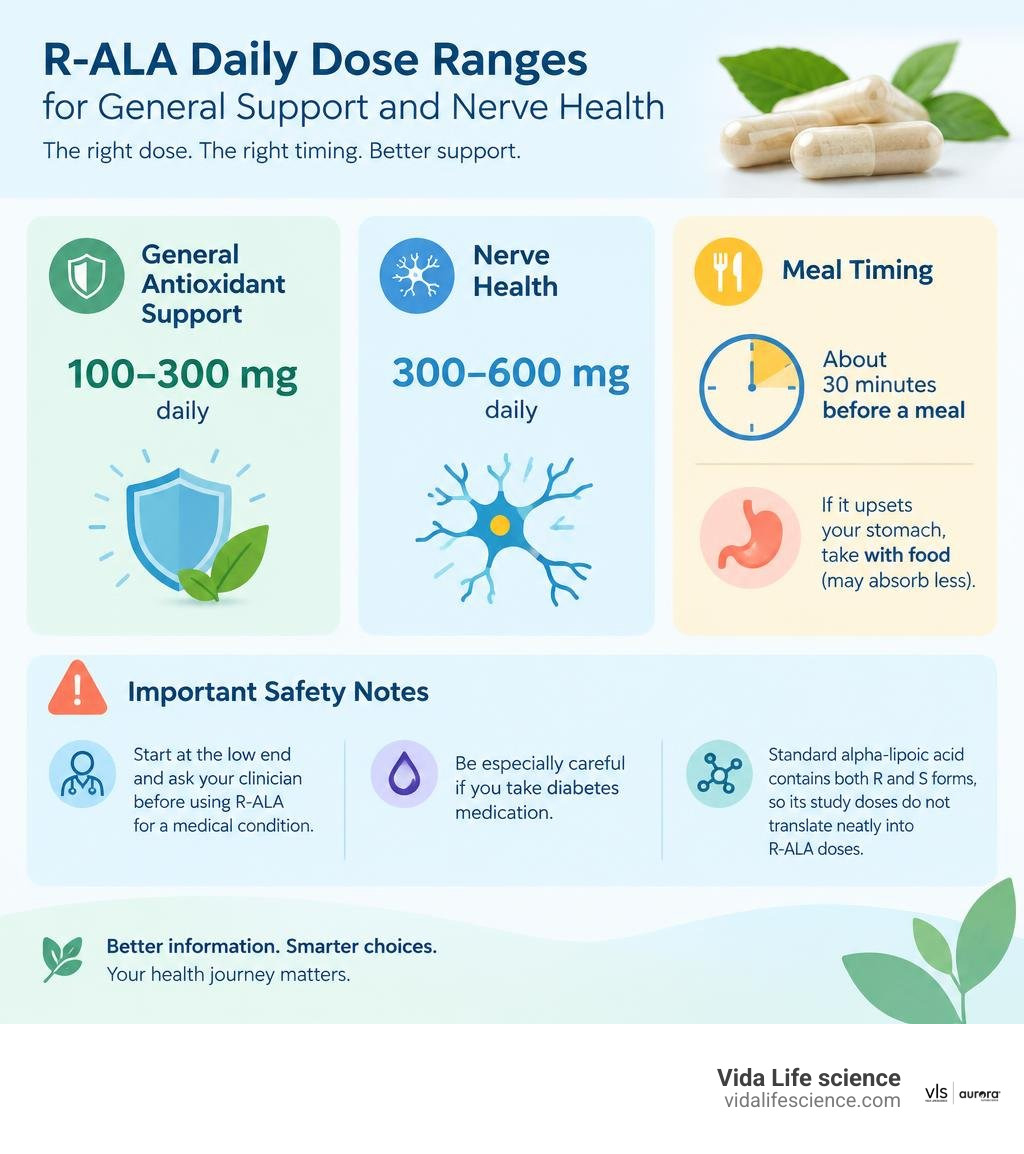
For general antioxidant support, 100-300 mg of R-ALA daily is a common starting range. For blood sugar or nerve support, 300-600 mg daily is often discussed, but the strongest diabetic neuropathy studies used standard alpha-lipoic acid, not R-ALA alone. Start at the low end, and ask your clinician before using R-ALA for a medical condition, especially if you take diabetes medication.
Take R-ALA about 30 minutes before a meal for better absorption. If it upsets your stomach, taking it with food may help, though you may absorb less. The form matters, too: standard alpha-lipoic acid contains both R and S forms, so its study doses do not translate neatly into pure R-enantiomer recommendations. Determining the right R-ALA dosage requires understanding these fundamental bioavailability differences.
At Vida Life Science, we draw on our experience distributing liposomal nutrients to help clarify optimal R-ALA dosage protocols, cellular uptake, and therapeutic applications. Next, we will look at what the research supports and where the gaps remain.
To understand why dosing recommendations can seem all over the map, we need to take a quick dive into stereochemistry. Alpha-lipoic acid exists as two distinct mirror-image molecules called enantiomers: R-alpha-lipoic acid (R-ALA) and S-alpha-lipoic acid (S-ALA).
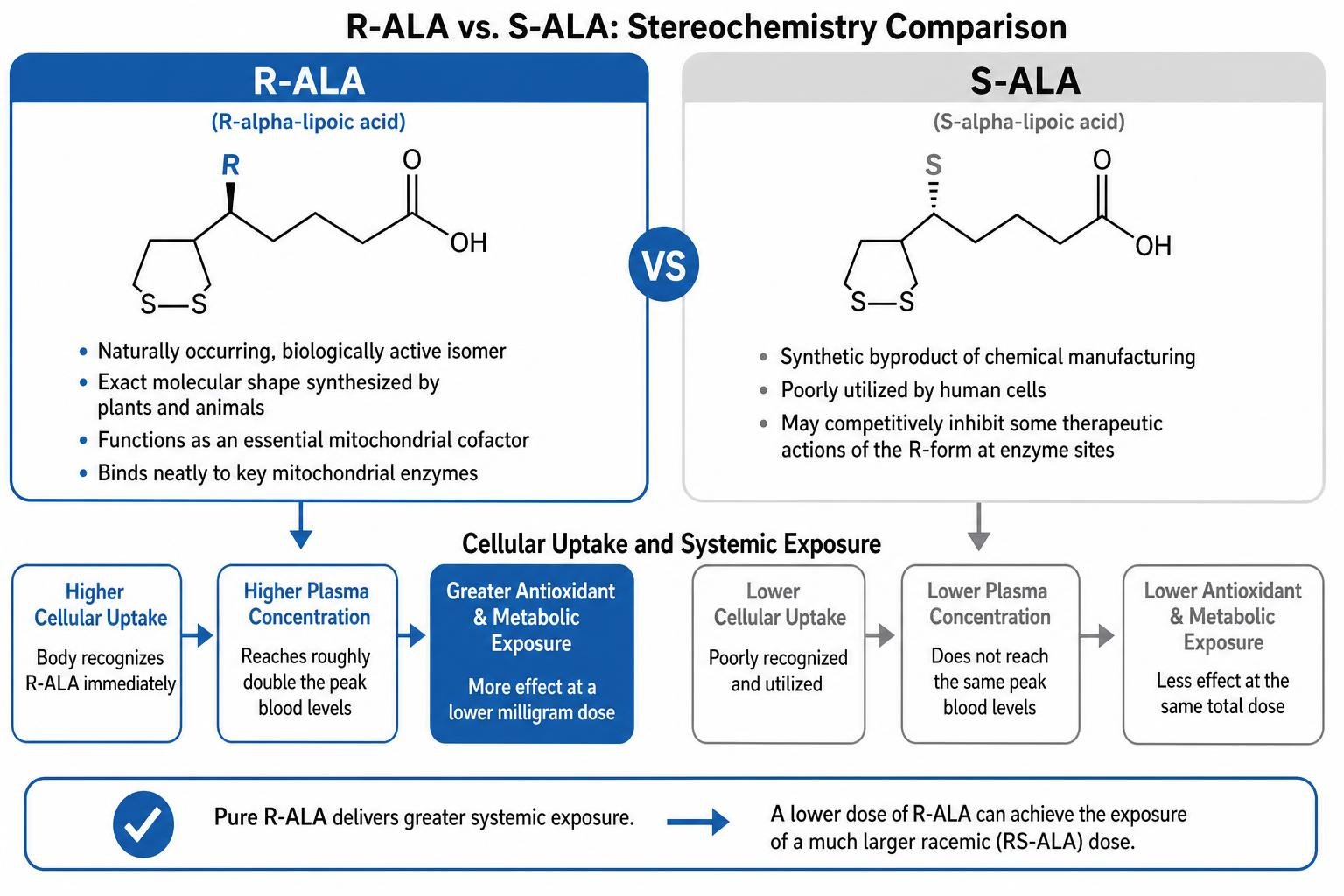
R-ALA is the naturally occurring, biologically active isomer. It is the exact molecular shape synthesized by plants and animals, functioning natively as an essential mitochondrial cofactor. It binds neatly to key mitochondrial enzyme complexes, driving cellular energy (ATP) production and powering endogenous antioxidant defenses.
In contrast, S-ALA is a synthetic byproduct created during chemical manufacturing. Standard, off-the-shelf alpha-lipoic acid supplements are typically a 50/50 "racemic mixture" (labeled as RS-ALA or simply Alpha Lipoic Acid). Research on the biological activity of lipoic acid indicates that the S-enantiomer is poorly utilized by human cells and may even competitively inhibit some of the therapeutic actions of the R-form at enzyme receptor sites.
Because the body recognizes R-ALA immediately, its cellular uptake is significantly higher. Pharmacokinetic studies reveal that pure R-ALA reaches roughly double the plasma concentration (peak blood levels) compared to the same total milligram dose of a racemic mixture. Consequently, a lower milligram dose of pure R-ALA is often needed to achieve the systemic antioxidant and metabolic exposure of a much larger racemic dose.
| Feature |
R-Alpha Lipoic Acid (R-ALA) |
Racemic Alpha Lipoic Acid (RS-ALA) |
| Isomer Composition |
100% biologically active R-enantiomer |
50% R-enantiomer / 50% synthetic S-enantiomer |
| Relative Bioavailability |
High (yields ~2x peak plasma levels vs RS-ALA) |
Moderate (absorption limited by S-isomer competition) |
| Primary Biological Role |
Native mitochondrial cofactor & enzyme activator |
Diluted cellular activity due to inactive S-isomer |
| Typical Daily Dose |
100 – 600 mg/day |
600 – 1,800 mg/day |
| Digestive Tolerability |
Generally well-tolerated at lower therapeutic doses |
Higher doses often cause heartburn or nausea |
Optimal R-ALA Dosage for Specific Health Goals
Finding your therapeutic threshold depends on your personal health objectives, baseline metabolic health, and the delivery technology used. Choosing advanced R-alpha lipoic acid formulations ensures that the active compound survives the harsh gastrointestinal tract for optimal cellular uptake.
For healthy individuals seeking baseline cellular protection, mitochondrial biogenesis, and systemic glutathione recycling, a daily dose of 100 to 300 mg of R-ALA is generally sufficient.
Often referred to as the "universal antioxidant," lipoic acid possesses the rare ability to operate in both water-soluble and fat-soluble environments within our cells. At this maintenance level, R-ALA works continuously behind the scenes to:
- Neutralize reactive oxygen species (ROS) in cellular membranes and the cytoplasm.
- Regenerate depleted vitamins C and E, coenzyme Q10, and endogenous glutathione.
- Support healthy fasting blood glucose and insulin sensitivity by facilitating GLUT4 glucose transporter translocation to muscle cell surfaces.
Many individuals meet their daily baseline using convenient liposomal R-ALA capsules, which wrap the active R-lipoate molecules in protective phospholipid spheres to shield them from premature stomach breakdown.
Clinical R-ALA Dosage for Diabetic Neuropathy and Nerve Comfort
Diabetic peripheral neuropathy is driven by chronic oxidative stress and microvascular damage, which starves peripheral nerves of vital oxygen and nutrients. In clinical practice, therapeutic protocols generally target 300 to 600 mg daily of R-ALA (or 600 to 1,800 mg of standard racemic ALA).
The landmark ALADIN clinical trial series demonstrated that oral racemic ALA at 600 mg once daily significantly relieved classic neuropathic discomforts, such as burning feet, numbness, paresthesia, and lancinating pain, while supporting nerve conduction velocity. Interestingly, the ALADIN III trial revealed that taking 600 mg three times daily (1,800 mg total) offered no significant added clinical benefit over a single 600 mg daily dose.
Established clinical dosage standards show that maintaining a steady daily intake for at least 3 to 5 weeks produces substantial improvements in neuropathic pain scores. Because pure R-ALA offers superior bioavailability, many practitioners start patients at 300 mg daily and titrate up to 600 mg only if additional nerve comfort is needed.
Evidence for Non-Diabetic Neuropathies and Carpal Tunnel Syndrome
The neuroprotective benefits of R-ALA extend beyond diabetic complications to nerve entrapment syndromes and idiopathic nerve distress. A prominent example is carpal tunnel syndrome (CTS), characterized by median nerve compression within the wrist.
In a randomized clinical trial evaluating patients with mild-to-moderate CTS awaiting surgical intervention, oral supplementation with 600 mg of R-ALA once daily for 60 days resulted in a statistically significant reduction in pain scores (Passiatore et al., 2020). Daytime Visual Analogue Scale (VAS) pain dropped from 5.3 to 1.9, while nighttime pain dropped from 6.0 to 2.9 (p < 0.0001).
Similar antioxidant benefits have been observed in clinical explorations of scientific research on autonomic neuropathy and idiopathic small-fiber neuropathy. For non-diabetic nerve entrapment or inflammation, a structured 60-day protocol of 300 to 600 mg daily provides targeted cellular support to nerve sheaths experiencing mechanical or oxidative strain.
Maximizing Absorption: Timing, Administration, and Bioavailability
Unformulated alpha-lipoic acid is notoriously tricky for the digestive tract to process. It has poor natural solubility, degrades rapidly when exposed to stomach acid and heat, and competes with food components for intestinal transporters.
To get the most out of standard R-ALA supplements, keep these rules in mind:
-
Take it on an empty stomach: Ingest your dose approximately 30 to 60 minutes before breakfast or at least two hours after eating. Clinical pharmacokinetics confirm that taking ALA alongside a meal can reduce absorption by up to 30%.
-
Split larger daily doses: If your protocol calls for 600 mg daily, taking 300 mg in the morning and 300 mg in the late afternoon maintains steadier systemic plasma concentrations and avoids overwhelming your stomach.
-
Separate from mineral supplements: Lipoic acid is a natural chelator that binds to free metal ions. Separate your R-ALA intake from calcium, magnesium, zinc, or iron supplements by at least two hours to avoid reducing the absorption of both compounds.
-
Combine synergistically: R-ALA pairs well with complementary cellular antioxidants; for instance, pairing alpha lipoic acid and resveratrol provides dual-action mitochondrial defense and sirtuin pathway activation.
Advanced supplement technologies, such as sodium-stabilized R-lipoate (Na-R-ALA) and protective liposomal encapsulation, bypass many of these classic absorption hurdles by preventing gastric degradation and enhancing direct cellular uptake.
Safety Profile, Upper Limits, and Potential Drug Interactions
R-ALA boasts an exceptional safety record across decades of human trials. Daily intakes between 200 mg and 2,400 mg of lipoic acid have been evaluated in medical literature without evidence of severe organ toxicity. However, higher doses do not translate into greater therapeutic benefits and significantly increase the rate of mild side effects.
Before beginning an R-ALA regimen, review the safety precautions outlined in the clinical monograph on lipoic acid precautions:
-
Hypoglycemia Risk: Because R-ALA stimulates cellular glucose disposal, it can have an additive effect when combined with insulin or oral antidiabetic agents (such as metformin or sulfonylureas). Diabetics must monitor blood glucose levels closely to avoid sudden hypoglycemia.
-
Thyroid Hormone Interference: High-dose lipoic acid can alter peripheral thyroid hormone conversion (T4 to T3). If you take levothyroxine, separate your R-ALA dose by at least several hours and monitor your thyroid panel regularly.
-
Gastrointestinal Tolerability: Mild gastrointestinal upset, acid reflux, nausea, or a harmless sulfurous odor in the urine can occur, particularly at doses above 600 mg daily. In the carpal tunnel study, only 4.5% of participants discontinued use due to mild headaches or nausea (Passiatore et al., 2020).
-
Special Populations: Due to limited safety data in pediatric and maternal populations, pregnant women, nursing mothers, and young children should avoid R-ALA supplementation unless directly supervised by a qualified physician.
Real-World Insights: Titration and Stacking Strategies
Patient discussions on platforms like Mayo Clinic Connect provide valuable real-world context that mirrors clinical trial observations. Community members navigating small-fiber neuropathy, CIDP, and metabolic challenges consistently emphasize two successful strategies: starting low and stacking smartly.
Many individuals begin with a conservative dose of 150 to 300 mg daily to verify digestive comfort before stepping up to 600 mg daily if nerve tingling persists. Real-world feedback also highlights that noticeable relief rarely happens overnight—it typically takes 4 to 8 weeks of consistent daily supplementation to observe meaningful improvements in nerve comfort and sensory stability.

Responders frequently combine their R-ALA with complementary neurotrophic nutrients:
-
Benfotiamine (Fat-Soluble Vitamin B1): Blocks toxic glucose-metabolite pathways (AGEs) that damage peripheral capillaries.
-
Acetyl-L-Carnitine (ALCAR): Supplies acetyl groups for acetylcholine synthesis and shuttles fatty acids into mitochondria for nerve sheath repair.
-
Methylated B-Complex (B12 & Folate): Provides vital raw materials for myelin sheath maintenance and nerve signal transmission.
For those sensitive to standard dry powders, utilizing gentle R-ALA softgel options can minimize esophageal irritation while delivering steady daily support.
Frequently Asked Questions About R-ALA
What is the maximum safe daily dose of R-ALA?
Clinical trials show that doses up to 2,400 mg daily of alpha-lipoic acid do not cause serious organ toxicity. However, therapeutic efficacy reaches a plateau at 600 mg per day. Exceeding 600 mg of R-ALA daily provides minimal added benefit while significantly increasing the likelihood of stomach upset, acid reflux, nausea, or tension headaches.
How long does it take for R-ALA to relieve nerve discomfort?
While subtle improvements in energy and oxidative markers can occur within 2 to 3 weeks, nerve tissue repairs at a gradual pace. Clinical trials and real-world patient reports indicate that meaningful relief from burning sensations, numbness, and tingling typically requires 4 to 12 weeks of consistent, uninterrupted daily use.
Can R-ALA be taken alongside prescription diabetes or thyroid medications?
R-ALA can be used alongside prescription medications, but strict medical oversight is essential. Because R-ALA enhances insulin sensitivity, taking it with blood sugar-lowering drugs may require your physician to adjust your medication dosages to prevent hypoglycemia. Additionally, lipoic acid should be separated from thyroid hormone replacements (like levothyroxine) by at least 4 hours to avoid absorption interference.
Conclusion
Determining the right R-ALA dosage comes down to matching your specific wellness goals with the compound's unique biological properties. While a baseline intake of 100 to 300 mg per day delivers comprehensive antioxidant defense and metabolic support, targeted clinical protocols for nerve comfort typically rely on 300 to 600 mg daily taken in divided, fasted doses.
Because standard alpha-lipoic acid supplements suffer from poor stability and limited gastrointestinal uptake, maximizing bioavailability is key. At Vida Life Science, our mission is to empower your wellness journey through cutting-edge liposomal delivery technology—ensuring that essential nutrients like R-ALA bypass digestive barriers to reach your cells directly. For a deeper dive into personalized dosing strategies, explore our comprehensive R-ALA dosage guide and speak with your healthcare provider to find the perfect protocol for your body.
References
Passiatore M, Perna A, De-Vitis R, Taccardo G. "The Use of Alfa-Lipoic Acid-R (ALA-R) in Patients with Mild-Moderate Carpal Tunnel Syndrome: A Randomised Controlled Open Label Prospective Study.." Malaysian orthopaedic journal, 2020. PMCID PMC7156176.


A Science-Backed Breakdown of R-ALA Dosing and Bioavailability
How Much R-ALA Should You Take Daily?
For general antioxidant support, 100-300 mg of R-ALA daily is a common starting range. For blood sugar or nerve support, 300-600 mg daily is often discussed, but the strongest diabetic neuropathy studies used standard alpha-lipoic acid, not R-ALA alone. Start at the low end, and ask your clinician before using R-ALA for a medical condition, especially if you take diabetes medication.
Take R-ALA about 30 minutes before a meal for better absorption. If it upsets your stomach, taking it with food may help, though you may absorb less. The form matters, too: standard alpha-lipoic acid contains both R and S forms, so its study doses do not translate neatly into pure R-enantiomer recommendations. Determining the right R-ALA dosage requires understanding these fundamental bioavailability differences.
At Vida Life Science, we draw on our experience distributing liposomal nutrients to help clarify optimal R-ALA dosage protocols, cellular uptake, and therapeutic applications. Next, we will look at what the research supports and where the gaps remain.
Understanding R-ALA vs. Racemic ALA: Why Form Dictates Dosing
To understand why dosing recommendations can seem all over the map, we need to take a quick dive into stereochemistry. Alpha-lipoic acid exists as two distinct mirror-image molecules called enantiomers: R-alpha-lipoic acid (R-ALA) and S-alpha-lipoic acid (S-ALA).
R-ALA is the naturally occurring, biologically active isomer. It is the exact molecular shape synthesized by plants and animals, functioning natively as an essential mitochondrial cofactor. It binds neatly to key mitochondrial enzyme complexes, driving cellular energy (ATP) production and powering endogenous antioxidant defenses.
In contrast, S-ALA is a synthetic byproduct created during chemical manufacturing. Standard, off-the-shelf alpha-lipoic acid supplements are typically a 50/50 "racemic mixture" (labeled as RS-ALA or simply Alpha Lipoic Acid). Research on the biological activity of lipoic acid indicates that the S-enantiomer is poorly utilized by human cells and may even competitively inhibit some of the therapeutic actions of the R-form at enzyme receptor sites.
Because the body recognizes R-ALA immediately, its cellular uptake is significantly higher. Pharmacokinetic studies reveal that pure R-ALA reaches roughly double the plasma concentration (peak blood levels) compared to the same total milligram dose of a racemic mixture. Consequently, a lower milligram dose of pure R-ALA is often needed to achieve the systemic antioxidant and metabolic exposure of a much larger racemic dose.
Optimal R-ALA Dosage for Specific Health Goals
Finding your therapeutic threshold depends on your personal health objectives, baseline metabolic health, and the delivery technology used. Choosing advanced R-alpha lipoic acid formulations ensures that the active compound survives the harsh gastrointestinal tract for optimal cellular uptake.
Daily R-ALA Dosage for General Antioxidant and Metabolic Support
For healthy individuals seeking baseline cellular protection, mitochondrial biogenesis, and systemic glutathione recycling, a daily dose of 100 to 300 mg of R-ALA is generally sufficient.
Often referred to as the "universal antioxidant," lipoic acid possesses the rare ability to operate in both water-soluble and fat-soluble environments within our cells. At this maintenance level, R-ALA works continuously behind the scenes to:
Many individuals meet their daily baseline using convenient liposomal R-ALA capsules, which wrap the active R-lipoate molecules in protective phospholipid spheres to shield them from premature stomach breakdown.
Clinical R-ALA Dosage for Diabetic Neuropathy and Nerve Comfort
Diabetic peripheral neuropathy is driven by chronic oxidative stress and microvascular damage, which starves peripheral nerves of vital oxygen and nutrients. In clinical practice, therapeutic protocols generally target 300 to 600 mg daily of R-ALA (or 600 to 1,800 mg of standard racemic ALA).
The landmark ALADIN clinical trial series demonstrated that oral racemic ALA at 600 mg once daily significantly relieved classic neuropathic discomforts, such as burning feet, numbness, paresthesia, and lancinating pain, while supporting nerve conduction velocity. Interestingly, the ALADIN III trial revealed that taking 600 mg three times daily (1,800 mg total) offered no significant added clinical benefit over a single 600 mg daily dose.
Established clinical dosage standards show that maintaining a steady daily intake for at least 3 to 5 weeks produces substantial improvements in neuropathic pain scores. Because pure R-ALA offers superior bioavailability, many practitioners start patients at 300 mg daily and titrate up to 600 mg only if additional nerve comfort is needed.
Evidence for Non-Diabetic Neuropathies and Carpal Tunnel Syndrome
The neuroprotective benefits of R-ALA extend beyond diabetic complications to nerve entrapment syndromes and idiopathic nerve distress. A prominent example is carpal tunnel syndrome (CTS), characterized by median nerve compression within the wrist.
In a randomized clinical trial evaluating patients with mild-to-moderate CTS awaiting surgical intervention, oral supplementation with 600 mg of R-ALA once daily for 60 days resulted in a statistically significant reduction in pain scores (Passiatore et al., 2020). Daytime Visual Analogue Scale (VAS) pain dropped from 5.3 to 1.9, while nighttime pain dropped from 6.0 to 2.9 (p < 0.0001).
Similar antioxidant benefits have been observed in clinical explorations of scientific research on autonomic neuropathy and idiopathic small-fiber neuropathy. For non-diabetic nerve entrapment or inflammation, a structured 60-day protocol of 300 to 600 mg daily provides targeted cellular support to nerve sheaths experiencing mechanical or oxidative strain.
Maximizing Absorption: Timing, Administration, and Bioavailability
Unformulated alpha-lipoic acid is notoriously tricky for the digestive tract to process. It has poor natural solubility, degrades rapidly when exposed to stomach acid and heat, and competes with food components for intestinal transporters.
To get the most out of standard R-ALA supplements, keep these rules in mind:
Advanced supplement technologies, such as sodium-stabilized R-lipoate (Na-R-ALA) and protective liposomal encapsulation, bypass many of these classic absorption hurdles by preventing gastric degradation and enhancing direct cellular uptake.
Safety Profile, Upper Limits, and Potential Drug Interactions
R-ALA boasts an exceptional safety record across decades of human trials. Daily intakes between 200 mg and 2,400 mg of lipoic acid have been evaluated in medical literature without evidence of severe organ toxicity. However, higher doses do not translate into greater therapeutic benefits and significantly increase the rate of mild side effects.
Before beginning an R-ALA regimen, review the safety precautions outlined in the clinical monograph on lipoic acid precautions:
Real-World Insights: Titration and Stacking Strategies
Patient discussions on platforms like Mayo Clinic Connect provide valuable real-world context that mirrors clinical trial observations. Community members navigating small-fiber neuropathy, CIDP, and metabolic challenges consistently emphasize two successful strategies: starting low and stacking smartly.
Many individuals begin with a conservative dose of 150 to 300 mg daily to verify digestive comfort before stepping up to 600 mg daily if nerve tingling persists. Real-world feedback also highlights that noticeable relief rarely happens overnight—it typically takes 4 to 8 weeks of consistent daily supplementation to observe meaningful improvements in nerve comfort and sensory stability.
Responders frequently combine their R-ALA with complementary neurotrophic nutrients:
For those sensitive to standard dry powders, utilizing gentle R-ALA softgel options can minimize esophageal irritation while delivering steady daily support.
Frequently Asked Questions About R-ALA
What is the maximum safe daily dose of R-ALA?
Clinical trials show that doses up to 2,400 mg daily of alpha-lipoic acid do not cause serious organ toxicity. However, therapeutic efficacy reaches a plateau at 600 mg per day. Exceeding 600 mg of R-ALA daily provides minimal added benefit while significantly increasing the likelihood of stomach upset, acid reflux, nausea, or tension headaches.
How long does it take for R-ALA to relieve nerve discomfort?
While subtle improvements in energy and oxidative markers can occur within 2 to 3 weeks, nerve tissue repairs at a gradual pace. Clinical trials and real-world patient reports indicate that meaningful relief from burning sensations, numbness, and tingling typically requires 4 to 12 weeks of consistent, uninterrupted daily use.
Can R-ALA be taken alongside prescription diabetes or thyroid medications?
R-ALA can be used alongside prescription medications, but strict medical oversight is essential. Because R-ALA enhances insulin sensitivity, taking it with blood sugar-lowering drugs may require your physician to adjust your medication dosages to prevent hypoglycemia. Additionally, lipoic acid should be separated from thyroid hormone replacements (like levothyroxine) by at least 4 hours to avoid absorption interference.
Conclusion
Determining the right R-ALA dosage comes down to matching your specific wellness goals with the compound's unique biological properties. While a baseline intake of 100 to 300 mg per day delivers comprehensive antioxidant defense and metabolic support, targeted clinical protocols for nerve comfort typically rely on 300 to 600 mg daily taken in divided, fasted doses.
Because standard alpha-lipoic acid supplements suffer from poor stability and limited gastrointestinal uptake, maximizing bioavailability is key. At Vida Life Science, our mission is to empower your wellness journey through cutting-edge liposomal delivery technology—ensuring that essential nutrients like R-ALA bypass digestive barriers to reach your cells directly. For a deeper dive into personalized dosing strategies, explore our comprehensive R-ALA dosage guide and speak with your healthcare provider to find the perfect protocol for your body.
References
Passiatore M, Perna A, De-Vitis R, Taccardo G. "The Use of Alfa-Lipoic Acid-R (ALA-R) in Patients with Mild-Moderate Carpal Tunnel Syndrome: A Randomised Controlled Open Label Prospective Study.." Malaysian orthopaedic journal, 2020. PMCID PMC7156176.