Why Liposomal Creatine Cellular Energy Is the Smarter Way to Power Your Day
Liposomal creatine cellular energy support is one of the most exciting developments in nutrition science right now — and for good reason.
Quick Answer: What Does Liposomal Creatine Do for Cellular Energy?
-
Boosts ATP regeneration — creatine replenishes your cells' energy currency (ATP) faster during high-demand moments
-
Enhances absorption — liposomal delivery wraps creatine in protective lipid spheres, improving bioavailability compared to standard powder forms
-
Supports mitochondrial health — creatine works directly inside mitochondria to stabilize membranes and sustain energy output
-
Reduces digestive issues — the liposomal coating shields creatine from stomach acid, reducing bloating and discomfort
-
Benefits brain and muscle — the brain consumes roughly 20% of your body's energy despite being only 2% of your body weight, and creatine supports both organs
Your cells can only store enough ATP for a few seconds of intense activity. After that, your body scrambles to replenish it. Creatine is the molecule that makes that replenishment fast and efficient.
But here's the problem most people don't know about: not all creatine reaches your cells effectively. Traditional powders face real challenges in the digestive tract — degradation, incomplete absorption, and for many people, uncomfortable bloating.
That's where liposomal technology changes the equation entirely.
By encapsulating creatine inside tiny lipid-based spheres, liposomal formulas protect the molecule through digestion and deliver it more directly into the bloodstream. The result is more creatine where it actually counts — inside your cells, fueling your mitochondria, and supporting the ATP cycle your body depends on every minute of the day.
Whether you're pushing through a hard workout, fighting afternoon brain fog, or simply trying to feel sharper and more resilient, understanding how liposomal creatine works at the cellular level can help you make a smarter supplementation decision.
At Vida Life Science, we've built our expertise around advanced liposomal nutrient delivery technology — including the very phosphatidylcholine-based systems that make liposomal creatine cellular energy support more effective than traditional forms. As the exclusive US distributor of Aurora Nutrascience, we're here to help you cut through the noise and understand what the science actually says.
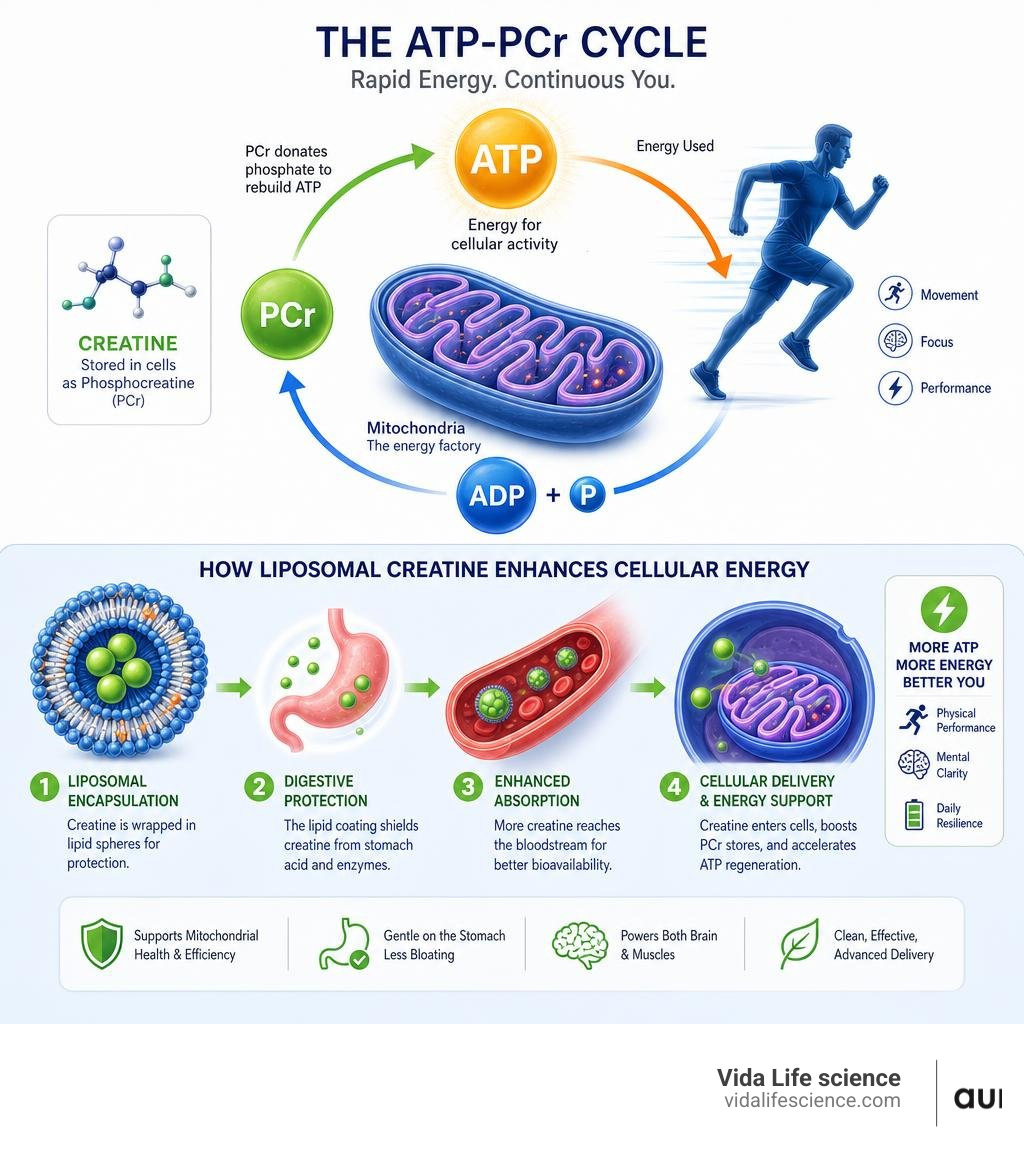
The Science of Cellular Energy: Mitochondria and ATP
To understand why liposomal creatine cellular energy is such a game-changer for daily productivity, we have to shrink ourselves down and look inside our cells. Every single action you perform—from typing an email to running a marathon—requires energy. But our cells cannot directly use the food we eat as immediate fuel. Instead, that food must be converted into a very specific molecular currency.

This conversion process takes place within our mitochondria, the specialized organelles famously known as the "cellular powerhouses."
The Role of Mitochondria in Energy Production
Mitochondria are found in almost all human cells, with the highest concentrations located in tissues with intense metabolic demands, such as our skeletal muscles, heart, and brain. Inside the mitochondrial matrix, a complex series of biochemical reactions takes place.
Through cellular respiration and oxidative phosphorylation, the food we digest is broken down, and its chemical energy is transferred along the electron transport chain. This process creates an electrochemical gradient that ultimately drives the synthesis of Adenosine Triphosphate (ATP). Without healthy mitochondria working around the clock, our cellular energy systems would grind to a halt, leaving us feeling chronically fatigued and mentally drained.
How ATP Powers Cellular Functions
ATP is the universal energy currency of the body. It consists of an adenosine molecule bound to three highly energetic phosphate groups. When a cell needs to perform work—whether that is active transport of nutrients across cell membranes, protein synthesis, or muscle contraction—it breaks the bond of the third phosphate group.
This chemical reaction releases a burst of energy, converting ATP into Adenosine Diphosphate (ADP), which has only two phosphate groups.
The major catch is that our cells can only store a tiny amount of ATP at any given time—just enough to power about 2 to 5 seconds of maximum cellular work. Because ATP cannot be stockpiled, our cells must constantly recycle ADP back into ATP.
If this recycling process slows down, we experience sudden energy crashes and cognitive fatigue. Fortunately, researchers studying energy-related cellular disorders have focused heavily on how to bypass these energy bottlenecks. You can read more about these therapeutic efforts on the Association for Creatine Deficiencies website, which highlights the clinical importance of maintaining intracellular energy homeostasis.
How Liposomal Creatine Cellular Energy Mechanisms Power Your Body
This is where creatine enters the spotlight. While many people associate creatine purely with bodybuilding, its primary biological role is actually to serve as a cellular energy buffer.
Approximately 95% of the body's creatine is stored in skeletal muscle, while the remaining 5% is distributed to other high-energy organs, including the brain and heart. About half of our daily creatine requirements are synthesized endogenously by the liver, kidneys, and pancreas from the amino acids glycine, arginine, and methionine, while the other half must come from our diet (primarily red meat and seafood) or targeted supplementation.
The Science of Liposomal Creatine Cellular Energy Production
Once inside our cells, creatine is phosphorylated to form phosphocreatine (PCr). When metabolic demand spikes and ATP is rapidly broken down into ADP, an enzyme called creatine kinase (CK) steps in.
Creatine kinase facilitates a near-instantaneous reaction: it transfers the high-energy phosphate group from phosphocreatine directly to the waiting ADP molecule, immediately regenerating it back into active ATP.
This rapid recycling loop is known as the Creatine Kinase-Phosphocreatine (CK/PCr) shuttle. It acts as a vital metabolic bridge, linking the ATP produced inside the mitochondria directly to the areas of the cell where energy is being consumed.
In fact, creatine kinase activity in mitochondria supports up to 70% of ATP turnover in high-energy-demand tissues. Because this system operates much faster than oxidative phosphorylation, it prevents cellular energy depletion during sudden shifts in workload.
Advanced research published in MDPI's Pharmaceuticals journal has demonstrated that using advanced liposomal delivery systems to transport phosphocreatine directly into cells can increase intracellular ATP levels by up to 23% in just 30 minutes, whereas free, unencapsulated molecules show no such immediate benefit.
Mitochondrial Biogenesis and Long-Term Cellular Health
The benefits of maintaining robust creatine levels extend far beyond immediate ATP recycling. Over time, consistent creatine availability actively supports long-term organelle health and cellular longevity.
First, creatine acts as an indirect antioxidant inside the mitochondria, helping to neutralize excess reactive oxygen species (ROS) that are naturally generated during ATP production. By reducing oxidative stress, creatine helps protect mitochondrial DNA and delicate inner-membrane proteins from damage.
Second, creatine supports mitochondrial biogenesis—the process by which cells create new, healthy mitochondria. It does this by upregulating key signaling proteins and transcription factors, including:
-
PGC-1α (Peroxisome proliferator-activated receptor-gamma coactivator-1alpha)
-
NRF-1 (Nuclear respiratory factor 1)
-
TFAM (Mitochondrial transcription factor A)
By stimulating these pathways, creatine helps increase overall mitochondrial density and copy numbers of mitochondrial DNA.
Furthermore, mitochondrial creatine kinase (mtCK) physically interacts with cardiolipin to stabilize the mitochondrial membrane. This structural stabilization helps prevent the premature opening of the mitochondrial permeability transition pore (mPTP), protecting the cell from programmed cell death (apoptosis) and preserving cellular resilience as we age.
Liposomal Delivery vs. Traditional Creatine Monohydrate
If creatine is so incredibly beneficial, why can't we just scoop standard creatine monohydrate powder into a glass of water and call it a day? While traditional creatine monohydrate is a highly researched and effective supplement, it does have several physiological limitations that liposomal technology is uniquely designed to solve.

What is Liposomal Delivery Technology?
Liposomal delivery is an advanced nutrient administration method that encapsulates active ingredients inside microscopic, spherical vesicles called liposomes. These spheres are constructed from a double layer of phospholipids—the exact same structural material that makes up our own cellular membranes.
At Vida Life Science, we utilize these natural, plant-derived lipid bilayers to wrap nutrients in a protective shield. This encapsulation serves two primary purposes:
-
Protection: It shields the delicate cargo from the highly acidic environment of the stomach and destructive digestive enzymes.
-
Absorption: Because the outer layer of a liposome mimics our cell membranes, it can bind directly to the cells lining the small intestine, facilitating direct absorption into the bloodstream and bypassing traditional, rate-limited active transport pathways.
Overcoming the Limitations of Standard Creatine
Traditional creatine monohydrate powders are notoriously hydrophobic (water-fearing), meaning they do not dissolve easily in liquids. This often leaves a gritty residue at the bottom of your shaker cup.
When you consume standard creatine powder, a significant portion of it can degrade in the stomach's harsh acids before it ever reaches your intestines. Furthermore, standard creatine relies on specific sodium-dependent creatine transporters (CRT1/SLC6A8) to cross the intestinal wall and enter target cells. These transporters can easily become saturated, meaning that a large portion of a high-dose powder serving is simply excreted in the urine as waste.
Only about 16% of a typical high-dose traditional creatine serving is absorbed during a standard loading phase, with the remainder often sitting in the colon. This unabsorbed creatine draws water into the gut via osmosis, which is the primary cause of the stomach cramps, bloating, and digestive distress that many users complain about.
By contrast, liposomal delivery systems can improve nutrient bioavailability by up to 5 to 10 times compared to standard oral forms. Because the creatine is safely tucked inside a lipid bubble, it does not cause osmotic water retention in the intestines, completely eliminating the bloating and gastric discomfort associated with traditional powders.
| Feature |
Traditional Creatine Monohydrate |
Liposomal Creatine Monohydrate |
| Bioavailability |
Moderate (limited by transporter saturation) |
High (5-10x improvement via lipid fusion) |
| Digestive Comfort |
Can cause bloating, cramping, and osmotic diarrhea |
Very gentle; bypasses gastric irritation completely |
| Water Solubility |
Poor (leaves gritty residue, unstable in liquid) |
Excellent (fully soluble, stable liquid emulsion) |
| Loading Phase |
Often required (5-7 days of high doses) |
Not required (rapid cellular saturation) |
| Cellular Uptake |
Relies entirely on rate-limited CRT1 transporters |
Fuses directly with cell membranes |
Cognitive Enhancement: Fueling the Brain’s Energy Demands
While creatine has historically been marketed as a sports nutrition supplement for physical performance, some of the most profound benefits of liposomal creatine cellular energy support occur above the neck.
Maximizing Liposomal Creatine Cellular Energy for Brain Health
The human brain is an incredibly demanding organ. While it accounts for approximately 2% of our total body weight, it consumes roughly 20% of the body's total energy at rest.
Our brain cells (neurons and glia) require a constant, uninterrupted supply of ATP to maintain membrane potentials, propagate electrical impulses, and synthesize neurotransmitters. Because the brain cannot store energy, even minor dips in ATP production can manifest as mental fatigue, brain fog, and decreased executive function.
Just like muscle cells, brain cells express their own creatine kinase isoforms and maintain an active pool of phosphocreatine to buffer rapid energy swings. Supplementing with highly bioavailable creatine provides the brain with the raw materials needed to rapidly regenerate neural ATP, especially during periods of high cognitive strain or sleep deprivation.
However, getting standard creatine into the brain is difficult because of the blood-brain barrier (BBB), which strictly regulates what substances can enter the central nervous system.
To overcome this, scientists have developed lipid-based carrier systems. A fascinating study published in the Anais da Academia Brasileira de Ciências demonstrated that encapsulating creatine inside pegylated nanoliposomes coated with surfactants safely and significantly increased creatine delivery across the blood-brain barrier, resulting in a measurable increase in cerebral cortex creatine levels without any toxicity.
By maximizing brain creatine levels, liposomal delivery supports superior cognitive performance, sharper focus, and better mental clarity during long workdays.
Neurological Support and Healthy Aging
As we age, our cellular energy systems naturally become less efficient. Mitochondrial function declines, and the brain's ability to metabolize glucose decreases. This energetic deficit is a hallmark of age-related cognitive decline and various neurodegenerative conditions.
By supporting mitochondrial stability and maintaining ATP levels, liposomal creatine helps preserve neural cellular resilience. It acts as a protective shield against metabolic stress, helping to keep brain cells functioning optimally as we grow older.
Furthermore, this cellular protection is not limited to the brain. A comprehensive review published in PubMed Central highlights that consistent creatine supplementation provides profound benefits for aging muscle tissue and bone health, helping older adults maintain their strength, physical independence, and overall vitality.
Practical Guide: Dosage, Safety, and Quality Selection
Ready to integrate liposomal creatine into your daily productivity routine? To get the absolute best results, it helps to understand the practical details of dosing, timing, and quality standards.
Optimal Dosage and Usage Protocols
Because liposomal creatine features vastly superior bioavailability compared to traditional powders, you do not need to take massive doses to saturate your cells.
-
Daily Dosage: A standard daily serving of 3 to 5 grams of liposomal creatine monohydrate is highly effective. Consistently taking this amount is sufficient to saturate your cellular creatine stores within 3 to 4 weeks.
-
No Loading Phase Needed: With traditional powders, users often undergo a "loading phase" consisting of 20 grams per day for a week to force saturation. Because liposomes bypass traditional absorption barriers, a loading phase is completely unnecessary. Consistent daily dosing gets you to optimal levels smoothly and comfortably.
-
Timing: For general productivity, cognitive support, and daily vitality, taking your liposomal creatine in the morning with breakfast is ideal. If you are using it to support physical performance and exercise recovery, taking it 30 to 90 minutes before or immediately after your workout yields excellent results.
-
Consistency is Key: Creatine works via accumulation. To maintain saturated cellular stores, make sure to take it every day, even on your rest days.
Evaluating Product Quality and Purity
The dietary supplement market can be difficult to navigate, and not all liposomal products are created equal. To ensure you are getting a clean, effective, and truly liposomal formula, look for the following quality indicators:
-
True Liposomal Technology: Ensure the product uses high-quality, plant-derived phospholipids (such as phosphatidylcholine from non-GMO sunflower lecithin) to form the liposomes. Avoid products that simply mix creatine powder with fats without a proper emulsification process.
-
Third-Party Testing: Reputable brands always have their batches tested by independent, third-party laboratories to verify purity, potency, and the absence of heavy metals, microplastics, or microbial contaminants.
-
GMP Certification: Only purchase supplements manufactured in current Good Manufacturing Practice (cGMP) compliant facilities, which guarantees strict quality control standards.
-
Shelf Stability: Liquid liposomal formulas must undergo rigorous stability testing to ensure the active creatine does not degrade into creatinine (a inactive waste product) while sitting on the shelf. Look for brands that have proven, multi-month stability data.
Frequently Asked Questions about Liposomal Creatine
Does liposomal creatine cause water retention or bloating?
No. Traditional creatine monohydrate powders often cause extracellular water retention (holding water under the skin) and abdominal bloating because unabsorbed powder sits in the digestive tract and draws water into the gut. Because liposomal creatine is encapsulated in a protective lipid bilayer, it is absorbed directly in the small intestine, completely bypassing gastric irritation and eliminating bloating. Any water retention that does occur with creatine is strictly intracellular (inside the muscle cells), which is actually highly beneficial for cellular hydration, protein synthesis, and muscle fullness.
Can women benefit from liposomal creatine supplementation?
Absolutely! Women can benefit immensely from liposomal creatine. Women naturally have distinct physiological differences from men, and hormonal fluctuations throughout the menstrual cycle, pregnancy, and menopause can significantly impact creatine kinase levels and energy metabolism. Supplementing with liposomal creatine supports daily vitality, enhances workout recovery, and provides crucial cognitive support to combat mental fatigue and brain fog. Furthermore, it delivers these benefits without the uncomfortable digestive bloating that often deters women from trying traditional creatine powders.
Is a loading phase required for liposomal creatine?
No, a loading phase is not required. Traditional creatine protocols often recommend taking 20 grams daily for 5 to 7 days to saturate muscle stores quickly, which frequently leads to stomach cramps and digestive issues. Because liposomal delivery dramatically enhances absorption and cellular uptake, consistent daily dosing of 3 to 5 grams will safely and comfortably saturate your tissue stores without any of the unpleasant side effects of high-dose loading.
Conclusion
Sustained energy and sharp focus are the ultimate foundation of daily productivity. When your cellular energy systems are running at their peak, tackling a demanding workload, recovering from a tough workout, and staying mentally clear throughout the afternoon becomes second nature.
By upgrading from traditional, hard-to-absorb powders to advanced liposomal creatine cellular energy support, you bypass the digestive bottlenecks of the past. This allows you to deliver pure, protected energy precursors directly to your mitochondria and brain cells, precisely where they are needed most.
At Vida Life Science, we are proud to offer the highest standard of liposomal supplements. As the exclusive distributor of Aurora Nutrascience, we bring you clinically backed, exceptionally stable, and highly bioavailable formulations designed to unleash your body's true cellular vitality.
Ready to experience the difference that advanced lipid-encapsulation technology can make for your daily energy and physical performance? Discover Aurora Nutrascience Liposomal Supplements and take the first step toward a more vibrant, productive, and energized you.
Cellular Energy Unleashed: Why Liposomal Creatine is the Ultimate Productivity Boost
Why Liposomal Creatine Cellular Energy Is the Smarter Way to Power Your Day
Liposomal creatine cellular energy support is one of the most exciting developments in nutrition science right now — and for good reason.
Quick Answer: What Does Liposomal Creatine Do for Cellular Energy?
Your cells can only store enough ATP for a few seconds of intense activity. After that, your body scrambles to replenish it. Creatine is the molecule that makes that replenishment fast and efficient.
But here's the problem most people don't know about: not all creatine reaches your cells effectively. Traditional powders face real challenges in the digestive tract — degradation, incomplete absorption, and for many people, uncomfortable bloating.
That's where liposomal technology changes the equation entirely.
By encapsulating creatine inside tiny lipid-based spheres, liposomal formulas protect the molecule through digestion and deliver it more directly into the bloodstream. The result is more creatine where it actually counts — inside your cells, fueling your mitochondria, and supporting the ATP cycle your body depends on every minute of the day.
Whether you're pushing through a hard workout, fighting afternoon brain fog, or simply trying to feel sharper and more resilient, understanding how liposomal creatine works at the cellular level can help you make a smarter supplementation decision.
At Vida Life Science, we've built our expertise around advanced liposomal nutrient delivery technology — including the very phosphatidylcholine-based systems that make liposomal creatine cellular energy support more effective than traditional forms. As the exclusive US distributor of Aurora Nutrascience, we're here to help you cut through the noise and understand what the science actually says.
The Science of Cellular Energy: Mitochondria and ATP
To understand why liposomal creatine cellular energy is such a game-changer for daily productivity, we have to shrink ourselves down and look inside our cells. Every single action you perform—from typing an email to running a marathon—requires energy. But our cells cannot directly use the food we eat as immediate fuel. Instead, that food must be converted into a very specific molecular currency.
This conversion process takes place within our mitochondria, the specialized organelles famously known as the "cellular powerhouses."
The Role of Mitochondria in Energy Production
Mitochondria are found in almost all human cells, with the highest concentrations located in tissues with intense metabolic demands, such as our skeletal muscles, heart, and brain. Inside the mitochondrial matrix, a complex series of biochemical reactions takes place.
Through cellular respiration and oxidative phosphorylation, the food we digest is broken down, and its chemical energy is transferred along the electron transport chain. This process creates an electrochemical gradient that ultimately drives the synthesis of Adenosine Triphosphate (ATP). Without healthy mitochondria working around the clock, our cellular energy systems would grind to a halt, leaving us feeling chronically fatigued and mentally drained.
How ATP Powers Cellular Functions
ATP is the universal energy currency of the body. It consists of an adenosine molecule bound to three highly energetic phosphate groups. When a cell needs to perform work—whether that is active transport of nutrients across cell membranes, protein synthesis, or muscle contraction—it breaks the bond of the third phosphate group.
This chemical reaction releases a burst of energy, converting ATP into Adenosine Diphosphate (ADP), which has only two phosphate groups.
The major catch is that our cells can only store a tiny amount of ATP at any given time—just enough to power about 2 to 5 seconds of maximum cellular work. Because ATP cannot be stockpiled, our cells must constantly recycle ADP back into ATP.
If this recycling process slows down, we experience sudden energy crashes and cognitive fatigue. Fortunately, researchers studying energy-related cellular disorders have focused heavily on how to bypass these energy bottlenecks. You can read more about these therapeutic efforts on the Association for Creatine Deficiencies website, which highlights the clinical importance of maintaining intracellular energy homeostasis.
How Liposomal Creatine Cellular Energy Mechanisms Power Your Body
This is where creatine enters the spotlight. While many people associate creatine purely with bodybuilding, its primary biological role is actually to serve as a cellular energy buffer.
Approximately 95% of the body's creatine is stored in skeletal muscle, while the remaining 5% is distributed to other high-energy organs, including the brain and heart. About half of our daily creatine requirements are synthesized endogenously by the liver, kidneys, and pancreas from the amino acids glycine, arginine, and methionine, while the other half must come from our diet (primarily red meat and seafood) or targeted supplementation.
The Science of Liposomal Creatine Cellular Energy Production
Once inside our cells, creatine is phosphorylated to form phosphocreatine (PCr). When metabolic demand spikes and ATP is rapidly broken down into ADP, an enzyme called creatine kinase (CK) steps in.
Creatine kinase facilitates a near-instantaneous reaction: it transfers the high-energy phosphate group from phosphocreatine directly to the waiting ADP molecule, immediately regenerating it back into active ATP.
This rapid recycling loop is known as the Creatine Kinase-Phosphocreatine (CK/PCr) shuttle. It acts as a vital metabolic bridge, linking the ATP produced inside the mitochondria directly to the areas of the cell where energy is being consumed.
In fact, creatine kinase activity in mitochondria supports up to 70% of ATP turnover in high-energy-demand tissues. Because this system operates much faster than oxidative phosphorylation, it prevents cellular energy depletion during sudden shifts in workload.
Advanced research published in MDPI's Pharmaceuticals journal has demonstrated that using advanced liposomal delivery systems to transport phosphocreatine directly into cells can increase intracellular ATP levels by up to 23% in just 30 minutes, whereas free, unencapsulated molecules show no such immediate benefit.
Mitochondrial Biogenesis and Long-Term Cellular Health
The benefits of maintaining robust creatine levels extend far beyond immediate ATP recycling. Over time, consistent creatine availability actively supports long-term organelle health and cellular longevity.
First, creatine acts as an indirect antioxidant inside the mitochondria, helping to neutralize excess reactive oxygen species (ROS) that are naturally generated during ATP production. By reducing oxidative stress, creatine helps protect mitochondrial DNA and delicate inner-membrane proteins from damage.
Second, creatine supports mitochondrial biogenesis—the process by which cells create new, healthy mitochondria. It does this by upregulating key signaling proteins and transcription factors, including:
By stimulating these pathways, creatine helps increase overall mitochondrial density and copy numbers of mitochondrial DNA.
Furthermore, mitochondrial creatine kinase (mtCK) physically interacts with cardiolipin to stabilize the mitochondrial membrane. This structural stabilization helps prevent the premature opening of the mitochondrial permeability transition pore (mPTP), protecting the cell from programmed cell death (apoptosis) and preserving cellular resilience as we age.
Liposomal Delivery vs. Traditional Creatine Monohydrate
If creatine is so incredibly beneficial, why can't we just scoop standard creatine monohydrate powder into a glass of water and call it a day? While traditional creatine monohydrate is a highly researched and effective supplement, it does have several physiological limitations that liposomal technology is uniquely designed to solve.
What is Liposomal Delivery Technology?
Liposomal delivery is an advanced nutrient administration method that encapsulates active ingredients inside microscopic, spherical vesicles called liposomes. These spheres are constructed from a double layer of phospholipids—the exact same structural material that makes up our own cellular membranes.
At Vida Life Science, we utilize these natural, plant-derived lipid bilayers to wrap nutrients in a protective shield. This encapsulation serves two primary purposes:
Overcoming the Limitations of Standard Creatine
Traditional creatine monohydrate powders are notoriously hydrophobic (water-fearing), meaning they do not dissolve easily in liquids. This often leaves a gritty residue at the bottom of your shaker cup.
When you consume standard creatine powder, a significant portion of it can degrade in the stomach's harsh acids before it ever reaches your intestines. Furthermore, standard creatine relies on specific sodium-dependent creatine transporters (CRT1/SLC6A8) to cross the intestinal wall and enter target cells. These transporters can easily become saturated, meaning that a large portion of a high-dose powder serving is simply excreted in the urine as waste.
Only about 16% of a typical high-dose traditional creatine serving is absorbed during a standard loading phase, with the remainder often sitting in the colon. This unabsorbed creatine draws water into the gut via osmosis, which is the primary cause of the stomach cramps, bloating, and digestive distress that many users complain about.
By contrast, liposomal delivery systems can improve nutrient bioavailability by up to 5 to 10 times compared to standard oral forms. Because the creatine is safely tucked inside a lipid bubble, it does not cause osmotic water retention in the intestines, completely eliminating the bloating and gastric discomfort associated with traditional powders.
Cognitive Enhancement: Fueling the Brain’s Energy Demands
While creatine has historically been marketed as a sports nutrition supplement for physical performance, some of the most profound benefits of liposomal creatine cellular energy support occur above the neck.
Maximizing Liposomal Creatine Cellular Energy for Brain Health
The human brain is an incredibly demanding organ. While it accounts for approximately 2% of our total body weight, it consumes roughly 20% of the body's total energy at rest.
Our brain cells (neurons and glia) require a constant, uninterrupted supply of ATP to maintain membrane potentials, propagate electrical impulses, and synthesize neurotransmitters. Because the brain cannot store energy, even minor dips in ATP production can manifest as mental fatigue, brain fog, and decreased executive function.
Just like muscle cells, brain cells express their own creatine kinase isoforms and maintain an active pool of phosphocreatine to buffer rapid energy swings. Supplementing with highly bioavailable creatine provides the brain with the raw materials needed to rapidly regenerate neural ATP, especially during periods of high cognitive strain or sleep deprivation.
However, getting standard creatine into the brain is difficult because of the blood-brain barrier (BBB), which strictly regulates what substances can enter the central nervous system.
To overcome this, scientists have developed lipid-based carrier systems. A fascinating study published in the Anais da Academia Brasileira de Ciências demonstrated that encapsulating creatine inside pegylated nanoliposomes coated with surfactants safely and significantly increased creatine delivery across the blood-brain barrier, resulting in a measurable increase in cerebral cortex creatine levels without any toxicity.
By maximizing brain creatine levels, liposomal delivery supports superior cognitive performance, sharper focus, and better mental clarity during long workdays.
Neurological Support and Healthy Aging
As we age, our cellular energy systems naturally become less efficient. Mitochondrial function declines, and the brain's ability to metabolize glucose decreases. This energetic deficit is a hallmark of age-related cognitive decline and various neurodegenerative conditions.
By supporting mitochondrial stability and maintaining ATP levels, liposomal creatine helps preserve neural cellular resilience. It acts as a protective shield against metabolic stress, helping to keep brain cells functioning optimally as we grow older.
Furthermore, this cellular protection is not limited to the brain. A comprehensive review published in PubMed Central highlights that consistent creatine supplementation provides profound benefits for aging muscle tissue and bone health, helping older adults maintain their strength, physical independence, and overall vitality.
Practical Guide: Dosage, Safety, and Quality Selection
Ready to integrate liposomal creatine into your daily productivity routine? To get the absolute best results, it helps to understand the practical details of dosing, timing, and quality standards.
Optimal Dosage and Usage Protocols
Because liposomal creatine features vastly superior bioavailability compared to traditional powders, you do not need to take massive doses to saturate your cells.
Evaluating Product Quality and Purity
The dietary supplement market can be difficult to navigate, and not all liposomal products are created equal. To ensure you are getting a clean, effective, and truly liposomal formula, look for the following quality indicators:
Frequently Asked Questions about Liposomal Creatine
Does liposomal creatine cause water retention or bloating?
No. Traditional creatine monohydrate powders often cause extracellular water retention (holding water under the skin) and abdominal bloating because unabsorbed powder sits in the digestive tract and draws water into the gut. Because liposomal creatine is encapsulated in a protective lipid bilayer, it is absorbed directly in the small intestine, completely bypassing gastric irritation and eliminating bloating. Any water retention that does occur with creatine is strictly intracellular (inside the muscle cells), which is actually highly beneficial for cellular hydration, protein synthesis, and muscle fullness.
Can women benefit from liposomal creatine supplementation?
Absolutely! Women can benefit immensely from liposomal creatine. Women naturally have distinct physiological differences from men, and hormonal fluctuations throughout the menstrual cycle, pregnancy, and menopause can significantly impact creatine kinase levels and energy metabolism. Supplementing with liposomal creatine supports daily vitality, enhances workout recovery, and provides crucial cognitive support to combat mental fatigue and brain fog. Furthermore, it delivers these benefits without the uncomfortable digestive bloating that often deters women from trying traditional creatine powders.
Is a loading phase required for liposomal creatine?
No, a loading phase is not required. Traditional creatine protocols often recommend taking 20 grams daily for 5 to 7 days to saturate muscle stores quickly, which frequently leads to stomach cramps and digestive issues. Because liposomal delivery dramatically enhances absorption and cellular uptake, consistent daily dosing of 3 to 5 grams will safely and comfortably saturate your tissue stores without any of the unpleasant side effects of high-dose loading.
Conclusion
Sustained energy and sharp focus are the ultimate foundation of daily productivity. When your cellular energy systems are running at their peak, tackling a demanding workload, recovering from a tough workout, and staying mentally clear throughout the afternoon becomes second nature.
By upgrading from traditional, hard-to-absorb powders to advanced liposomal creatine cellular energy support, you bypass the digestive bottlenecks of the past. This allows you to deliver pure, protected energy precursors directly to your mitochondria and brain cells, precisely where they are needed most.
At Vida Life Science, we are proud to offer the highest standard of liposomal supplements. As the exclusive distributor of Aurora Nutrascience, we bring you clinically backed, exceptionally stable, and highly bioavailable formulations designed to unleash your body's true cellular vitality.
Ready to experience the difference that advanced lipid-encapsulation technology can make for your daily energy and physical performance? Discover Aurora Nutrascience Liposomal Supplements and take the first step toward a more vibrant, productive, and energized you.