Your Brain on Creatine: What the Science Actually Shows
Creatine mental effects are more significant than most people realize — and they go far beyond the gym.
Quick answer: What does creatine do for your brain?
| Mental Effect |
What the Evidence Shows |
| Memory |
Significant improvement (SMD = 0.31) across 16 RCTs |
| Processing speed |
Up to 16–29% faster under sleep deprivation |
| Depression symptoms |
Meaningful reduction when added to SSRIs or CBT |
| Mental fatigue |
Reduced fatigue scores, especially under stress |
| Cognitive resilience |
Protective effects during sleep deprivation and hypoxia |
| Mood stabilization |
Promising results in bipolar depression and PTSD |
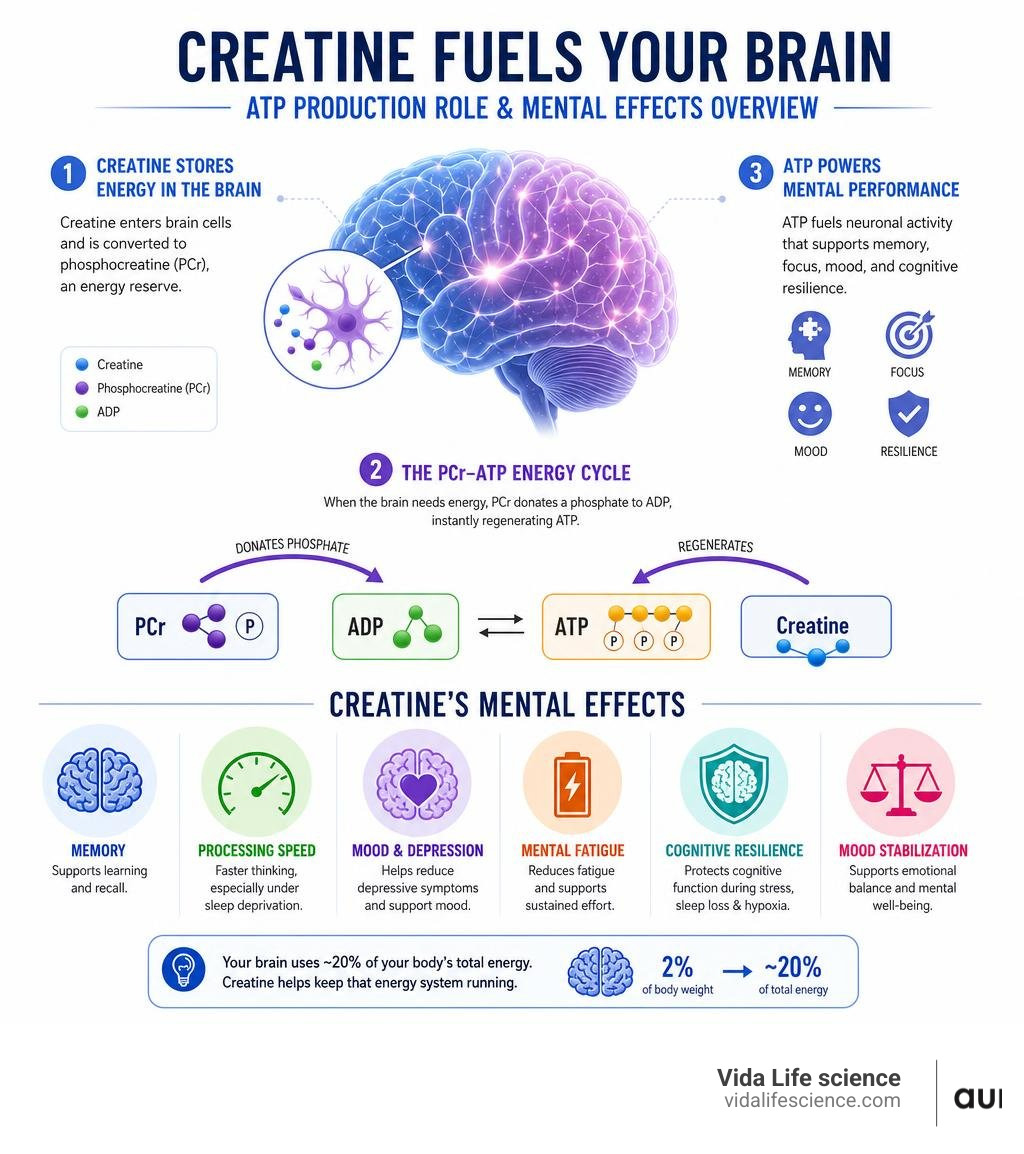
Most people know creatine as a muscle supplement. But your brain — which burns roughly 20% of your body's total energy while making up just 2% of your body weight — depends on creatine too. When brain energy runs low, memory slips, mood dips, and focus fades. Creatine helps keep that energy system running.
The research here is newer, but it's building fast. Clinical trials, meta-analyses, and neuroimaging studies are all pointing in the same direction: creatine does something real inside the brain, especially for people under stress, those with depression, and anyone whose diet is low in animal protein.
At Vida Life Science, we've spent years working with advanced nutritional science — including how delivery methods affect the way your body actually absorbs nutrients — which is directly relevant to understanding creatine mental effects and getting the most from supplementation.
Understanding the Science Behind Creatine Mental Effects
To understand why your brain is so hungry for creatine, we have to look at how brain cells generate power. Your brain never truly sleeps; even when you are staring blankly at a wall or drifting through REM cycles, your neurons are firing, maintaining cellular gradients, and cleaning up metabolic waste. This requires a massive, uninterrupted stream of adenosine triphosphate (ATP) — the primary energy currency of life.
When a neuron fires, it uses up ATP, converting it into a spent molecule called adenosine diphosphate (ADP). To fire again, the neuron must instantly rebuild ADP back into ATP. This is where creatine enters the picture.
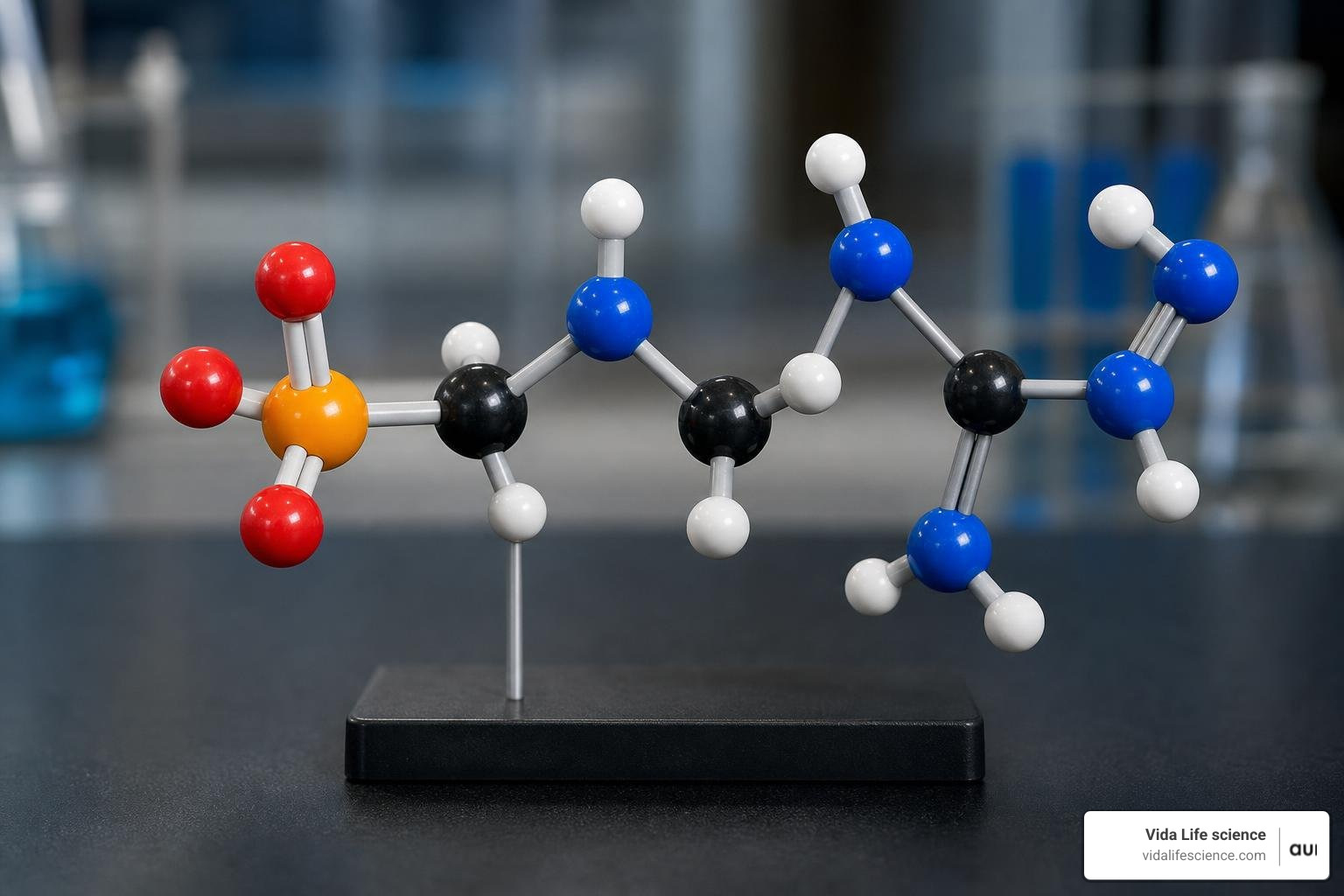
According to a comprehensive scientific review on brain bioenergetics, the brain utilizes a specialized backup system to keep energy levels stable during high-demand tasks. Creatine acts like a rapid-charging spare battery, holding onto a high-energy phosphate molecule to form phosphocreatine (PCr). When energy demands spike, phosphocreatine immediately donates its phosphate to ADP, regenerating ATP in a fraction of a millisecond.
Cellular Energy and the CK-PCr System
This rapid recycling process is managed by an enzyme called creatine kinase (CK). The CK-PCr system synthesizes ATP up to 12 times faster than oxidative phosphorylation (the standard energy-producing pathway inside your mitochondria).
While muscle cells hold massive pools of creatine, brain cells are much more compartmentalized. If the CK-PCr system is running low on raw materials, cellular homeostasis begins to waver. You experience this energy deficit as brain fog, slow processing speed, and mental fatigue.
Neuroprotection and Neurotransmitter Regulation
Beyond keeping the lights on, creatine plays a vital structural and protective role in the central nervous system. When energy levels drop, neurons lose their ability to clear glutamate—the brain's primary excitatory neurotransmitter—from the synaptic cleft. This leads to glutamate excitotoxicity, a damaging process where overstimulated brain cells become damaged or die. By buffering ATP levels, creatine helps fuel the pumps that clear excess glutamate, protecting delicate neural pathways.
Creatine as an Adjunct Treatment for Depression and Mood Disorders

Depression is increasingly understood not just as a "chemical imbalance" of serotonin, but as a systemic bioenergetic crisis. Simply put, a depressed brain is often an energy-starved brain.
Observational data shows a striking link between diet and mental health: individuals with a dietary creatine intake below 1 gram per day exhibit a significantly higher prevalence of depression. Furthermore, low serum creatine levels are associated with a 1.67 times higher risk of depressive disorders.
This has led researchers to investigate whether boosting brain energy via supplementation can help lift depressive symptoms, as highlighted in a landmark research on brain creatine in behavioral health.
Using a specialized neuroimaging technique called phosphorus magnetic resonance spectroscopy (31P-MRS), scientists can peer inside the living human brain to measure high-energy phosphates. Individuals with Major Depressive Disorder (MDD) frequently present with lower levels of frontal-lobe phosphocreatine. When these individuals supplement with creatine, their frontal-lobe PCr levels rise — in adolescent trials, a daily dose of creatine increased frontal-lobe PCr by 9.1% compared to a slight decline in the placebo group. That rise in brain energy directly correlates with a reduction in depression severity.
Clinical Evidence: Creatine + SSRIs and CBT
-
Creatine + SSRIs: In a double-blind RCT, women with MDD who received 5 g/day of creatine alongside their daily escitalopram showed a 21.8% greater drop in HAM-D scores by week 4. By the end of the study, the creatine group achieved a 52% remission rate, compared to just 26% in the placebo group.
-
Creatine + CBT: An 8-week trial combining 5 g/day of creatine with Cognitive Behavioral Therapy resulted in a 5.12-point greater reduction in PHQ-9 scores compared to CBT plus a placebo.
-
Treatment-Resistant Depression: For adolescents with SSRI-resistant depression, adding 4 g/day of creatine led to a 56% decline in depression scores (CDRS-R).
-
Synergistic Blends: Combining creatine with 5-HTP in treatment-resistant women resulted in a 60% mean decrease in HAM-D scores.
If you are well-rested, well-fed, and unstressed, daily creatine supplementation might only provide a subtle nudge to your baseline cognitive performance. However, when your system is pushed to its absolute limits, creatine mental effects become incredibly obvious.
How Sleep Deprivation and Stress Amplify Creatine Mental Effects
A ground-breaking study on single-dose creatine during sleep deprivation subjected healthy adults to 21 hours of sleep deprivation. Under placebo conditions, participants suffered a 4.7% decline in their brain's PCr/Pi ratio. When given a single high-dose creatine supplement (0.35 g/kg of body weight), the metabolic decline was completely prevented:
-
Processing speed on complex language, logic, and numeric tasks improved by 16% to 29%.
-
Short-term word memory accuracy improved by 10.3% compared to the placebo group.
-
Subjective fatigue scores were reduced by 8% during the hardest hours of the night.
Acute High-Dose vs. Chronic Loading for Cognitive Resilience
While a massive, single 25-gram dose can show cognitive improvements within 3 to 7.5 hours under sleep-deprived conditions, it is not an ideal daily strategy — high single doses can overwhelm your gut. For daily cognitive resilience, chronic loading (a consistent daily dose over 4 to 8 weeks) is a safer, more sustainable way to build a robust energy buffer.
Demographic Variations: Who Benefits Most from Brain Creatine?
| Demographic |
Baseline Creatine Levels |
Cognitive/Mental Response |
Why? |
| Vegetarians & Vegans |
Very Low |
Extremely High |
Plant-based diets provide virtually zero dietary creatine |
| Women |
Low-Moderate |
High |
Naturally lower baseline stores (70-80% of male levels) plus cyclic hormonal shifts |
| Older Adults (60+) |
Declining |
Moderate-High |
Natural decline in brain creatine and mitochondrial efficiency |
| Omnivorous Young Men |
High |
Low-Moderate |
Brain stores often already near saturation from diet |
A comprehensive meta-analysis on cognitive function in adults evaluated 16 randomized controlled trials and confirmed that while healthy, well-rested omnivores show modest improvements, vegetarians experience dramatic, statistically significant memory and reasoning gains after supplementing.
Creatine’s Role in Other Psychiatric and Neurodevelopmental Conditions
Bipolar Depression and the Risk of Manic Switch
In a clinical trial focusing on bipolar depression, patients given 6 g/day of creatine achieved a 52.9% remission rate, compared to just 11.1% in the placebo group. However, there is a critical safety caveat: in rare cases, creatine may trigger a "manic switch" in individuals with bipolar disorder. Anyone with bipolar disorder should never supplement with creatine without strict medical supervision.
PTSD, Schizophrenia, and Substance Use
-
PTSD: Patients with PTSD who added 3 to 5 grams of creatine daily reported a 30% improvement in quality of life.
-
Schizophrenia: Evidence is mixed — one trial showed no major changes in primary symptoms, another noted improvements in negative symptoms.
-
Substance Use Disorders: In methamphetamine-dependent women, 5 g/day of creatine restored brain PCr levels and led to a 50% decrease in positive drug screens alongside drops in anxiety and depression.
Dosing Strategies, Safety, and Practical Implementation
Brain vs. Muscle Dosing Protocols
Skeletal muscle is easy to saturate; 3 to 5 grams of standard creatine monohydrate per day will fully load your muscles within a month. Your brain is guarded by the selective blood-brain barrier, so achieving a meaningful increase in brain creatine takes one of two approaches:
-
The Chronic Slow Load (Recommended): 5 to 10 grams per day consistently for at least 8 weeks.
-
The Aggressive Fast Load: 20 grams per day (split into four 5-gram doses) for 5 to 7 days, followed by a daily maintenance dose of 5 grams.
Safety Considerations and Contraindications
-
Kidneys and Liver: Long-term studies spanning up to 5 years show no adverse effects on renal function or liver enzymes in healthy individuals. If you have pre-existing kidney disease, avoid supplementation.
-
Hydration: Creatine draws water into your cells — increase your daily water intake.
-
GI Tolerability: Avoid large single doses (more than 5 grams) to prevent bloating or mild diarrhea.
Frequently Asked Questions about Creatine Brain Benefits
Yes, but primarily under conditions of severe metabolic stress, such as acute sleep deprivation or hypoxia. For daily, unstressed cognitive enhancement, a long-term daily dose is required.
Does creatine cause any psychiatric side effects?
In healthy individuals, no. However, in individuals diagnosed with bipolar disorder, there is a documented risk of inducing a manic or hypomanic episode. Consult your psychiatrist first if you have a history of bipolar disorder.
Is creatine safe to take with antidepressants?
Yes — clinical evidence shows creatine acts synergistically with SSRIs like escitalopram and fluoxetine. Always discuss any new supplement with your healthcare provider.
Conclusion: Maximizing Bioavailability for Mind and Body
The science is clear: creatine mental effects are a powerful tool for building a more resilient, energetic, and focused brain. At Vida Life Science, we believe a supplement is only as good as your body's ability to absorb it, which is why we partner exclusively with Aurora Nutrascience to bring you advanced liposomal supplements — wrapping vital nutrients in protective, organic liposomes to bypass the harsh digestive environment of the stomach for direct, efficient absorption.
Shop Aurora Nutrascience Liposomal Creatine + GAA →
📩 Want more guides like this?
Get our free supplement guide — dosing breakdowns, ingredient science, and what to actually look for on a label — delivered straight to your inbox. Sign up here.
Related reading: Best Creatine for Brain Fog · Liposomal Creatine & Cellular Energy · Creatine for Brain Power


Creatine Mental Effects and Why Your Brain Craves It
🛒 Shop This Article: Aurora Nutrascience Liposomal Creatine + GAA — the creatine discussed below, in liposomal form.
Your Brain on Creatine: What the Science Actually Shows
Creatine mental effects are more significant than most people realize — and they go far beyond the gym.
Quick answer: What does creatine do for your brain?
Most people know creatine as a muscle supplement. But your brain — which burns roughly 20% of your body's total energy while making up just 2% of your body weight — depends on creatine too. When brain energy runs low, memory slips, mood dips, and focus fades. Creatine helps keep that energy system running.
The research here is newer, but it's building fast. Clinical trials, meta-analyses, and neuroimaging studies are all pointing in the same direction: creatine does something real inside the brain, especially for people under stress, those with depression, and anyone whose diet is low in animal protein.
At Vida Life Science, we've spent years working with advanced nutritional science — including how delivery methods affect the way your body actually absorbs nutrients — which is directly relevant to understanding creatine mental effects and getting the most from supplementation.
Understanding the Science Behind Creatine Mental Effects
To understand why your brain is so hungry for creatine, we have to look at how brain cells generate power. Your brain never truly sleeps; even when you are staring blankly at a wall or drifting through REM cycles, your neurons are firing, maintaining cellular gradients, and cleaning up metabolic waste. This requires a massive, uninterrupted stream of adenosine triphosphate (ATP) — the primary energy currency of life.
When a neuron fires, it uses up ATP, converting it into a spent molecule called adenosine diphosphate (ADP). To fire again, the neuron must instantly rebuild ADP back into ATP. This is where creatine enters the picture.
According to a comprehensive scientific review on brain bioenergetics, the brain utilizes a specialized backup system to keep energy levels stable during high-demand tasks. Creatine acts like a rapid-charging spare battery, holding onto a high-energy phosphate molecule to form phosphocreatine (PCr). When energy demands spike, phosphocreatine immediately donates its phosphate to ADP, regenerating ATP in a fraction of a millisecond.
Cellular Energy and the CK-PCr System
This rapid recycling process is managed by an enzyme called creatine kinase (CK). The CK-PCr system synthesizes ATP up to 12 times faster than oxidative phosphorylation (the standard energy-producing pathway inside your mitochondria).
While muscle cells hold massive pools of creatine, brain cells are much more compartmentalized. If the CK-PCr system is running low on raw materials, cellular homeostasis begins to waver. You experience this energy deficit as brain fog, slow processing speed, and mental fatigue.
Neuroprotection and Neurotransmitter Regulation
Beyond keeping the lights on, creatine plays a vital structural and protective role in the central nervous system. When energy levels drop, neurons lose their ability to clear glutamate—the brain's primary excitatory neurotransmitter—from the synaptic cleft. This leads to glutamate excitotoxicity, a damaging process where overstimulated brain cells become damaged or die. By buffering ATP levels, creatine helps fuel the pumps that clear excess glutamate, protecting delicate neural pathways.
Creatine as an Adjunct Treatment for Depression and Mood Disorders
Depression is increasingly understood not just as a "chemical imbalance" of serotonin, but as a systemic bioenergetic crisis. Simply put, a depressed brain is often an energy-starved brain.
Observational data shows a striking link between diet and mental health: individuals with a dietary creatine intake below 1 gram per day exhibit a significantly higher prevalence of depression. Furthermore, low serum creatine levels are associated with a 1.67 times higher risk of depressive disorders.
This has led researchers to investigate whether boosting brain energy via supplementation can help lift depressive symptoms, as highlighted in a landmark research on brain creatine in behavioral health.
Brain Energy Metabolism and Depressive Symptoms
Using a specialized neuroimaging technique called phosphorus magnetic resonance spectroscopy (31P-MRS), scientists can peer inside the living human brain to measure high-energy phosphates. Individuals with Major Depressive Disorder (MDD) frequently present with lower levels of frontal-lobe phosphocreatine. When these individuals supplement with creatine, their frontal-lobe PCr levels rise — in adolescent trials, a daily dose of creatine increased frontal-lobe PCr by 9.1% compared to a slight decline in the placebo group. That rise in brain energy directly correlates with a reduction in depression severity.
Clinical Evidence: Creatine + SSRIs and CBT
Cognitive Performance Under Stress: Sleep Deprivation and Hypoxia
If you are well-rested, well-fed, and unstressed, daily creatine supplementation might only provide a subtle nudge to your baseline cognitive performance. However, when your system is pushed to its absolute limits, creatine mental effects become incredibly obvious.
How Sleep Deprivation and Stress Amplify Creatine Mental Effects
A ground-breaking study on single-dose creatine during sleep deprivation subjected healthy adults to 21 hours of sleep deprivation. Under placebo conditions, participants suffered a 4.7% decline in their brain's PCr/Pi ratio. When given a single high-dose creatine supplement (0.35 g/kg of body weight), the metabolic decline was completely prevented:
Acute High-Dose vs. Chronic Loading for Cognitive Resilience
While a massive, single 25-gram dose can show cognitive improvements within 3 to 7.5 hours under sleep-deprived conditions, it is not an ideal daily strategy — high single doses can overwhelm your gut. For daily cognitive resilience, chronic loading (a consistent daily dose over 4 to 8 weeks) is a safer, more sustainable way to build a robust energy buffer.
Demographic Variations: Who Benefits Most from Brain Creatine?
A comprehensive meta-analysis on cognitive function in adults evaluated 16 randomized controlled trials and confirmed that while healthy, well-rested omnivores show modest improvements, vegetarians experience dramatic, statistically significant memory and reasoning gains after supplementing.
Creatine’s Role in Other Psychiatric and Neurodevelopmental Conditions
Bipolar Depression and the Risk of Manic Switch
In a clinical trial focusing on bipolar depression, patients given 6 g/day of creatine achieved a 52.9% remission rate, compared to just 11.1% in the placebo group. However, there is a critical safety caveat: in rare cases, creatine may trigger a "manic switch" in individuals with bipolar disorder. Anyone with bipolar disorder should never supplement with creatine without strict medical supervision.
PTSD, Schizophrenia, and Substance Use
Dosing Strategies, Safety, and Practical Implementation
Brain vs. Muscle Dosing Protocols
Skeletal muscle is easy to saturate; 3 to 5 grams of standard creatine monohydrate per day will fully load your muscles within a month. Your brain is guarded by the selective blood-brain barrier, so achieving a meaningful increase in brain creatine takes one of two approaches:
Safety Considerations and Contraindications
Frequently Asked Questions about Creatine Brain Benefits
Can a single dose of creatine immediately improve brain function?
Yes, but primarily under conditions of severe metabolic stress, such as acute sleep deprivation or hypoxia. For daily, unstressed cognitive enhancement, a long-term daily dose is required.
Does creatine cause any psychiatric side effects?
In healthy individuals, no. However, in individuals diagnosed with bipolar disorder, there is a documented risk of inducing a manic or hypomanic episode. Consult your psychiatrist first if you have a history of bipolar disorder.
Is creatine safe to take with antidepressants?
Yes — clinical evidence shows creatine acts synergistically with SSRIs like escitalopram and fluoxetine. Always discuss any new supplement with your healthcare provider.
Conclusion: Maximizing Bioavailability for Mind and Body
The science is clear: creatine mental effects are a powerful tool for building a more resilient, energetic, and focused brain. At Vida Life Science, we believe a supplement is only as good as your body's ability to absorb it, which is why we partner exclusively with Aurora Nutrascience to bring you advanced liposomal supplements — wrapping vital nutrients in protective, organic liposomes to bypass the harsh digestive environment of the stomach for direct, efficient absorption.
Shop Aurora Nutrascience Liposomal Creatine + GAA →
📩 Want more guides like this?
Get our free supplement guide — dosing breakdowns, ingredient science, and what to actually look for on a label — delivered straight to your inbox. Sign up here.
Related reading: Best Creatine for Brain Fog · Liposomal Creatine & Cellular Energy · Creatine for Brain Power