Why the Biotin Vitamin Matters for Everyday Health
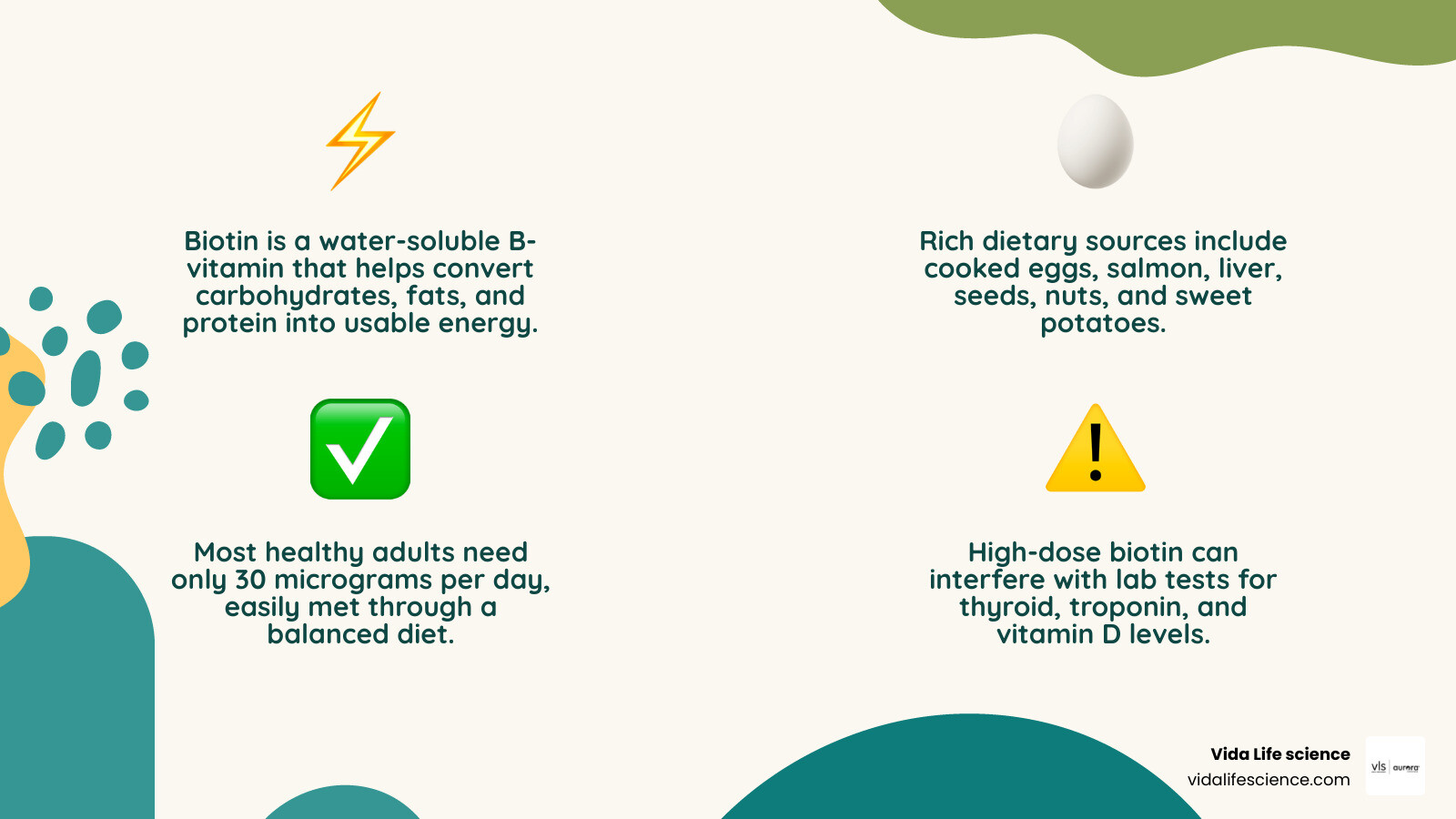
Biotin, also called vitamin B7, is a water-soluble vitamin that helps your body turn carbohydrates, fats, and protein into usable energy. Most healthy adults can meet the adequate intake of 30 micrograms per day through a varied diet. Biotin supplements can treat a true deficiency, but strong evidence does not show that high-dose biotin improves hair, skin, or nails in people who already get enough.
Biotin is essential, but deficiency is rare in the United States. Foods such as cooked eggs, salmon, liver, seeds, nuts, and sweet potatoes can help support daily intake. If you use a supplement, tell your healthcare team before blood work: larger doses can affect some lab tests, including thyroid, troponin, and vitamin D tests.
At Vida Life Science, we focus on high-quality nutritional supplements and advanced phosphatidylcholine-based liposomal delivery technology designed to support nutrient absorption. In this guide, we explain what a biotin vitamin does, where to get it, and when supplementation may make sense.
What Is the Biotin Vitamin and How Does It Function?
Biotin—historically referred to as "vitamin H" after the German words Haar und Haut (hair and skin)—is a vital member of the water-soluble B-complex family. Because it is water-soluble, our bodies do not store it in large quantities; instead, we utilize what we need for daily metabolic tasks and excrete any surplus through urine.
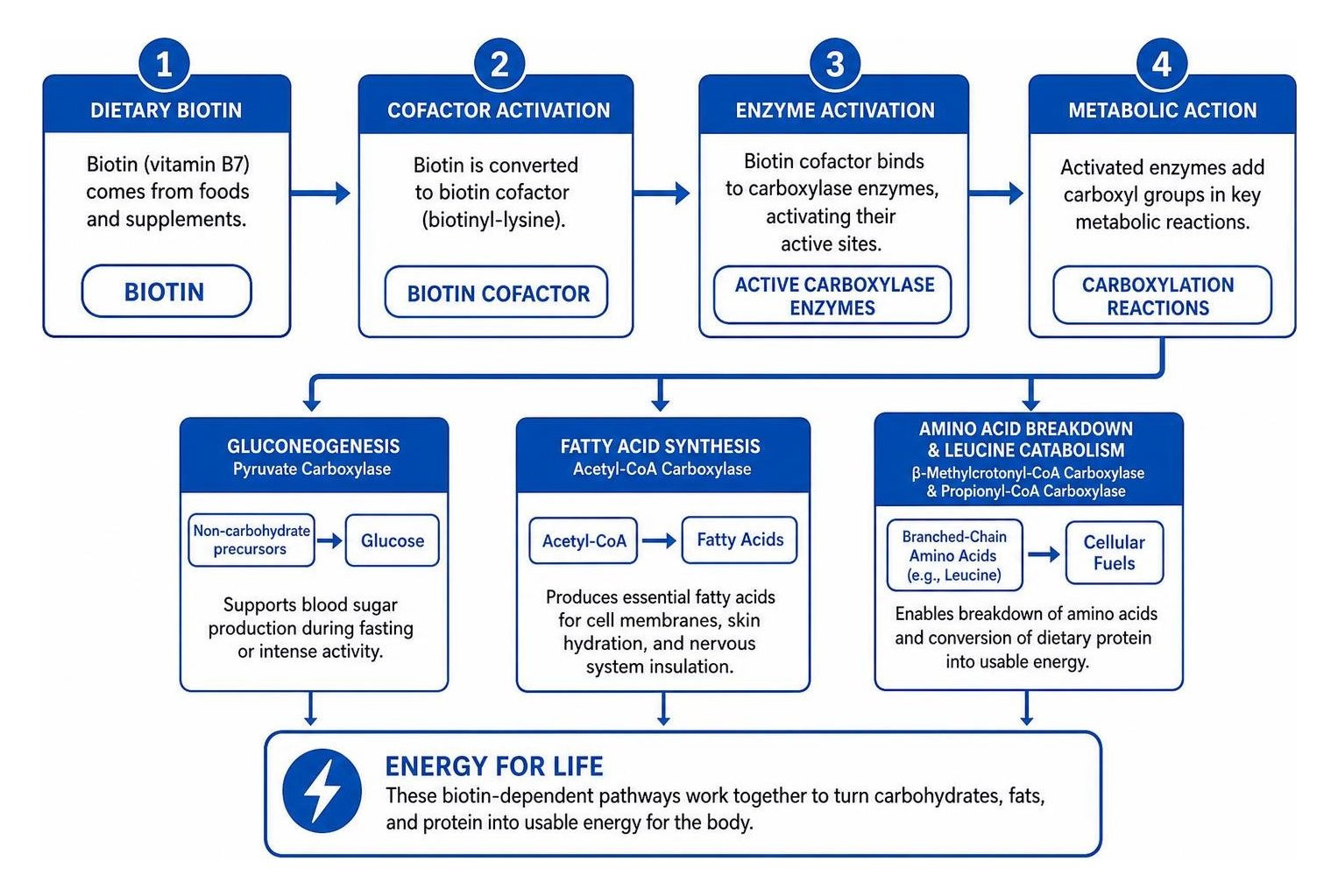
At a cellular level, biotin functions as an indispensable coenzyme for five distinct carboxylases in human physiology. According to the National Institutes of Health biotin research, these enzymes cannot perform their metabolic duties without biotin attached to their active sites. Beyond macronutrient processing, biotin plays an active role in histone biotinylation, epigenetic regulation, and vital cell signaling pathways that control basic cellular replication.
Our bodies rely on biotin-dependent carboxylase enzymes to power several foundational metabolic pathways:
-
Gluconeogenesis (Pyruvate Carboxylase): Helps synthesize glucose from non-carbohydrate precursors, ensuring a steady supply of blood sugar during fasting or intense activity.
-
Fatty Acid Synthesis (Acetyl-CoA Carboxylase): Assists in constructing essential fatty acids necessary for robust cell membrane structure, skin hydration, and nervous system insulation.
-
Amino Acid Breakdown & Leucine Catabolism (β-Methylcrotonyl-CoA Carboxylase & Propionyl-CoA Carboxylase): Enables the body to break down branched-chain amino acids like leucine, converting dietary proteins into usable cellular fuels.
Daily Recommended Intake and Adequate Intake Levels
Because clinical biotin deficiency is exceptionally rare in the general population, health authorities have established an Adequate Intake (AI) rather than a strict Recommended Dietary Allowance (RDA). As of August 2026, the dietary intake standards in the United States and Canada set clear benchmarks across every life stage:
| Life Stage |
Age / Condition |
Adequate Intake (AI) in Micrograms (mcg) |
| Infants |
0–6 months |
5 mcg |
| Infants |
7–12 months |
6 mcg |
| Young Children |
1–3 years |
8 mcg |
| Children |
4–8 years |
12 mcg |
| Pre-Teens |
9–13 years |
20 mcg |
| Teens |
14–18 years |
25 mcg |
| Adults |
19+ years (Men & Women) |
30 mcg |
| Pregnancy |
14–50 years |
30 mcg |
| Lactation |
14–50 years |
35 mcg |
The recommended daily amount for adolescents and adults generally spans 30 to 100 mcg per day when evaluating total dietary patterns, with baseline maintenance firmly anchored at 30 mcg. Nursing mothers require an additional 5 mcg daily (35 mcg total) to account for the concentration of active biotin exported into breast milk.
Dietary Sources vs. Supplementation for Optimal Intake
Most people living in the United States and Canada consume between 35 and 70 mcg of biotin daily through a standard balanced diet, naturally covering baseline requirements. However, getting enough of this nutrient requires mindful eating habits, as natural food matrices hold biotin in distinct forms compared to standalone supplements. For those exploring optimized wellness protocols, our guide to Achieve Radiant Skin Hair and Nails with Liposomal Biotin provides valuable context on modern nutritional strategies.
Top Whole-Food Sources of Biotin Vitamin
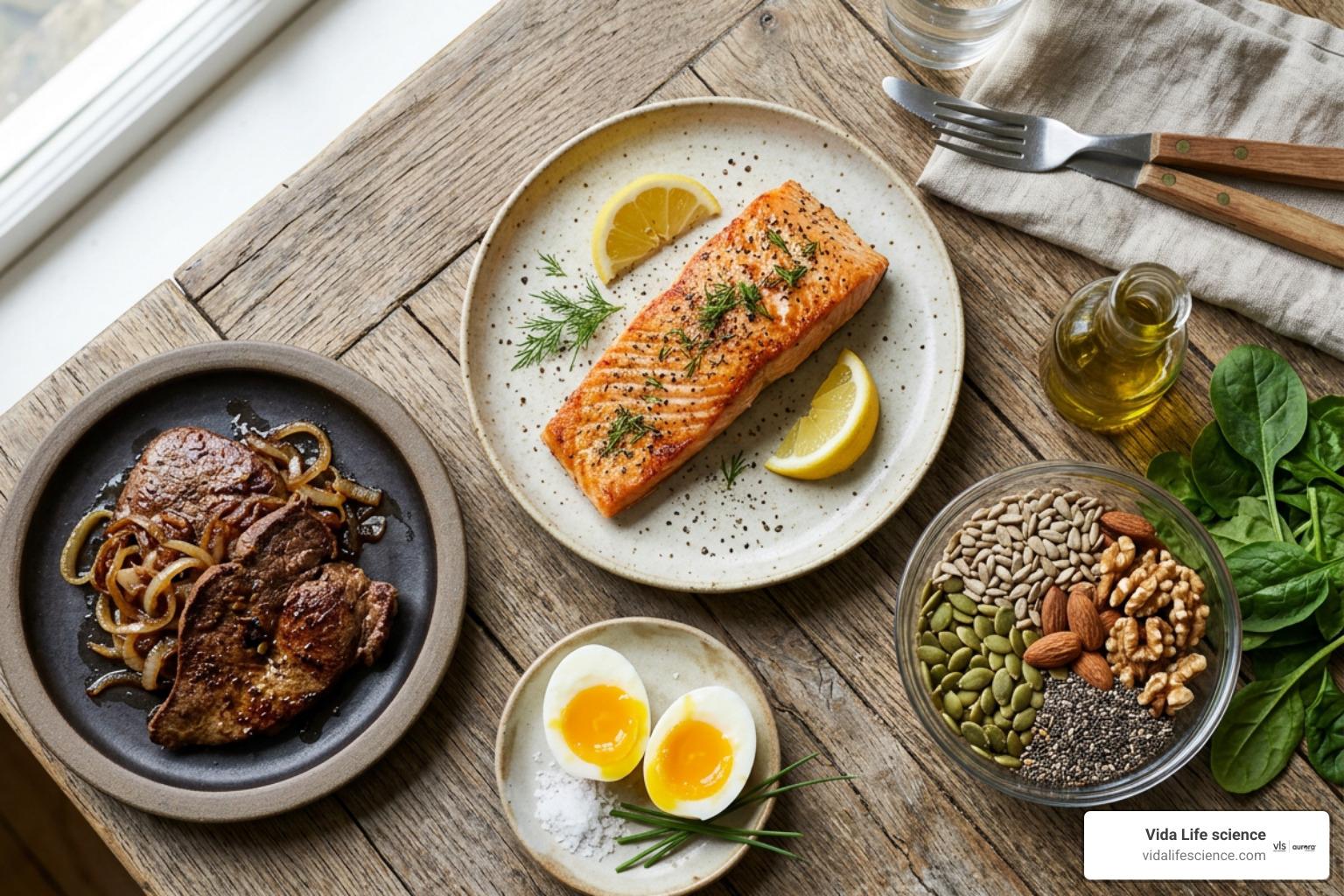
Biotin is found across a diverse spectrum of animal and plant foods:
-
Beef Liver: The richest dietary source, providing roughly 30.8 mcg in a 3-ounce cooked serving (over 100% of the adult AI).
-
Whole Eggs (Cooked): Delivers approximately 10 mcg per large egg, predominantly concentrated in the yolk.
-
Canned Salmon: Provides about 5 mcg per 3-ounce serving, alongside healthy omega-3 fatty acids.
-
Pork Chops: Yields around 3.8 mcg per 3-ounce cooked portion.
-
Sunflower Seeds: A great plant source, providing 2.6 mcg per 1/4 cup.
-
Sweet Potatoes: Offers 2.4 mcg per 1/2 cup cooked.
-
Other Plant Sources: Bananas, carrots, cauliflower, spinach, broccoli, soy flour, whole-grain cereals, and nutritional yeast all provide steady amounts.
A culinary word of caution: Raw egg whites contain avidin, a specific glycoprotein that binds tightly to biotin in the digestive tract, blocking its absorption. Cooking denatures avidin, neutralizing this binding effect and allowing your body to absorb the nutrient freely.
In natural food sources, biotin is primarily bound to proteins or exists as biocytin (biotin coupled to lysine). Before absorption can take place in the small intestine, our digestive enzyme biotinidase must cleave these complexes into free biotin.
Free biotin is absorbed across the intestinal brush border via the Sodium-Dependent Multivitamin Transporter (SMVT). Standard synthetic tablets dump large crystalline boluses into the gut, which can quickly saturate this transport system. At Vida Life Science, we distribute Aurora Nutrascience liposomal formulas that encapsulate nutrients in protective phosphatidylcholine spheres. This specialized delivery approach shields delicate micronutrients from harsh stomach acid and bypasses classic intestinal transport bottlenecks, promoting superior cellular uptake.
Proven Health Benefits and Evidence for Hair, Skin, and Nails
The proportion of consumers using biotin supplements has expanded by more than 30 times since 1999, driven heavily by promises of flowing hair and unbreakable nails. While biotin is undeniably essential for maintaining the biological infrastructure of keratin, it helps to separate proven medical science from cosmetic marketing claims. To explore these dynamics in depth, consult our Biotin Benefits Complete Guide 2026 alongside authoritative Cleveland Clinic insights on biotin.
The Science on Hair and Nail Strength
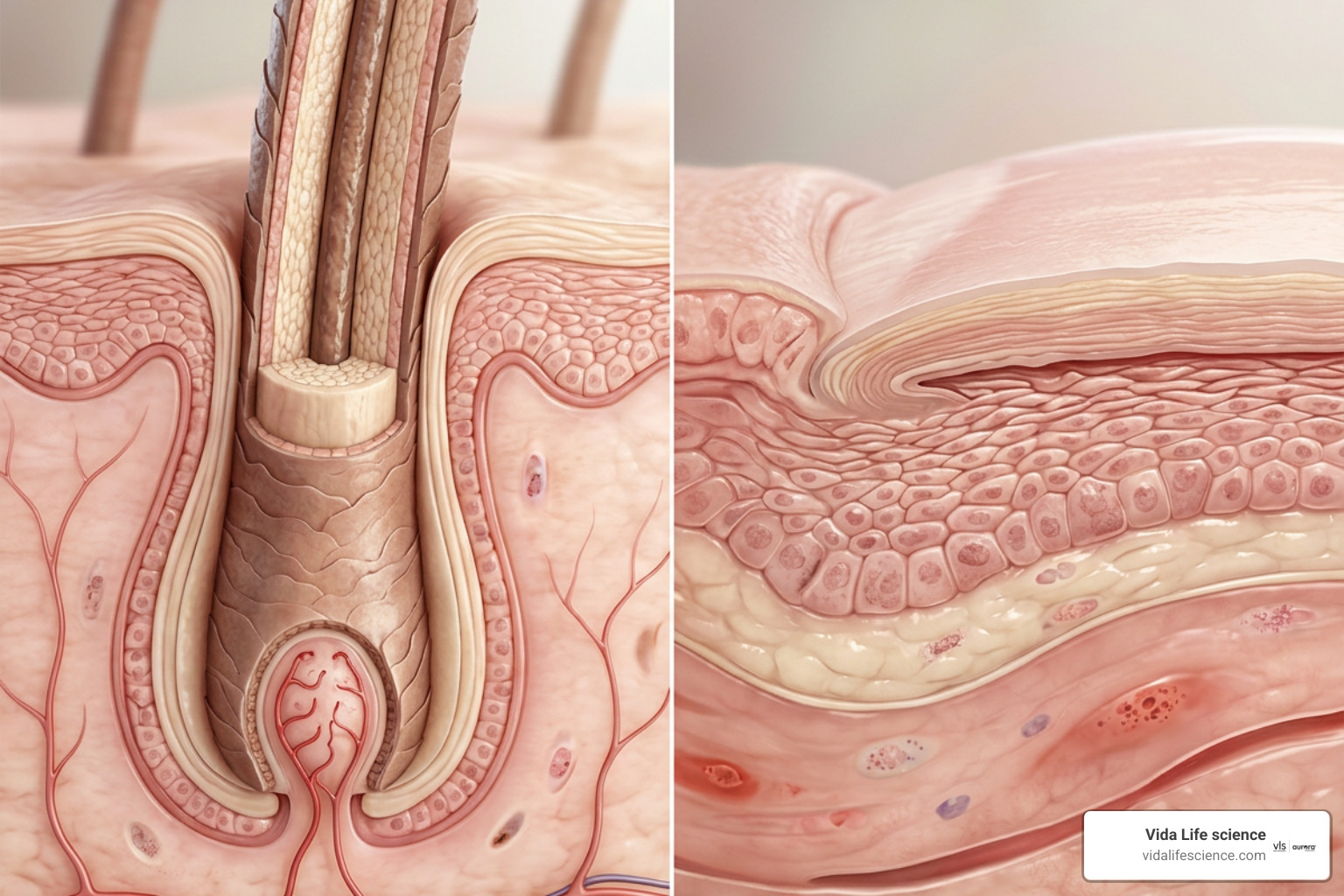
Keratin is the basic structural protein that forms our hair, skin, and nails. Because biotin-dependent enzymes help assemble the fatty acids and amino acids that nourish nail beds and hair follicles, a true biological deficiency will cause diffuse hair thinning (alopecia) and brittle, splitting nails.
However, clinical research indicates that in well-nourished individuals who already meet their daily 30 mcg baseline, taking massive doses (such as 5,000 to 10,000 mcg) does not magically accelerate hair growth or thicken nails. Biotin supplementation shines primarily when correcting an underlying nutritional gap, genetic recycling flaw, or targeted clinical deficiency.
Energy Production and Cellular Health
The most grounded, proven benefit of biotin is its contribution to cellular vitality:
-
Macronutrient Energy Conversion: Facilitates the smooth conversion of dietary fats, carbs, and proteins into adenosine triphosphate (ATP), the body's cellular energy currency.
-
Glucose Regulation: Supports healthy postprandial glucose metabolism by assisting hepatic and pancreatic enzymatic pathways.
-
Nervous System Support: Contributes to myelin sheath maintenance and neurotransmitter synthesis, supporting cognitive and peripheral nerve health.
Recognizing Biotin Deficiency and High-Risk Groups
Frank nutritional deficiency is exceptionally rare in North America because our daily needs are modest, common foods contain steady amounts, and gut microflora naturally synthesize small quantities of the vitamin in the large intestine.
For those looking to explore our full selection of specialized formulations, browse our Biotin catalog, and read the NCBI StatPearls clinical monograph on biotin for deeper physiological insights.
Common Symptoms of Inadequate Intake
When biotin levels fall significantly below normal ranges, physical symptoms emerge gradually:
-
Dermatological Signs: Scaly, red, erythematous rashes around body openings (the mouth, nose, eyes, and perineum), often referred to clinically as biotin deficiency facies.
-
Hair & Nail Breakdown: Progressive hair shedding, loss of eyebrow or eyelash hair, and severely brittle nails.
-
Neurological Impairment: Lethargy, depression, muscle weakness (hypotonia), paresthesia (tingling sensations in extremities), and in severe cases, ataxia or seizures.
-
Immune & Ocular Issues: Heightened susceptibility to localized bacterial or fungal skin infections and recurrent conjunctivitis (pinkeye).
Because standard blood plasma tests are notoriously insensitive for identifying subclinical biotin depletion, clinical researchers rely on elevated urinary excretion of 3-hydroxyisovaleric acid as an accurate diagnostic indicator.
Risk Factors and Underlying Causes
Certain groups face an increased likelihood of developing inadequate biotin levels:
-
Biotinidase Deficiency: A rare inherited genetic disorder (affecting roughly 1 in 40,000 to 1 in 60,000 live births) where the body cannot recycle endogenous biotin, requiring lifelong oral therapy (5 to 20 mg daily).
-
Pregnancy & Lactation: Approximately one-third of pregnant women develop marginal, subclinical biotin deficiency due to accelerated fetal nutrient utilization.
-
Long-Term Anticonvulsant Therapy: Medications such as carbamazepine, primidone, and phenobarbital inhibit intestinal brush-border transport and speed up biotin breakdown.
-
Chronic Alcohol Dependence: Alcohol inhibits both the intestinal absorption and renal conservation of the vitamin.
-
Gastrointestinal Surgeries & Malabsorption: Patients recovering from partial gastrectomy, stomach resection, or severe inflammatory bowel diseases exhibit impaired uptake.
-
Prolonged Raw Egg Diets: Consuming significant quantities of unpasteurized raw egg whites over weeks or months can induce avidin-mediated deficiency.
Safety Guidelines, Dosage, and Medical Test Considerations
Biotin exhibits an exceptional safety profile. The National Academy of Medicine and health regulators have not established a Tolerable Upper Intake Level (UL) because adverse toxic effects have not been observed in clinical trials even at high pharmacological doses up to 200 mg (200,000 mcg) per day.
Potential Side Effects and Tolerable Limits
No side effects have been reported for standard biotin supplementation in amounts up to 10 milligrams (10,000 mcg) daily. Because excess amounts are water-soluble, our kidneys clear surplus vitamin B7 via urine. Occasionally, individuals taking megadose capsules report mild digestive upset.
Furthermore, extremely high doses of synthetic biotin may competitively compete with pantothenic acid (vitamin B5) for uptake via the shared SMVT intestinal transporter, which can occasionally trigger transient skin breakouts or digestive imbalance in sensitive individuals.
Critical Lab Test Interference Warnings
While high-dose biotin is biologically safe, it poses a significant diagnostic risk by interfering with clinical laboratory blood tests.
Many modern diagnostic assays use a streptavidin-biotin binding technology. When high levels of supplemental biotin remain in the bloodstream, they can bind directly to assay reagents, creating falsely elevated or falsely suppressed readings:
-
Troponin Assays: Used in emergency rooms to diagnose acute myocardial infarctions (heart attacks). Biotin can cause falsely low troponin readings, potentially masking a cardiac event.
-
Thyroid Function Panels: Can produce falsely elevated free T3/T4 and falsely depressed TSH levels, mimicking Graves' disease or severe hyperthyroidism.
-
Vitamin D & Hormone Tests: Can cause inaccurate readings across 25-hydroxyvitamin D, ferritin, and reproductive hormone assays.
Actionable Safety Tip: Always inform your doctor, nurse, and lab technicians if you take supplements containing biotin. Healthcare professionals typically recommend stopping high-dose biotin supplements at least 48 hours to several days prior to scheduled diagnostic blood work.
Frequently Asked Questions About Biotin
Should healthy individuals take biotin supplements daily?
Most healthy adults who consume a varied diet rich in whole foods do not strictly require daily biotin supplementation to avoid deficiency. However, individuals navigating periods of elevated metabolic demand—such as pregnancy, post-surgery recovery, or prolonged lifestyle stress—often find daily multi-nutrient or standalone support beneficial. If you choose to supplement, sticking to moderate doses or utilizing high-bioavailability liposomal forms ensures your body absorbs what it needs without overloading your system.
Can taking high-dose biotin cause breakouts or skin irritation?
While biotin itself is non-toxic, consuming huge boluses (such as 5,000 to 10,000 mcg crystalline pills) can sometimes lead to mild skin blemishes. This occurs because biotin and vitamin B5 (pantothenic acid, which helps manage skin barrier integrity and sebum production) share the exact same intestinal transporter (SMVT). Flooding the gut with megadoses of biotin can temporarily reduce vitamin B5 uptake. Choosing balanced formulas or liposomal delivery systems helps prevent this competitive interference.
How long does it take to see results from biotin supplementation?
If you are supplementing to address thinning hair or brittle nails caused by a subclinical deficiency, patience is key. Human scalp hair grows at roughly half an inch per month, while fingernails require 4 to 6 months to completely regrow from cuticle to tip. Most clinical observations and real-world trials indicate that it takes at least 3 to 6 months of consistent nutritional support before noticeable improvements in shedding reduction or nail firmness become apparent.
Conclusion
Biotin is an indispensable micronutrient that keeps our metabolic engines running, turning daily meals into clean cellular energy while supporting the building blocks of hair, skin, and nails. While true deficiency is uncommon across North America, maintaining an adequate daily intake of 30 mcg is vital for long-term health and vitality.
Rather than relying on unproven megadoses that risk interfering with critical blood work, the smartest approach pairs nutrient-dense whole foods with advanced, bioavailable supplementation when extra support is needed. Explore our advanced Biotin Supplement resources at Vida Life Science to discover how liposomal delivery technology can elevate your daily wellness routine with optimal absorption and cellular care.


Beginner's Guide to Biotin: Understand Its Benefits
Why the Biotin Vitamin Matters for Everyday Health
Biotin, also called vitamin B7, is a water-soluble vitamin that helps your body turn carbohydrates, fats, and protein into usable energy. Most healthy adults can meet the adequate intake of 30 micrograms per day through a varied diet. Biotin supplements can treat a true deficiency, but strong evidence does not show that high-dose biotin improves hair, skin, or nails in people who already get enough.
Biotin is essential, but deficiency is rare in the United States. Foods such as cooked eggs, salmon, liver, seeds, nuts, and sweet potatoes can help support daily intake. If you use a supplement, tell your healthcare team before blood work: larger doses can affect some lab tests, including thyroid, troponin, and vitamin D tests.
At Vida Life Science, we focus on high-quality nutritional supplements and advanced phosphatidylcholine-based liposomal delivery technology designed to support nutrient absorption. In this guide, we explain what a biotin vitamin does, where to get it, and when supplementation may make sense.
What Is the Biotin Vitamin and How Does It Function?
Biotin—historically referred to as "vitamin H" after the German words Haar und Haut (hair and skin)—is a vital member of the water-soluble B-complex family. Because it is water-soluble, our bodies do not store it in large quantities; instead, we utilize what we need for daily metabolic tasks and excrete any surplus through urine.
At a cellular level, biotin functions as an indispensable coenzyme for five distinct carboxylases in human physiology. According to the National Institutes of Health biotin research, these enzymes cannot perform their metabolic duties without biotin attached to their active sites. Beyond macronutrient processing, biotin plays an active role in histone biotinylation, epigenetic regulation, and vital cell signaling pathways that control basic cellular replication.
Essential Functions of the Biotin Vitamin in Metabolism
Our bodies rely on biotin-dependent carboxylase enzymes to power several foundational metabolic pathways:
Daily Recommended Intake and Adequate Intake Levels
Because clinical biotin deficiency is exceptionally rare in the general population, health authorities have established an Adequate Intake (AI) rather than a strict Recommended Dietary Allowance (RDA). As of August 2026, the dietary intake standards in the United States and Canada set clear benchmarks across every life stage:
The recommended daily amount for adolescents and adults generally spans 30 to 100 mcg per day when evaluating total dietary patterns, with baseline maintenance firmly anchored at 30 mcg. Nursing mothers require an additional 5 mcg daily (35 mcg total) to account for the concentration of active biotin exported into breast milk.
Dietary Sources vs. Supplementation for Optimal Intake
Most people living in the United States and Canada consume between 35 and 70 mcg of biotin daily through a standard balanced diet, naturally covering baseline requirements. However, getting enough of this nutrient requires mindful eating habits, as natural food matrices hold biotin in distinct forms compared to standalone supplements. For those exploring optimized wellness protocols, our guide to Achieve Radiant Skin Hair and Nails with Liposomal Biotin provides valuable context on modern nutritional strategies.
Top Whole-Food Sources of Biotin Vitamin
Biotin is found across a diverse spectrum of animal and plant foods:
A culinary word of caution: Raw egg whites contain avidin, a specific glycoprotein that binds tightly to biotin in the digestive tract, blocking its absorption. Cooking denatures avidin, neutralizing this binding effect and allowing your body to absorb the nutrient freely.
Bioavailability and Advanced Delivery Forms
In natural food sources, biotin is primarily bound to proteins or exists as biocytin (biotin coupled to lysine). Before absorption can take place in the small intestine, our digestive enzyme biotinidase must cleave these complexes into free biotin.
Free biotin is absorbed across the intestinal brush border via the Sodium-Dependent Multivitamin Transporter (SMVT). Standard synthetic tablets dump large crystalline boluses into the gut, which can quickly saturate this transport system. At Vida Life Science, we distribute Aurora Nutrascience liposomal formulas that encapsulate nutrients in protective phosphatidylcholine spheres. This specialized delivery approach shields delicate micronutrients from harsh stomach acid and bypasses classic intestinal transport bottlenecks, promoting superior cellular uptake.
Proven Health Benefits and Evidence for Hair, Skin, and Nails
The proportion of consumers using biotin supplements has expanded by more than 30 times since 1999, driven heavily by promises of flowing hair and unbreakable nails. While biotin is undeniably essential for maintaining the biological infrastructure of keratin, it helps to separate proven medical science from cosmetic marketing claims. To explore these dynamics in depth, consult our Biotin Benefits Complete Guide 2026 alongside authoritative Cleveland Clinic insights on biotin.
The Science on Hair and Nail Strength
Keratin is the basic structural protein that forms our hair, skin, and nails. Because biotin-dependent enzymes help assemble the fatty acids and amino acids that nourish nail beds and hair follicles, a true biological deficiency will cause diffuse hair thinning (alopecia) and brittle, splitting nails.
However, clinical research indicates that in well-nourished individuals who already meet their daily 30 mcg baseline, taking massive doses (such as 5,000 to 10,000 mcg) does not magically accelerate hair growth or thicken nails. Biotin supplementation shines primarily when correcting an underlying nutritional gap, genetic recycling flaw, or targeted clinical deficiency.
Energy Production and Cellular Health
The most grounded, proven benefit of biotin is its contribution to cellular vitality:
Recognizing Biotin Deficiency and High-Risk Groups
Frank nutritional deficiency is exceptionally rare in North America because our daily needs are modest, common foods contain steady amounts, and gut microflora naturally synthesize small quantities of the vitamin in the large intestine.
For those looking to explore our full selection of specialized formulations, browse our Biotin catalog, and read the NCBI StatPearls clinical monograph on biotin for deeper physiological insights.
Common Symptoms of Inadequate Intake
When biotin levels fall significantly below normal ranges, physical symptoms emerge gradually:
Because standard blood plasma tests are notoriously insensitive for identifying subclinical biotin depletion, clinical researchers rely on elevated urinary excretion of 3-hydroxyisovaleric acid as an accurate diagnostic indicator.
Risk Factors and Underlying Causes
Certain groups face an increased likelihood of developing inadequate biotin levels:
Safety Guidelines, Dosage, and Medical Test Considerations
Biotin exhibits an exceptional safety profile. The National Academy of Medicine and health regulators have not established a Tolerable Upper Intake Level (UL) because adverse toxic effects have not been observed in clinical trials even at high pharmacological doses up to 200 mg (200,000 mcg) per day.
Potential Side Effects and Tolerable Limits
No side effects have been reported for standard biotin supplementation in amounts up to 10 milligrams (10,000 mcg) daily. Because excess amounts are water-soluble, our kidneys clear surplus vitamin B7 via urine. Occasionally, individuals taking megadose capsules report mild digestive upset.
Furthermore, extremely high doses of synthetic biotin may competitively compete with pantothenic acid (vitamin B5) for uptake via the shared SMVT intestinal transporter, which can occasionally trigger transient skin breakouts or digestive imbalance in sensitive individuals.
Critical Lab Test Interference Warnings
While high-dose biotin is biologically safe, it poses a significant diagnostic risk by interfering with clinical laboratory blood tests.
Many modern diagnostic assays use a streptavidin-biotin binding technology. When high levels of supplemental biotin remain in the bloodstream, they can bind directly to assay reagents, creating falsely elevated or falsely suppressed readings:
Actionable Safety Tip: Always inform your doctor, nurse, and lab technicians if you take supplements containing biotin. Healthcare professionals typically recommend stopping high-dose biotin supplements at least 48 hours to several days prior to scheduled diagnostic blood work.
Frequently Asked Questions About Biotin
Should healthy individuals take biotin supplements daily?
Most healthy adults who consume a varied diet rich in whole foods do not strictly require daily biotin supplementation to avoid deficiency. However, individuals navigating periods of elevated metabolic demand—such as pregnancy, post-surgery recovery, or prolonged lifestyle stress—often find daily multi-nutrient or standalone support beneficial. If you choose to supplement, sticking to moderate doses or utilizing high-bioavailability liposomal forms ensures your body absorbs what it needs without overloading your system.
Can taking high-dose biotin cause breakouts or skin irritation?
While biotin itself is non-toxic, consuming huge boluses (such as 5,000 to 10,000 mcg crystalline pills) can sometimes lead to mild skin blemishes. This occurs because biotin and vitamin B5 (pantothenic acid, which helps manage skin barrier integrity and sebum production) share the exact same intestinal transporter (SMVT). Flooding the gut with megadoses of biotin can temporarily reduce vitamin B5 uptake. Choosing balanced formulas or liposomal delivery systems helps prevent this competitive interference.
How long does it take to see results from biotin supplementation?
If you are supplementing to address thinning hair or brittle nails caused by a subclinical deficiency, patience is key. Human scalp hair grows at roughly half an inch per month, while fingernails require 4 to 6 months to completely regrow from cuticle to tip. Most clinical observations and real-world trials indicate that it takes at least 3 to 6 months of consistent nutritional support before noticeable improvements in shedding reduction or nail firmness become apparent.
Conclusion
Biotin is an indispensable micronutrient that keeps our metabolic engines running, turning daily meals into clean cellular energy while supporting the building blocks of hair, skin, and nails. While true deficiency is uncommon across North America, maintaining an adequate daily intake of 30 mcg is vital for long-term health and vitality.
Rather than relying on unproven megadoses that risk interfering with critical blood work, the smartest approach pairs nutrient-dense whole foods with advanced, bioavailable supplementation when extra support is needed. Explore our advanced Biotin Supplement resources at Vida Life Science to discover how liposomal delivery technology can elevate your daily wellness routine with optimal absorption and cellular care.