What Is a Creatine Supplement and How Does It Work?
Creatine is a naturally occurring nitrogenous organic compound synthesized primarily in the liver, kidneys, and pancreas. It is assembled from three specific amino acids: arginine, glycine, and methionine. While our bodies naturally produce roughly 1 to 2 grams of creatine each day, omnivorous diets supply an additional gram or two through meat and seafood. However, typical dietary intakes only saturate our baseline phosphocreatine stores to about 60% to 80% of their full capacity.
When we take supplemental creatine, we are effectively topping off these cellular energy reservoirs. The vast majority of our bodily creatine—around 95%—is concentrated directly inside skeletal muscle tissue, with the remaining fraction distributed among the brain, heart, and testes. Within muscle cells, free creatine is converted into phosphocreatine (creatine phosphate) via the enzyme creatine kinase. This molecule serves as an immediate chemical battery, standing ready to donate high-energy phosphate groups during rapid bursts of cellular work.
Cellular Energy and ATP Regeneration
To understand why creatine is so vital, we have to look at adenosine triphosphate (ATP), the fundamental energy currency of human life. Whenever a muscle contracts or a brain cell fires, it hydrolyzes ATP into adenosine diphosphate (ADP) and an inorganic phosphate molecule, releasing immediate kinetic energy:
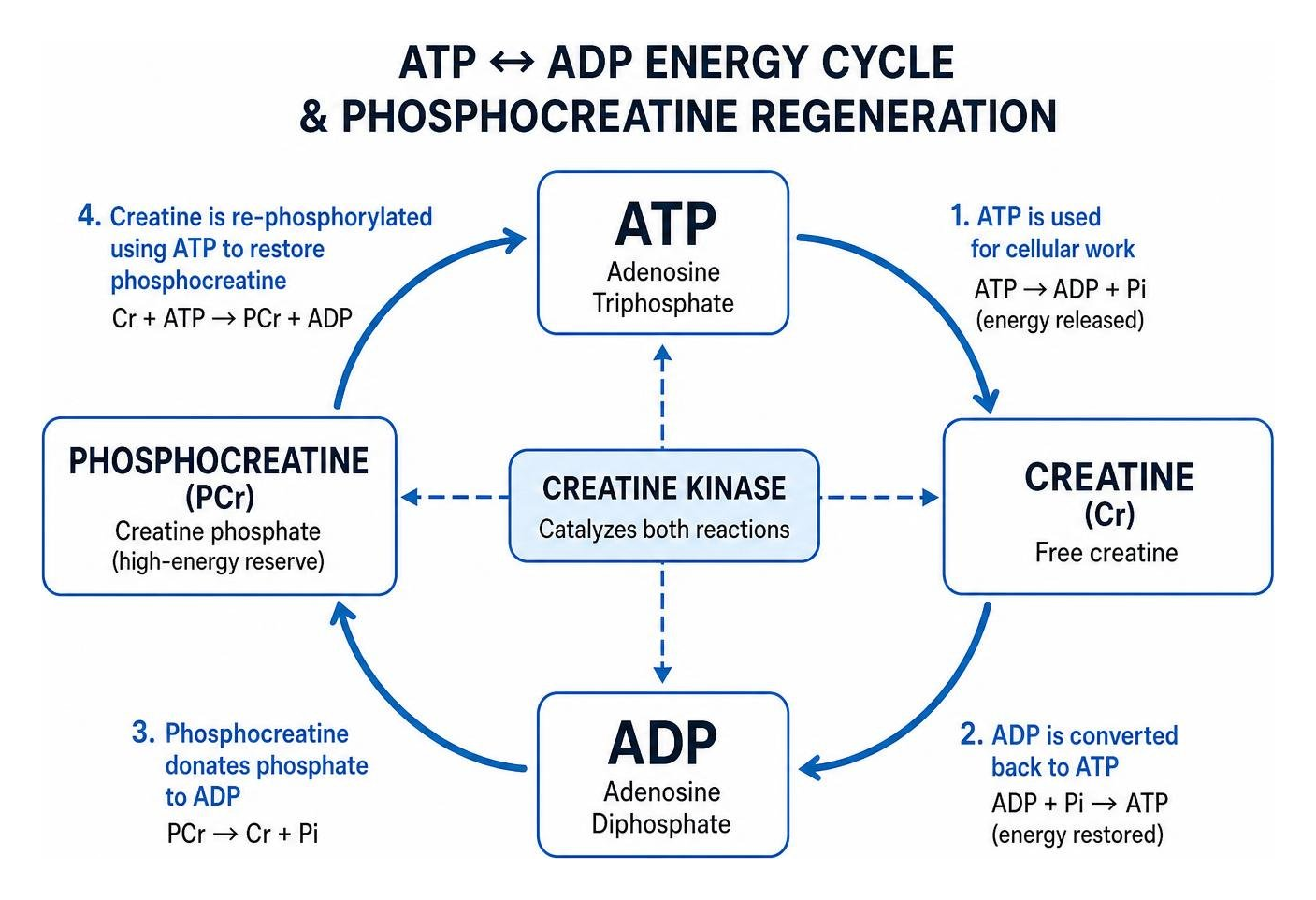
During high-intensity exercise—such as an all-out 100-meter sprint or a heavy set of squats—muscle cells exhaust their existing intracellular ATP pools in just a couple of seconds. Glycolysis and oxidative phosphorylation can generate new ATP, but those metabolic pathways are far too slow to match the explosive energy demands of maximum physical effort.
This is where the phosphocreatine energy system steps in. Phosphocreatine rapidly transfers its phosphate group directly to ADP, resynthesizing ATP almost instantly without requiring oxygen. Maximizing your intracellular phosphocreatine stores enables your muscles to sustain maximum power output for longer intervals. For those interested in optimizing cellular bioenergetics at the highest level, exploring liposomal creatine cellular energy reveals how advanced delivery systems protect and deliver vital precursors directly to cellular machinery.
Intestinal Absorption and Transporter Kinetics
Before creatine can fuel a muscle contraction or power a neural circuit, it must cross the intestinal barrier. The body relies on a specialized transport mechanism known as the creatine transporter (CRT), encoded by the SLC6A8 gene (Peral et al., 2002).
Scientific characterization of CRT reveals crucial facts about how oral supplementation is processed in the human gut:
-
Specific Localization: The CRT protein is expressed primarily along the brush-border (apical membrane) of enterocytes throughout the intestinal villus, rather than in the crypt cells (Peral et al., 2002).
-
High-Affinity Transport: The apparent Michaelis constant ($K_m$) for intestinal creatine uptake is approximately 29 μM, demonstrating that the transporter has a remarkably high affinity for creatine (Peral et al., 2002).
-
Ion Dependency and Stoichiometry: Creatine uptake across the enterocyte apical membrane is an electrogenic process driven by electrochemical gradients. It requires both extracellular sodium ($Na^+$) and chloride ($Cl^−$) ions, operating with a precise stoichiometry of 2 $Na^+$: 1 $Cl^−$: 1 creatine (Peral et al., 2002).
-
Energy Requirements: This active transport process is dependent on the cellular $Na^+/K^+$ ATPase pump and is markedly inhibited by metabolic inhibitors like ouabain and iodoacetic acid (Peral et al., 2002).
Because standard intestinal transporters can face saturation when overwhelmed by massive single doses, advanced delivery technologies—such as liposomal encapsulation—provide a distinct pathway to support cellular uptake without relying solely on standard ion-dependent mucosal transport channels.
Key Physical and Athletic Benefits of Creatine
Creatine stands as the gold standard of sports nutrition. Hundreds of peer-reviewed clinical studies demonstrate its ability to increase muscle power, expand total training volume, and accelerate post-workout recovery. Whether you are stepping into a squat rack or looking to crush your workouts, consistent supplementation provides measurable improvements across multiple physical domains.
Power Output and Strength Gains
The primary physical benefit of elevating phosphocreatine stores is an immediate increase in maximal power output and resistance training capacity. Clinical trials have consistently demonstrated that a daily intake of 3 g of creatine increases physical performance in successive bursts of short-term, high-intensity exercise.
By accelerating ATP resynthesis between rigorous sets, creatine enables athletes to perform extra repetitions, lift heavier loads, and reduce accumulated neuromuscular fatigue. Over weeks and months of structured resistance training, this amplified training volume stimulates greater myofibrillar protein synthesis, driving superior increases in lean muscle mass and structural strength compared to training alone.
Walk down any supplement aisle in the United States or Canada, and you will encounter several different formulations claiming superiority. However, decades of independent sports science research confirm that classic creatine monohydrate remains the most effective, thoroughly studied, and bioavailable standard.
| Supplement Form |
Formulation Details |
Solubility & Mixability |
Scientific Backing |
| Creatine Monohydrate |
100% pure creatine molecule bound to one water molecule (≈88% active creatine by weight). |
Moderate; dissolves best in warm or room-temperature liquids. |
Gold Standard; backed by hundreds of clinical trials establishing safety and efficacy. |
| Micronized Creatine |
Creatine monohydrate mechanically processed to reduce particle size by up to 20 times. |
High; dissolves rapidly without clumping or leaving sandy grit in the cup. |
Identical physiological efficacy to standard monohydrate, with improved mixability. |
| Creatine Hydrochloride (HCl) |
Creatine bound with hydrochloric acid to lower pH and increase water solubility. |
Very High; requires smaller liquid volume for complete dissolution. |
Limited clinical trials; no proven superiority in muscle saturation over monohydrate. |
| Creatine Ethyl Ester (CEE) |
Creatine bound to an ester molecule designed to bypass active cellular transporters. |
High; distinctive bitter taste. |
Shown in clinical studies to degrade rapidly into inactive creatinine in the gut. |
| Buffered Creatine (Kre-Alkalyn) |
Creatine combined with an alkaline powder to raise the finished solution's pH. |
Moderate to High. |
Clinical trials show no enhanced muscle retention compared to standard monohydrate. |
When selecting a pure powder, look for ultra-pure, micronized options that have undergone rigorous testing for heavy metals and purity.
Cognitive and Therapeutic Potential Beyond Muscle
While creatine built its reputation inside weight rooms, modern neurobiology is uncovering its profound role within the central nervous system. The human brain accounts for roughly 2% of total body mass yet consumes over 20% of the body's baseline resting metabolic energy. Just like contracting muscle fibers, active neurons depend heavily on steady ATP resynthesis to maintain membrane potentials and process complex signals.
Enhancing Brain Health with a Creatine Supplement
Neural tissue expresses its own specialized creatine kinase enzymes. Under conditions of acute metabolic stress—such as sleep deprivation, strenuous cognitive workloads, or mental fatigue—intracellular brain phosphocreatine levels can drop significantly.
Supplementation helps replenish these central energy reserves, which is why scientists are actively studying creatine for cognitive health. Clinical trials indicate that maintaining optimal brain creatine concentrations supports mental clarity, working memory retention, and cognitive processing speed. Furthermore, discovering the benefits beyond muscle gains has made creatine a sought-after nootropic for knowledge workers, students, and active professionals.
These cognitive benefits are often most dramatic in vegetarians and vegans, whose baseline brain creatine stores are naturally lower due to the absence of dietary meat and fish.
Clinical Applications in Disease Rehabilitation
The therapeutic scope of creatine reaches well beyond healthy athletic populations. Because it plays a fundamental role in maintaining cellular energy homeostasis and protecting cell integrity, researchers have evaluated creatine across several clinical models:
-
Gyrate Atrophy: Creatine supplementation has shown clear utility in managing gyrate atrophy of the choroid and retina, a rare metabolic condition linked to systemic ornithine aminotransferase deficiency (Peral et al., 2002).
-
Muscle Atrophy Rehabilitation: Extended periods of limb casting, post-surgical bed rest, or chronic disuse lead to rapid muscular atrophy. Creatine supplementation during immobilization and structured rehabilitation attenuates muscle loss, improves rehabilitation speed, and accelerates the restoration of functional strength.
-
Cardiovascular and Muscular Dystrophies: In cardiovascular and myopathic disorders where cellular energy synthesis is compromised, supplemental creatine supports cardiac and skeletal energy pools (Peral et al., 2002).
-
Anticancer Research: Experimental oncology investigations have highlighted that creatine and its structural analogues may exhibit potent anticancer properties by regulating cellular bioenergetics and inhibiting tumor proliferation pathways (Peral et al., 2002).
Recommended Dosage Protocols and Safety Guidelines
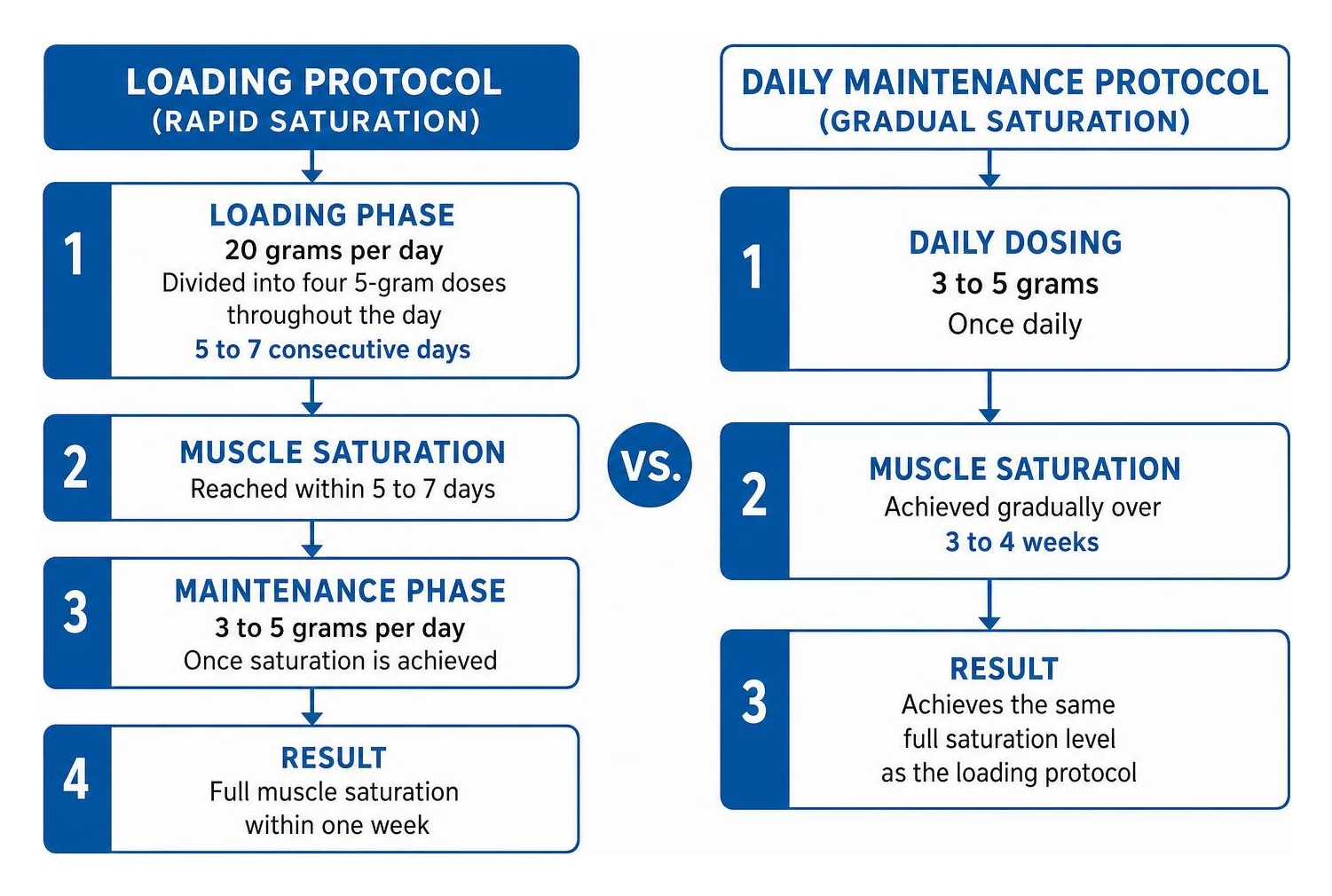
Achieving complete skeletal muscle saturation can be accomplished using two distinct, clinically proven dosing strategies. Both approaches lead to identical intramuscular creatine concentrations over time; they simply differ in how quickly full saturation is achieved.
Loading Phase vs Daily Maintenance
-
The Loading Strategy (Rapid Saturation): Consume 20 grams per day (divided into four equal 5-gram doses spread throughout the morning, afternoon, and evening) for 5 to 7 consecutive days. Once muscle saturation is reached, drop down to a daily maintenance dose of 3 to 5 grams. This method fully saturates muscle stores within a single week.
-
The Steady Maintenance Strategy (Gradual Saturation): Skip the high-dose loading phase entirely and consume a steady 3 to 5 grams once daily. While it takes roughly 3 to 4 weeks to reach full saturation with this method, it achieves the exact same physiological plateau without requiring multiple daily servings.
Consistency is far more important than exact nutrient timing. While consuming creatine alongside carbohydrates or protein can slightly enhance uptake due to insulin-mediated signaling, taking your supplement at a convenient, repeatable time each day is what ensures lasting results.
Common Myths and Side Effects
Despite being the most thoroughly investigated dietary supplement in modern sports science, a few persistent misconceptions remain:
-
Myth: Creatine damages the kidneys. Reality: Decades of long-term clinical trials spanning up to five years of continuous daily use demonstrate no adverse renal effects in healthy individuals. This myth stems from confusing creatine with creatinine—a harmless metabolic byproduct measured during routine blood tests. Supplementation naturally raises serum creatinine levels without altering actual glomerular filtration rate (GFR).
-
Myth: Creatine causes bloating and fat gain. Reality: Creatine draws water into the muscle cells (intracellular hydration), which increases cell volume and creates a fuller appearance. It does not cause subcutaneous (extracellular) water retention or body fat accumulation. Intracellular swelling is actually an anabolic signal that stimulates protein synthesis.
-
Fact: Mild gastrointestinal discomfort can occur if taken incorrectly. Solution: Taking a 20-gram loading dose all at once can pull water into the digestive tract, resulting in transient stomach upset. To prevent this, divide loading doses into 5-gram servings taken with plenty of fluid, or opt for a gentle 3- to 5-gram daily maintenance approach.
Frequently Asked Questions About Creatine
Who benefits most from taking creatine?
While competitive athletes and strength lifters experience obvious performance gains, vegetarians, vegans, and aging adults often see the most pronounced relative benefits. Because plant-based diets contain virtually zero dietary creatine, plant-based individuals typically have lower initial baseline muscle and neural stores. When they begin supplementing, they experience dramatic improvements in physical endurance, recovery, and working memory. Older adults also benefit significantly, as creatine helps combat age-related sarcopenia (muscle loss) and supports bone density when paired with resistance exercise.
Can non-responders still benefit from supplementation?
Approximately 20% to 25% of the population are classified as athletic "non-responders." These individuals naturally possess near-maximal intramuscular phosphocreatine levels due to genetics, muscle fiber composition, or high dietary intake of meat. While non-responders may not experience a noticeable jump in their 1-rep-max bench press or sprint speed, they still absorb creatine systemically, enjoying the neuroprotective, cognitive, and general cellular energy benefits that the molecule provides.
Is creatine safe for long-term daily use?
Yes. Multi-year clinical trials have repeatedly verified that continuous, daily supplementation of pure creatine monohydrate is safe for healthy adults. Cycling on and off is completely unnecessary; your body does not downregulate its natural transport capacity permanently, and natural synthesis resumes seamlessly if you ever choose to discontinue use. To explore pure, high-potency options, explore our complete creatine collection.
Conclusion
Creatine is an exceptional, versatile, and thoroughly validated nutritional supplement. By directly replenishing cellular ATP stores, it enhances physical power output, accelerates lean muscle development, and sustains sharp cognitive focus under fatigue. Whether you choose a rapid loading phase or a simple daily maintenance dose of 3 to 5 grams, maintaining consistent daily habits is the key to unlocking its full benefits.
At Vida Life Science, we are passionate about advancing human performance and wellness through cutting-edge nutrient delivery. By combining foundational nutrients with advanced liposomal encapsulation technology, we help ensure your body efficiently absorbs and utilizes the nutrients you take. Discover more about fueling both body and brain and elevate your physical and mental stamina today.
References
Peral MJ, García-Delgado M, Calonge ML, Durán JM, De La Horra MC, Wallimann T, Speer O, Ilundáin A. "Human, rat and chicken small intestinal Na+ - Cl- -creatine transporter: functional, molecular characterization and localization.." The Journal of physiology, 2002. PMCID PMC2290665.


Beginner's Guide to Creatine Supplement Benefits
What Is a Creatine Supplement and How Does It Work?
Creatine is a naturally occurring nitrogenous organic compound synthesized primarily in the liver, kidneys, and pancreas. It is assembled from three specific amino acids: arginine, glycine, and methionine. While our bodies naturally produce roughly 1 to 2 grams of creatine each day, omnivorous diets supply an additional gram or two through meat and seafood. However, typical dietary intakes only saturate our baseline phosphocreatine stores to about 60% to 80% of their full capacity.
When we take supplemental creatine, we are effectively topping off these cellular energy reservoirs. The vast majority of our bodily creatine—around 95%—is concentrated directly inside skeletal muscle tissue, with the remaining fraction distributed among the brain, heart, and testes. Within muscle cells, free creatine is converted into phosphocreatine (creatine phosphate) via the enzyme creatine kinase. This molecule serves as an immediate chemical battery, standing ready to donate high-energy phosphate groups during rapid bursts of cellular work.
Cellular Energy and ATP Regeneration
To understand why creatine is so vital, we have to look at adenosine triphosphate (ATP), the fundamental energy currency of human life. Whenever a muscle contracts or a brain cell fires, it hydrolyzes ATP into adenosine diphosphate (ADP) and an inorganic phosphate molecule, releasing immediate kinetic energy:
During high-intensity exercise—such as an all-out 100-meter sprint or a heavy set of squats—muscle cells exhaust their existing intracellular ATP pools in just a couple of seconds. Glycolysis and oxidative phosphorylation can generate new ATP, but those metabolic pathways are far too slow to match the explosive energy demands of maximum physical effort.
This is where the phosphocreatine energy system steps in. Phosphocreatine rapidly transfers its phosphate group directly to ADP, resynthesizing ATP almost instantly without requiring oxygen. Maximizing your intracellular phosphocreatine stores enables your muscles to sustain maximum power output for longer intervals. For those interested in optimizing cellular bioenergetics at the highest level, exploring liposomal creatine cellular energy reveals how advanced delivery systems protect and deliver vital precursors directly to cellular machinery.
Intestinal Absorption and Transporter Kinetics
Before creatine can fuel a muscle contraction or power a neural circuit, it must cross the intestinal barrier. The body relies on a specialized transport mechanism known as the creatine transporter (CRT), encoded by the SLC6A8 gene (Peral et al., 2002).
Scientific characterization of CRT reveals crucial facts about how oral supplementation is processed in the human gut:
Because standard intestinal transporters can face saturation when overwhelmed by massive single doses, advanced delivery technologies—such as liposomal encapsulation—provide a distinct pathway to support cellular uptake without relying solely on standard ion-dependent mucosal transport channels.
Key Physical and Athletic Benefits of Creatine
Creatine stands as the gold standard of sports nutrition. Hundreds of peer-reviewed clinical studies demonstrate its ability to increase muscle power, expand total training volume, and accelerate post-workout recovery. Whether you are stepping into a squat rack or looking to crush your workouts, consistent supplementation provides measurable improvements across multiple physical domains.
Power Output and Strength Gains
The primary physical benefit of elevating phosphocreatine stores is an immediate increase in maximal power output and resistance training capacity. Clinical trials have consistently demonstrated that a daily intake of 3 g of creatine increases physical performance in successive bursts of short-term, high-intensity exercise.
By accelerating ATP resynthesis between rigorous sets, creatine enables athletes to perform extra repetitions, lift heavier loads, and reduce accumulated neuromuscular fatigue. Over weeks and months of structured resistance training, this amplified training volume stimulates greater myofibrillar protein synthesis, driving superior increases in lean muscle mass and structural strength compared to training alone.
Choosing the Right Creatine Supplement Form
Walk down any supplement aisle in the United States or Canada, and you will encounter several different formulations claiming superiority. However, decades of independent sports science research confirm that classic creatine monohydrate remains the most effective, thoroughly studied, and bioavailable standard.
When selecting a pure powder, look for ultra-pure, micronized options that have undergone rigorous testing for heavy metals and purity.
Cognitive and Therapeutic Potential Beyond Muscle
While creatine built its reputation inside weight rooms, modern neurobiology is uncovering its profound role within the central nervous system. The human brain accounts for roughly 2% of total body mass yet consumes over 20% of the body's baseline resting metabolic energy. Just like contracting muscle fibers, active neurons depend heavily on steady ATP resynthesis to maintain membrane potentials and process complex signals.
Enhancing Brain Health with a Creatine Supplement
Neural tissue expresses its own specialized creatine kinase enzymes. Under conditions of acute metabolic stress—such as sleep deprivation, strenuous cognitive workloads, or mental fatigue—intracellular brain phosphocreatine levels can drop significantly.
Supplementation helps replenish these central energy reserves, which is why scientists are actively studying creatine for cognitive health. Clinical trials indicate that maintaining optimal brain creatine concentrations supports mental clarity, working memory retention, and cognitive processing speed. Furthermore, discovering the benefits beyond muscle gains has made creatine a sought-after nootropic for knowledge workers, students, and active professionals.
These cognitive benefits are often most dramatic in vegetarians and vegans, whose baseline brain creatine stores are naturally lower due to the absence of dietary meat and fish.
Clinical Applications in Disease Rehabilitation
The therapeutic scope of creatine reaches well beyond healthy athletic populations. Because it plays a fundamental role in maintaining cellular energy homeostasis and protecting cell integrity, researchers have evaluated creatine across several clinical models:
Recommended Dosage Protocols and Safety Guidelines
Achieving complete skeletal muscle saturation can be accomplished using two distinct, clinically proven dosing strategies. Both approaches lead to identical intramuscular creatine concentrations over time; they simply differ in how quickly full saturation is achieved.
Loading Phase vs Daily Maintenance
Consistency is far more important than exact nutrient timing. While consuming creatine alongside carbohydrates or protein can slightly enhance uptake due to insulin-mediated signaling, taking your supplement at a convenient, repeatable time each day is what ensures lasting results.
Common Myths and Side Effects
Despite being the most thoroughly investigated dietary supplement in modern sports science, a few persistent misconceptions remain:
Frequently Asked Questions About Creatine
Who benefits most from taking creatine?
While competitive athletes and strength lifters experience obvious performance gains, vegetarians, vegans, and aging adults often see the most pronounced relative benefits. Because plant-based diets contain virtually zero dietary creatine, plant-based individuals typically have lower initial baseline muscle and neural stores. When they begin supplementing, they experience dramatic improvements in physical endurance, recovery, and working memory. Older adults also benefit significantly, as creatine helps combat age-related sarcopenia (muscle loss) and supports bone density when paired with resistance exercise.
Can non-responders still benefit from supplementation?
Approximately 20% to 25% of the population are classified as athletic "non-responders." These individuals naturally possess near-maximal intramuscular phosphocreatine levels due to genetics, muscle fiber composition, or high dietary intake of meat. While non-responders may not experience a noticeable jump in their 1-rep-max bench press or sprint speed, they still absorb creatine systemically, enjoying the neuroprotective, cognitive, and general cellular energy benefits that the molecule provides.
Is creatine safe for long-term daily use?
Yes. Multi-year clinical trials have repeatedly verified that continuous, daily supplementation of pure creatine monohydrate is safe for healthy adults. Cycling on and off is completely unnecessary; your body does not downregulate its natural transport capacity permanently, and natural synthesis resumes seamlessly if you ever choose to discontinue use. To explore pure, high-potency options, explore our complete creatine collection.
Conclusion
Creatine is an exceptional, versatile, and thoroughly validated nutritional supplement. By directly replenishing cellular ATP stores, it enhances physical power output, accelerates lean muscle development, and sustains sharp cognitive focus under fatigue. Whether you choose a rapid loading phase or a simple daily maintenance dose of 3 to 5 grams, maintaining consistent daily habits is the key to unlocking its full benefits.
At Vida Life Science, we are passionate about advancing human performance and wellness through cutting-edge nutrient delivery. By combining foundational nutrients with advanced liposomal encapsulation technology, we help ensure your body efficiently absorbs and utilizes the nutrients you take. Discover more about fueling both body and brain and elevate your physical and mental stamina today.
References
Peral MJ, García-Delgado M, Calonge ML, Durán JM, De La Horra MC, Wallimann T, Speer O, Ilundáin A. "Human, rat and chicken small intestinal Na+ - Cl- -creatine transporter: functional, molecular characterization and localization.." The Journal of physiology, 2002. PMCID PMC2290665.