Why the Vitamin C Testosterone Connection Matters for Men's Hormonal Health
The link between vitamin C testosterone levels is more significant than most men realize. Here's a quick summary if you're short on time:
Does vitamin C support testosterone? Yes — here's how:
-
Protects testosterone production by reducing oxidative stress in the testes
-
Lowers luteinizing hormone (LH) levels, suggesting improved hormonal efficiency
-
Reduces aromatase activity, which slows the conversion of testosterone to estrogen
-
Shields Leydig cells — the cells that actually make testosterone — from chemical and oxidative damage
-
Most beneficial for men over 41, where the association with higher testosterone is statistically significant
Note: Vitamin C is unlikely to dramatically raise testosterone on its own in healthy men. Its primary role is protective — preserving the testosterone your body already produces.
Low testosterone is more common than most people think. It affects an estimated 10–40% of men worldwide, and levels naturally decline by around 1–2% every year after age 30. At the same time, oxidative stress — caused by poor diet, environmental toxins, stress, and aging — quietly damages the cells responsible for hormone production.
This is where vitamin C comes in. As one of the most well-studied antioxidants on the planet, ascorbic acid plays a surprisingly active role in male reproductive health. In fact, it accounts for up to 65% of the antioxidant activity in seminal plasma — and seminal concentrations can run up to ten times higher than what's found in the bloodstream.
Yet most men never think about vitamin C when it comes to hormonal health. That's a gap worth closing.
At Vida Life Science, we specialize in advanced liposomal nutrient delivery technology, giving us a deep understanding of how nutrients like vitamin C interact with critical biological systems — including vitamin C testosterone pathways in male endocrine health. That expertise shapes everything in this guide.
The Biological Link: How Vitamin C Testosterone Interactions Support Male Endocrine Health
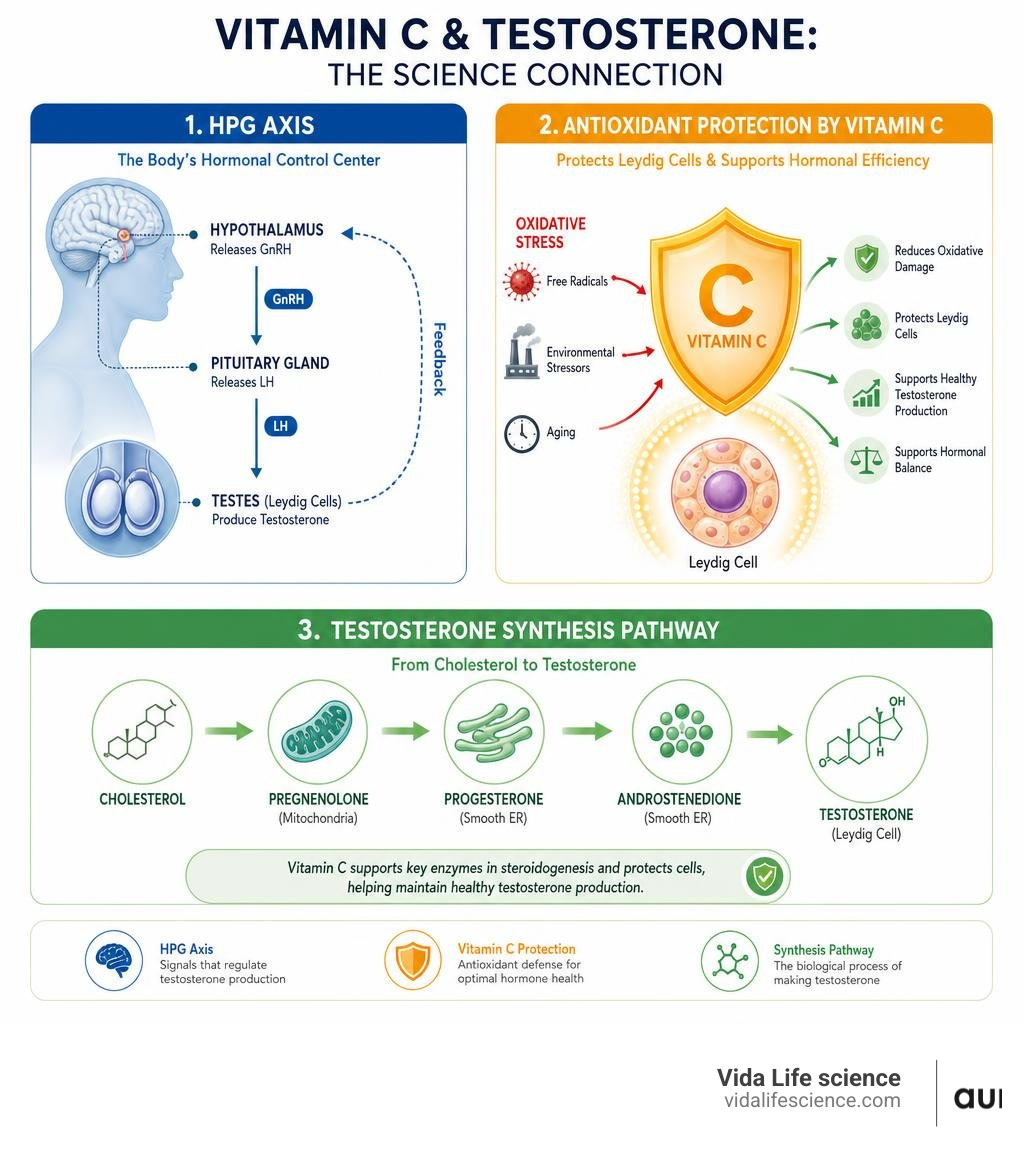
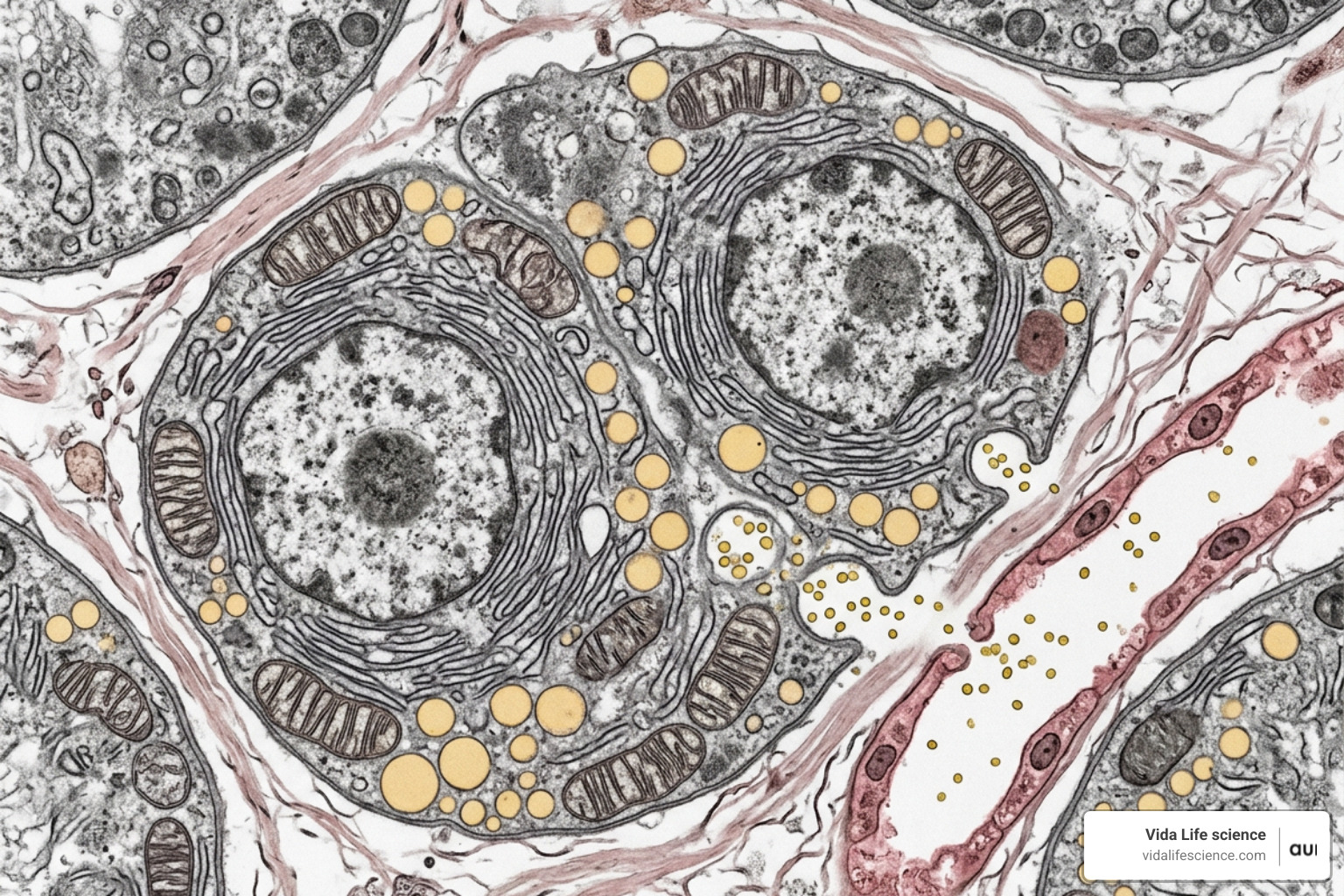
To understand how vitamin C testosterone interactions work, we have to look inside the testes—specifically at the Leydig cells. These specialized cells are the primary factories for male androgen synthesis, converting cholesterol into testosterone through a process called steroidogenesis.
However, Leydig cells are highly sensitive to their environment. When the body is under physical, mental, or chemical stress, it releases high levels of cortisol. Cortisol is a known antagonist of testosterone; elevated cortisol levels directly suppress Leydig cell function, halting the steroidogenesis process.
Ascorbic acid acts as a powerful biological buffer in this system. It is heavily concentrated in the adrenal glands, where it helps regulate the stress response and mitigate excess cortisol production. By keeping cortisol in check, vitamin C indirectly maintains an environment where Leydig cells can produce testosterone without interruption.
Furthermore, clinical data suggests a direct relationship between circulating ascorbic acid and male sex hormones. In a landmark study analyzing the nutritional and hormonal profiles of males, researchers found that higher serum ascorbic acid concentrations were strongly linked to improved androgenic status. You can read the full breakdown of these findings in this Scientific research on ascorbic acid and male hormones.
How Vitamin C Influences LH, FSH, and Estradiol
The male reproductive system relies on the Hypothalamic-Pituitary-Gonadal (HPG) axis, a complex feedback loop. The brain releases Luteinizing Hormone (LH) to signal the testes to produce testosterone, and Follicle-Stimulating Hormone (FSH) to stimulate sperm production.
When Leydig cells are damaged or struggling due to oxidative stress, the brain must pump out more LH to force testosterone production. This state of hormonal strain is common in subfertile men.
Interestingly, research shows that serum ascorbic acid is inversely associated with LH levels. When vitamin C levels are optimal, LH levels remain moderate and stable, indicating that the testes are operating efficiently and do not require excessive hormonal "prodding" from the brain.
Additionally, vitamin C helps regulate estradiol (estrogen) levels in men by inhibiting aromatase—the enzyme responsible for converting precious testosterone into estrogen. By slowing down this conversion, vitamin C helps preserve your active pool of free testosterone. This delicate hormonal balance is explored in detail within this Research on hormonal profiles in infertile males.
Mitigating Oxidative Stress in Testosterone Synthesis
During testosterone synthesis, Leydig cells naturally generate Reactive Oxygen Species (ROS) as metabolic byproducts. If these free radicals are not quickly neutralized, they cause lipid peroxidation—a destructive process that degrades the fatty acids in Leydig cell membranes.
This cellular damage is often measured using TBARS (Thiobarbituric Acid Reactive Substances). High TBARS levels indicate severe oxidative stress, which leads to testicular damage and a sharp drop in testosterone production.
Vitamin C serves as the body’s primary water-soluble antioxidant. It donates electrons to neutralize free radicals, preventing lipid peroxidation and keeping TBARS levels low. This protective shield is critical for maintaining the structural integrity of the testes, as highlighted in this Study on vitamin C and testicular oxidative damage.
Clinical Evidence: Human and Animal Studies on Vitamin C and Androgens
The relationship between vitamin C testosterone pathways has been thoroughly investigated in both animal models and human clinical trials, demonstrating a clear protective effect under various physiological stressors.
In animal models, researchers frequently use Wistar rats to study reproductive toxicity. For instance, in hyperglycemic (diabetic) rat models, severe blood sugar elevation causes massive oxidative stress, leading to a drastic drop in testosterone. Studies show that administering vitamin C to these hyperglycemic animals partially recovers testosterone levels and completely restores the sensitivity of the vas deferens to sympathetic signals. Remarkably, vitamin C was found to be more efficient than vitamin E in attenuating these hyperglycemia-induced reproductive issues.
Similarly, in chemically stressed models—such as rats exposed to the toxic effects of the antibiotic gentamicin—vitamin C administration at doses of 1.6 mg and 2.25 mg significantly increased testosterone levels compared to untreated controls. It also protected sperm morphology and count.
In human trials, the data is equally compelling. A study of 302 infertile males revealed that 6.0% of the participants were severely deficient in vitamin C (serum levels <11 µmol/L), which is double the rate found in the general Canadian population. Those with optimal ascorbic acid levels demonstrated far more favorable hormonal profiles, including higher total testosterone and a healthier, lower LH-to-testosterone ratio.
| Study Type |
Subject / Model |
Intervention / Stressor |
Key Finding on Testosterone & Sperm |
| Animal Study |
Hyperglycemic Wistar Rats |
Diabetes-induced oxidative stress |
Vitamin C partially restored testosterone and fully recovered vas deferens sensitivity. |
| Animal Study |
Gentamicin-exposed Rats |
Gentamicin antibiotic toxicity |
Lower doses (1.6mg–2.25mg) significantly increased testosterone; higher doses protected sperm count. |
| Animal Study |
Albino Rats |
200–400 mg/kg twice daily for 21 days |
Directly resulted in increased total testosterone concentrations. |
| Human Study |
302 Infertile Males |
Cross-sectional observational |
Higher serum vitamin C was associated with higher total testosterone and lower LH. |
Age and BMI as Modifiers of Vitamin C Testosterone Efficacy
The positive association between vitamin C and testosterone is not uniform across all demographics; it is highly dependent on age and metabolic health.
In the human cohort of infertile males, a positive correlation between serum ascorbic acid and total testosterone was specifically observed in men over the age of 41.6 years (calculated via the Johnson-Neyman statistical interval).
Why does this age threshold exist? As men age, natural antioxidant defenses decline, and systemic oxidative stress increases. Consequently, older Leydig cells are far more vulnerable to damage. In younger men, the body's natural antioxidant pool may be sufficient, but as we cross into our 40s, external antioxidants like vitamin C become critical to prevent age-related testosterone decline.
Body Mass Index (BMI) also acts as a major modifier. Men with higher BMIs typically carry more adipose tissue, which expresses high levels of the aromatase enzyme. This metabolic state increases oxidative stress and systemic inflammation, making vitamin C's protective role even more vital for maintaining primary androgenic status.
Protecting the Testes from Chemical and Steroid-Induced Damage
Environmental toxins, heavy metals, prescription drugs, and even synthetic hormones can devastate testicular health.
In a study investigating the effects of the anabolic steroid boldenone undecylenate (BOL) in male rats, the steroid caused severe testicular oxidative damage, down-regulated androgen receptors, and dropped testicular testosterone from a baseline of 406.40 ng/g down to 147.20 ng/g.
While vitamin C co-administration could not completely override the powerful hormonal feedback suppression caused by the synthetic steroid, it significantly relieved testicular oxidative damage. Specifically, vitamin C:
- Improved sperm motility from 60% in the steroid-only group to 79.67%
- Reduced abnormal sperm morphology from 40.82% down to 24.26%
This demonstrates that even in cases of severe chemical or hormonal trauma, vitamin C acts as a reliable shield, preserving the physical structures required for fertility and future hormone recovery.
Dietary Sources and Optimal Dosing of Vitamin C for Men
While the Recommended Dietary Allowance (RDA) for vitamin C in adult men is set at 90 mg per day, this baseline is designed merely to prevent deficiency diseases like scurvy. It does not account for the optimal amounts needed to manage chronic oxidative stress, intense physical training, or hormone optimization.
For active men, hard training raises cortisol levels, which can temporarily tank testosterone. Supplementing with higher doses of vitamin C (typically between 1,000 mg and 3,000 mg daily) has been shown to suppress exercise-induced cortisol spikes, protecting the testosterone-to-cortisol ratio.

Best Food Sources to Support Vitamin C Testosterone Levels
To naturally support your daily antioxidant pool, we recommend incorporating these vitamin C-rich foods into your diet:
-
Squeezed Orange Juice: A single glass contains up to 108 mg of vitamin C (about 120% of your daily value).
-
Kiwi: One of the most nutrient-dense options, providing 92 mg of vitamin C per 100g (155% DV). Bonus: Eating two kiwis before bed has also been shown to improve sleep quality!
-
Pineapple: Offers 47 mg of vitamin C per 100g, along with bromelain, an enzyme that aids digestion and reduces inflammation.
-
Mango: Provides 27 mg of vitamin C per 100g, alongside carotenoids that support overall cellular health.
-
Sweet Potato: A great carb source for active men, containing 19 mg of vitamin C per 100g.
Supplementation Protocols and Potential Risks
While getting vitamin C from food is excellent, achieving the higher doses used in clinical studies (1,000 mg and above) often requires supplementation. However, traditional oral vitamin C (ascorbic acid) has a major limitation: absorption limits.
When you take a high dose of standard vitamin C, your digestive tract can only absorb a fraction of it. The unabsorbed vitamin C remains in the colon, drawing in water and causing gastrointestinal distress, cramping, and osmotic diarrhea. Furthermore, excessively high doses of standard ascorbic acid can increase urinary oxalate levels, raising the risk of kidney stones in susceptible individuals.
It is also important to consider potential drug interactions. While there are no major adverse interactions between testosterone replacement therapy (TRT) and vitamin C, you can review detailed safety profiles via this guide on Information on testosterone and vitamin C interactions.
To bypass these digestive limitations and eliminate the risk of gastric upset, liposomal vitamin C is the ideal solution. Liposomal technology wraps the ascorbic acid in a protective lipid bilayer, allowing it to pass smoothly through the digestive tract and absorb directly into the bloodstream at far higher rates.
How Vitamin C Compares to Other Testosterone-Boosting Micronutrients
While vitamin C is a premier protective antioxidant, it works best when part of a broader nutritional strategy. Here is how it compares to, and pairs with, other key testosterone-supporting nutrients:
-
Vitamin D: Unlike vitamin C's protective role, Vitamin D acts more like a hormone. In one study, a daily dose of 3,300 IU of Vitamin D increased testosterone levels by 20% in deficient men, making it a powerful direct booster.
-
Zinc: An absolute cornerstone for male fertility. Zinc is directly involved in LH secretion and testicular function. Severe zinc deficiency leads to hypogonadism, and clinical protocols often use 220 mg of zinc twice daily to restore baseline levels.
-
Vitamin E: The perfect partner to vitamin C. While vitamin C is water-soluble and works in the cellular fluids, Vitamin E is fat-soluble and protects the lipid membranes of Leydig cells. Together, they form an unstoppable antioxidant tag-team.
-
Inositol: Particularly beneficial for metabolic health. Studies show that 1g to 1.2g of daily inositol can increase testosterone levels by 20–23% in older or hypogonadal men by improving insulin sensitivity.
-
Ashwagandha: An adaptogenic herb that, at 300 mg twice daily, has been shown to reduce cortisol and increase testosterone by 14.7% in stressed men.
Frequently Asked Questions about Vitamin C and Testosterone
Can taking vitamin C daily increase my testosterone levels?
Not directly if you already have optimal hormone levels and low oxidative stress. Vitamin C is not a stimulant or a direct hormone precursor. Instead, its daily intake acts as a protective shield. It prevents oxidative stress, environmental toxins, and cortisol from damaging your Leydig cells, preserving your natural testosterone production.
What is the best dosage of vitamin C for male fertility and hormone support?
To maintain a basic antioxidant pool, 100 mg to 200 mg daily is sufficient. However, for men under high physical stress, those exposed to environmental toxins, or those recovering from testicular strain, daily doses of 1,000 mg to 2,000 mg are commonly used to ensure tissue saturation and maintain high concentrations within the seminal plasma.
Does vitamin C lower cortisol to help testosterone?
Yes. Cortisol and testosterone exist in a seesaw relationship; when cortisol is high, testosterone drops. Vitamin C is heavily utilized by the adrenal glands to regulate the stress response. By helping to lower excess cortisol, vitamin C naturally supports a healthier, higher testosterone-to-cortisol ratio.
Conclusion
When it comes to optimizing male hormonal health, we cannot ignore the foundational role of antioxidants. The vitamin C testosterone connection highlights how protecting your Leydig cells from oxidative damage, managing cortisol, and maintaining testicular integrity are just as important as direct hormone stimulation.
However, standard vitamin C supplements often fall short due to poor absorption rates and digestive side effects at optimal doses.
At Vida Life Science, we solve this problem. We are the exclusive distributor of Aurora Nutrascience liposomal supplements in the USA and Canada. By utilizing advanced, protective liposomal delivery technology, our supplements wrap active nutrients in microscopic liposomes. This ensures superior nutrient absorption, bypassing digestive barriers to deliver vitamin C directly to your cells where it is needed most.
Ready to experience the difference that advanced cellular absorption can make for your energy, recovery, and hormonal health? Explore our advanced liposomal supplements and take control of your cellular wellness today.


The Hormonal Hero: How Vitamin C Supports Testosterone Synthesis
Why the Vitamin C Testosterone Connection Matters for Men's Hormonal Health
The link between vitamin C testosterone levels is more significant than most men realize. Here's a quick summary if you're short on time:
Does vitamin C support testosterone? Yes — here's how:
Low testosterone is more common than most people think. It affects an estimated 10–40% of men worldwide, and levels naturally decline by around 1–2% every year after age 30. At the same time, oxidative stress — caused by poor diet, environmental toxins, stress, and aging — quietly damages the cells responsible for hormone production.
This is where vitamin C comes in. As one of the most well-studied antioxidants on the planet, ascorbic acid plays a surprisingly active role in male reproductive health. In fact, it accounts for up to 65% of the antioxidant activity in seminal plasma — and seminal concentrations can run up to ten times higher than what's found in the bloodstream.
Yet most men never think about vitamin C when it comes to hormonal health. That's a gap worth closing.
At Vida Life Science, we specialize in advanced liposomal nutrient delivery technology, giving us a deep understanding of how nutrients like vitamin C interact with critical biological systems — including vitamin C testosterone pathways in male endocrine health. That expertise shapes everything in this guide.
The Biological Link: How Vitamin C Testosterone Interactions Support Male Endocrine Health
To understand how vitamin C testosterone interactions work, we have to look inside the testes—specifically at the Leydig cells. These specialized cells are the primary factories for male androgen synthesis, converting cholesterol into testosterone through a process called steroidogenesis.
However, Leydig cells are highly sensitive to their environment. When the body is under physical, mental, or chemical stress, it releases high levels of cortisol. Cortisol is a known antagonist of testosterone; elevated cortisol levels directly suppress Leydig cell function, halting the steroidogenesis process.
Ascorbic acid acts as a powerful biological buffer in this system. It is heavily concentrated in the adrenal glands, where it helps regulate the stress response and mitigate excess cortisol production. By keeping cortisol in check, vitamin C indirectly maintains an environment where Leydig cells can produce testosterone without interruption.
Furthermore, clinical data suggests a direct relationship between circulating ascorbic acid and male sex hormones. In a landmark study analyzing the nutritional and hormonal profiles of males, researchers found that higher serum ascorbic acid concentrations were strongly linked to improved androgenic status. You can read the full breakdown of these findings in this Scientific research on ascorbic acid and male hormones.
How Vitamin C Influences LH, FSH, and Estradiol
The male reproductive system relies on the Hypothalamic-Pituitary-Gonadal (HPG) axis, a complex feedback loop. The brain releases Luteinizing Hormone (LH) to signal the testes to produce testosterone, and Follicle-Stimulating Hormone (FSH) to stimulate sperm production.
When Leydig cells are damaged or struggling due to oxidative stress, the brain must pump out more LH to force testosterone production. This state of hormonal strain is common in subfertile men.
Interestingly, research shows that serum ascorbic acid is inversely associated with LH levels. When vitamin C levels are optimal, LH levels remain moderate and stable, indicating that the testes are operating efficiently and do not require excessive hormonal "prodding" from the brain.
Additionally, vitamin C helps regulate estradiol (estrogen) levels in men by inhibiting aromatase—the enzyme responsible for converting precious testosterone into estrogen. By slowing down this conversion, vitamin C helps preserve your active pool of free testosterone. This delicate hormonal balance is explored in detail within this Research on hormonal profiles in infertile males.
Mitigating Oxidative Stress in Testosterone Synthesis
During testosterone synthesis, Leydig cells naturally generate Reactive Oxygen Species (ROS) as metabolic byproducts. If these free radicals are not quickly neutralized, they cause lipid peroxidation—a destructive process that degrades the fatty acids in Leydig cell membranes.
This cellular damage is often measured using TBARS (Thiobarbituric Acid Reactive Substances). High TBARS levels indicate severe oxidative stress, which leads to testicular damage and a sharp drop in testosterone production.
Vitamin C serves as the body’s primary water-soluble antioxidant. It donates electrons to neutralize free radicals, preventing lipid peroxidation and keeping TBARS levels low. This protective shield is critical for maintaining the structural integrity of the testes, as highlighted in this Study on vitamin C and testicular oxidative damage.
Clinical Evidence: Human and Animal Studies on Vitamin C and Androgens
The relationship between vitamin C testosterone pathways has been thoroughly investigated in both animal models and human clinical trials, demonstrating a clear protective effect under various physiological stressors.
In animal models, researchers frequently use Wistar rats to study reproductive toxicity. For instance, in hyperglycemic (diabetic) rat models, severe blood sugar elevation causes massive oxidative stress, leading to a drastic drop in testosterone. Studies show that administering vitamin C to these hyperglycemic animals partially recovers testosterone levels and completely restores the sensitivity of the vas deferens to sympathetic signals. Remarkably, vitamin C was found to be more efficient than vitamin E in attenuating these hyperglycemia-induced reproductive issues.
Similarly, in chemically stressed models—such as rats exposed to the toxic effects of the antibiotic gentamicin—vitamin C administration at doses of 1.6 mg and 2.25 mg significantly increased testosterone levels compared to untreated controls. It also protected sperm morphology and count.
In human trials, the data is equally compelling. A study of 302 infertile males revealed that 6.0% of the participants were severely deficient in vitamin C (serum levels <11 µmol/L), which is double the rate found in the general Canadian population. Those with optimal ascorbic acid levels demonstrated far more favorable hormonal profiles, including higher total testosterone and a healthier, lower LH-to-testosterone ratio.
Age and BMI as Modifiers of Vitamin C Testosterone Efficacy
The positive association between vitamin C and testosterone is not uniform across all demographics; it is highly dependent on age and metabolic health.
In the human cohort of infertile males, a positive correlation between serum ascorbic acid and total testosterone was specifically observed in men over the age of 41.6 years (calculated via the Johnson-Neyman statistical interval).
Why does this age threshold exist? As men age, natural antioxidant defenses decline, and systemic oxidative stress increases. Consequently, older Leydig cells are far more vulnerable to damage. In younger men, the body's natural antioxidant pool may be sufficient, but as we cross into our 40s, external antioxidants like vitamin C become critical to prevent age-related testosterone decline.
Body Mass Index (BMI) also acts as a major modifier. Men with higher BMIs typically carry more adipose tissue, which expresses high levels of the aromatase enzyme. This metabolic state increases oxidative stress and systemic inflammation, making vitamin C's protective role even more vital for maintaining primary androgenic status.
Protecting the Testes from Chemical and Steroid-Induced Damage
Environmental toxins, heavy metals, prescription drugs, and even synthetic hormones can devastate testicular health.
In a study investigating the effects of the anabolic steroid boldenone undecylenate (BOL) in male rats, the steroid caused severe testicular oxidative damage, down-regulated androgen receptors, and dropped testicular testosterone from a baseline of 406.40 ng/g down to 147.20 ng/g.
While vitamin C co-administration could not completely override the powerful hormonal feedback suppression caused by the synthetic steroid, it significantly relieved testicular oxidative damage. Specifically, vitamin C:
This demonstrates that even in cases of severe chemical or hormonal trauma, vitamin C acts as a reliable shield, preserving the physical structures required for fertility and future hormone recovery.
Dietary Sources and Optimal Dosing of Vitamin C for Men
While the Recommended Dietary Allowance (RDA) for vitamin C in adult men is set at 90 mg per day, this baseline is designed merely to prevent deficiency diseases like scurvy. It does not account for the optimal amounts needed to manage chronic oxidative stress, intense physical training, or hormone optimization.
For active men, hard training raises cortisol levels, which can temporarily tank testosterone. Supplementing with higher doses of vitamin C (typically between 1,000 mg and 3,000 mg daily) has been shown to suppress exercise-induced cortisol spikes, protecting the testosterone-to-cortisol ratio.
Best Food Sources to Support Vitamin C Testosterone Levels
To naturally support your daily antioxidant pool, we recommend incorporating these vitamin C-rich foods into your diet:
Supplementation Protocols and Potential Risks
While getting vitamin C from food is excellent, achieving the higher doses used in clinical studies (1,000 mg and above) often requires supplementation. However, traditional oral vitamin C (ascorbic acid) has a major limitation: absorption limits.
When you take a high dose of standard vitamin C, your digestive tract can only absorb a fraction of it. The unabsorbed vitamin C remains in the colon, drawing in water and causing gastrointestinal distress, cramping, and osmotic diarrhea. Furthermore, excessively high doses of standard ascorbic acid can increase urinary oxalate levels, raising the risk of kidney stones in susceptible individuals.
It is also important to consider potential drug interactions. While there are no major adverse interactions between testosterone replacement therapy (TRT) and vitamin C, you can review detailed safety profiles via this guide on Information on testosterone and vitamin C interactions.
To bypass these digestive limitations and eliminate the risk of gastric upset, liposomal vitamin C is the ideal solution. Liposomal technology wraps the ascorbic acid in a protective lipid bilayer, allowing it to pass smoothly through the digestive tract and absorb directly into the bloodstream at far higher rates.
How Vitamin C Compares to Other Testosterone-Boosting Micronutrients
While vitamin C is a premier protective antioxidant, it works best when part of a broader nutritional strategy. Here is how it compares to, and pairs with, other key testosterone-supporting nutrients:
Frequently Asked Questions about Vitamin C and Testosterone
Can taking vitamin C daily increase my testosterone levels?
Not directly if you already have optimal hormone levels and low oxidative stress. Vitamin C is not a stimulant or a direct hormone precursor. Instead, its daily intake acts as a protective shield. It prevents oxidative stress, environmental toxins, and cortisol from damaging your Leydig cells, preserving your natural testosterone production.
What is the best dosage of vitamin C for male fertility and hormone support?
To maintain a basic antioxidant pool, 100 mg to 200 mg daily is sufficient. However, for men under high physical stress, those exposed to environmental toxins, or those recovering from testicular strain, daily doses of 1,000 mg to 2,000 mg are commonly used to ensure tissue saturation and maintain high concentrations within the seminal plasma.
Does vitamin C lower cortisol to help testosterone?
Yes. Cortisol and testosterone exist in a seesaw relationship; when cortisol is high, testosterone drops. Vitamin C is heavily utilized by the adrenal glands to regulate the stress response. By helping to lower excess cortisol, vitamin C naturally supports a healthier, higher testosterone-to-cortisol ratio.
Conclusion
When it comes to optimizing male hormonal health, we cannot ignore the foundational role of antioxidants. The vitamin C testosterone connection highlights how protecting your Leydig cells from oxidative damage, managing cortisol, and maintaining testicular integrity are just as important as direct hormone stimulation.
However, standard vitamin C supplements often fall short due to poor absorption rates and digestive side effects at optimal doses.
At Vida Life Science, we solve this problem. We are the exclusive distributor of Aurora Nutrascience liposomal supplements in the USA and Canada. By utilizing advanced, protective liposomal delivery technology, our supplements wrap active nutrients in microscopic liposomes. This ensures superior nutrient absorption, bypassing digestive barriers to deliver vitamin C directly to your cells where it is needed most.
Ready to experience the difference that advanced cellular absorption can make for your energy, recovery, and hormonal health? Explore our advanced liposomal supplements and take control of your cellular wellness today.