Why More Parents Are Turning to Liposomal Melatonin for Kids
Liposomal melatonin for kids is a newer form of the popular sleep supplement that uses tiny fat-based particles to deliver melatonin more efficiently into the bloodstream — potentially working faster and at lower doses than standard melatonin gummies or tablets.
Here's a quick summary of what parents need to know:
-
What it is: Melatonin wrapped in a lipid (fat) shell for better absorption
-
Who it may help: Children with sleep onset issues, ADHD, or autism spectrum disorder (ASD)
-
Key benefit: Faster sleep onset — one study found children fell asleep in 10.8 minutes vs. 18.1 minutes with a placebo
-
Minimum age: Not recommended for children under 5; always consult a pediatrician first
-
Important note: The FDA has not approved melatonin for children — its use is considered off-label
Getting a child to fall asleep can feel like a battle. Millions of parents have turned to melatonin supplements for help — and reports to U.S. poison control centers related to melatonin jumped 530% between 2012 and 2021, largely from accidental ingestion of gummies. That number alone signals how widespread — and sometimes risky — supplement use in children has become.
Liposomal melatonin offers a promising alternative, but it still comes with questions around safety, dosing, and whether it's right for your child.
At Vida Life Science, we specialize exclusively in phosphatidylcholine-based liposomal nutrient delivery technology — the same science behind liposomal melatonin for kids products — giving us a deep understanding of how these formulations work and what parents should look for. We'll walk you through everything the research says so you can make a confident, informed decision.
Understanding Liposomal Melatonin for Kids and How It Works
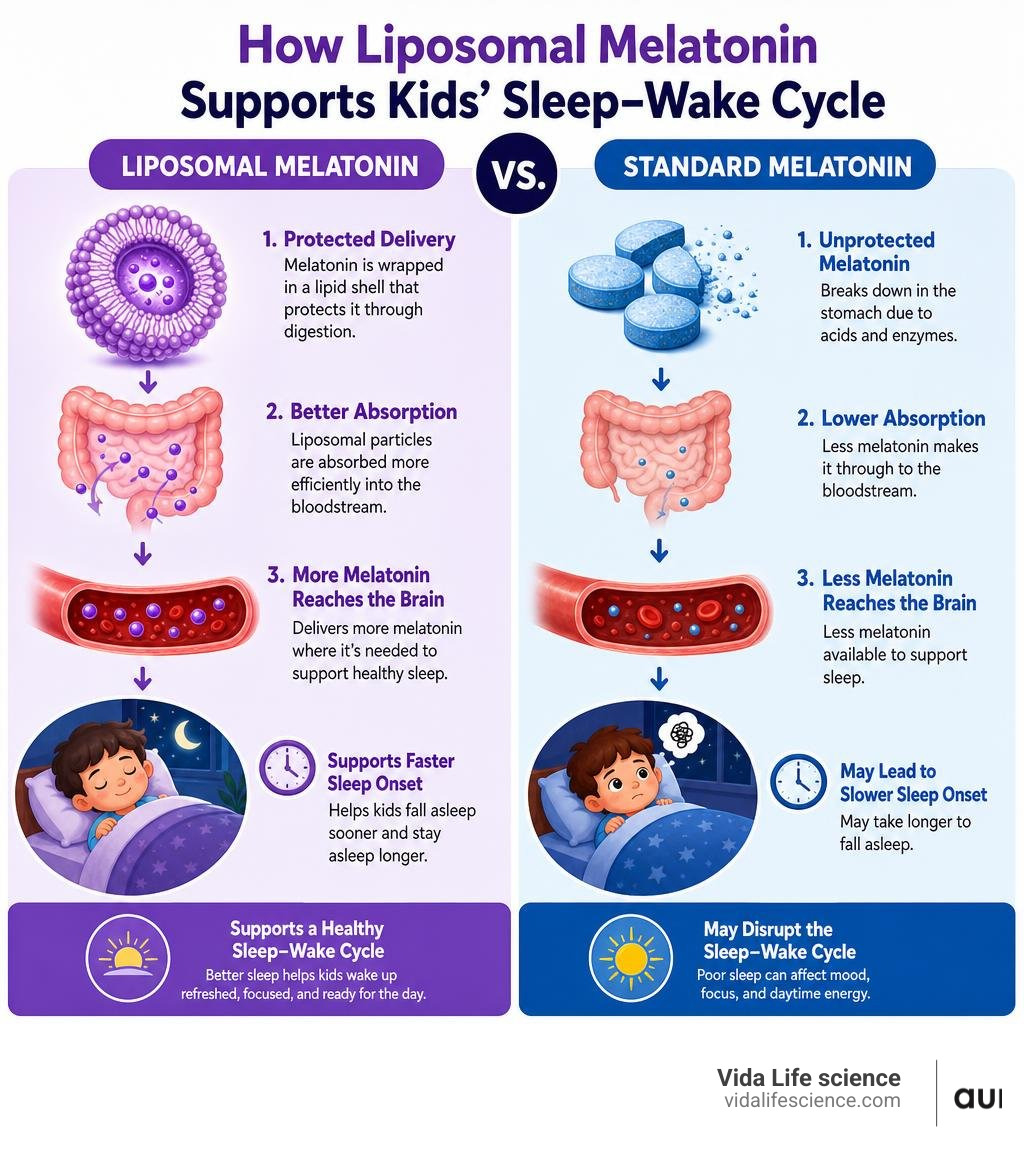
To understand how liposomal melatonin for kids works, we first have to look at how traditional supplements travel through the body. When a child chews a standard melatonin gummy or swallows a tablet, the active ingredients must pass through the harsh environment of the digestive system. Stomach acids, enzymes, and the liver break down a large portion of the melatonin before it ever reaches the bloodstream.
This process results in low "bioavailability" — meaning only a small fraction of the original dose is actually utilized by the body.
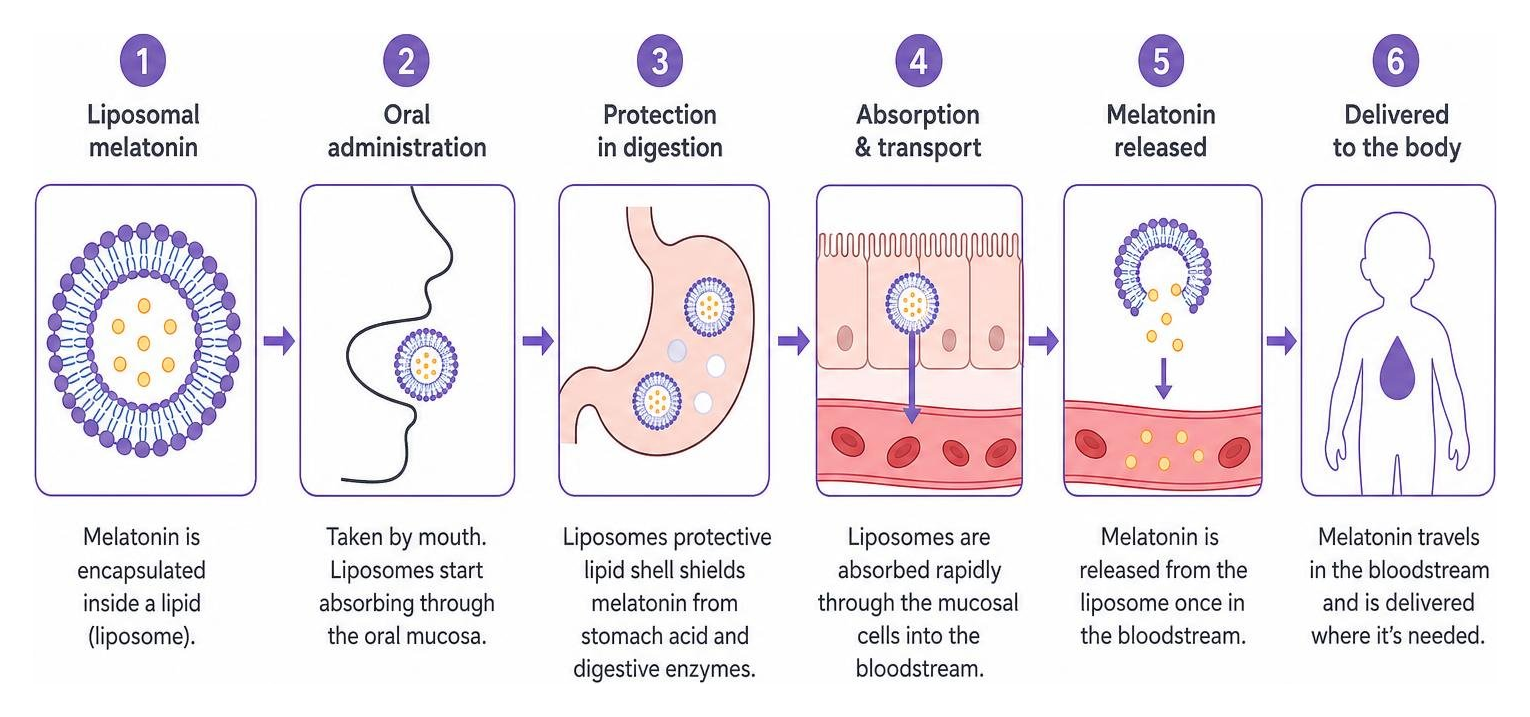
Liposomal technology completely changes this journey. By wrapping the melatonin molecules in microscopic liquid spheres called liposomes, we protect the nutrient from digestive degradation. Because these liposomes are made of the same materials as our cell membranes, the body recognizes them and absorbs them rapidly, often beginning right through the mucous membranes in the mouth.
The table below outlines the primary differences between these two delivery methods:
| Feature |
Traditional Melatonin (Gummies/Tablets) |
Liposomal Melatonin |
| Primary Absorption Site |
Stomach and small intestine |
Oral mucosa and upper GI tract |
| Bioavailability |
Low (typically around 15%) |
Significantly higher due to cellular bypass |
| Onset of Action |
30 to 60 minutes |
Much faster (often within 10 to 20 minutes) |
| Required Dosage |
Higher doses needed to achieve desired effect |
Lower doses required due to high absorption |
| Common Additives |
Often high in sugars, artificial dyes, and gelatin |
Usually liquid, low-sugar, or unsweetened |
| Accidental Ingestion Risk |
High (gummies look and taste like candy) |
Low (liquid pipette or spray format) |
The Science of Liposomal Technology
At the heart of this advanced delivery method is the lipid bilayer. Liposomes are constructed from phospholipids — specifically phosphatidylcholine, which is the same building block that forms human cell membranes.
When formulated into a nanoemulsion, these liposomes are incredibly tiny, typically ranging between 20 and 100 nanometers. Because of their microscopic size and biocompatible structure, they don't have to rely on traditional digestive pathways. Instead, they easily merge with the cells lining the mouth and gastrointestinal tract, delivering the melatonin directly into the bloodstream. This direct cellular uptake bypasses the "first-pass metabolism" of the liver, ensuring that almost none of the active melatonin is wasted.
Why Choose Liposomal Melatonin for Kids Over Traditional Supplements
For parents, the practical benefits of this scientific process are clear:
-
Rapid Absorption: Because the liposomes bypass the slow digestive process, they work exceptionally fast. This is highly beneficial for children who experience intense restlessness or anxiety at bedtime.
-
Lower, Safer Dosages: Because the bioavailability is so high, children do not need massive doses. A fraction of a milligram of liposomal melatonin can be just as effective as a much larger dose of a standard gummy.
-
Gastric Bypass: If your child has a sensitive stomach, food sensitivities, or gastrointestinal issues, liposomal liquids bypass the heavy digestive work, reducing the risk of tummy aches before bed.
The clinical efficacy of this fast-acting delivery was highlighted in an important medical trial. In a rigorous, double-blind case-control study, researchers evaluated the Efficacy of Liposomal Melatonin in sleep EEG in Childhood: A Double Blind Case Control Study. The study demonstrated that children aged 1 to 6 years who received liposomal melatonin fell asleep significantly faster than those who received a placebo.
For a deeper dive into the technical data and methodology of this landmark pediatric trial, you can access the full Efficacy of Liposomal Melatonin in sleep EEG in Childhood PDF.
Benefits of Liposomal Melatonin for Pediatric Sleep Support
For children struggling with sleep, the benefits of liposomal melatonin go far beyond simply "making them tired." It directly supports the natural circadian rhythm — the body's internal 24-hour clock that dictates when we wake up and when we sleep.

Addressing Sleep Latency in Neurodivergent Children
While sleep struggles can affect any household, they are incredibly common among neurodivergent children. Research indicates that between 40% and 86% of children with autism spectrum disorder (ASD) experience significant sleep disturbances, primarily difficulty falling asleep (prolonged sleep latency) and frequent nighttime awakenings. Similarly, up to 70% of children diagnosed with ADHD struggle with bedtime resistance and delayed sleep onset.
For these children, a lack of sleep doesn't just cause next-day fatigue; it can exacerbate daytime behavioral challenges, sensory sensitivities, and difficulties with focus and emotional regulation.
Studies show that melatonin supplementation can help children with ADHD fall asleep an average of 16 minutes earlier, drastically reducing bedtime friction. Because liposomal melatonin is absorbed so rapidly, it targets sleep latency (the time it takes to fall asleep) with incredible precision. Rather than waiting an hour for a gummy to kick in while your child's mind races, a liposomal liquid starts supporting relaxation almost immediately.
According to the Melatonin for Kids: What Parents Should Know About This Sleep Aid guide published by the American Academy of Pediatrics (AAP), melatonin should always be viewed as a temporary tool to help establish healthy sleep patterns, rather than a permanent cure for insomnia.
Administering Liposomal Melatonin for Kids Safely
When using liposomal melatonin, the golden rule is to start with the lowest possible dose. Because of its superior absorption, you do not need the 3 mg to 5 mg doses commonly found in standard kids' gummies.
-
For general sleep support in children over 5: Many pediatricians recommend starting with a very low dose of 0.2 mg to 0.5 mg, administered about 20 to 30 minutes before bedtime.
-
Customizing the dose: High-quality liquid formulations allow you to easily adjust the dosage drop by drop or spray by spray. For instance, some liquid sprays provide about 0.5 mg of melatonin per spray, allowing you to tailor the dosage precisely to your child's needs.
-
Under professional guidance: For children with neurodevelopmental conditions like ASD or ADHD, pediatricians may recommend slightly higher doses under strict supervision. For example, the pharmaceutical profile of pediatric liquid melatonin described on the DailyMed - MELATOL- melatonin liquid label outlines clinical protocols where 1 mL (typically 1 mg) is administered 30 minutes to an hour before bedtime under direct medical supervision.
Always use a precise liquid pipette or a calibrated spray bottle rather than guessing the amount. When choosing a product, look for high-quality, professional-grade liquid formulations that are soy-free and offer customizable micro-dosing to ensure you can easily adjust the dosage to your child's specific needs.
Safety, Side Effects, and Best Practices for Parents
While melatonin is a naturally occurring hormone produced by the pineal gland, supplemental melatonin is still an active physiological agent. It is crucial to understand the potential side effects and follow safety best practices.
Potential Side Effects in Children
Most children tolerate melatonin well, but some may experience mild side effects, including:
- Morning grogginess or daytime drowsiness
- Vivid dreams or nightmares
- Mild headaches or dizziness
- Mild gastrointestinal upset or irritability
If your child experiences any of these symptoms, it is often a sign that the dosage is too high or that it was administered too late in the evening.
The Danger of Accidental Overdose
As mentioned earlier, pediatric poison control calls involving melatonin have surged by over 500% in recent years. This is almost entirely due to the rise of candy-like melatonin gummies. Children find these supplements, mistake them for regular treats, and consume dangerous amounts. While melatonin overdose is rarely fatal, it can cause severe nausea, extreme lethargy, cardiovascular fluctuations, and disorientation.
Using a liquid liposomal supplement completely removes this "candy temptation." However, parents must still practice strict safety protocols:
-
Lock it up: Store all supplements completely out of reach and sight of children.
-
Treat it like medicine: Never refer to supplements as "candy" or "treats."
-
Use child-resistant packaging: Ensure the bottle has a secure dropper cap.
Sleep Hygiene: The True Foundation of Sleep
Melatonin is not a magic eraser for poor sleep habits. In fact, clinical experts agree that improving behavioral sleep hygiene alone can resolve pediatric insomnia in up to 50% of cases. Before introducing any supplement, or alongside its use, ensure you are practicing these core habits:
-
The 60-Minute Screen Rule: Turn off all tablets, TVs, and phones at least one hour before bed. Blue light from screens directly suppresses the brain's natural melatonin production.
-
Consistent Bedtime Routines: Keep the same bedtime and wake-up time every day, even on weekends. A predictable routine (e.g., bath, book, bed) signals the brain that it is time to wind down.
-
Optimize the Environment: Keep your child's bedroom cool, dark, and quiet. Consider using blackout curtains and a white noise machine if your home is prone to outside noise.
Frequently Asked Questions about Pediatric Melatonin
Is liposomal melatonin safe for toddlers under 5?
Generally, melatonin supplements of any kind are not recommended for children under 5 years of age for routine home use. Infants and young toddlers have naturally developing circadian rhythms, and introducing external hormones can interfere with this delicate process.
While clinical studies (such as the pediatric EEG study) have safely used liposomal melatonin in children as young as 1 year old, these were one-time administrations conducted in controlled, clinical settings to facilitate medical testing. For daily sleep struggles at home, always consult your pediatrician before giving melatonin to a child under 5.
How does liposomal melatonin differ from standard gummies?
Standard gummies are highly processed, often packed with sugars, artificial colors, gelatin, and preservatives. Because they must pass through the entire digestive tract, they require higher doses to be effective.
Furthermore, their candy-like appearance poses a significant risk for accidental ingestion. Liposomal melatonin is a clean, highly bioavailable liquid that bypasses digestion, works faster at lower doses, and does not carry the same "candy appeal" to curious children.
Can children take liposomal melatonin every night?
Melatonin is designed for short-term support — such as helping a child adjust to a new school schedule, recovering from jet lag, or establishing a healthy sleep routine.
Giving your child melatonin every single night for months on end is not recommended. Over time, continuous supplementation may cause the body to rely on external sources rather than producing its own natural melatonin. If your child cannot sleep without a supplement, it is time to consult a pediatrician or a pediatric sleep specialist to investigate potential underlying causes, such as iron deficiency, sleep apnea, or environmental stressors.
Conclusion
When used correctly and under the guidance of a healthcare professional, liposomal melatonin for kids is an incredibly effective, fast-acting, and low-dose option to help your child overcome sleep challenges. By utilizing advanced phospholipid bilayers, liposomal delivery ensures that your child gets the maximum benefit from a minimal dose, helping them drift off to sleep naturally and wake up feeling refreshed.
At Vida Life Science, we are dedicated to bringing you the absolute highest standard of liposomal technology. As the exclusive distributor of Aurora Nutrascience, we ensure that every supplement we offer is crafted with clinical precision, utilizing non-GMO, soy-free, organic phospholipids to protect and deliver vital nutrients directly to the cells that need them most.
If you want to discover what sets our advanced delivery systems apart from traditional supplements, Learn more about Aurora Nutrascience liposomal supplements and explore how we are redefining cellular health for the whole family.


How Liposomal Melatonin Helps Kids Get Better Sleep
Why More Parents Are Turning to Liposomal Melatonin for Kids
Liposomal melatonin for kids is a newer form of the popular sleep supplement that uses tiny fat-based particles to deliver melatonin more efficiently into the bloodstream — potentially working faster and at lower doses than standard melatonin gummies or tablets.
Here's a quick summary of what parents need to know:
Getting a child to fall asleep can feel like a battle. Millions of parents have turned to melatonin supplements for help — and reports to U.S. poison control centers related to melatonin jumped 530% between 2012 and 2021, largely from accidental ingestion of gummies. That number alone signals how widespread — and sometimes risky — supplement use in children has become.
Liposomal melatonin offers a promising alternative, but it still comes with questions around safety, dosing, and whether it's right for your child.
At Vida Life Science, we specialize exclusively in phosphatidylcholine-based liposomal nutrient delivery technology — the same science behind liposomal melatonin for kids products — giving us a deep understanding of how these formulations work and what parents should look for. We'll walk you through everything the research says so you can make a confident, informed decision.
Understanding Liposomal Melatonin for Kids and How It Works
To understand how liposomal melatonin for kids works, we first have to look at how traditional supplements travel through the body. When a child chews a standard melatonin gummy or swallows a tablet, the active ingredients must pass through the harsh environment of the digestive system. Stomach acids, enzymes, and the liver break down a large portion of the melatonin before it ever reaches the bloodstream.
This process results in low "bioavailability" — meaning only a small fraction of the original dose is actually utilized by the body.
Liposomal technology completely changes this journey. By wrapping the melatonin molecules in microscopic liquid spheres called liposomes, we protect the nutrient from digestive degradation. Because these liposomes are made of the same materials as our cell membranes, the body recognizes them and absorbs them rapidly, often beginning right through the mucous membranes in the mouth.
The table below outlines the primary differences between these two delivery methods:
The Science of Liposomal Technology
At the heart of this advanced delivery method is the lipid bilayer. Liposomes are constructed from phospholipids — specifically phosphatidylcholine, which is the same building block that forms human cell membranes.
When formulated into a nanoemulsion, these liposomes are incredibly tiny, typically ranging between 20 and 100 nanometers. Because of their microscopic size and biocompatible structure, they don't have to rely on traditional digestive pathways. Instead, they easily merge with the cells lining the mouth and gastrointestinal tract, delivering the melatonin directly into the bloodstream. This direct cellular uptake bypasses the "first-pass metabolism" of the liver, ensuring that almost none of the active melatonin is wasted.
Why Choose Liposomal Melatonin for Kids Over Traditional Supplements
For parents, the practical benefits of this scientific process are clear:
The clinical efficacy of this fast-acting delivery was highlighted in an important medical trial. In a rigorous, double-blind case-control study, researchers evaluated the Efficacy of Liposomal Melatonin in sleep EEG in Childhood: A Double Blind Case Control Study. The study demonstrated that children aged 1 to 6 years who received liposomal melatonin fell asleep significantly faster than those who received a placebo.
For a deeper dive into the technical data and methodology of this landmark pediatric trial, you can access the full Efficacy of Liposomal Melatonin in sleep EEG in Childhood PDF.
Benefits of Liposomal Melatonin for Pediatric Sleep Support
For children struggling with sleep, the benefits of liposomal melatonin go far beyond simply "making them tired." It directly supports the natural circadian rhythm — the body's internal 24-hour clock that dictates when we wake up and when we sleep.
Addressing Sleep Latency in Neurodivergent Children
While sleep struggles can affect any household, they are incredibly common among neurodivergent children. Research indicates that between 40% and 86% of children with autism spectrum disorder (ASD) experience significant sleep disturbances, primarily difficulty falling asleep (prolonged sleep latency) and frequent nighttime awakenings. Similarly, up to 70% of children diagnosed with ADHD struggle with bedtime resistance and delayed sleep onset.
For these children, a lack of sleep doesn't just cause next-day fatigue; it can exacerbate daytime behavioral challenges, sensory sensitivities, and difficulties with focus and emotional regulation.
Studies show that melatonin supplementation can help children with ADHD fall asleep an average of 16 minutes earlier, drastically reducing bedtime friction. Because liposomal melatonin is absorbed so rapidly, it targets sleep latency (the time it takes to fall asleep) with incredible precision. Rather than waiting an hour for a gummy to kick in while your child's mind races, a liposomal liquid starts supporting relaxation almost immediately.
According to the Melatonin for Kids: What Parents Should Know About This Sleep Aid guide published by the American Academy of Pediatrics (AAP), melatonin should always be viewed as a temporary tool to help establish healthy sleep patterns, rather than a permanent cure for insomnia.
Administering Liposomal Melatonin for Kids Safely
When using liposomal melatonin, the golden rule is to start with the lowest possible dose. Because of its superior absorption, you do not need the 3 mg to 5 mg doses commonly found in standard kids' gummies.
Always use a precise liquid pipette or a calibrated spray bottle rather than guessing the amount. When choosing a product, look for high-quality, professional-grade liquid formulations that are soy-free and offer customizable micro-dosing to ensure you can easily adjust the dosage to your child's specific needs.
Safety, Side Effects, and Best Practices for Parents
While melatonin is a naturally occurring hormone produced by the pineal gland, supplemental melatonin is still an active physiological agent. It is crucial to understand the potential side effects and follow safety best practices.
Potential Side Effects in Children
Most children tolerate melatonin well, but some may experience mild side effects, including:
If your child experiences any of these symptoms, it is often a sign that the dosage is too high or that it was administered too late in the evening.
The Danger of Accidental Overdose
As mentioned earlier, pediatric poison control calls involving melatonin have surged by over 500% in recent years. This is almost entirely due to the rise of candy-like melatonin gummies. Children find these supplements, mistake them for regular treats, and consume dangerous amounts. While melatonin overdose is rarely fatal, it can cause severe nausea, extreme lethargy, cardiovascular fluctuations, and disorientation.
Using a liquid liposomal supplement completely removes this "candy temptation." However, parents must still practice strict safety protocols:
Sleep Hygiene: The True Foundation of Sleep
Melatonin is not a magic eraser for poor sleep habits. In fact, clinical experts agree that improving behavioral sleep hygiene alone can resolve pediatric insomnia in up to 50% of cases. Before introducing any supplement, or alongside its use, ensure you are practicing these core habits:
Frequently Asked Questions about Pediatric Melatonin
Is liposomal melatonin safe for toddlers under 5?
Generally, melatonin supplements of any kind are not recommended for children under 5 years of age for routine home use. Infants and young toddlers have naturally developing circadian rhythms, and introducing external hormones can interfere with this delicate process.
While clinical studies (such as the pediatric EEG study) have safely used liposomal melatonin in children as young as 1 year old, these were one-time administrations conducted in controlled, clinical settings to facilitate medical testing. For daily sleep struggles at home, always consult your pediatrician before giving melatonin to a child under 5.
How does liposomal melatonin differ from standard gummies?
Standard gummies are highly processed, often packed with sugars, artificial colors, gelatin, and preservatives. Because they must pass through the entire digestive tract, they require higher doses to be effective.
Furthermore, their candy-like appearance poses a significant risk for accidental ingestion. Liposomal melatonin is a clean, highly bioavailable liquid that bypasses digestion, works faster at lower doses, and does not carry the same "candy appeal" to curious children.
Can children take liposomal melatonin every night?
Melatonin is designed for short-term support — such as helping a child adjust to a new school schedule, recovering from jet lag, or establishing a healthy sleep routine.
Giving your child melatonin every single night for months on end is not recommended. Over time, continuous supplementation may cause the body to rely on external sources rather than producing its own natural melatonin. If your child cannot sleep without a supplement, it is time to consult a pediatrician or a pediatric sleep specialist to investigate potential underlying causes, such as iron deficiency, sleep apnea, or environmental stressors.
Conclusion
When used correctly and under the guidance of a healthcare professional, liposomal melatonin for kids is an incredibly effective, fast-acting, and low-dose option to help your child overcome sleep challenges. By utilizing advanced phospholipid bilayers, liposomal delivery ensures that your child gets the maximum benefit from a minimal dose, helping them drift off to sleep naturally and wake up feeling refreshed.
At Vida Life Science, we are dedicated to bringing you the absolute highest standard of liposomal technology. As the exclusive distributor of Aurora Nutrascience, we ensure that every supplement we offer is crafted with clinical precision, utilizing non-GMO, soy-free, organic phospholipids to protect and deliver vital nutrients directly to the cells that need them most.
If you want to discover what sets our advanced delivery systems apart from traditional supplements, Learn more about Aurora Nutrascience liposomal supplements and explore how we are redefining cellular health for the whole family.