Why Liposomal Magnesium Glycinate Benefits Your Health From the Inside Out
The liposomal magnesium glycinate benefits you'll discover in this guide go far beyond what a standard magnesium supplement can offer — and the difference starts at the cellular level.
Here's a quick summary of the key benefits:
| Benefit |
What the Research Shows |
| Sleep quality |
May improve sleep within 14 days by activating GABA and glycine receptors |
| Stress and anxiety |
Supports calm by blocking NMDA receptors and reducing cortisol |
| Muscle recovery |
Aids ATP production and reduces cramping after exercise |
| Blood sugar control |
Improves insulin sensitivity and GLUT4 glucose transport |
| Heart health |
Associated with lower systolic and diastolic blood pressure |
| Bone health |
Helps regulate calcium and vitamin D for bone density |
| Absorption |
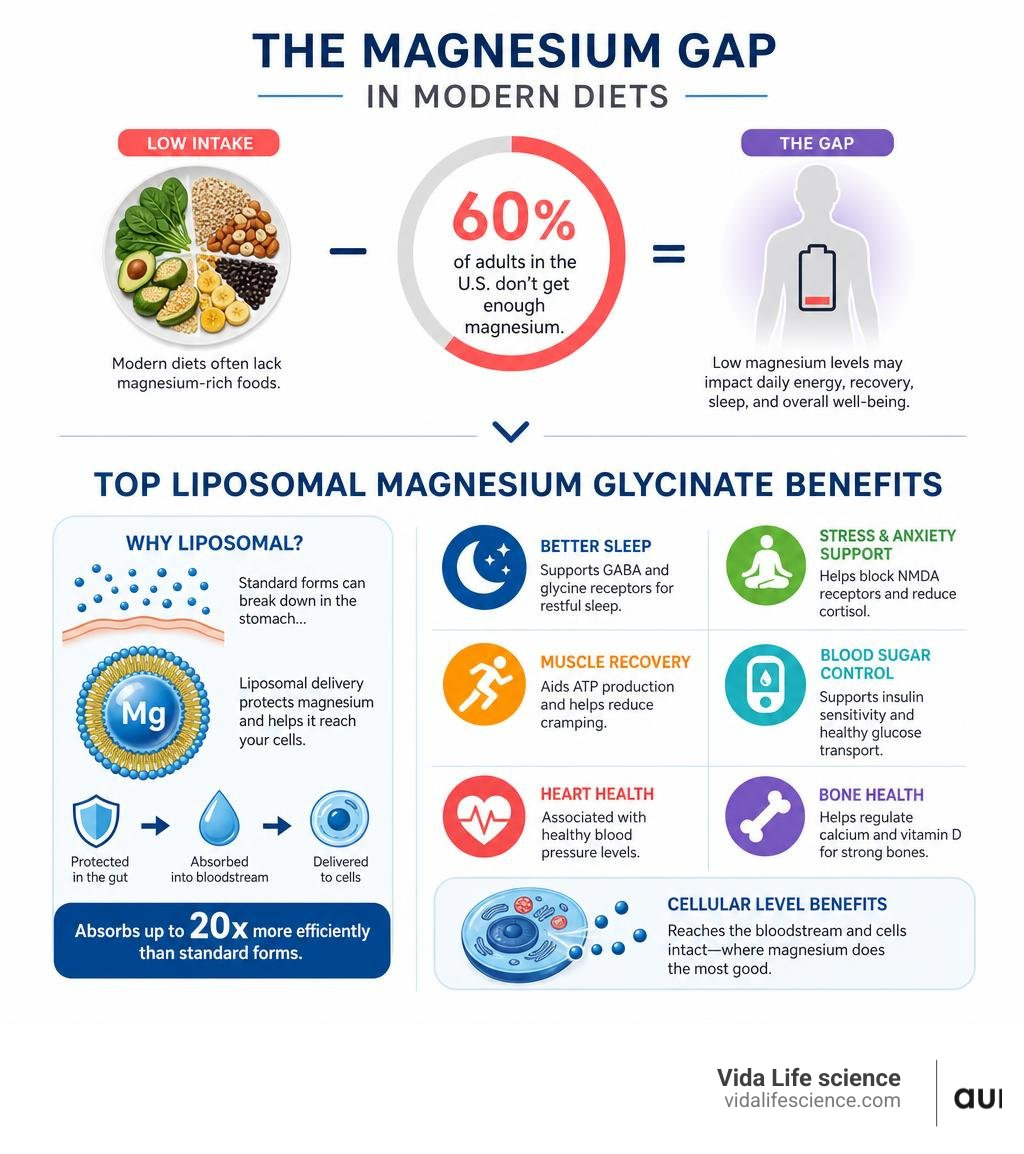
Liposomal delivery absorbs up to 20x more efficiently than standard forms |
Nearly 60% of adults in the United States don't get enough magnesium from their diet. Yet most people don't feel the symptoms right away — because the kidneys work hard to conserve what little magnesium the body has.
The problem? What you take isn't always what you absorb. Standard magnesium supplements often break down in the stomach before they can reach your cells. Liposomal delivery wraps the magnesium in a protective phospholipid layer — similar to your own cell membranes — so it can reach the bloodstream and cells intact.
That's the core difference. And it matters more than most people realize.
At Vida Life Science, we're the exclusive US distributor of Aurora Nutrascience, a Canadian manufacturer specializing in phosphatidylcholine-based liposomal nutrient delivery — the same technology behind truly effective liposomal magnesium glycinate benefits. Our focus on advanced absorption science means we understand exactly what separates a supplement that works from one that doesn't.
What is Liposomal Magnesium Glycinate?
To understand why this supplement is making waves in July 2026, we first need to look at its two core components: magnesium bisglycinate and the liposomal delivery system.
Standard magnesium is an inorganic mineral that the human body struggles to absorb on its own. To make it more "bioavailable" (easy for your body to use), chemists bind the mineral to an organic compound. This process is called chelation. In the case of magnesium glycinate (often called magnesium bisglycinate), the elemental magnesium is chemically bonded to two molecules of glycine, a soothing amino acid.
This glycine bond creates an electrically neutral, stable complex. Because it is neutral, it does not easily break apart or react with other compounds in your digestive tract. It travels quietly through your stomach without drawing in excess water, which is why magnesium glycinate is famously gentle on sensitive stomachs.
But we wanted to take absorption a step further. That is where liposomal encapsulation comes in.

A liposome is a microscopic, spherical vesicle made of a double layer of lipids (fats)—specifically phospholipids like phosphatidylcholine. This lipid bilayer is chemically identical to the membranes that surround every single cell in your body.
When you encapsulate magnesium bisglycinate inside these tiny lipid bubbles, something incredible happens:
-
The "Trojan Horse" Effect: Your digestive system does not recognize the liposome as a mineral supplement. Instead, it sees a friendly lipid molecule.
-
Bypassing Digestive Barriers: The liposome protects the fragile magnesium compound from aggressive stomach acids and digestive enzymes.
-
Direct Cellular Uptake: Instead of competing for traditional mineral transporters in the small intestine, the liposomes merge directly with your intestinal cell membranes via endocytosis or membrane fusion.
This allows the nutrient to slide effortlessly into your bloodstream and target tissues. By choosing a liposomal form, you are choosing a delivery system that mimics biology itself. To understand how this encapsulation process changes the game for other nutrients as well, you can read about What Makes Aurora Nutrascience Liposomal Supplements Different and explore the science of What Is Liposomal Magnesium Glycinate?.
Key Liposomal Magnesium Glycinate Benefits for Health
Magnesium is often called the "spark plug" of the human body. It acts as a mandatory cofactor in over 300 (some research suggests up to 600) enzymatic reactions. Without it, your cells cannot produce energy, your DNA cannot repair itself, and your muscles cannot relax.
By upgrading to a liposomal form, you are maximizing the systemic wellness benefits of this vital mineral. Let's look at how this impacts your day-to-day physiological support.
Liposomal Magnesium Glycinate Benefits for Sleep and Anxiety
If you have ever felt "tired but wired" at 11:00 PM, your nervous system is likely crying out for magnesium.
The liposomal magnesium glycinate benefits for mental calm and sleep quality are driven by a triple-pathway mechanism in the central nervous system:
-
GABA-A Receptor Potentiation: Magnesium acts as a natural agonist for GABA (gamma-aminobutyric acid), the brain's primary inhibitory neurotransmitter. By binding to GABA receptors, it helps quiet down overactive neural chatter, acting like a gentle brake pedal for a racing mind.
-
NMDA Receptor Blockade: Glutamate is an excitatory neurotransmitter that can cause anxiety and brain fog when left unchecked. Magnesium sits inside the NMDA receptor channel, blocking glutamate from overstimulating your brain cells.
-
Glycine Receptor Agonism: Because magnesium glycinate is bound to glycine, you also get a therapeutic dose of this calming amino acid. Glycine acts as a neurotransmitter in its own right, signaling the brain to reduce its core body temperature—a crucial physiological trigger that tells your body it is time to sleep.
Together, these mechanisms help lower systemic cortisol (the stress hormone) and build long-term stress resilience. According to a 2025 clinical trial highlighted in the literature, participants taking magnesium glycinate saw a significant reduction in their Insomnia Severity Index (ISI) scores within just 14 days. You can read more about how this form supports your mental well-being in this article on the 8 Health Benefits of Magnesium Glycinate.
Whether you are a professional athlete, a weekend warrior, or someone who simply struggles with painful nighttime leg cramps, muscle comfort depends heavily on mineral balance.

Every time a muscle contracts, calcium rushes into the muscle fibers, causing them to tighten. To relax that muscle, your body must pump the calcium back out—a process that requires magnesium and cellular energy (ATP). If you do not have enough magnesium at the cellular level, your muscles cannot fully relax, leading to tightness, twitches, and painful cramps.
Furthermore, magnesium must be physically bound to ATP (adenosine triphosphate) for your body's energy currency to become biologically active. Without active Mg-ATP, your muscles cannot efficiently clear lactic acid or rebuild tissue after a strenuous workout. By delivering magnesium directly to muscle cells via liposomes, we can help speed up recovery times, reduce post-exercise muscle soreness, and support overall physical comfort.
Cardiovascular, Bone, and Blood Sugar Support
While sleep and muscle relief are the most immediate benefits you will feel, the long-term systemic benefits of liposomal magnesium glycinate are even more profound.
-
Cardiovascular Health: Magnesium regulates vascular smooth muscle tone. When your cells are saturated with magnesium, your blood vessels can relax and dilate, naturally lowering peripheral resistance. A major 2025 meta-analysis of 38 randomized controlled trials showed that magnesium supplementation resulted in a clinically meaningful reduction in both systolic and diastolic blood pressure, particularly in individuals with pre-existing hypertension.
-
Insulin Sensitivity and Blood Sugar: Magnesium plays a critical role in glucose metabolism. It is required for the proper functioning of insulin receptors and the activation of GLUT4, the transport protein that pulls glucose out of your bloodstream and into your cells. Data from NHANES shows a clear inverse correlation between serum magnesium levels and insulin resistance (HOMA-IR).
-
Bone Density: About 60% of your body's magnesium is stored in your bones. Magnesium works closely with calcium and vitamin D, acting as a regulator that prevents calcium from depositing in your soft tissues (like your arteries) and instead directs it into your bones.
To explore these systemic pathways and clinical trials in greater depth, review the comprehensive guide on Magnesium Glycinate: Benefits, Dosage & Safety.
Liposomal vs. Regular Magnesium: Bioavailability and Side Effects
To truly appreciate the value of liposomal magnesium glycinate, it helps to compare it to the traditional forms of magnesium you will find on most drugstore shelves.
| Magnesium Form |
Bioavailability Rate |
Common Uses |
Primary Side Effect |
| Magnesium Oxide |
Extremely Low (~4%) |
Antacid, short-term constipation relief |
Severe diarrhea, cramping |
| Magnesium Citrate |
Moderate |
Laxative, general magnesium boost |
Loose stools, abdominal discomfort |
| Standard Magnesium Glycinate |
High |
Sleep, anxiety, muscle recovery |
Mild digestive upset in high doses |
| Liposomal Magnesium Glycinate |
Very High (Up to 20x standard absorption) |
Cellular saturation, sleep, systemic support |
Virtually none; highly tolerated |
Traditional oral magnesium supplements face a major biological bottleneck. When you swallow a standard magnesium tablet, the acidic environment of your stomach causes the compound to dissociate into free magnesium ions ($Mg^{2+}$). These unattached ions travel down to your colon, where they draw water into the bowel through osmosis. This osmotic effect is why cheap forms like magnesium oxide or even moderate forms like magnesium citrate frequently cause diarrhea, loose stools, and stomach cramps.
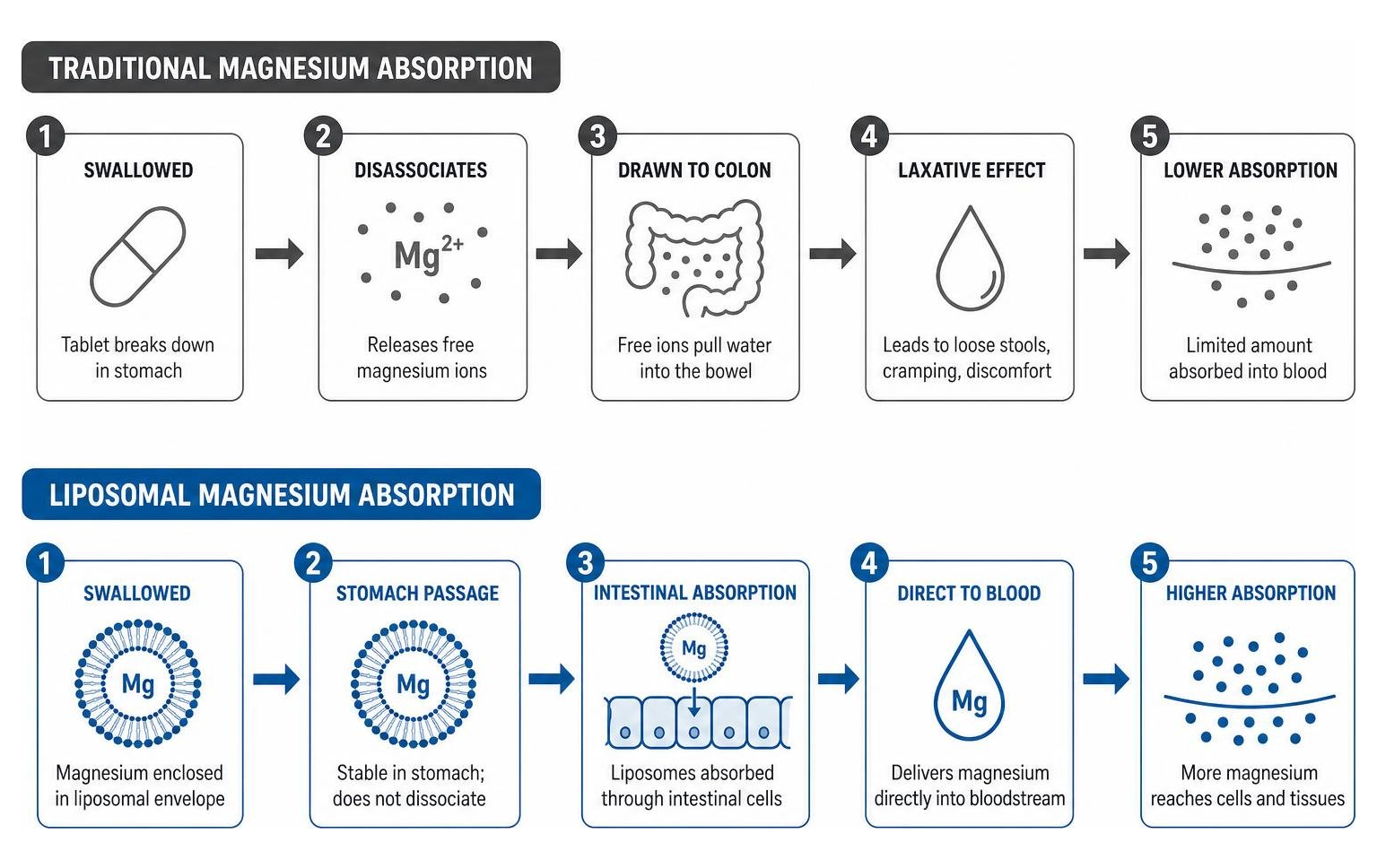
Liposomal magnesium glycinate completely bypasses this issue. Because the magnesium glycinate is tightly encapsulated within a protective phospholipid envelope, the mineral does not dissociate in the stomach or interact with the mucosal lining of your intestines.
This means:
-
No Laxative Effect: Because no free ions are left to draw water into your colon, you can say goodbye to the digestive distress associated with traditional magnesium.
-
Superior Cellular Saturation: Research indicates that liposomal delivery can be up to 20 times more efficient than non-liposomal alternatives. It allows you to take lower, highly targeted doses while achieving much higher levels of tissue saturation.
If you want to dive deeper into how liposomes compare to traditional powders and tablets, check out the detailed breakdown of Liposomal Magnesium vs Regular Magnesium.
Dosage, Food Sources, and How to Take It
Getting the most out of your supplementation routine requires understanding how to read labels, balance your diet, and implement safe practices.
Recommended Dosage and Timing
When choosing a magnesium supplement, the single most common source of confusion is the difference between compound weight and elemental magnesium.
A capsule might say "Magnesium Glycinate 500 mg" on the front of the bottle, but because pure magnesium glycinate is only about 10% to 14% elemental magnesium by weight, that capsule actually only contains about 50 to 70 mg of actual, usable elemental magnesium. Always look at the "Supplement Facts" panel on the back of the label to find the true elemental magnesium content.
-
Daily Requirements: The Recommended Dietary Allowance (RDA) for adults is 310 to 420 mg of elemental magnesium per day, depending on age and biological sex.
-
The Supplemental Upper Limit: The National Institutes of Health (NIH) sets a tolerable upper intake level of 350 mg of elemental magnesium per day from supplements alone for healthy adults.
-
Optimal Timing: For sleep, anxiety, and nighttime muscle recovery, we recommend taking liposomal magnesium glycinate approximately 30 to 60 minutes before bed. If you are using it for daytime stress resilience or blood sugar management, you can split your dose between morning and evening.
For more details on safety limits, label reading, and daily usage, consult Magnesium Glycinate: Benefits, Side Effects, Uses, and More.
Natural Food Sources vs. Supplementation
We always advocate for a "food first" approach to nutrition. Nature provides several excellent dietary sources of magnesium:
- Dark leafy greens (such as spinach and Swiss chard)
- Pumpkin seeds, chia seeds, and almonds
- Black beans, lentils, and chickpeas
- Whole grains (such as quinoa and brown rice)
- High-quality dark chocolate
However, relying entirely on food has become increasingly difficult in our modern world. Due to decades of intensive industrial farming, our agricultural soils have become severely depleted of essential minerals. If the magnesium isn't in the soil, it cannot make its way into the plants we eat.
Additionally, modern lifestyles—characterized by high stress, alcohol consumption, caffeine, and high-sugar diets—actively deplete our body's magnesium reserves. This is why high-absorption supplementation has transitioned from a luxury to a practical necessity for many of us.
Potential Side Effects and Drug Interactions
While liposomal magnesium glycinate is incredibly safe and exceptionally gentle, there are a few important precautions to keep in mind:
-
Kidney Function: Your kidneys are responsible for filtering and excreting excess magnesium. If you have chronic kidney disease or severe renal impairment, you must consult your physician before taking any magnesium supplements, as your body may struggle to clear the mineral.
-
Medication Interactions: Magnesium can bind to certain medications in your digestive tract, reducing their absorption.
-
Antibiotics: Take antibiotics (like tetracyclines or fluoroquinolones) at least 2 hours before or 4 to 6 hours after your magnesium supplement.
-
Osteoporosis Medications: Space bisphosphonates at least 2 hours apart from magnesium.
-
Blood Pressure Medications: Because magnesium naturally relaxes blood vessels, taking it alongside prescription blood pressure medications can occasionally cause your blood pressure to drop too low. Speak to your doctor to monitor your levels.
Frequently Asked Questions about Liposomal Magnesium Glycinate
Is it safe to take liposomal magnesium glycinate every day?
Yes, daily supplementation is highly safe and beneficial for most healthy adults. Because your body uses magnesium in hundreds of daily cellular processes, maintaining a consistent daily routine is the best way to prevent deficiency and maintain tissue saturation. Your kidneys will naturally excrete any excess magnesium that your body does not need, provided you have normal kidney function and stay within the recommended daily limits.
Can I take liposomal magnesium glycinate on an empty stomach?
Absolutely. One of the greatest advantages of our liposomal technology is that the magnesium is safely tucked away inside a phospholipid bilayer. This protects your stomach lining from direct contact with the mineral, eliminating the nausea or stomach upset that often occurs when taking standard mineral supplements on an empty stomach.
How long does it take to see results from liposomal magnesium?
While some benefits—like mental calm, relaxation, and improved sleep quality—can often be felt within the very first few nights, deeper physiological changes take time. Restoring cellular magnesium levels and achieving tissue saturation typically takes about 14 days of consistent daily use. Long-term benefits, such as improvements in blood pressure or blood sugar management, are typically observed after 4 to 12 weeks of daily supplementation.
Conclusion
At Vida Life Science, we believe that true wellness is not just about the nutrients you buy—it is about the nutrients your cells actually receive.
Standard magnesium supplements often fall short because they cannot survive the journey through your digestive system without causing discomfort or losing their potency. By combining the highly bioavailable, calming properties of magnesium bisglycinate with advanced, Canadian-engineered liposomal delivery, you can finally experience the full spectrum of liposomal magnesium glycinate benefits without the digestive side effects.
If you are ready to upgrade your daily wellness routine with a supplement designed for maximum cellular absorption, we invite you to Discover the Aurora Nutrascience difference.
To explore how liposomal science can optimize other areas of your health, check out our guides on Mega Liposomal Vit C vs Traditional Vit C: Why Absorption Matters, Unlocking the Power of Liposomal Vitamin C: A Game Changer in Immune Health, and The Power of Liposomal Vitamin D3 with K2: A Dynamic Duo for Optimal Health.


The Ultimate Guide to Liposomal Magnesium Glycinate Benefits
Why Liposomal Magnesium Glycinate Benefits Your Health From the Inside Out
The liposomal magnesium glycinate benefits you'll discover in this guide go far beyond what a standard magnesium supplement can offer — and the difference starts at the cellular level.
Here's a quick summary of the key benefits:
Nearly 60% of adults in the United States don't get enough magnesium from their diet. Yet most people don't feel the symptoms right away — because the kidneys work hard to conserve what little magnesium the body has.
The problem? What you take isn't always what you absorb. Standard magnesium supplements often break down in the stomach before they can reach your cells. Liposomal delivery wraps the magnesium in a protective phospholipid layer — similar to your own cell membranes — so it can reach the bloodstream and cells intact.
That's the core difference. And it matters more than most people realize.
At Vida Life Science, we're the exclusive US distributor of Aurora Nutrascience, a Canadian manufacturer specializing in phosphatidylcholine-based liposomal nutrient delivery — the same technology behind truly effective liposomal magnesium glycinate benefits. Our focus on advanced absorption science means we understand exactly what separates a supplement that works from one that doesn't.
What is Liposomal Magnesium Glycinate?
To understand why this supplement is making waves in July 2026, we first need to look at its two core components: magnesium bisglycinate and the liposomal delivery system.
Standard magnesium is an inorganic mineral that the human body struggles to absorb on its own. To make it more "bioavailable" (easy for your body to use), chemists bind the mineral to an organic compound. This process is called chelation. In the case of magnesium glycinate (often called magnesium bisglycinate), the elemental magnesium is chemically bonded to two molecules of glycine, a soothing amino acid.
This glycine bond creates an electrically neutral, stable complex. Because it is neutral, it does not easily break apart or react with other compounds in your digestive tract. It travels quietly through your stomach without drawing in excess water, which is why magnesium glycinate is famously gentle on sensitive stomachs.
But we wanted to take absorption a step further. That is where liposomal encapsulation comes in.
A liposome is a microscopic, spherical vesicle made of a double layer of lipids (fats)—specifically phospholipids like phosphatidylcholine. This lipid bilayer is chemically identical to the membranes that surround every single cell in your body.
When you encapsulate magnesium bisglycinate inside these tiny lipid bubbles, something incredible happens:
This allows the nutrient to slide effortlessly into your bloodstream and target tissues. By choosing a liposomal form, you are choosing a delivery system that mimics biology itself. To understand how this encapsulation process changes the game for other nutrients as well, you can read about What Makes Aurora Nutrascience Liposomal Supplements Different and explore the science of What Is Liposomal Magnesium Glycinate?.
Key Liposomal Magnesium Glycinate Benefits for Health
Magnesium is often called the "spark plug" of the human body. It acts as a mandatory cofactor in over 300 (some research suggests up to 600) enzymatic reactions. Without it, your cells cannot produce energy, your DNA cannot repair itself, and your muscles cannot relax.
By upgrading to a liposomal form, you are maximizing the systemic wellness benefits of this vital mineral. Let's look at how this impacts your day-to-day physiological support.
Liposomal Magnesium Glycinate Benefits for Sleep and Anxiety
If you have ever felt "tired but wired" at 11:00 PM, your nervous system is likely crying out for magnesium.
The liposomal magnesium glycinate benefits for mental calm and sleep quality are driven by a triple-pathway mechanism in the central nervous system:
Together, these mechanisms help lower systemic cortisol (the stress hormone) and build long-term stress resilience. According to a 2025 clinical trial highlighted in the literature, participants taking magnesium glycinate saw a significant reduction in their Insomnia Severity Index (ISI) scores within just 14 days. You can read more about how this form supports your mental well-being in this article on the 8 Health Benefits of Magnesium Glycinate.
Liposomal Magnesium Glycinate Benefits for Muscle Recovery and Performance
Whether you are a professional athlete, a weekend warrior, or someone who simply struggles with painful nighttime leg cramps, muscle comfort depends heavily on mineral balance.
Every time a muscle contracts, calcium rushes into the muscle fibers, causing them to tighten. To relax that muscle, your body must pump the calcium back out—a process that requires magnesium and cellular energy (ATP). If you do not have enough magnesium at the cellular level, your muscles cannot fully relax, leading to tightness, twitches, and painful cramps.
Furthermore, magnesium must be physically bound to ATP (adenosine triphosphate) for your body's energy currency to become biologically active. Without active Mg-ATP, your muscles cannot efficiently clear lactic acid or rebuild tissue after a strenuous workout. By delivering magnesium directly to muscle cells via liposomes, we can help speed up recovery times, reduce post-exercise muscle soreness, and support overall physical comfort.
Cardiovascular, Bone, and Blood Sugar Support
While sleep and muscle relief are the most immediate benefits you will feel, the long-term systemic benefits of liposomal magnesium glycinate are even more profound.
To explore these systemic pathways and clinical trials in greater depth, review the comprehensive guide on Magnesium Glycinate: Benefits, Dosage & Safety.
Liposomal vs. Regular Magnesium: Bioavailability and Side Effects
To truly appreciate the value of liposomal magnesium glycinate, it helps to compare it to the traditional forms of magnesium you will find on most drugstore shelves.
Traditional oral magnesium supplements face a major biological bottleneck. When you swallow a standard magnesium tablet, the acidic environment of your stomach causes the compound to dissociate into free magnesium ions ($Mg^{2+}$). These unattached ions travel down to your colon, where they draw water into the bowel through osmosis. This osmotic effect is why cheap forms like magnesium oxide or even moderate forms like magnesium citrate frequently cause diarrhea, loose stools, and stomach cramps.
Liposomal magnesium glycinate completely bypasses this issue. Because the magnesium glycinate is tightly encapsulated within a protective phospholipid envelope, the mineral does not dissociate in the stomach or interact with the mucosal lining of your intestines.
This means:
If you want to dive deeper into how liposomes compare to traditional powders and tablets, check out the detailed breakdown of Liposomal Magnesium vs Regular Magnesium.
Dosage, Food Sources, and How to Take It
Getting the most out of your supplementation routine requires understanding how to read labels, balance your diet, and implement safe practices.
Recommended Dosage and Timing
When choosing a magnesium supplement, the single most common source of confusion is the difference between compound weight and elemental magnesium.
A capsule might say "Magnesium Glycinate 500 mg" on the front of the bottle, but because pure magnesium glycinate is only about 10% to 14% elemental magnesium by weight, that capsule actually only contains about 50 to 70 mg of actual, usable elemental magnesium. Always look at the "Supplement Facts" panel on the back of the label to find the true elemental magnesium content.
For more details on safety limits, label reading, and daily usage, consult Magnesium Glycinate: Benefits, Side Effects, Uses, and More.
Natural Food Sources vs. Supplementation
We always advocate for a "food first" approach to nutrition. Nature provides several excellent dietary sources of magnesium:
However, relying entirely on food has become increasingly difficult in our modern world. Due to decades of intensive industrial farming, our agricultural soils have become severely depleted of essential minerals. If the magnesium isn't in the soil, it cannot make its way into the plants we eat.
Additionally, modern lifestyles—characterized by high stress, alcohol consumption, caffeine, and high-sugar diets—actively deplete our body's magnesium reserves. This is why high-absorption supplementation has transitioned from a luxury to a practical necessity for many of us.
Potential Side Effects and Drug Interactions
While liposomal magnesium glycinate is incredibly safe and exceptionally gentle, there are a few important precautions to keep in mind:
Frequently Asked Questions about Liposomal Magnesium Glycinate
Is it safe to take liposomal magnesium glycinate every day?
Yes, daily supplementation is highly safe and beneficial for most healthy adults. Because your body uses magnesium in hundreds of daily cellular processes, maintaining a consistent daily routine is the best way to prevent deficiency and maintain tissue saturation. Your kidneys will naturally excrete any excess magnesium that your body does not need, provided you have normal kidney function and stay within the recommended daily limits.
Can I take liposomal magnesium glycinate on an empty stomach?
Absolutely. One of the greatest advantages of our liposomal technology is that the magnesium is safely tucked away inside a phospholipid bilayer. This protects your stomach lining from direct contact with the mineral, eliminating the nausea or stomach upset that often occurs when taking standard mineral supplements on an empty stomach.
How long does it take to see results from liposomal magnesium?
While some benefits—like mental calm, relaxation, and improved sleep quality—can often be felt within the very first few nights, deeper physiological changes take time. Restoring cellular magnesium levels and achieving tissue saturation typically takes about 14 days of consistent daily use. Long-term benefits, such as improvements in blood pressure or blood sugar management, are typically observed after 4 to 12 weeks of daily supplementation.
Conclusion
At Vida Life Science, we believe that true wellness is not just about the nutrients you buy—it is about the nutrients your cells actually receive.
Standard magnesium supplements often fall short because they cannot survive the journey through your digestive system without causing discomfort or losing their potency. By combining the highly bioavailable, calming properties of magnesium bisglycinate with advanced, Canadian-engineered liposomal delivery, you can finally experience the full spectrum of liposomal magnesium glycinate benefits without the digestive side effects.
If you are ready to upgrade your daily wellness routine with a supplement designed for maximum cellular absorption, we invite you to Discover the Aurora Nutrascience difference.
To explore how liposomal science can optimize other areas of your health, check out our guides on Mega Liposomal Vit C vs Traditional Vit C: Why Absorption Matters, Unlocking the Power of Liposomal Vitamin C: A Game Changer in Immune Health, and The Power of Liposomal Vitamin D3 with K2: A Dynamic Duo for Optimal Health.