Why Liposomal Curcumin and IBD Treatment Are Changing the Conversation on Gut Health
Liposomal curcumin and IBD treatment is an emerging area of research offering real hope for the millions of people living with ulcerative colitis (UC) or Crohn's disease — two chronic, relapsing inflammatory bowel conditions with no permanent cure.
Here's what the current evidence shows at a glance:
-
Curcumin works — A meta-analysis of 13 randomized controlled trials found curcumin achieved clinical remission in UC patients at more than double the rate of placebo (RR 2.45).
-
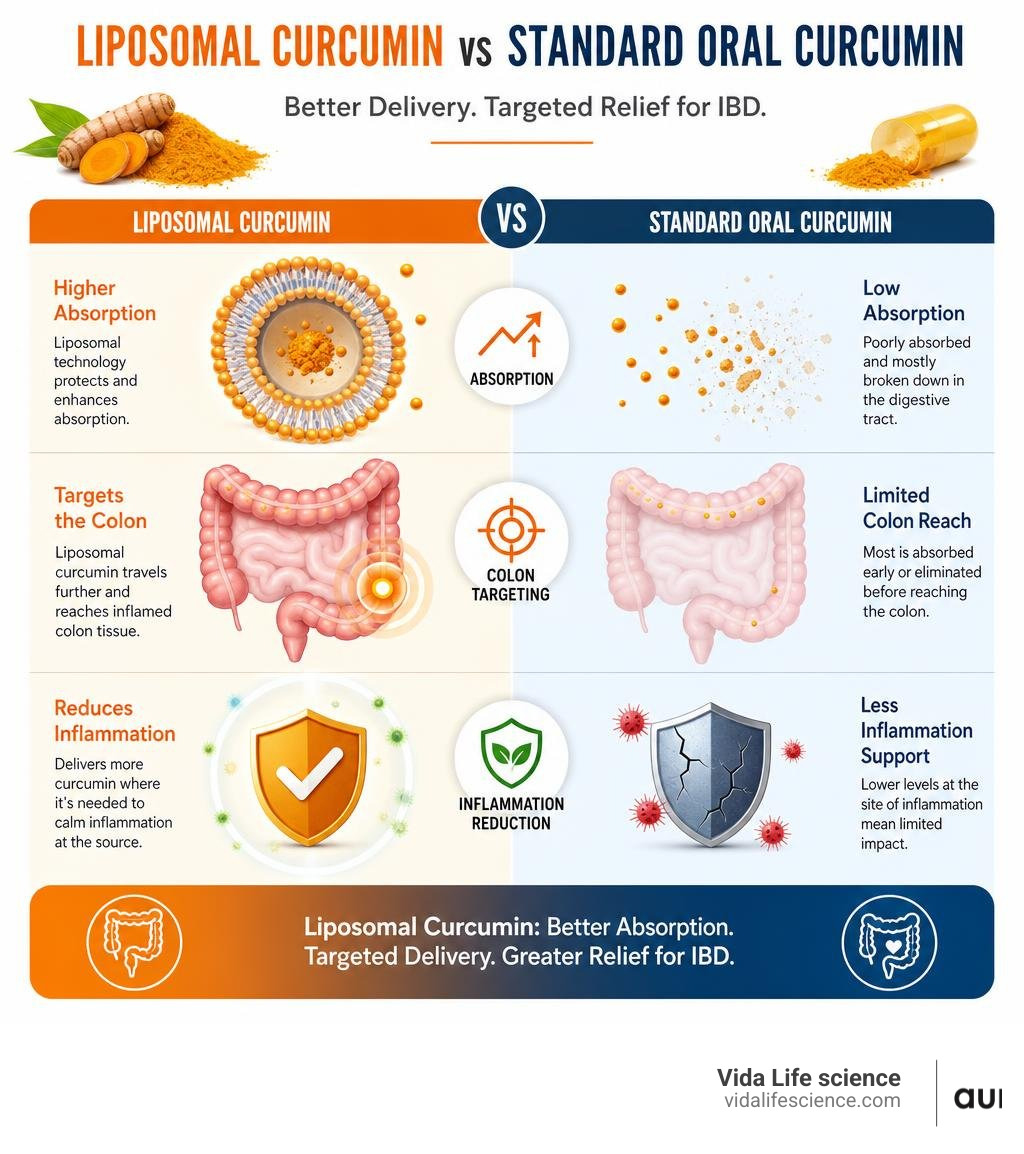
The problem is delivery — Standard curcumin is poorly absorbed, rapidly broken down, and largely gone before it reaches the colon where it's needed most.
-
Liposomal encapsulation solves this — Wrapping curcumin in a phospholipid shell protects it from stomach acid, slows its breakdown, and delivers it directly to inflamed colon tissue.
-
Animal studies confirm the benefit — Curcumin-loaded liposomes (CUR-LPs) reduced key inflammation markers including TNF-α, IL-6, MDA, and MPO in colitis models.
-
Safety looks good — Adverse event rates between curcumin and placebo groups show no significant difference (RR 1.03).
IBD affects an estimated 150–250 people per 100,000 worldwide. Current drugs — corticosteroids, immunosuppressants, biologics — carry serious long-term risks like increased infection and bone loss. That's why so many patients and researchers are looking at natural, targeted alternatives.
Curcumin, the bright yellow compound from turmeric, has powerful anti-inflammatory and antioxidant properties. But its biggest flaw has always been getting it to where it's needed in the body. Liposomal technology is changing that.
At Vida Life Science, we specialize in phosphatidylcholine-based liposomal nutrient delivery — the same advanced technology that makes liposomal curcumin and IBD treatment a scientifically credible option worth exploring. As the exclusive US distributor of Aurora Nutrascience, we've seen how liposomal formulations dramatically improve absorption compared to conventional supplements. Let's take a closer look at the science behind why this matters for IBD patients.
Understanding IBD and the Curcumin Paradox
To understand why we need advanced delivery systems, we first have to understand the disease itself and the frustrating "curcumin paradox."
Inflammatory Bowel Disease (IBD) is a broad term that primarily covers two conditions: ulcerative colitis (UC) and Crohn’s disease (CD). While both cause chronic inflammation of the digestive tract, they behave quite differently. Ulcerative colitis is a mucosal disease, meaning it is limited to the innermost lining of the colon and rectum. Crohn’s disease, on the other hand, is transmural—it can cause deep, patchy inflammation anywhere from the mouth to the anus.
Curcumin is a natural polyphenolic compound extracted from turmeric (Curcuma longa). For centuries, it has been celebrated for its anti-inflammatory, antioxidant, and immune-modulating powers. In fact, we often discuss its systemic benefits, such as Supporting Heart Health with CoQ10 and Curcumin Supplements.
However, we face a major hurdle when using standard curcumin for IBD. This is the curcumin paradox: curcumin is highly active in laboratory dishes, but when a human swallows it, almost none of it reaches the bloodstream or the lower gut in an active form. It has extremely poor water solubility, is rapidly metabolized by the liver and intestines, and is quickly eliminated from the body.
The Inflammatory Cascade in Crohn's and Colitis
The chronic inflammation in IBD is driven by a hyperactive immune system. In Crohn’s disease, the immune response is heavily dominated by Th1 and Th17 pathways, which release pro-inflammatory cytokines like interferon-gamma (IFN-γ) and interleukin-17. In ulcerative colitis, the immune response resembles an atypical Th2 response.
Regardless of the pathway, both diseases culminate in massive mucosal damage, oxidative stress, and a breakdown of the intestinal barrier. Genetic susceptibility also plays a major role; over 200 susceptibility loci have been linked to IBD, including mutations in the NOD2 gene, autophagy genes (ATG16L1, IRGM), and the interleukin-10 (IL-10) receptor genes.
When the mucosal barrier is damaged, gut bacteria leak into the deeper tissue layers, triggering a continuous loop of immune activation. According to a comprehensive MDPI review on curcumin and IBD, curcumin works by interacting with multiple cellular targets to break this loop, making it a highly attractive therapeutic candidate.
Why Standard Curcumin Falls Short in the Gut
If curcumin is so great at fighting inflammation, why can't we just take more turmeric powder? The answer lies in our digestive biology:
-
Poor Aqueous Solubility: Curcumin is highly hydrophobic (water-fearing) with a logP value of approximately 3.2. Its water solubility is a minuscule 30 nM at acidic or neutral pH. It simply refuses to dissolve in the watery environment of our digestive tract.
-
Rapid Systemic Pre-Metabolism: What little curcumin does dissolve is quickly attacked by metabolic enzymes in the intestinal wall and liver, converting it into inactive glucuronides and sulfates.
-
Short Retention Time: The half-life of standard oral curcumin in humans is a mere 6 to 7 hours.
-
Altered Colon Transit in IBD: In healthy individuals, colonic transit takes between 41 and 62 hours. In active IBD patients, inflammation speeds up the bowels, dropping colonic transit time to around 24.3 hours. This leaves standard curcumin with even less time to dissolve and exert its local effects.
The Science Behind Liposomal Curcumin and IBD Treatment
To overcome these biological barriers, formulation scientists have turned to nanomedicine. By encapsulating curcumin in liposomes, we can protect the compound and guide it directly to the inflamed areas of the colon.
According to a pivotal Springer Nature study on curcumin delivery, modern drug delivery systems like liposomes prevent pre-absorption degradation, bypass first-pass metabolism, and ensure a steady, sustained release of active curcumin directly to the mucosal lining.
Overcoming Biological Barriers with Liposomal Curcumin and IBD Treatment
When we take a standard supplement, it must survive a harsh journey: the highly acidic environment of the stomach, the digestive enzymes of the small intestine, and the thick mucus layer protecting the gut wall.
Liposomes act as microscopic "trojan horses." Made from a phospholipid bilayer identical to our own cell membranes, they shield the curcumin inside. In simulated gastric fluid (SGF) tests, curcumin-loaded liposomes (CUR-LPs) showed excellent stability, with only 21.82% of the curcumin released or consumed within the first hour. In simulated intestinal fluid (SIF), only 27.32% was released in the first hour.
This slow, controlled release ensures that the bulk of the curcumin survives the stomach and small intestine, arriving intact in the colon. Furthermore, the mucus layer in the gut has an average pore size of about 200 nm, which acts as a filter. Well-engineered liposomes can easily penetrate this barrier to reach the inflamed epithelial cells beneath.
Physicochemical Properties of Curcumin Liposomes
The therapeutic success of liposomal curcumin and IBD treatment depends entirely on the physical characteristics of the liposomes. They must be small enough to penetrate mucosal tissues, stable enough not to clump together, and properly charged to interact with inflamed cells.

Key physical properties include:
-
Particle Size: Optimized curcumin liposomes have a small average hydrodynamic diameter of approximately 167 nm (specifically 167.34 ± 9.42 nm). This tiny size allows them to easily pass through the mucosal barrier.
-
Zeta Potential (Surface Charge): A surface charge of around -34.11 ± 0.24 mV provides strong electrostatic repulsion between the vesicles, preventing them from coalescing and ensuring long-term shelf stability.
-
Polydispersity Index (PDI): A PDI of 0.09 ± 0.01 indicates an incredibly uniform, narrow size distribution.
-
Gel-Core Liposomes (GCL): Advanced formulations utilize a polymer gel core (like Carbopol) inside the lipid bilayer. This increases curcumin entrapment efficiency to an impressive 81.21% (compared to just 50-60% in conventional liposomes) and supports a sustained drug release lasting up to 72 hours.
-
Eudragit S100 Coating: Some advanced formulations coat the liposomes with Eudragit S100, a pH-sensitive polymer that only dissolves at a pH of 7.4 or higher. This completely prevents drug release in the stomach (pH 1.2 to 4.5) and small intestine, ensuring 100% of the payload is delivered specifically to the colon.
Molecular Mechanisms: How Liposomes Calm Colonic Inflammation
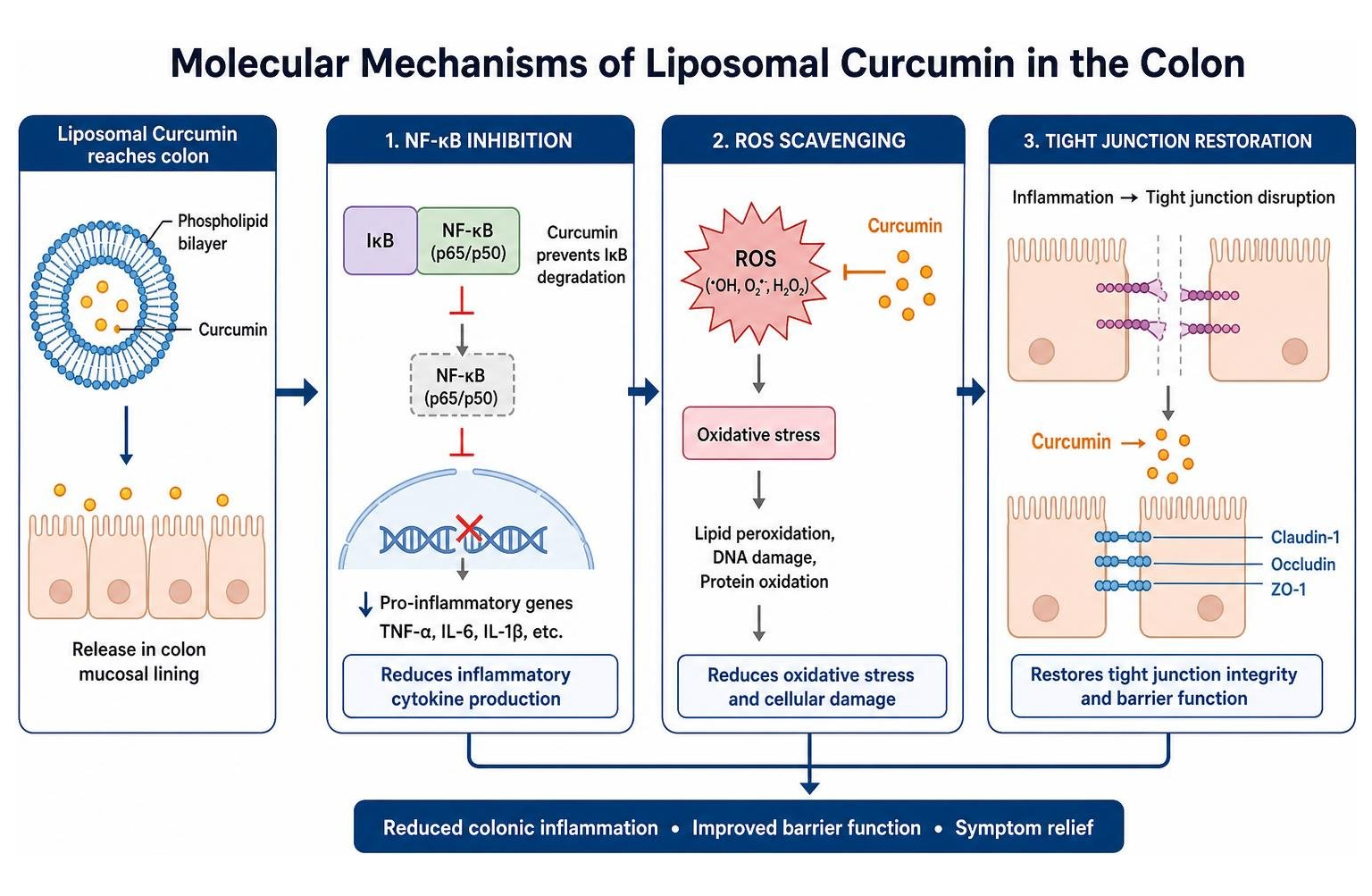
Once the liposomes deliver curcumin to the colon, the compound goes to work on a cellular level. Curcumin is a multi-target agent, meaning it doesn't just block one pathway; it orchestrates a broad, anti-inflammatory response.
Cellular Targets and Cytokine Downregulation
At the heart of IBD pathology is the NF-κB (nuclear factor kappa B) pathway. When activated, NF-κB enters the cell nucleus and turns on the genes that produce pro-inflammatory cytokines like TNF-α, IL-6, and IL-1β.
Curcumin directly blocks this process. It prevents the degradation of IκB (an inhibitory protein), keeping NF-κB locked up and inactive in the cell cytoplasm.
By shutting down this master switch, liposomal curcumin achieves the following:
-
Reduces Neutrophil Infiltration: Curcumin disrupts the chemokine gradients that draw white blood cells (neutrophils) into the gut tissue. This is reflected in a massive reduction of colonic myeloperoxidase (MPO), an enzyme found in neutrophils.
-
Suppresses Key Cytokines: It downregulates the production of TNF-α, IL-6, IFN-γ, IL-1, and IL-8.
-
Inhibits Inflammatory Enzymes: It suppresses COX-2 (cyclooxygenase-2) and MMP-3 (matrix metalloproteinase-3), which otherwise destroy the structural matrix of the gut.
-
Activates Protective Pathways: It upregulates PPARγ (peroxisome proliferator-activated receptor gamma) and HO-1 (heme oxygenase-1), which promote tissue healing and resolve inflammation.
Restoring the Mucosal Barrier and Gut Microbiota
A healthy gut relies on a strong "physical wall" made of epithelial cells held tightly together by proteins called tight junctions (such as occludin and zonula occludens-1). In IBD, these tight junctions break down, creating a "leaky gut."
Liposomal curcumin helps rebuild this wall by upregulating tight junction proteins and neutralizing reactive oxygen species (ROS). In the inflamed gut, ROS levels spike 10 to 100 times higher than normal, causing severe oxidative stress and cell death. Curcumin acts as a direct scavenger of these free radicals, lowering levels of malondialdehyde (MDA), a key marker of lipid peroxidation.
Additionally, liposomal formulations help restore microbial homeostasis. IBD is characterized by dysbiosis—a loss of beneficial bacteria and an overgrowth of harmful ones. Curcumin acts as a prebiotic, encouraging the growth of beneficial, short-chain fatty acid (SCFA)-producing bacteria. These SCFAs (like butyrate) serve as the primary fuel source for colonic cells, helping them heal and maintain a healthy mucosal barrier.
Comparing Liposomes to Other Advanced Nano-Delivery Systems
How does liposomal curcumin stack up against other modern delivery methods, and what does the clinical data say?
Clinical Evidence Supporting Liposomal Curcumin and IBD Treatment
While many nanomedicine studies are preclinical, the clinical evidence for curcumin as an adjunctive therapy is incredibly strong. A systematic review and meta-analysis of 13 placebo-controlled randomized clinical trials (RCTs) showed that curcumin, when added to standard-of-care medications (like 5-ASAs), significantly improved outcomes in ulcerative colitis:
-
Clinical Remission: Curcumin-treated patients achieved clinical remission at a rate 2.45 times higher than the placebo group (RR 2.45, 95% CI: 1.09–5.51).
-
Clinical Response: The clinical response rate was nearly double (RR 1.93, 95% CI: 1.15–3.25).
-
Endoscopic Remission: Curcumin was statistically superior in achieving mucosal healing and endoscopic remission (RR 2.11, 95% CI: 1.23–3.62).
Interestingly, the clinical benefits are much more pronounced in ulcerative colitis (a mucosal disease) than in Crohn’s disease (which is transmural and involves deeper tissue layers). To investigate this further, clinical trials are exploring genotype-stratified approaches. For example, a pilot study evaluated liposomal curcumin (at 400–600 mg/day for 12 weeks) in IBD patients homozygous for the IL-10 rs1800896 variant—a genetic profile associated with naturally lower anti-inflammatory capacity—to see if they derive even greater benefits from targeted curcumin therapy.
For more details on clinical trials and natural therapies, you can read about the latest gastroenterology insights on Curcumin, oxygen chambers and Apple watches or consult the clinical perspectives from the IBD Centre BC's guide on turmeric.
Liposomes vs. Hydrogels, Micelles, and Polymeric Nanoparticles
Researchers have designed several novel drug delivery systems (NDDS) to overcome curcumin's limitations. According to a detailed review on natural product-based nanomedicine delivery, each system has its own strengths and weaknesses.
| Delivery System |
Key Materials |
Mechanism of Action |
Pros |
Cons |
| Liposomes (e.g., CUR-LPs) |
Phospholipids, cholesterol, gel-cores |
Membrane fusion, sustained release, mucosal adhesion |
Excellent biocompatibility, low toxicity, protects payload from gastric acid |
Can suffer from premature leakage if uncoated |
| Polymeric Nanoparticles |
PLGA, Chitosan |
Mucosal adhesion, slow degradation |
Highly stable, prolonged retention in the gut |
Potential toxicity from polymer accumulation over long-term use |
| Inulin Hydrogels |
Inulin matrix, nanocomposites |
Enzyme-responsive degradation by colonic inulinase |
Dual action (prebiotic + targeted drug release) |
Complex manufacturing, harder to scale up |
One exciting hybrid approach involves encapsulating curcumin in chitosan-coated PLGA nanoparticles embedded inside an inulin hydrogel. As detailed in the Journal of Nanobiotechnology research on nanocomposite hydrogels, the outer inulin hydrogel protects the nanoparticles from stomach acid. Once it reaches the colon, bacterial enzymes (inulinases) digest the hydrogel, releasing the highly adhesive chitosan nanoparticles to stick directly to the inflamed mucosal lesions.
Another natural alternative involves isolating turmeric-derived exosome-like nanovesicles (TDNPs 2). These plant-derived nanoparticles naturally contain curcumin, preferentially accumulate in the inflamed colon, and are easily taken up by colonic macrophages to suppress colitis. You can read more about this biomimetic approach in this study on turmeric-derived nanovesicles.
Despite these exciting developments, liposomes remain the gold standard for clinical translation. They are highly biocompatible, easy to manufacture on a large scale, and have a proven safety record in human supplements.
Frequently Asked Questions about Liposomal Curcumin for IBD
Is liposomal curcumin safe for long-term use?
Yes, curcumin has an excellent safety profile. In large-scale meta-analyses, there was no significant difference in adverse events (RR 1.03) or study withdrawal rates (RR 1.04) between curcumin and placebo groups. High doses of standard curcumin (0.9 to 3.6 g/day) can sometimes cause mild nausea, diarrhea, or transient increases in liver enzymes. However, because liposomal formulations dramatically increase absorption, patients can take much lower doses (typically 400 to 600 mg/day) to achieve the same, if not better, therapeutic effects, minimizing the risk of digestive upset. For a thorough review of its safety and clinical limits, see the PMC review on curcumin in IBD and the PMC paper on modified curcumin formulations.
How does liposomal curcumin target the colon specifically?
Liposomal curcumin targets the colon through a combination of size, surface charge, and smart coatings. Inflamed colonic tissue naturally accumulates nano-sized particles (under 200 nm) because the blood vessels and mucosal barriers in these areas are "leaky"—a phenomenon similar to the EPR (enhanced permeability and retention) effect in tumors. Additionally, advanced liposomes are often coated with pH-sensitive polymers like Eudragit S100, which remain intact in the acidic stomach and slightly acidic small intestine, only dissolving when they reach the neutral-to-alkaline environment of the colon (pH 7.4).
Can liposomal curcumin be used alongside standard IBD medications?
In almost all clinical trials, curcumin was evaluated as an add-on (adjunctive) therapy alongside standard medications like 5-aminosalicylates (mesalamine) or immunosuppressants. It has been shown to work synergistically with these drugs, helping patients achieve remission faster and stay in remission longer. However, because curcumin can have mild blood-thinning properties and can interact with certain liver enzymes, it is crucial to consult your gastroenterologist before starting any new supplement regimen.
Conclusion
The science of liposomal curcumin and IBD treatment represents a massive leap forward in clinical nutrition. By wrapping this powerful, natural anti-inflammatory compound in a protective phospholipid bilayer, we overcome its poor solubility and rapid breakdown, delivering it directly to the inflamed tissues of the colon. Preclinical models and human clinical trials alike show that this targeted approach significantly reduces colonic inflammation, restores the mucosal barrier, and helps rebalance the gut microbiome.
At Vida Life Science, we are proud to offer Aurora Nutrascience’s state-of-the-art liposomal supplements. Utilizing advanced, clinical-grade manufacturing, these liquid liposomal formulations ensure maximum nutrient absorption and stability, giving your body the support it needs to soothe chronic inflammation.
If you are a healthcare provider, retail partner, or distributor looking to bring these highly bioavailable, advanced liposomal formulations to your patients or customers, we invite you to connect with us. Visit our Vida Life Science Agents page to learn more about our distribution network and how we can work together to make superior nutrient absorption accessible across the USA and Canada.


Soothing the Swell: How Liposomal Curcumin Helps Manage IBD
Why Liposomal Curcumin and IBD Treatment Are Changing the Conversation on Gut Health
Liposomal curcumin and IBD treatment is an emerging area of research offering real hope for the millions of people living with ulcerative colitis (UC) or Crohn's disease — two chronic, relapsing inflammatory bowel conditions with no permanent cure.
Here's what the current evidence shows at a glance:
IBD affects an estimated 150–250 people per 100,000 worldwide. Current drugs — corticosteroids, immunosuppressants, biologics — carry serious long-term risks like increased infection and bone loss. That's why so many patients and researchers are looking at natural, targeted alternatives.
Curcumin, the bright yellow compound from turmeric, has powerful anti-inflammatory and antioxidant properties. But its biggest flaw has always been getting it to where it's needed in the body. Liposomal technology is changing that.
At Vida Life Science, we specialize in phosphatidylcholine-based liposomal nutrient delivery — the same advanced technology that makes liposomal curcumin and IBD treatment a scientifically credible option worth exploring. As the exclusive US distributor of Aurora Nutrascience, we've seen how liposomal formulations dramatically improve absorption compared to conventional supplements. Let's take a closer look at the science behind why this matters for IBD patients.
Understanding IBD and the Curcumin Paradox
To understand why we need advanced delivery systems, we first have to understand the disease itself and the frustrating "curcumin paradox."
Inflammatory Bowel Disease (IBD) is a broad term that primarily covers two conditions: ulcerative colitis (UC) and Crohn’s disease (CD). While both cause chronic inflammation of the digestive tract, they behave quite differently. Ulcerative colitis is a mucosal disease, meaning it is limited to the innermost lining of the colon and rectum. Crohn’s disease, on the other hand, is transmural—it can cause deep, patchy inflammation anywhere from the mouth to the anus.
Curcumin is a natural polyphenolic compound extracted from turmeric (Curcuma longa). For centuries, it has been celebrated for its anti-inflammatory, antioxidant, and immune-modulating powers. In fact, we often discuss its systemic benefits, such as Supporting Heart Health with CoQ10 and Curcumin Supplements.
However, we face a major hurdle when using standard curcumin for IBD. This is the curcumin paradox: curcumin is highly active in laboratory dishes, but when a human swallows it, almost none of it reaches the bloodstream or the lower gut in an active form. It has extremely poor water solubility, is rapidly metabolized by the liver and intestines, and is quickly eliminated from the body.
The Inflammatory Cascade in Crohn's and Colitis
The chronic inflammation in IBD is driven by a hyperactive immune system. In Crohn’s disease, the immune response is heavily dominated by Th1 and Th17 pathways, which release pro-inflammatory cytokines like interferon-gamma (IFN-γ) and interleukin-17. In ulcerative colitis, the immune response resembles an atypical Th2 response.
Regardless of the pathway, both diseases culminate in massive mucosal damage, oxidative stress, and a breakdown of the intestinal barrier. Genetic susceptibility also plays a major role; over 200 susceptibility loci have been linked to IBD, including mutations in the NOD2 gene, autophagy genes (ATG16L1, IRGM), and the interleukin-10 (IL-10) receptor genes.
When the mucosal barrier is damaged, gut bacteria leak into the deeper tissue layers, triggering a continuous loop of immune activation. According to a comprehensive MDPI review on curcumin and IBD, curcumin works by interacting with multiple cellular targets to break this loop, making it a highly attractive therapeutic candidate.
Why Standard Curcumin Falls Short in the Gut
If curcumin is so great at fighting inflammation, why can't we just take more turmeric powder? The answer lies in our digestive biology:
The Science Behind Liposomal Curcumin and IBD Treatment
To overcome these biological barriers, formulation scientists have turned to nanomedicine. By encapsulating curcumin in liposomes, we can protect the compound and guide it directly to the inflamed areas of the colon.
According to a pivotal Springer Nature study on curcumin delivery, modern drug delivery systems like liposomes prevent pre-absorption degradation, bypass first-pass metabolism, and ensure a steady, sustained release of active curcumin directly to the mucosal lining.
Overcoming Biological Barriers with Liposomal Curcumin and IBD Treatment
When we take a standard supplement, it must survive a harsh journey: the highly acidic environment of the stomach, the digestive enzymes of the small intestine, and the thick mucus layer protecting the gut wall.
Liposomes act as microscopic "trojan horses." Made from a phospholipid bilayer identical to our own cell membranes, they shield the curcumin inside. In simulated gastric fluid (SGF) tests, curcumin-loaded liposomes (CUR-LPs) showed excellent stability, with only 21.82% of the curcumin released or consumed within the first hour. In simulated intestinal fluid (SIF), only 27.32% was released in the first hour.
This slow, controlled release ensures that the bulk of the curcumin survives the stomach and small intestine, arriving intact in the colon. Furthermore, the mucus layer in the gut has an average pore size of about 200 nm, which acts as a filter. Well-engineered liposomes can easily penetrate this barrier to reach the inflamed epithelial cells beneath.
Physicochemical Properties of Curcumin Liposomes
The therapeutic success of liposomal curcumin and IBD treatment depends entirely on the physical characteristics of the liposomes. They must be small enough to penetrate mucosal tissues, stable enough not to clump together, and properly charged to interact with inflamed cells.
Key physical properties include:
Molecular Mechanisms: How Liposomes Calm Colonic Inflammation
Once the liposomes deliver curcumin to the colon, the compound goes to work on a cellular level. Curcumin is a multi-target agent, meaning it doesn't just block one pathway; it orchestrates a broad, anti-inflammatory response.
Cellular Targets and Cytokine Downregulation
At the heart of IBD pathology is the NF-κB (nuclear factor kappa B) pathway. When activated, NF-κB enters the cell nucleus and turns on the genes that produce pro-inflammatory cytokines like TNF-α, IL-6, and IL-1β.
Curcumin directly blocks this process. It prevents the degradation of IκB (an inhibitory protein), keeping NF-κB locked up and inactive in the cell cytoplasm.
By shutting down this master switch, liposomal curcumin achieves the following:
Restoring the Mucosal Barrier and Gut Microbiota
A healthy gut relies on a strong "physical wall" made of epithelial cells held tightly together by proteins called tight junctions (such as occludin and zonula occludens-1). In IBD, these tight junctions break down, creating a "leaky gut."
Liposomal curcumin helps rebuild this wall by upregulating tight junction proteins and neutralizing reactive oxygen species (ROS). In the inflamed gut, ROS levels spike 10 to 100 times higher than normal, causing severe oxidative stress and cell death. Curcumin acts as a direct scavenger of these free radicals, lowering levels of malondialdehyde (MDA), a key marker of lipid peroxidation.
Additionally, liposomal formulations help restore microbial homeostasis. IBD is characterized by dysbiosis—a loss of beneficial bacteria and an overgrowth of harmful ones. Curcumin acts as a prebiotic, encouraging the growth of beneficial, short-chain fatty acid (SCFA)-producing bacteria. These SCFAs (like butyrate) serve as the primary fuel source for colonic cells, helping them heal and maintain a healthy mucosal barrier.
Comparing Liposomes to Other Advanced Nano-Delivery Systems
How does liposomal curcumin stack up against other modern delivery methods, and what does the clinical data say?
Clinical Evidence Supporting Liposomal Curcumin and IBD Treatment
While many nanomedicine studies are preclinical, the clinical evidence for curcumin as an adjunctive therapy is incredibly strong. A systematic review and meta-analysis of 13 placebo-controlled randomized clinical trials (RCTs) showed that curcumin, when added to standard-of-care medications (like 5-ASAs), significantly improved outcomes in ulcerative colitis:
Interestingly, the clinical benefits are much more pronounced in ulcerative colitis (a mucosal disease) than in Crohn’s disease (which is transmural and involves deeper tissue layers). To investigate this further, clinical trials are exploring genotype-stratified approaches. For example, a pilot study evaluated liposomal curcumin (at 400–600 mg/day for 12 weeks) in IBD patients homozygous for the IL-10 rs1800896 variant—a genetic profile associated with naturally lower anti-inflammatory capacity—to see if they derive even greater benefits from targeted curcumin therapy.
For more details on clinical trials and natural therapies, you can read about the latest gastroenterology insights on Curcumin, oxygen chambers and Apple watches or consult the clinical perspectives from the IBD Centre BC's guide on turmeric.
Liposomes vs. Hydrogels, Micelles, and Polymeric Nanoparticles
Researchers have designed several novel drug delivery systems (NDDS) to overcome curcumin's limitations. According to a detailed review on natural product-based nanomedicine delivery, each system has its own strengths and weaknesses.
One exciting hybrid approach involves encapsulating curcumin in chitosan-coated PLGA nanoparticles embedded inside an inulin hydrogel. As detailed in the Journal of Nanobiotechnology research on nanocomposite hydrogels, the outer inulin hydrogel protects the nanoparticles from stomach acid. Once it reaches the colon, bacterial enzymes (inulinases) digest the hydrogel, releasing the highly adhesive chitosan nanoparticles to stick directly to the inflamed mucosal lesions.
Another natural alternative involves isolating turmeric-derived exosome-like nanovesicles (TDNPs 2). These plant-derived nanoparticles naturally contain curcumin, preferentially accumulate in the inflamed colon, and are easily taken up by colonic macrophages to suppress colitis. You can read more about this biomimetic approach in this study on turmeric-derived nanovesicles.
Despite these exciting developments, liposomes remain the gold standard for clinical translation. They are highly biocompatible, easy to manufacture on a large scale, and have a proven safety record in human supplements.
Frequently Asked Questions about Liposomal Curcumin for IBD
Is liposomal curcumin safe for long-term use?
Yes, curcumin has an excellent safety profile. In large-scale meta-analyses, there was no significant difference in adverse events (RR 1.03) or study withdrawal rates (RR 1.04) between curcumin and placebo groups. High doses of standard curcumin (0.9 to 3.6 g/day) can sometimes cause mild nausea, diarrhea, or transient increases in liver enzymes. However, because liposomal formulations dramatically increase absorption, patients can take much lower doses (typically 400 to 600 mg/day) to achieve the same, if not better, therapeutic effects, minimizing the risk of digestive upset. For a thorough review of its safety and clinical limits, see the PMC review on curcumin in IBD and the PMC paper on modified curcumin formulations.
How does liposomal curcumin target the colon specifically?
Liposomal curcumin targets the colon through a combination of size, surface charge, and smart coatings. Inflamed colonic tissue naturally accumulates nano-sized particles (under 200 nm) because the blood vessels and mucosal barriers in these areas are "leaky"—a phenomenon similar to the EPR (enhanced permeability and retention) effect in tumors. Additionally, advanced liposomes are often coated with pH-sensitive polymers like Eudragit S100, which remain intact in the acidic stomach and slightly acidic small intestine, only dissolving when they reach the neutral-to-alkaline environment of the colon (pH 7.4).
Can liposomal curcumin be used alongside standard IBD medications?
In almost all clinical trials, curcumin was evaluated as an add-on (adjunctive) therapy alongside standard medications like 5-aminosalicylates (mesalamine) or immunosuppressants. It has been shown to work synergistically with these drugs, helping patients achieve remission faster and stay in remission longer. However, because curcumin can have mild blood-thinning properties and can interact with certain liver enzymes, it is crucial to consult your gastroenterologist before starting any new supplement regimen.
Conclusion
The science of liposomal curcumin and IBD treatment represents a massive leap forward in clinical nutrition. By wrapping this powerful, natural anti-inflammatory compound in a protective phospholipid bilayer, we overcome its poor solubility and rapid breakdown, delivering it directly to the inflamed tissues of the colon. Preclinical models and human clinical trials alike show that this targeted approach significantly reduces colonic inflammation, restores the mucosal barrier, and helps rebalance the gut microbiome.
At Vida Life Science, we are proud to offer Aurora Nutrascience’s state-of-the-art liposomal supplements. Utilizing advanced, clinical-grade manufacturing, these liquid liposomal formulations ensure maximum nutrient absorption and stability, giving your body the support it needs to soothe chronic inflammation.
If you are a healthcare provider, retail partner, or distributor looking to bring these highly bioavailable, advanced liposomal formulations to your patients or customers, we invite you to connect with us. Visit our Vida Life Science Agents page to learn more about our distribution network and how we can work together to make superior nutrient absorption accessible across the USA and Canada.