Why Every Liposomal Curcumin Bioavailability Study Points to the Same Problem — and One Clear Solution
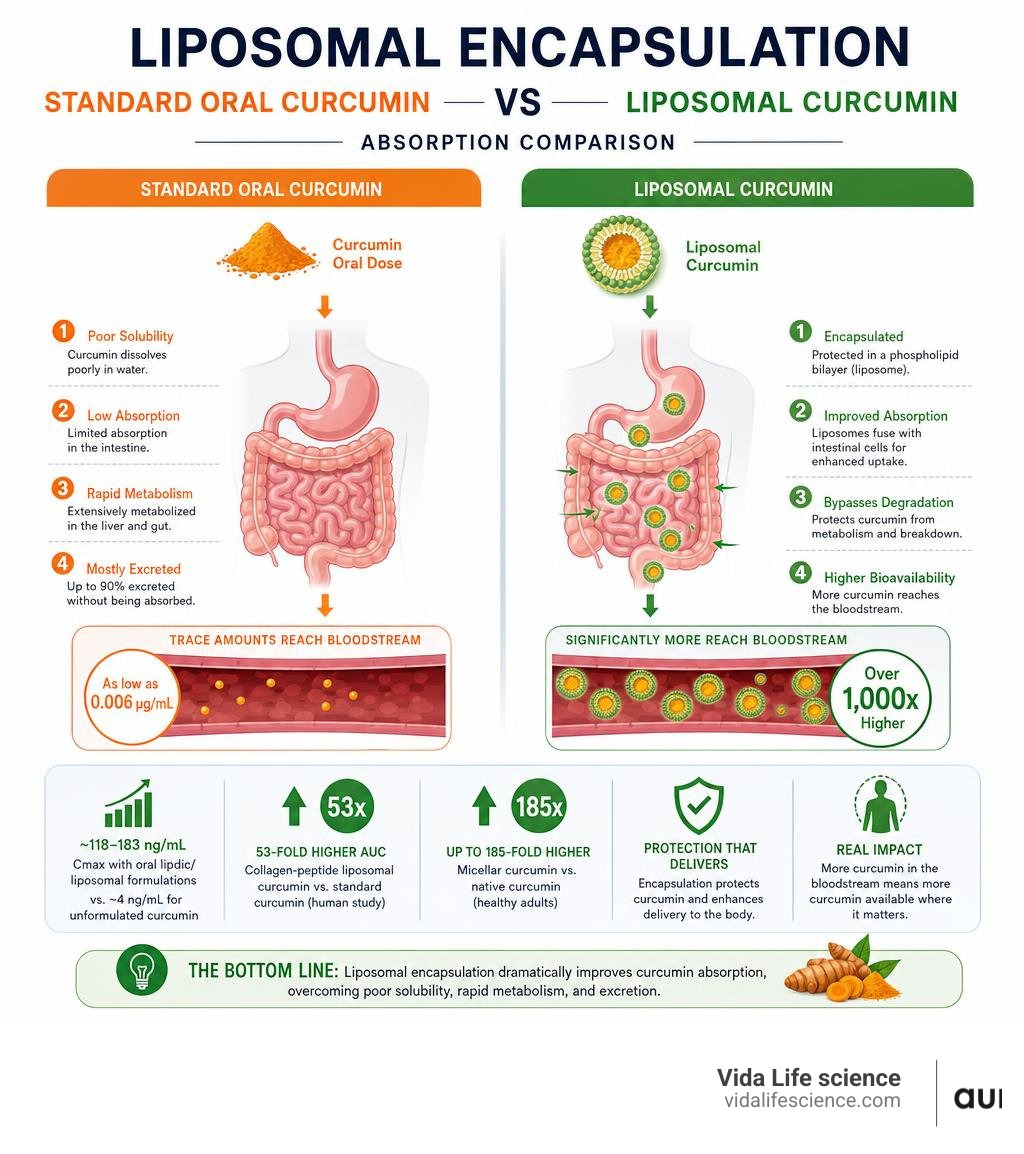
A liposomal curcumin bioavailability study consistently reveals a striking finding: standard oral curcumin is nearly useless at reaching your bloodstream. Here's what the research shows at a glance:
Key findings from liposomal curcumin bioavailability research:
-
Standard oral curcumin reaches only trace plasma levels — as low as 0.006 µg/mL even at high doses in humans
-
Liposomal (intravenous) curcumin achieves plasma levels over 1,000 times higher than oral administration
-
Oral lipidic/liposomal formulations have shown Cmax values of ~118–183 ng/mL vs. ~4 ng/mL for unformulated curcumin
-
Collagen-peptide liposomal curcumin demonstrated a 53-fold higher AUC compared to standard curcumin in human studies
-
Micellar curcumin achieved up to 185-fold higher bioavailability than native curcumin in healthy adults
-
The core problem: Up to 90% of an oral curcumin dose is excreted without being absorbed — and what little is absorbed is rapidly metabolized
Curcumin has been studied in over 6,000 published papers for its anti-inflammatory, antioxidant, and anticancer properties. Yet despite decades of research, turning that promise into real results inside the human body has been the central challenge. The molecule degrades quickly, dissolves poorly in water, and gets cleared before it can reach target tissues.
Liposomal encapsulation — wrapping curcumin in a phospholipid bilayer that mimics your own cell membranes — is one of the most studied solutions to this problem.
At Vida Life Science, we are the exclusive U.S. distributor of Aurora Nutrascience's phosphatidylcholine-based liposomal delivery technology, and understanding the science behind every liposomal curcumin bioavailability study is central to what we do. Our focus on true liposomal formulations is grounded in the same clinical and preclinical evidence this article covers.
Understanding the Liposomal Curcumin Bioavailability Study Landscape
To understand why researchers have spent years developing liposomal systems, we have to look at the harsh journey standard oral curcumin takes through the human digestive tract. Curcumin (diferuloylmethane) is the primary active curcuminoid extracted from the turmeric rhizome (Curcuma longa). While it has demonstrated remarkable therapeutic potential in vitro, its in vivo performance is notoriously poor.
When you swallow standard turmeric extract, it encounters several massive physiological barriers:
-
Extremely Low Aqueous Solubility: Curcumin is highly hydrophobic. Its solubility in water is a minuscule 11 ng/mL at neutral pH. If a compound cannot dissolve in the watery environment of your digestive tract, it cannot pass through the intestinal mucosal membrane.
-
Rapid Metabolism (First-Pass Clearance): The small amount of curcumin that does manage to cross the intestinal wall is immediately targeted by enzymes in your liver and intestines. Through phase II conjugation, it is rapidly converted into curcumin glucuronides and curcumin sulfates.
-
Instability at Physiological pH: Curcumin degrades rapidly in alkaline or even neutral pH conditions, meaning it breaks down before it even has a chance to be absorbed.
A critical review of Clinical trials on curcumin in relation to its bioavailability and effect on malignant diseases highlights that despite phase I trials showing oral doses of up to 12 grams per day are perfectly safe, systemic concentrations of free, active curcumin remain in the low nanomolar range. In fact, most oral doses result in over 90% of the active compound being excreted directly in the feces.
To bypass these limitations, scientists have spent the last two decades engineering advanced delivery systems. As detailed in Recent Developments in Delivery, Bioavailability, Absorption and Metabolism of Curcumin, these strategies include nanoparticles, polymer-lipid hybrids, micellar carriers, and liposomal encapsulation. Among these, liposomal formulations stand out because they utilize a phospholipid bilayer—the exact same structural component as human cell membranes—to shield the curcumin molecule, allowing it to glide through the digestive system and enter the bloodstream intact.
Pharmacokinetic Parameters (AUC, Cmax, and Tmax) in a Liposomal Curcumin Bioavailability Study
When scientists evaluate how well a nutrient is absorbed, they look at three primary pharmacokinetic parameters:
-
Cmax (Maximum Concentration): The peak level of the compound detected in the bloodstream after administration.
-
AUC (Area Under the Curve): The total exposure of the body to the compound over a set period of time (usually 12 to 24 hours).
-
Tmax (Time to Maximum Concentration): How long it takes for the compound to reach its peak level in the blood.
-
Half-life (t1/2): The time it takes for the systemic concentration of the active compound to reduce by half.
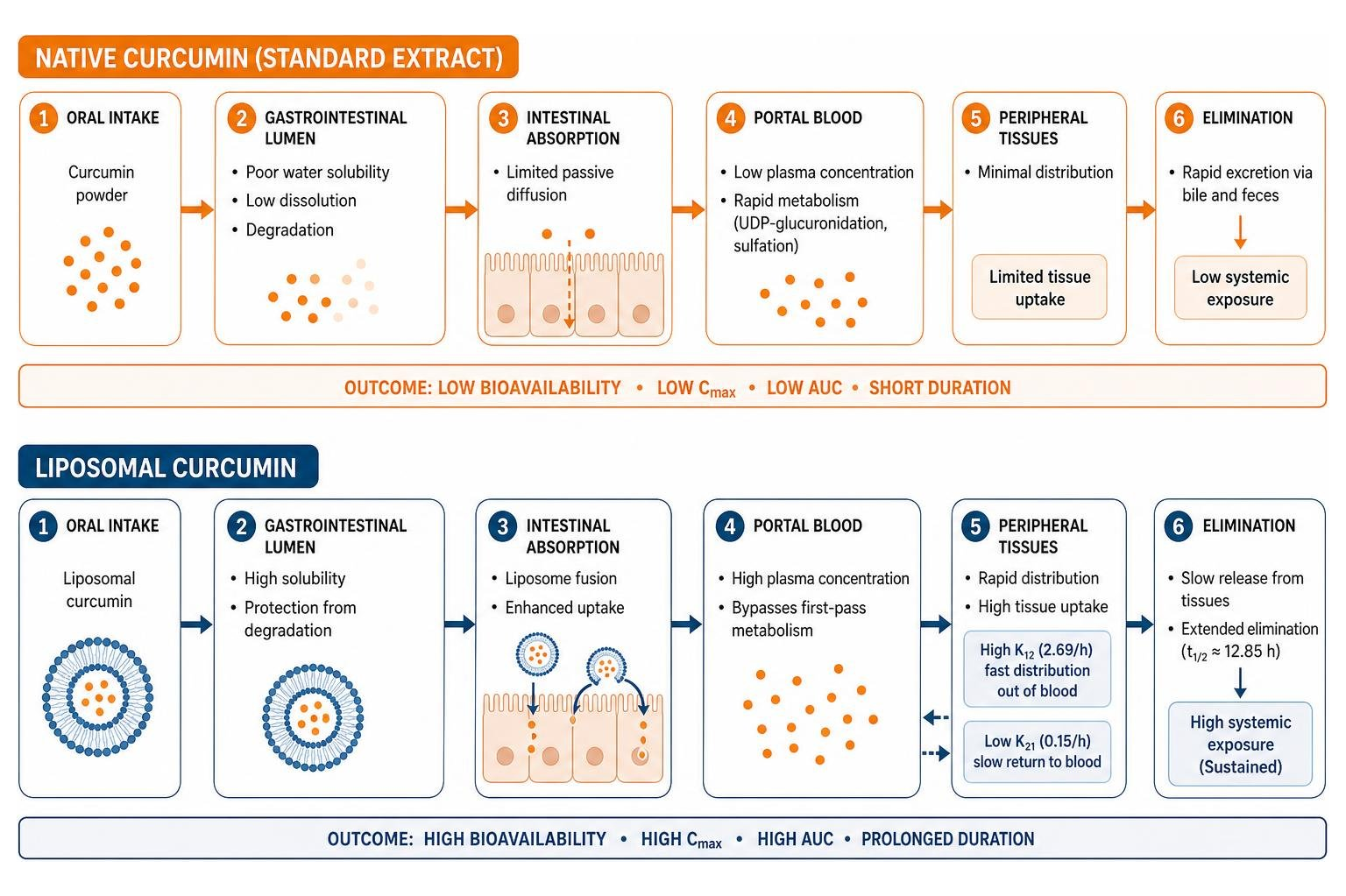
In a landmark human clinical trial published in the journal Pharmaceutics, titled Bioavailability of a Lipidic Formulation of Curcumin in Healthy Human Volunteers, researchers modeled the behavior of an advanced lipidic curcumin formulation (CRM-LF) in healthy subjects. The study revealed that the formulation followed a complex two-compartment model with first-order absorption and elimination.
The pharmacokinetic results from this study were highly revealing:
-
Cmax: Reached an impressive 183.35 ± 37.54 ng/mL at a 750 mg dose.
-
Tmax: Was remarkably fast, peaking at 0.60 ± 0.05 hours (roughly 36 minutes).
-
AUC (0 to infinity): Measured 321.12 ± 25.55 ng·h/mL.
-
Half-life (t1/2): Extended to 12.85 ± 4.57 hours, showing a sustained release profile.
The mathematical modeling showed a very high central-to-peripheral distribution rate constant ($K_{12} = 2.69/\text{h}$) but a significantly slower return rate constant ($K_{21} = 0.15/\text{h}$). This explains a classic scientific paradox: why curcumin can exert powerful systemic benefits even when blood serum measurements appear low. The liposomal carrier rapidly distributes the curcumin out of the blood plasma and directly into peripheral tissues, where it is slowly metabolized over a long period.
Further research into advanced liposomal architectures has pushed these boundaries even higher. For instance, a study on Two-Stage Supramolecular Self-Assembly-Directed Collagen-Peptide-Decorated Liposomal Complexes of Curcumin Microspheres evaluated a food-grade liposomal complex (CCL) decorated with collagen peptides. This green, bio-inspired formulation achieved a mind-boggling 146,000-fold increase in water solubility compared to standard curcumin. In a randomized, double-blind crossover study with 15 human volunteers, the CCL microspheres yielded a 53-fold increase in AUC0–12h (506.8 ng·h/mL vs. 9.47 ng·h/mL for standard extract) and a Cmax of 118 ng/mL compared to just 4.3 ng/mL for unformulated curcumin.
Not all "enhanced" curcumin supplements are created equal. To date, several distinct delivery technologies have been developed, including micronized powders, liquid micellar preparations, and liposomal systems.
In a randomized, double-blind, single-dose crossover study conducted at the University of Hohenheim (NCT03530436), researchers compared eight different curcumin delivery formats in 12 healthy volunteers. Each volunteer received a normalized dose of 207 mg of curcuminoids across different phases of the trial, with plasma samples gathered over 24 hours.
The findings from this trial and related literature, such as The oral bioavailability of curcumin from micronized powder and liquid micelles is significantly increased in healthy humans, demonstrate that liquid micellar formulations and liposomes represent the pinnacle of oral absorption. Liquid micelles achieved a 185-fold increase in bioavailability overall compared to native curcumin powder. Interestingly, this study also identified a significant sex-specific difference: women absorbed curcumin formulations significantly more efficiently than men, demonstrating up to a 277-fold increase in bioavailability for micellar formulations, compared to a 114-fold increase in men.
Another comprehensive crossover trial published in the Journal of Nutrition and Metabolism, titled Pharmacokinetics of a Single Dose of Turmeric Curcuminoids Depends on Formulation, compared five commercial formulations. It showed that liquid micellar preparations achieved the highest total curcuminoid AUC (8,540 ng·h/mL), followed by dried colloidal suspensions (6,520 ng·h/mL).
The table below highlights how different delivery technologies compare when normalized for active curcuminoid content:
| Formulation Type |
Bioavailability Increase (vs. Native) |
Relative Peak Plasma Concentration (Cmax) |
Primary Mechanisms of Action |
| Native Curcumin Extract (95%) |
1x (Baseline) |
Extremely Low (~4.3 ng/mL) |
Passive diffusion; mostly excreted |
| Micronized Powder |
~9-fold |
Moderate |
Reduced particle size increases surface area |
| Phospholipid/Phytosome |
~5-fold to 20-fold |
Moderate-High |
Complexation with lecithin |
| Liquid Micelles |
~114x (Men) to 277x (Women) |
Very High (~251 to 806-fold higher) |
Surfactant-stabilized single-layer spheres |
| Liposomal Curcumin (Oral) |
~53-fold to 100+ fold |
Very High (~118 to 183 ng/mL) |
Phospholipid bilayer fusion; cellular targeting |
Methodological Strengths and Limitations of Current Clinical Trials
While the data supporting advanced delivery systems is exciting, a rigorous analysis of the current scientific literature reveals several methodological strengths and limitations that must be addressed.
Methodological Strengths
Recent clinical trials—such as the crossover studies registered under NCT03530436—utilize highly robust, randomized, double-blind, crossover designs. The crossover setup is particularly valuable because each participant serves as their own control, eliminating inter-individual confounding variables like metabolic rate, age, sex, and genetics. Furthermore, modern studies utilize state-of-the-art Ultra-Performance Liquid Chromatography-Tandem Mass Spectrometry (UPLC-MS/MS) to isolate and measure free, unconjugated curcuminoids alongside their glucuronide and sulfate metabolites, ensuring highly accurate pharmacokinetic mapping.
Methodological Limitations & Industry Bias
However, independent researchers have raised serious concerns about industry bias. In a comprehensive systematic review published in Naunyn-Schmiedeberg's Archives of Pharmacology, researchers conducted a critical analysis of 52 clinical trials on curcumin's bioavailability. They discovered a troubling trend: every single study that successfully proved a significantly higher bioavailability of a proprietary curcumin formulation was funded by the pharmaceutical or nutraceutical company that manufactured it.
Independent, non-sponsored replication studies have frequently struggled to achieve the same astronomical absorption figures reported in industry-sponsored trials. Furthermore, industry-funded trials often used significantly higher average doses (5.015 g) compared to non-published or independent trials (2.54 g), skewing the perceived efficacy.
Another limitation is shown in trials like Comparative Oral Absorption of Curcumin in a Natural Turmeric Matrix, which note that while plasma levels are an easy metric to track, they do not always correlate perfectly with cellular uptake or clinical tissue distribution. Future trials must focus on long-term safety, independent replication, and tissue-specific biopsy measurements rather than relying solely on short-term plasma AUC values.
Therapeutic Efficacy and Tissue Distribution in High-Grade Gliomas
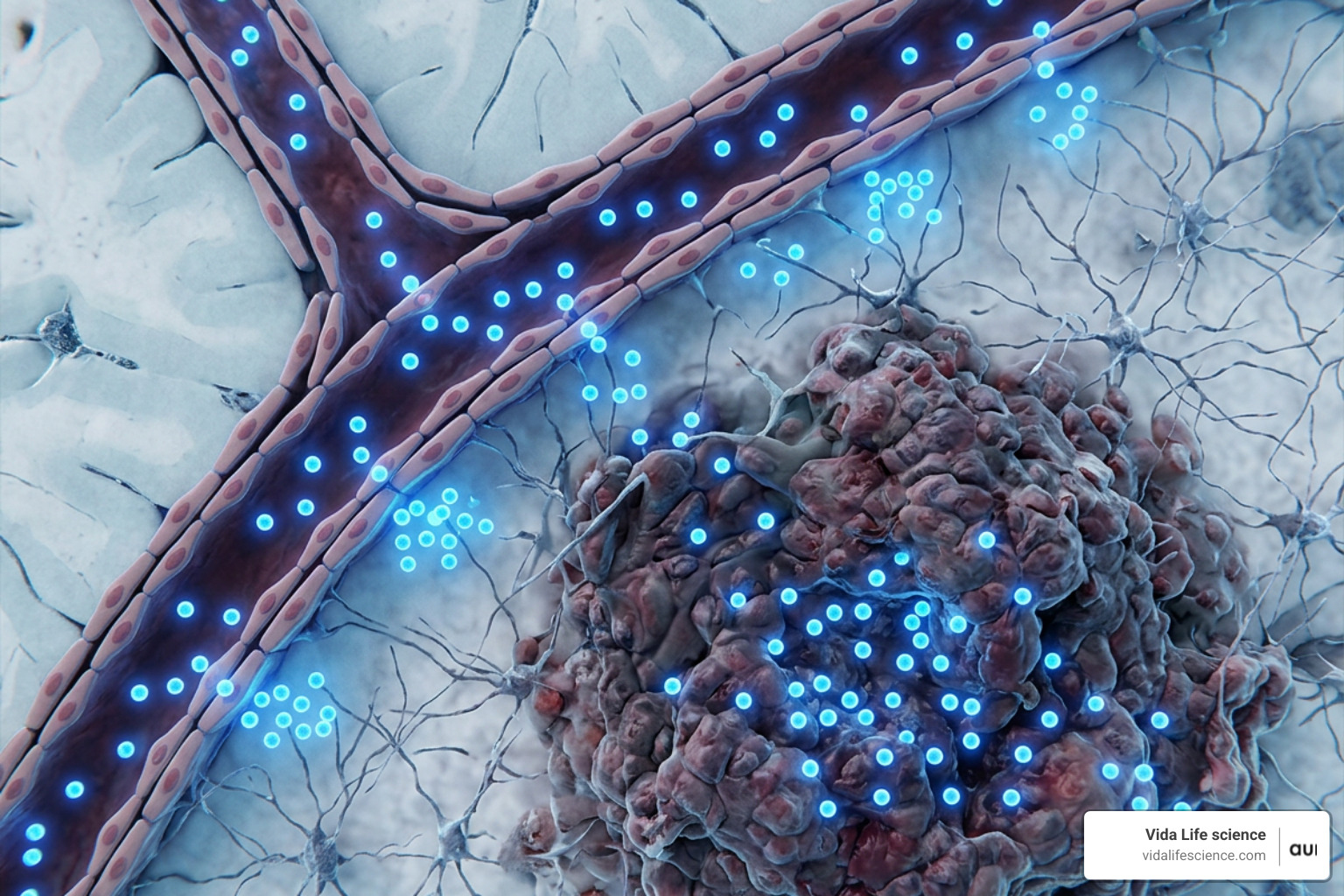
One of the most promising frontiers of liposomal curcumin research is its application in oncology, particularly in treating aggressive brain tumors like high-grade gliomas (glioblastoma). The blood-brain barrier (BBB) is a highly selective semipermeable border that prevents over 98% of small-molecule drugs from entering the brain.
Because of its lipophilic nature and small size when packaged into nanoparticles, liposomal curcumin is uniquely capable of crossing the blood-brain barrier. Preclinical models show that liposomal curcumin achieves plasma and tissue levels over 1,000 times higher than standard oral curcumin, allowing it to preferentially accumulate inside tumor cells.
In early-phase clinical research, intravenous liposomal curcumin is being evaluated as an adjunct therapy alongside standard treatments like radiation and temozolomide (TMZ). As of January 24, 2025, a Phase 1/2 dose-escalation trial had enrolled 14 patients with newly diagnosed high-grade gliomas. The trial combines weekly intravenous infusions of liposomal curcumin (at doses ranging from 240 to 400 mg/m²) with standard radiation and TMZ (150–200 mg/m²). The goal is to exploit curcumin’s ability to inhibit Nuclear Factor-kappa B (NF-κB), a key survival pathway that cancer cells use to resist chemotherapy and radiation.
Intravenous Liposomal Curcumin Bioavailability Study and Safety Profiles
Administering liposomal curcumin intravenously bypasses the digestive tract entirely, offering 100% systemic bioavailability. However, this direct route also introduces unique safety considerations that must be carefully managed.
In a pioneering Phase I dose-escalation study published by Storka et al., titled Safety, tolerability and pharmacokinetics of liposomal curcumin (Lipocurc™) in healthy humans, researchers evaluated the safety of a 2-hour intravenous infusion of liposomal curcumin (composed of DMPC and DMPG phospholipids in a 9:1 ratio) at doses ranging from 10 mg/m² to 400 mg/m² in healthy volunteers.
The study established several vital safety and pharmacokinetic insights:
-
Dose-Proportional Exposure: Both Cmax and AUC showed excellent dose-proportionality ($R^2 = 0.9175$ and $0.9441$, respectively).
-
Rapid Clearance: Curcumin and its active metabolite, tetrahydrocurcumin (THC), were cleared rapidly from the plasma, falling below detectable limits within 6 to 60 minutes after the infusion ended. The mean residence time (MRT) in plasma was only 7 to 15 minutes.
-
Echinocyte Formation: At doses of 120 mg/m² and above, researchers observed a dose-dependent, transient morphological change in red blood cells called echinocyte formation (crenated red blood cells). While this did not cause clinical hemolysis in healthy volunteers at lower doses, it represents a clear biological threshold.
-
Hemolytic Anemia Risk: In the Phase 1/2 glioma trials, a case of hemolytic anemia was observed at a dose of 300 mg/m² in a patient who was concurrently taking other hemolytic drugs. This highlights the importance of screening patients for pre-existing red blood cell vulnerabilities or interacting medications before administering high-dose intravenous liposomal therapies.
Impact on Systemic Inflammation and Pancreatic Function
Beyond oncology, liposomal curcumin has demonstrated profound therapeutic efficacy in metabolic and inflammatory disease models. A key study published in Antioxidants, titled Enhancing the Bioavailability and Bioactivity of Curcumin, evaluated the comparative effects of standard curcumin versus liposomal curcumin on systemic pro-inflammatory cytokines and pancreatic function in streptozotocin (STZ)-induced diabetic rats.
In this study, liposomal curcumin was formulated with DPPC, PEG-2000-DSPE, and cholesterol, resulting in a highly stable nanoparticle with a particle size of ~140 nm and an encapsulation efficiency of ~80%.
The study yielded remarkable therapeutic data when comparing liposomal curcumin (LCC) to standard curcumin solution (CC):
-
Preservation of Pancreatic Beta-Cells: In diabetic rats, liposomal curcumin at a dose of 2 mg/0.1 kg body weight (LCC2) significantly improved C-peptide levels—a highly stable marker of pancreatic beta-cell insulin secretion—to 557 pmol/L, compared to only 426 pmol/L in the untreated diabetic group.
-
Reduction of Systemic Inflammation: The 2 mg/0.1 kg body weight liposomal dose (LCC2) was highly effective at suppressing key pro-inflammatory cytokines and chemokines:
-
TNF-α: Reduced to 2.17 ng/mL compared to 4.03 ng/mL in the untreated group.
-
RANTES (CCL5): This chemokine, heavily involved in inflammatory cell recruitment, was significantly decreased compared to both the untreated control and standard curcumin groups.
-
IL-1β and MCP-1: Showed dramatic, dose-dependent reductions.
The study proved that the liposomal formulation was significantly more effective than standard curcumin at equivalent doses ($P < 0.003$ for TNF-α and RANTES reduction). By shielding the curcumin from rapid degradation, the liposomal nanoparticles allowed the compound to reach the pancreas and systemic immune cells in its active, un-metabolized form. This has massive implications for using liposomal curcumin as a supportive therapy for inflammatory conditions, and it pairs exceptionally well with other cellular rejuvenators, as discussed in our guide on Supporting Heart Health with CoQ10 and Curcumin Supplements.
Frequently Asked Questions about Liposomal Curcumin Bioavailability
How much more bioavailable is liposomal curcumin compared to standard oral curcumin?
Depending on the specific formulation and surface modifications, oral liposomal curcumin can achieve 50 to over 100 times higher bioavailability (AUC) compared to standard 95% curcumin extract. Intravenous liposomal curcumin bypasses intestinal absorption entirely, achieving plasma levels over 1,000 times higher than standard oral dosing and allowing for targeted accumulation in tissues like tumors or inflamed organs.
What are the primary safety concerns with high-dose intravenous liposomal curcumin?
In clinical trials, the primary dose-limiting toxicity identified is echinocyte formation (temporary changes in red blood cell shape), which begins to occur at doses $\ge 120\text{ mg/m}^2$. At higher doses, or when combined with other hemolytic agents, this can lead to hemolytic anemia. For standard oral liposomal supplements, these safety concerns are virtually non-existent, as oral absorption rates do not reach the extreme thresholds required to alter red blood cell morphology.
How does liposomal curcumin support pancreatic function and reduce inflammation?
By protecting the active curcumin molecule from rapid liver metabolism, liposomes deliver intact curcumin to target tissues. In animal models of diabetes, this direct delivery preserves pancreatic beta-cells (as evidenced by significantly higher C-peptide levels) and suppresses the release of systemic inflammatory master-regulators, including TNF-α, IL-1β, IL-6, MCP-1, and RANTES.
Conclusion
The scientific consensus across every major liposomal curcumin bioavailability study is undeniable: traditional curcumin supplements fall short due to poor solubility and rapid metabolic clearance. Liposomal encapsulation resolves this bottleneck by wrapping the curcumin molecule in a protective phospholipid bilayer, transforming a poorly absorbed herb into a highly bioavailable therapeutic powerhouse.
Whether it is crossing the blood-brain barrier to target high-grade gliomas, preserving insulin-producing pancreatic cells, or systematically lowering chronic inflammatory markers, the liposomal delivery system ensures that curcumin actually reaches the cells that need it most.
At Vida Life Science, we believe in delivering nutrients that your body can actually use. As the exclusive U.S. and Canadian distributor of Aurora Nutrascience, we provide true, phosphatidylcholine-based liposomal supplements engineered for maximum cellular absorption. To learn more about how our advanced manufacturing process sets us apart from standard supplements, explore our detailed breakdown of What Makes Aurora Nutrascience Liposomal Supplements Different.


How Liposomal Curcumin Nanoparticles Supercharge Bioavailability
Why Every Liposomal Curcumin Bioavailability Study Points to the Same Problem — and One Clear Solution
A liposomal curcumin bioavailability study consistently reveals a striking finding: standard oral curcumin is nearly useless at reaching your bloodstream. Here's what the research shows at a glance:
Key findings from liposomal curcumin bioavailability research:
Curcumin has been studied in over 6,000 published papers for its anti-inflammatory, antioxidant, and anticancer properties. Yet despite decades of research, turning that promise into real results inside the human body has been the central challenge. The molecule degrades quickly, dissolves poorly in water, and gets cleared before it can reach target tissues.
Liposomal encapsulation — wrapping curcumin in a phospholipid bilayer that mimics your own cell membranes — is one of the most studied solutions to this problem.
At Vida Life Science, we are the exclusive U.S. distributor of Aurora Nutrascience's phosphatidylcholine-based liposomal delivery technology, and understanding the science behind every liposomal curcumin bioavailability study is central to what we do. Our focus on true liposomal formulations is grounded in the same clinical and preclinical evidence this article covers.
Understanding the Liposomal Curcumin Bioavailability Study Landscape
To understand why researchers have spent years developing liposomal systems, we have to look at the harsh journey standard oral curcumin takes through the human digestive tract. Curcumin (diferuloylmethane) is the primary active curcuminoid extracted from the turmeric rhizome (Curcuma longa). While it has demonstrated remarkable therapeutic potential in vitro, its in vivo performance is notoriously poor.
When you swallow standard turmeric extract, it encounters several massive physiological barriers:
A critical review of Clinical trials on curcumin in relation to its bioavailability and effect on malignant diseases highlights that despite phase I trials showing oral doses of up to 12 grams per day are perfectly safe, systemic concentrations of free, active curcumin remain in the low nanomolar range. In fact, most oral doses result in over 90% of the active compound being excreted directly in the feces.
To bypass these limitations, scientists have spent the last two decades engineering advanced delivery systems. As detailed in Recent Developments in Delivery, Bioavailability, Absorption and Metabolism of Curcumin, these strategies include nanoparticles, polymer-lipid hybrids, micellar carriers, and liposomal encapsulation. Among these, liposomal formulations stand out because they utilize a phospholipid bilayer—the exact same structural component as human cell membranes—to shield the curcumin molecule, allowing it to glide through the digestive system and enter the bloodstream intact.
Pharmacokinetic Parameters (AUC, Cmax, and Tmax) in a Liposomal Curcumin Bioavailability Study
When scientists evaluate how well a nutrient is absorbed, they look at three primary pharmacokinetic parameters:
In a landmark human clinical trial published in the journal Pharmaceutics, titled Bioavailability of a Lipidic Formulation of Curcumin in Healthy Human Volunteers, researchers modeled the behavior of an advanced lipidic curcumin formulation (CRM-LF) in healthy subjects. The study revealed that the formulation followed a complex two-compartment model with first-order absorption and elimination.
The pharmacokinetic results from this study were highly revealing:
The mathematical modeling showed a very high central-to-peripheral distribution rate constant ($K_{12} = 2.69/\text{h}$) but a significantly slower return rate constant ($K_{21} = 0.15/\text{h}$). This explains a classic scientific paradox: why curcumin can exert powerful systemic benefits even when blood serum measurements appear low. The liposomal carrier rapidly distributes the curcumin out of the blood plasma and directly into peripheral tissues, where it is slowly metabolized over a long period.
Further research into advanced liposomal architectures has pushed these boundaries even higher. For instance, a study on Two-Stage Supramolecular Self-Assembly-Directed Collagen-Peptide-Decorated Liposomal Complexes of Curcumin Microspheres evaluated a food-grade liposomal complex (CCL) decorated with collagen peptides. This green, bio-inspired formulation achieved a mind-boggling 146,000-fold increase in water solubility compared to standard curcumin. In a randomized, double-blind crossover study with 15 human volunteers, the CCL microspheres yielded a 53-fold increase in AUC0–12h (506.8 ng·h/mL vs. 9.47 ng·h/mL for standard extract) and a Cmax of 118 ng/mL compared to just 4.3 ng/mL for unformulated curcumin.
Comparing Liposomal Curcumin to Native and Micellar Formulations
Not all "enhanced" curcumin supplements are created equal. To date, several distinct delivery technologies have been developed, including micronized powders, liquid micellar preparations, and liposomal systems.
In a randomized, double-blind, single-dose crossover study conducted at the University of Hohenheim (NCT03530436), researchers compared eight different curcumin delivery formats in 12 healthy volunteers. Each volunteer received a normalized dose of 207 mg of curcuminoids across different phases of the trial, with plasma samples gathered over 24 hours.
The findings from this trial and related literature, such as The oral bioavailability of curcumin from micronized powder and liquid micelles is significantly increased in healthy humans, demonstrate that liquid micellar formulations and liposomes represent the pinnacle of oral absorption. Liquid micelles achieved a 185-fold increase in bioavailability overall compared to native curcumin powder. Interestingly, this study also identified a significant sex-specific difference: women absorbed curcumin formulations significantly more efficiently than men, demonstrating up to a 277-fold increase in bioavailability for micellar formulations, compared to a 114-fold increase in men.
Another comprehensive crossover trial published in the Journal of Nutrition and Metabolism, titled Pharmacokinetics of a Single Dose of Turmeric Curcuminoids Depends on Formulation, compared five commercial formulations. It showed that liquid micellar preparations achieved the highest total curcuminoid AUC (8,540 ng·h/mL), followed by dried colloidal suspensions (6,520 ng·h/mL).
The table below highlights how different delivery technologies compare when normalized for active curcuminoid content:
Methodological Strengths and Limitations of Current Clinical Trials
While the data supporting advanced delivery systems is exciting, a rigorous analysis of the current scientific literature reveals several methodological strengths and limitations that must be addressed.
Methodological Strengths
Recent clinical trials—such as the crossover studies registered under NCT03530436—utilize highly robust, randomized, double-blind, crossover designs. The crossover setup is particularly valuable because each participant serves as their own control, eliminating inter-individual confounding variables like metabolic rate, age, sex, and genetics. Furthermore, modern studies utilize state-of-the-art Ultra-Performance Liquid Chromatography-Tandem Mass Spectrometry (UPLC-MS/MS) to isolate and measure free, unconjugated curcuminoids alongside their glucuronide and sulfate metabolites, ensuring highly accurate pharmacokinetic mapping.
Methodological Limitations & Industry Bias
However, independent researchers have raised serious concerns about industry bias. In a comprehensive systematic review published in Naunyn-Schmiedeberg's Archives of Pharmacology, researchers conducted a critical analysis of 52 clinical trials on curcumin's bioavailability. They discovered a troubling trend: every single study that successfully proved a significantly higher bioavailability of a proprietary curcumin formulation was funded by the pharmaceutical or nutraceutical company that manufactured it.
Independent, non-sponsored replication studies have frequently struggled to achieve the same astronomical absorption figures reported in industry-sponsored trials. Furthermore, industry-funded trials often used significantly higher average doses (5.015 g) compared to non-published or independent trials (2.54 g), skewing the perceived efficacy.
Another limitation is shown in trials like Comparative Oral Absorption of Curcumin in a Natural Turmeric Matrix, which note that while plasma levels are an easy metric to track, they do not always correlate perfectly with cellular uptake or clinical tissue distribution. Future trials must focus on long-term safety, independent replication, and tissue-specific biopsy measurements rather than relying solely on short-term plasma AUC values.
Therapeutic Efficacy and Tissue Distribution in High-Grade Gliomas
One of the most promising frontiers of liposomal curcumin research is its application in oncology, particularly in treating aggressive brain tumors like high-grade gliomas (glioblastoma). The blood-brain barrier (BBB) is a highly selective semipermeable border that prevents over 98% of small-molecule drugs from entering the brain.
Because of its lipophilic nature and small size when packaged into nanoparticles, liposomal curcumin is uniquely capable of crossing the blood-brain barrier. Preclinical models show that liposomal curcumin achieves plasma and tissue levels over 1,000 times higher than standard oral curcumin, allowing it to preferentially accumulate inside tumor cells.
In early-phase clinical research, intravenous liposomal curcumin is being evaluated as an adjunct therapy alongside standard treatments like radiation and temozolomide (TMZ). As of January 24, 2025, a Phase 1/2 dose-escalation trial had enrolled 14 patients with newly diagnosed high-grade gliomas. The trial combines weekly intravenous infusions of liposomal curcumin (at doses ranging from 240 to 400 mg/m²) with standard radiation and TMZ (150–200 mg/m²). The goal is to exploit curcumin’s ability to inhibit Nuclear Factor-kappa B (NF-κB), a key survival pathway that cancer cells use to resist chemotherapy and radiation.
Intravenous Liposomal Curcumin Bioavailability Study and Safety Profiles
Administering liposomal curcumin intravenously bypasses the digestive tract entirely, offering 100% systemic bioavailability. However, this direct route also introduces unique safety considerations that must be carefully managed.
In a pioneering Phase I dose-escalation study published by Storka et al., titled Safety, tolerability and pharmacokinetics of liposomal curcumin (Lipocurc™) in healthy humans, researchers evaluated the safety of a 2-hour intravenous infusion of liposomal curcumin (composed of DMPC and DMPG phospholipids in a 9:1 ratio) at doses ranging from 10 mg/m² to 400 mg/m² in healthy volunteers.
The study established several vital safety and pharmacokinetic insights:
Impact on Systemic Inflammation and Pancreatic Function
Beyond oncology, liposomal curcumin has demonstrated profound therapeutic efficacy in metabolic and inflammatory disease models. A key study published in Antioxidants, titled Enhancing the Bioavailability and Bioactivity of Curcumin, evaluated the comparative effects of standard curcumin versus liposomal curcumin on systemic pro-inflammatory cytokines and pancreatic function in streptozotocin (STZ)-induced diabetic rats.
In this study, liposomal curcumin was formulated with DPPC, PEG-2000-DSPE, and cholesterol, resulting in a highly stable nanoparticle with a particle size of ~140 nm and an encapsulation efficiency of ~80%.
The study yielded remarkable therapeutic data when comparing liposomal curcumin (LCC) to standard curcumin solution (CC):
The study proved that the liposomal formulation was significantly more effective than standard curcumin at equivalent doses ($P < 0.003$ for TNF-α and RANTES reduction). By shielding the curcumin from rapid degradation, the liposomal nanoparticles allowed the compound to reach the pancreas and systemic immune cells in its active, un-metabolized form. This has massive implications for using liposomal curcumin as a supportive therapy for inflammatory conditions, and it pairs exceptionally well with other cellular rejuvenators, as discussed in our guide on Supporting Heart Health with CoQ10 and Curcumin Supplements.
Frequently Asked Questions about Liposomal Curcumin Bioavailability
How much more bioavailable is liposomal curcumin compared to standard oral curcumin?
Depending on the specific formulation and surface modifications, oral liposomal curcumin can achieve 50 to over 100 times higher bioavailability (AUC) compared to standard 95% curcumin extract. Intravenous liposomal curcumin bypasses intestinal absorption entirely, achieving plasma levels over 1,000 times higher than standard oral dosing and allowing for targeted accumulation in tissues like tumors or inflamed organs.
What are the primary safety concerns with high-dose intravenous liposomal curcumin?
In clinical trials, the primary dose-limiting toxicity identified is echinocyte formation (temporary changes in red blood cell shape), which begins to occur at doses $\ge 120\text{ mg/m}^2$. At higher doses, or when combined with other hemolytic agents, this can lead to hemolytic anemia. For standard oral liposomal supplements, these safety concerns are virtually non-existent, as oral absorption rates do not reach the extreme thresholds required to alter red blood cell morphology.
How does liposomal curcumin support pancreatic function and reduce inflammation?
By protecting the active curcumin molecule from rapid liver metabolism, liposomes deliver intact curcumin to target tissues. In animal models of diabetes, this direct delivery preserves pancreatic beta-cells (as evidenced by significantly higher C-peptide levels) and suppresses the release of systemic inflammatory master-regulators, including TNF-α, IL-1β, IL-6, MCP-1, and RANTES.
Conclusion
The scientific consensus across every major liposomal curcumin bioavailability study is undeniable: traditional curcumin supplements fall short due to poor solubility and rapid metabolic clearance. Liposomal encapsulation resolves this bottleneck by wrapping the curcumin molecule in a protective phospholipid bilayer, transforming a poorly absorbed herb into a highly bioavailable therapeutic powerhouse.
Whether it is crossing the blood-brain barrier to target high-grade gliomas, preserving insulin-producing pancreatic cells, or systematically lowering chronic inflammatory markers, the liposomal delivery system ensures that curcumin actually reaches the cells that need it most.
At Vida Life Science, we believe in delivering nutrients that your body can actually use. As the exclusive U.S. and Canadian distributor of Aurora Nutrascience, we provide true, phosphatidylcholine-based liposomal supplements engineered for maximum cellular absorption. To learn more about how our advanced manufacturing process sets us apart from standard supplements, explore our detailed breakdown of What Makes Aurora Nutrascience Liposomal Supplements Different.