What Is Liposomal Creatine and How Does It Work?
Liposomal creatine is a next-generation form of creatine encapsulated in tiny fat-like spheres called liposomes, designed to protect the nutrient through digestion and deliver it more efficiently into your cells — compared to standard creatine monohydrate powder.
Quick answer: What is liposomal creatine?
-
What it is: Creatine monohydrate wrapped in a phospholipid (liposome) shell
-
How it works: The lipid layer protects creatine from stomach acid and helps it absorb directly into the bloodstream
-
Main advantage: Better absorption and less digestive discomfort (bloating, cramping) than standard powder
-
Who it's for: Athletes, older adults, people with sensitive stomachs, and anyone seeking cognitive or physical performance support
-
Key trade-off: Higher cost than standard creatine monohydrate, which is itself already well-absorbed by most people
Creatine is one of the most researched supplements in sports nutrition. It helps your body produce ATP — the primary fuel for muscle contractions and brain function. But even a well-studied supplement can have a delivery problem.
Many people who try standard creatine powder run into the same issues: gritty texture, clumping, bloating, and stomach discomfort. These aren't just annoyances — they can stop people from taking creatine consistently, which defeats the purpose entirely.
Liposomal delivery technology was developed to solve exactly this kind of problem. It's already used to improve the absorption of nutrients like Vitamin C, CoQ10, and glutathione. Now it's being applied to creatine — and the results are promising.
This guide breaks down everything you need to know: how liposomal creatine works, how it compares to standard monohydrate, who benefits most, and whether it's worth the extra cost.
At Vida Life Science, we are the exclusive U.S. distributor of Aurora Nutrascience — a Canadian manufacturer specializing in phosphatidylcholine-based liposomal delivery technology, including liposomal creatine products engineered for maximum bioavailability. Our focus is entirely on advanced liposomal nutrition, so everything in this guide reflects the science we work with every day.
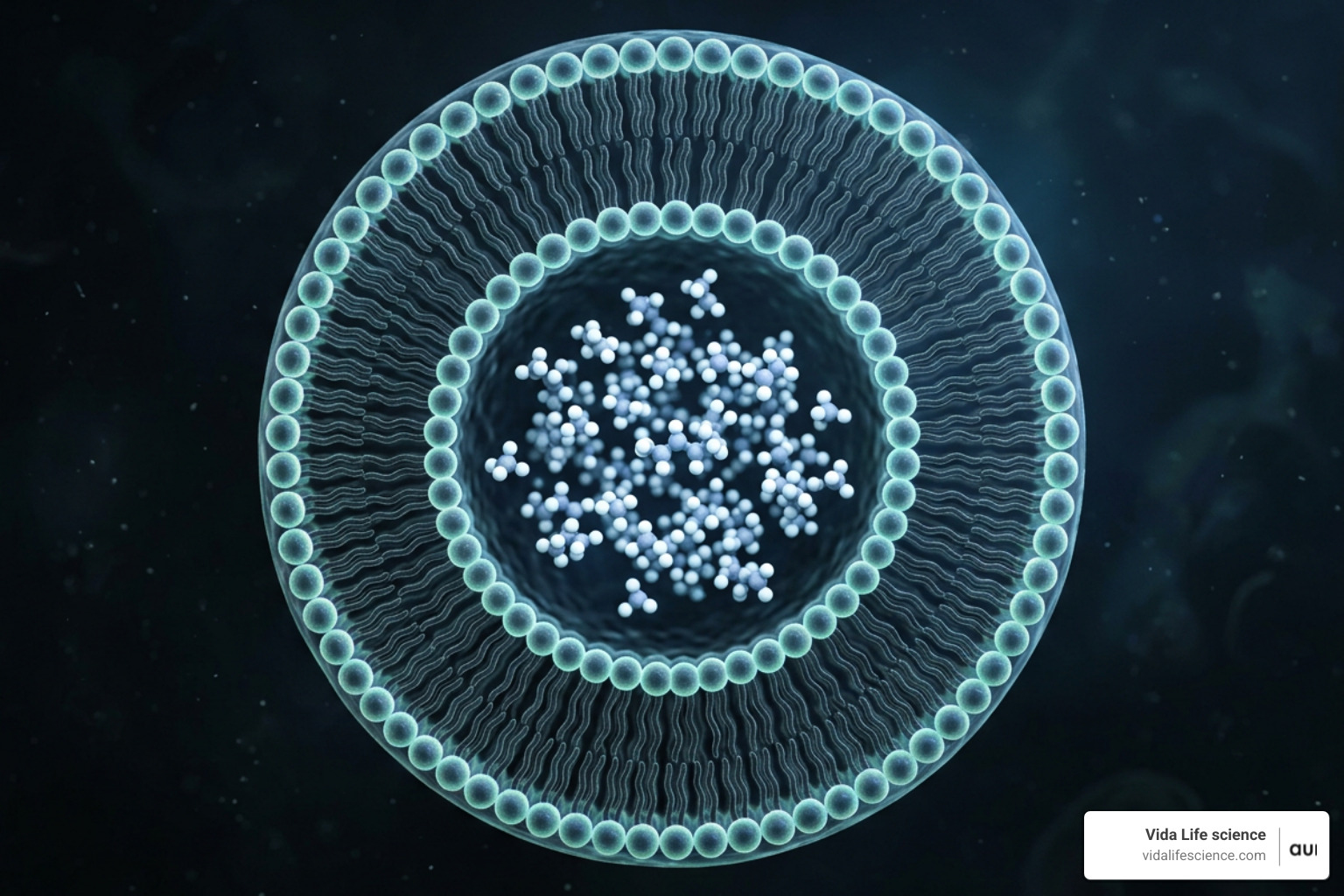
To understand liposomal creatine, we first have to look at the structure of a liposome. Liposomes are microscopic, artificial vesicles consisting of an aqueous core surrounded by one or more phospholipid bilayers. These bilayers are typically made from phosphatidylcholine, a healthy fat often extracted from natural, plant-based sources like non-GMO sunflower lecithin.
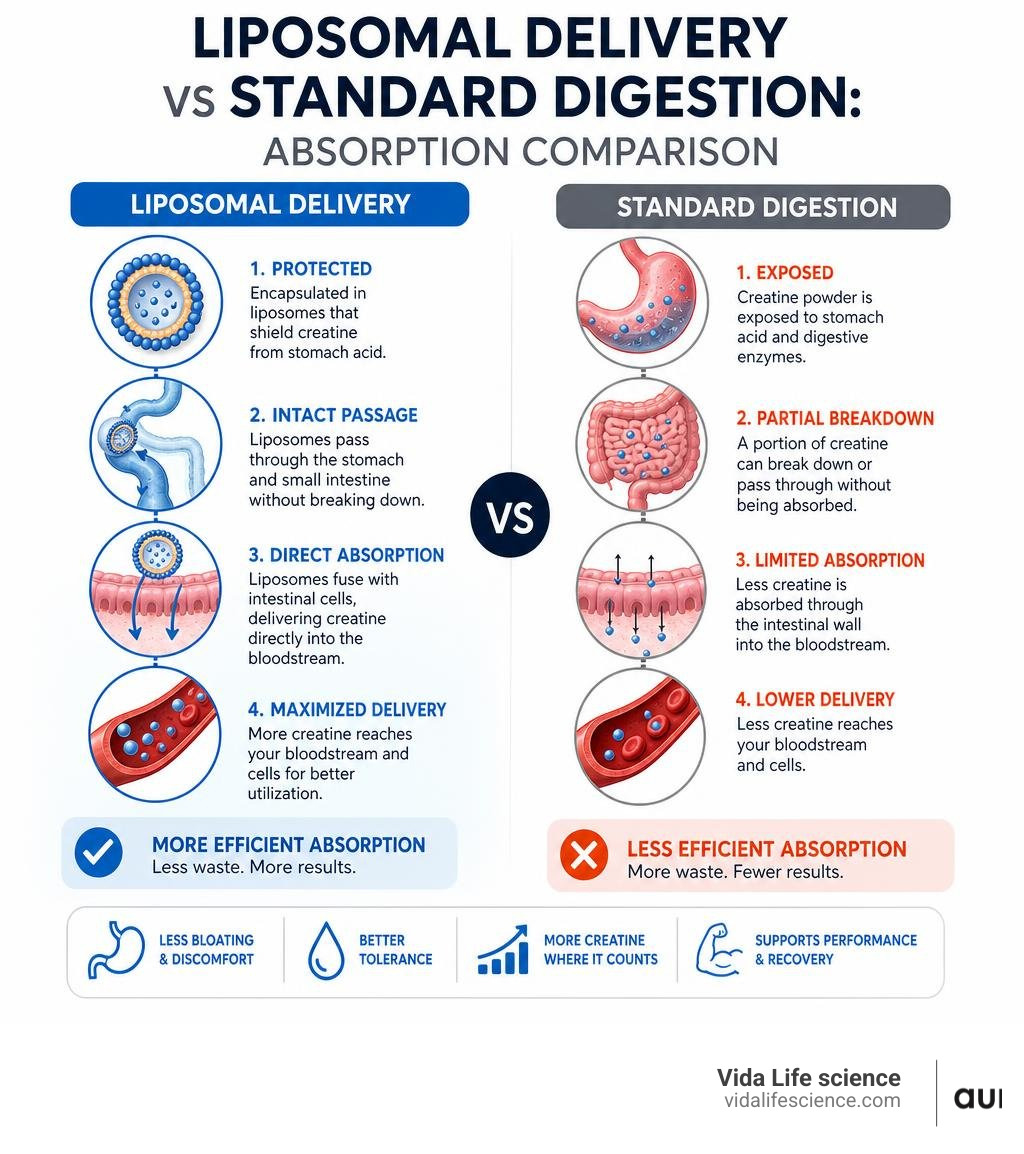
In standard digestion, when you swallow conventional creatine monohydrate powder, it must travel through the highly acidic environment of your stomach. Because creatine is highly hydrophilic (water-loving) and possesses strong osmotic properties, it tends to draw water into your intestines. If your body cannot absorb the creatine quickly enough, this pooling of water leads to the notorious "creatine bloat," stomach cramps, and even diarrhea.
Liposomal delivery completely changes this digestive pathway. By encapsulating the creatine molecules within a protective lipid bilayer, we shield the active ingredient from gastric juices and enzymes.
Because the outer lipid bilayer of a liposome mimics the structure of your body’s own cell membranes, it does not rely solely on standard, limited active transport proteins in the gut. Instead, the liposome can bind directly to the cell membranes of the small intestine. This cellular fusion allows the encapsulated creatine to pass smoothly into the bloodstream and target tissues with minimal nutrient loss.
To learn more about what sets this advanced encapsulation process apart, read our detailed breakdown of What Makes Aurora Nutrascience Liposomal Supplements Different.
Liposomal vs. Standard Creatine: The Bioavailability Breakthrough
When comparing liposomal creatine to standard creatine monohydrate, the main difference lies in how much of the active ingredient actually makes it into your muscles versus how much is wasted.
While standard dry creatine monohydrate is highly effective once it reaches muscle tissue, its initial oral absorption rate is surprisingly low. Clinical data and patent documentation indicate that during a traditional high-dose "loading phase" of standard creatine, only about 16% of the supplement is absorbed by the body, leaving a staggering 84% to be excreted as waste. Even during a low-dose maintenance phase, standard absorption rates hover around 53%.
By contrast, cell tests and scientific evaluations show that liposomal delivery can achieve up to 75% bioavailability. This represents a massive leap in absorption efficiency, allowing you to get better results with smaller doses.
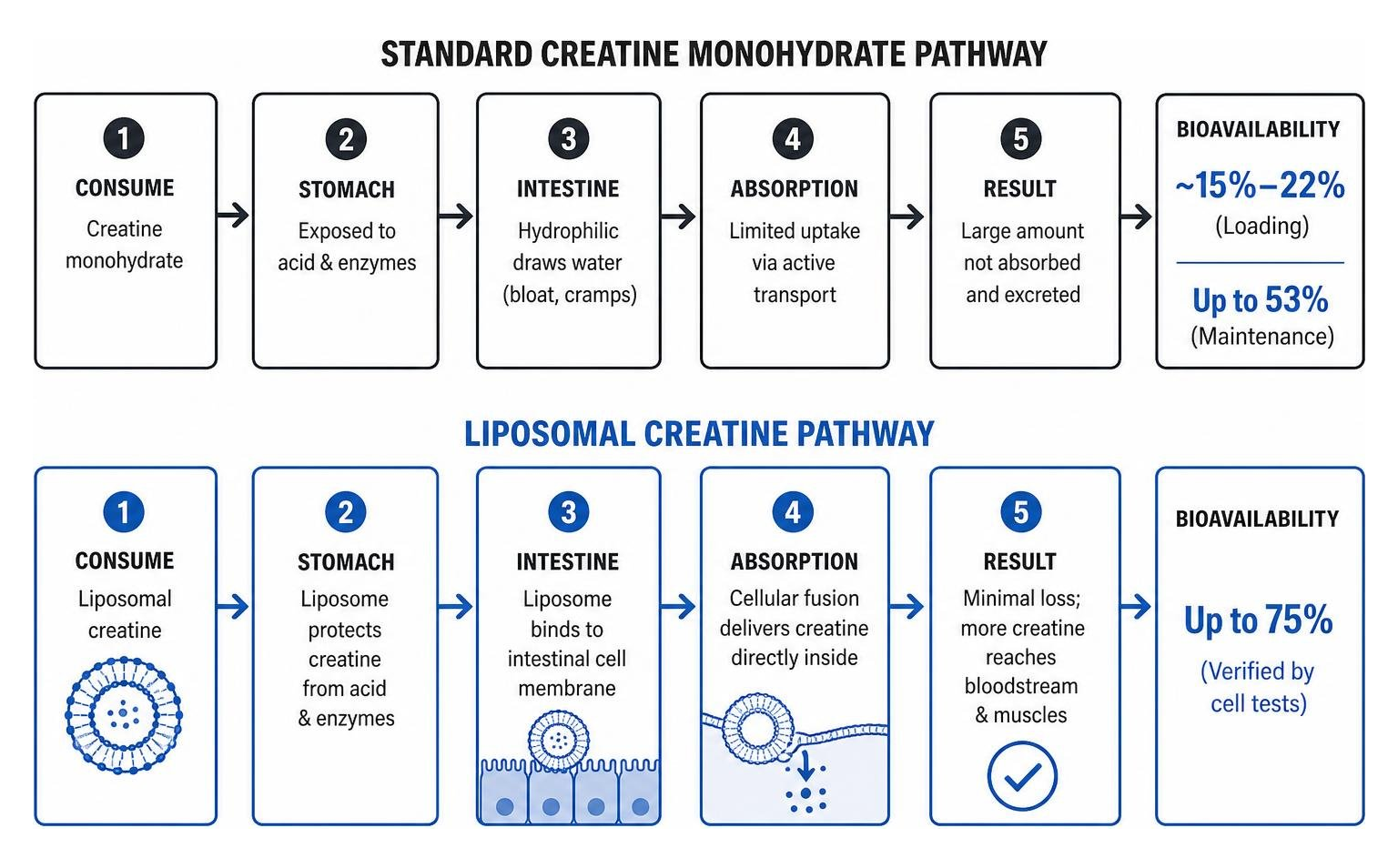
Here is a side-by-side technical comparison of the two forms:
| Feature |
Standard Creatine Monohydrate |
Liposomal Creatine |
| Oral Absorption Rate |
~15% to 22% (loading); up to 53% (maintenance) |
Up to 75% (verified by cell tests) |
| Intestinal Permeability |
Low to moderate (prone to osmotic water draw) |
High (direct cellular membrane fusion) |
| Particle Size |
Oversized (>480 nm), leading to poor dissolution |
Uniformly tiny (100 to 130 nm) |
| Liquid Stability |
Highly unstable (loses ~32% potency in 6 months) |
Highly stable (activity loss <6% in 6 months) |
| Loading Phase Required? |
Yes (typically 5 to 7 days at high doses) |
No (facilitates direct, rapid bloodstream uptake) |
| Digestive Side Effects |
Common (bloating, cramping, water retention) |
Extremely rare (gastric-friendly, shielded delivery) |
This bioavailability breakthrough is supported by a growing body of scientific literature. For instance, a pilot study published in the journal Nutrition and Dietary Supplements found that liposomal delivery significantly improves the absorption of difficult-to-absorb compounds in healthy subjects.
Furthermore, Caco-2 cellular uptake studies show that liposomal formulations demonstrate up to twice the intestinal permeability of standard nutrient powders. Because the lipid coating facilitates direct uptake, you can completely skip the tedious loading phase and achieve rapid muscle saturation.
If you are trying to decide if this advanced delivery system is right for your goals, check out the expert insights in Is Liposomal Creatine Better For Me? to weigh your options.
Key Benefits of Liposomal Creatine for Body and Mind
Creatine's primary biological role is to serve as a precursor to phosphocreatine, which the body uses to rapidly regenerate adenosine triphosphate (ATP) during short bursts of high-intensity activity. Under normal circumstances, your body's natural production only fills about 60% to 80% of your actual muscle creatine capacity. Supplemental creatine bridges this gap, and liposomal delivery ensures that the bridge is built as efficiently as possible.

For athletes, bodybuilders, and active individuals, liposomal creatine provides the ultimate fuel for physical performance. By delivering the active ingredient directly into muscle cells, it supports rapid ATP regeneration. This translates to greater strength, explosive power, and faster recovery between intense sets.
This highly bioavailable delivery method is also incredibly valuable for older adults. As we age, we naturally lose muscle mass and strength — a condition known as sarcopenia. Standard creatine powders can be difficult for older digestive systems to process, but a gastric-friendly liposomal alternative allows older adults to safely preserve lean muscle tissue, maintain physical independence, and combat age-related vitality loss.
Cognitive and Brain Health Benefits of Liposomal Creatine
While creatine is famous for building muscle, about 5% of the body's creatine stores are utilized by the brain. Your brain is an incredibly energy-demanding organ, consuming roughly 20% of your body's total energy. When you are mentally fatigued, sleep-deprived, or performing complex cognitive tasks, your brain's ATP levels drop rapidly.
Highly bioavailable liposomal creatine crosses the blood-brain barrier efficiently, helping to restore brain ATP levels. This supports:
- Improved mental clarity and focus
- Enhanced short-term memory and recall
- Better cognitive performance during periods of sleep deprivation
- Long-term neuroprotection and cellular health
To explore the fascinating science behind these mental benefits, read our educational resources on Creatine for Brain Power and Mental Stamina, Beyond Muscle Gains: The Surprising Brain Benefits of Creatine, and Creatine for Cognitive Health: What Science Tells Us.
How to Use Liposomal Creatine and Avoid Side Effects
If you have ever experienced the dreaded "creatine bloat" or stomach cramps from traditional powders, you are not alone. These side effects occur because undissolved creatine crystals sit in your gut, drawing in water and causing gastrointestinal distress.
Because liposomal creatine encapsulates the active ingredient in a protective lipid layer, it bypasses this osmotic water draw entirely. The creatine is absorbed directly through the intestinal wall rather than sitting in the digestive tract, making it the perfect solution for anyone with a sensitive stomach.
To get the most out of your supplement, we recommend the following best practices:
-
Dosage: A standard daily dose of 3 to 5 grams of active creatine is highly effective. Because of the superior absorption, you do not need to take massive doses to see results.
-
Timing: For physical athletic performance, take your dose 30 to 90 minutes before or immediately after your workout. For cognitive benefits, take it consistently in the morning.
-
Consistency is Key: Creatine works by accumulating in your tissues over time. Take it daily, even on rest days.
-
Format Options: Liquid liposomal supplements are highly convenient, but they historically faced stability issues because creatine degrades quickly in water. Aurora Nutrascience solved this by offering dry granule formats, such as our KREO® Liposomal Creatine Granule Packets. These travel-friendly packets do not require refrigeration and mix instantly into cold water.
-
Synergistic Formulations: Some advanced formulas combine creatine with biological precursors like Guanidinoacetic acid (GAA) — which supports the body's natural creatine production pathways — and R-Alpha Lipoic Acid (R-ALA), a potent antioxidant that supports cellular energy metabolism.
Frequently Asked Questions About Liposomal Creatine
When shopping for a high-quality supplement, always read the label carefully. Look for brands that use clean, non-GMO sunflower lecithin as their phospholipid source rather than soy. Ensure the product is third-party tested for purity, heavy metals, and potency, and avoid products that hide behind "proprietary blends" without disclosing the exact milligrams of active creatine monohydrate.
Is liposomal creatine worth the higher cost?
For many, yes. While standard creatine monohydrate is very inexpensive, its value drops when you factor in the physical waste (up to 84% excreted during loading) and the potential for stomach discomfort. If you struggle with bloating, dislike the gritty texture of traditional powders, or want a highly portable, travel-friendly option that delivers maximum absorption, the convenience and comfort of liposomal creatine make it well worth the premium.
Does liposomal creatine require a loading phase?
No. Traditional creatine requires a loading phase (taking 20 grams a day for a week) because standard powders have low bioavailability and take a long time to saturate your muscles. Because liposomal technology facilitates direct, highly efficient uptake into the bloodstream, your cells reach saturation quickly with a standard daily dose, completely eliminating the need for a high-dose loading week.
Are there clinical or medical applications for liposomal creatine?
Yes. Beyond sports performance, liposomal creatine is studied for its therapeutic potential in supporting cellular energy production. It is highly valued in clinical settings for supporting patients with mitochondrial disorders, where the electron transport chain is impaired and ATP production is compromised.
By delivering highly absorbable phosphocreatine precursors directly to cells, it helps restore mitochondrial enzyme activity and provides antioxidant protection against oxidative stress.
Conclusion
At Vida Life Science, we believe that your supplements should work as hard as you do. By partnering exclusively with Aurora Nutrascience, we bring you premium, Canadian-manufactured liposomal supplements engineered for maximum absorption.
Whether you are an athlete looking to shatter your personal records, an older adult focused on maintaining lean muscle, or a professional seeking sharper cognitive performance, liposomal creatine delivers the active ingredients your cells need — without the bloating, cramping, or waste of traditional powders.
Ready to fuel your body and mind with advanced, highly bioavailable nutrition? Explore the deep science of cellular energy and discover the liposomal difference today.


A Comprehensive Guide to Liposomal vs Standard Creatine
What Is Liposomal Creatine and How Does It Work?
Liposomal creatine is a next-generation form of creatine encapsulated in tiny fat-like spheres called liposomes, designed to protect the nutrient through digestion and deliver it more efficiently into your cells — compared to standard creatine monohydrate powder.
Quick answer: What is liposomal creatine?
Creatine is one of the most researched supplements in sports nutrition. It helps your body produce ATP — the primary fuel for muscle contractions and brain function. But even a well-studied supplement can have a delivery problem.
Many people who try standard creatine powder run into the same issues: gritty texture, clumping, bloating, and stomach discomfort. These aren't just annoyances — they can stop people from taking creatine consistently, which defeats the purpose entirely.
Liposomal delivery technology was developed to solve exactly this kind of problem. It's already used to improve the absorption of nutrients like Vitamin C, CoQ10, and glutathione. Now it's being applied to creatine — and the results are promising.
This guide breaks down everything you need to know: how liposomal creatine works, how it compares to standard monohydrate, who benefits most, and whether it's worth the extra cost.
At Vida Life Science, we are the exclusive U.S. distributor of Aurora Nutrascience — a Canadian manufacturer specializing in phosphatidylcholine-based liposomal delivery technology, including liposomal creatine products engineered for maximum bioavailability. Our focus is entirely on advanced liposomal nutrition, so everything in this guide reflects the science we work with every day.
To understand liposomal creatine, we first have to look at the structure of a liposome. Liposomes are microscopic, artificial vesicles consisting of an aqueous core surrounded by one or more phospholipid bilayers. These bilayers are typically made from phosphatidylcholine, a healthy fat often extracted from natural, plant-based sources like non-GMO sunflower lecithin.
In standard digestion, when you swallow conventional creatine monohydrate powder, it must travel through the highly acidic environment of your stomach. Because creatine is highly hydrophilic (water-loving) and possesses strong osmotic properties, it tends to draw water into your intestines. If your body cannot absorb the creatine quickly enough, this pooling of water leads to the notorious "creatine bloat," stomach cramps, and even diarrhea.
Liposomal delivery completely changes this digestive pathway. By encapsulating the creatine molecules within a protective lipid bilayer, we shield the active ingredient from gastric juices and enzymes.
Because the outer lipid bilayer of a liposome mimics the structure of your body’s own cell membranes, it does not rely solely on standard, limited active transport proteins in the gut. Instead, the liposome can bind directly to the cell membranes of the small intestine. This cellular fusion allows the encapsulated creatine to pass smoothly into the bloodstream and target tissues with minimal nutrient loss.
To learn more about what sets this advanced encapsulation process apart, read our detailed breakdown of What Makes Aurora Nutrascience Liposomal Supplements Different.
Liposomal vs. Standard Creatine: The Bioavailability Breakthrough
When comparing liposomal creatine to standard creatine monohydrate, the main difference lies in how much of the active ingredient actually makes it into your muscles versus how much is wasted.
While standard dry creatine monohydrate is highly effective once it reaches muscle tissue, its initial oral absorption rate is surprisingly low. Clinical data and patent documentation indicate that during a traditional high-dose "loading phase" of standard creatine, only about 16% of the supplement is absorbed by the body, leaving a staggering 84% to be excreted as waste. Even during a low-dose maintenance phase, standard absorption rates hover around 53%.
By contrast, cell tests and scientific evaluations show that liposomal delivery can achieve up to 75% bioavailability. This represents a massive leap in absorption efficiency, allowing you to get better results with smaller doses.
Here is a side-by-side technical comparison of the two forms:
This bioavailability breakthrough is supported by a growing body of scientific literature. For instance, a pilot study published in the journal Nutrition and Dietary Supplements found that liposomal delivery significantly improves the absorption of difficult-to-absorb compounds in healthy subjects.
Furthermore, Caco-2 cellular uptake studies show that liposomal formulations demonstrate up to twice the intestinal permeability of standard nutrient powders. Because the lipid coating facilitates direct uptake, you can completely skip the tedious loading phase and achieve rapid muscle saturation.
If you are trying to decide if this advanced delivery system is right for your goals, check out the expert insights in Is Liposomal Creatine Better For Me? to weigh your options.
Key Benefits of Liposomal Creatine for Body and Mind
Creatine's primary biological role is to serve as a precursor to phosphocreatine, which the body uses to rapidly regenerate adenosine triphosphate (ATP) during short bursts of high-intensity activity. Under normal circumstances, your body's natural production only fills about 60% to 80% of your actual muscle creatine capacity. Supplemental creatine bridges this gap, and liposomal delivery ensures that the bridge is built as efficiently as possible.
Enhancing Athletic Performance with Liposomal Creatine
For athletes, bodybuilders, and active individuals, liposomal creatine provides the ultimate fuel for physical performance. By delivering the active ingredient directly into muscle cells, it supports rapid ATP regeneration. This translates to greater strength, explosive power, and faster recovery between intense sets.
This highly bioavailable delivery method is also incredibly valuable for older adults. As we age, we naturally lose muscle mass and strength — a condition known as sarcopenia. Standard creatine powders can be difficult for older digestive systems to process, but a gastric-friendly liposomal alternative allows older adults to safely preserve lean muscle tissue, maintain physical independence, and combat age-related vitality loss.
Cognitive and Brain Health Benefits of Liposomal Creatine
While creatine is famous for building muscle, about 5% of the body's creatine stores are utilized by the brain. Your brain is an incredibly energy-demanding organ, consuming roughly 20% of your body's total energy. When you are mentally fatigued, sleep-deprived, or performing complex cognitive tasks, your brain's ATP levels drop rapidly.
Highly bioavailable liposomal creatine crosses the blood-brain barrier efficiently, helping to restore brain ATP levels. This supports:
To explore the fascinating science behind these mental benefits, read our educational resources on Creatine for Brain Power and Mental Stamina, Beyond Muscle Gains: The Surprising Brain Benefits of Creatine, and Creatine for Cognitive Health: What Science Tells Us.
How to Use Liposomal Creatine and Avoid Side Effects
If you have ever experienced the dreaded "creatine bloat" or stomach cramps from traditional powders, you are not alone. These side effects occur because undissolved creatine crystals sit in your gut, drawing in water and causing gastrointestinal distress.
Because liposomal creatine encapsulates the active ingredient in a protective lipid layer, it bypasses this osmotic water draw entirely. The creatine is absorbed directly through the intestinal wall rather than sitting in the digestive tract, making it the perfect solution for anyone with a sensitive stomach.
To get the most out of your supplement, we recommend the following best practices:
Frequently Asked Questions About Liposomal Creatine
When shopping for a high-quality supplement, always read the label carefully. Look for brands that use clean, non-GMO sunflower lecithin as their phospholipid source rather than soy. Ensure the product is third-party tested for purity, heavy metals, and potency, and avoid products that hide behind "proprietary blends" without disclosing the exact milligrams of active creatine monohydrate.
Is liposomal creatine worth the higher cost?
For many, yes. While standard creatine monohydrate is very inexpensive, its value drops when you factor in the physical waste (up to 84% excreted during loading) and the potential for stomach discomfort. If you struggle with bloating, dislike the gritty texture of traditional powders, or want a highly portable, travel-friendly option that delivers maximum absorption, the convenience and comfort of liposomal creatine make it well worth the premium.
Does liposomal creatine require a loading phase?
No. Traditional creatine requires a loading phase (taking 20 grams a day for a week) because standard powders have low bioavailability and take a long time to saturate your muscles. Because liposomal technology facilitates direct, highly efficient uptake into the bloodstream, your cells reach saturation quickly with a standard daily dose, completely eliminating the need for a high-dose loading week.
Are there clinical or medical applications for liposomal creatine?
Yes. Beyond sports performance, liposomal creatine is studied for its therapeutic potential in supporting cellular energy production. It is highly valued in clinical settings for supporting patients with mitochondrial disorders, where the electron transport chain is impaired and ATP production is compromised.
By delivering highly absorbable phosphocreatine precursors directly to cells, it helps restore mitochondrial enzyme activity and provides antioxidant protection against oxidative stress.
Conclusion
At Vida Life Science, we believe that your supplements should work as hard as you do. By partnering exclusively with Aurora Nutrascience, we bring you premium, Canadian-manufactured liposomal supplements engineered for maximum absorption.
Whether you are an athlete looking to shatter your personal records, an older adult focused on maintaining lean muscle, or a professional seeking sharper cognitive performance, liposomal creatine delivers the active ingredients your cells need — without the bloating, cramping, or waste of traditional powders.
Ready to fuel your body and mind with advanced, highly bioavailable nutrition? Explore the deep science of cellular energy and discover the liposomal difference today.