Why Vitamin C Is One of the Most Important Nutrients for Your Immune System
Immune support vitamin C is one of the most researched nutrient-immunity relationships in modern science — and for good reason.
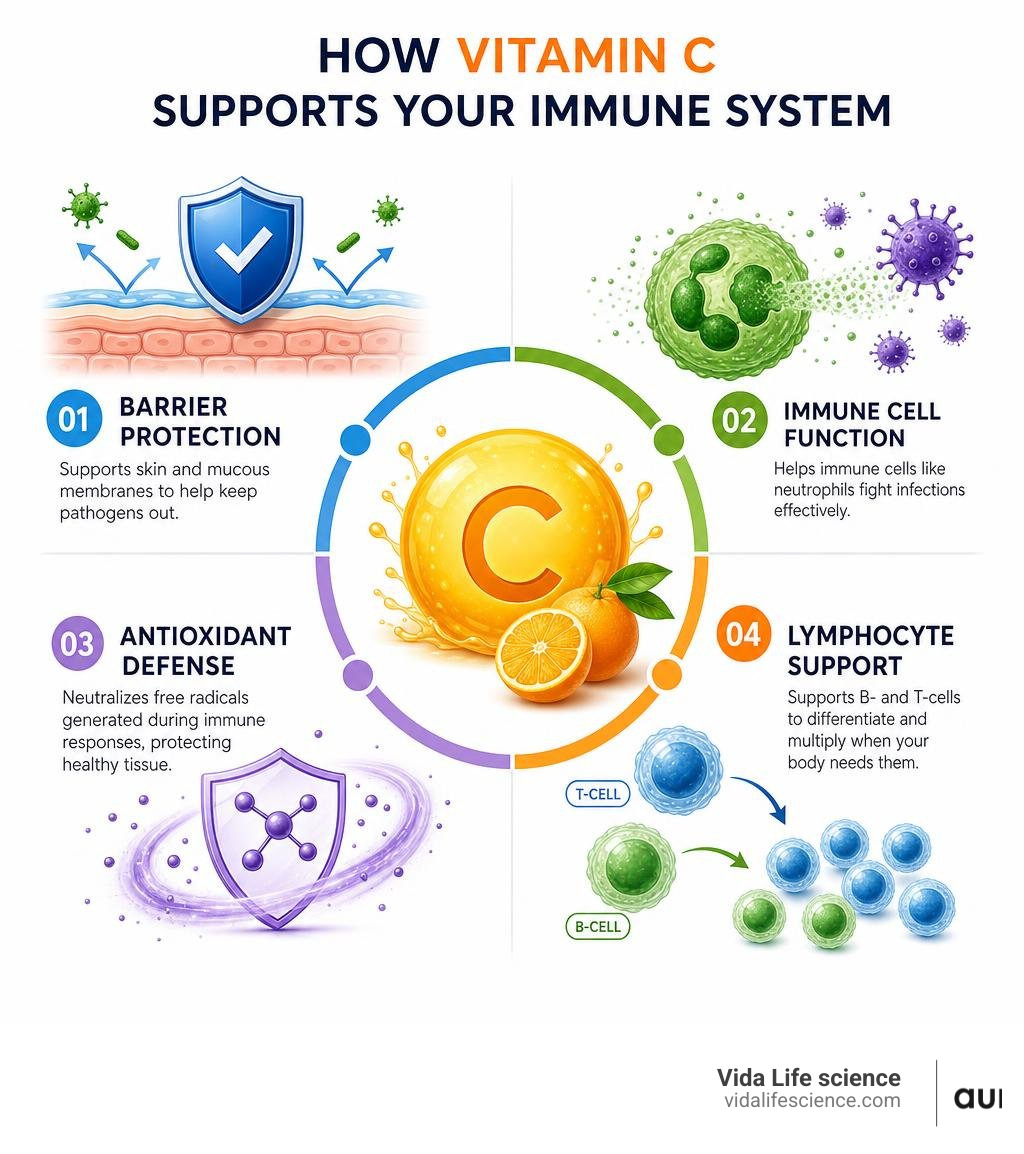
Here's a quick summary of how vitamin C supports your immune system:
-
Strengthens physical barriers — boosts collagen in skin and mucous membranes to keep pathogens out
-
Powers immune cells — neutrophils concentrate vitamin C at levels 50–100x higher than blood plasma to fight infections
-
Acts as an antioxidant — neutralizes free radicals generated during immune responses, protecting healthy tissue
-
Supports lymphocyte function — helps B- and T-cells differentiate and multiply when your body needs them
-
Speeds recovery — higher doses during active infection help meet the increased metabolic demand on immune cells
Despite being widely known, vitamin C is still one of the most misunderstood nutrients. People debate whether it prevents colds, how much to take, and whether supplements actually work. The answers are more nuanced than most headlines suggest.
Here's the core truth: your body cannot make vitamin C on its own, and it doesn't store much of it. That means consistent daily intake — from food or supplements — is non-negotiable for a well-functioning immune system.
At Vida Life Science, we've spent years focused on the science of advanced nutrient delivery, distributing premium liposomal immune support vitamin C supplements designed to maximize what your body actually absorbs. In this guide, we'll cut through the noise and walk you through what the research actually says.
How Immune Support Vitamin C Works in the Body

To truly understand how immune support vitamin C works, we have to look past the marketing buzzwords and dive into basic human biology.
Your immune system is not a single organ; it is a complex, highly coordinated network of cells, tissues, and physical barriers. Vitamin C (scientifically known as ascorbic acid) acts as a vital cofactor and fuel source for multiple branches of this defense network.
First, let's talk about your body's outer walls: the skin and epithelial barriers. Your skin is your primary shield against the outside world. Vitamin C is absolutely essential for collagen synthesis, which acts as the intracellular "glue" holding your skin cells together. Without adequate vitamin C, your skin barrier weakens, making it much easier for pathogens to find a way inside. Furthermore, vitamin C accelerates wound healing by promoting fibroblast proliferation and collagen deposition, helping your body seal up cuts and scrapes before bacteria can colonize them.
Once a pathogen gets past your physical barriers, your cellular defenses must spring into action. This is where vitamin C's role as a powerful antioxidant becomes critical. When your immune system detects an invader, white blood cells rush to the scene and release a massive wave of highly reactive oxygen species (ROS) to destroy the pathogen. This process is called an "oxidative burst."
While this oxidative burst is highly effective at killing viruses and bacteria, it can also cause serious collateral damage to your own healthy cells and surrounding tissue. Vitamin C acts as a protective shield, neutralizing excess free radicals and regenerating other vital antioxidants like vitamin E to keep inflammation from spiraling out of control.
To explore these biological pathways in greater detail, you can read the comprehensive Scientific research on vitamin C and immune function.
Cellular Mechanisms of Immune Support Vitamin C
On a cellular level, vitamin C is a high-octane fuel for your white blood cells.
Your immune cells have a massive appetite for vitamin C. In fact, vitamin C accumulates in phagocytic cells such as neutrophils at concentrations 50- to 100-fold higher than plasma levels. When these cells are activated during an immune response, their internal concentration can reach up to 10 mM to support their pathogen-destroying activities.
Here is a breakdown of the specific cellular mechanisms fueled by vitamin C:
-
Neutrophil Chemotaxis: This is the process by which white blood cells detect chemical distress signals from an infection site and migrate toward them. Vitamin C significantly enhances this cellular "GPS" system, helping your defense cells navigate to the infection quickly.
-
Phagocytosis and Microbial Killing: Once neutrophils reach the invader, they engulf it (phagocytosis) and destroy it using enzymes and reactive oxygen. Vitamin C supports both the engulfing process and the subsequent generation of microbial-killing compounds.
-
Apoptosis and Clearance: After a white blood cell has done its job, it needs to be cleanly retired. Vitamin C facilitates healthy programed cell death (apoptosis) and prompt clearance by macrophages. This prevents the dead cells from rupturing (necrosis) and spilling toxic contents into surrounding healthy tissue, which reduces unnecessary inflammation.
-
Lymphocyte Proliferation: Your adaptive immune system relies on T-cells and B-cells to remember and target specific pathogens. Vitamin C plays a crucial role in the epigenetic regulation of these cells, supporting their differentiation and multiplication so your body can mount a strong, targeted defense.
For a deeper look into how this nutrient regulates gene expression and cell signaling in immune cells, consult this Study on vitamin C and immune cell function.
Synergistic Nutrients: Vitamin D, Zinc, and Vitamin C
While vitamin C is a powerhouse on its own, it does not work in a vacuum. To build a truly resilient immune system, it must work in tandem with other critical micronutrients—most notably vitamin D and zinc.
Think of your immune system as an elite sports team. If vitamin C is your star quarterback, zinc is the essential offensive line, and vitamin D is the head coach directing the entire strategy.
-
Zinc (The "Gatekeeper"): Zinc is frequently called the gatekeeper of the immune system because it is vital for the development and function of all immune cells. A zinc deficiency rapidly compromises both innate and adaptive immunity. When paired with vitamin C, zinc works synergistically to protect mucosal membranes and shorten the duration of respiratory issues.
-
Vitamin D3 (The Regulator): Vitamin D is a potent immunomodulator. It helps prime your immune cells to recognize pathogens while simultaneously preventing the overproduction of inflammatory cytokines (which can lead to dangerous "cytokine storms").
Key Synergistic Nutrients for Immune Defense
-
Vitamin C: Protects cells from oxidative stress and powers neutrophil activity.
-
Zinc: Supports cell division, protein synthesis, and acts as an anti-inflammatory gatekeeper.
-
Vitamin D3: Regulates adaptive immune responses and promotes the production of antimicrobial peptides.
-
Bioflavonoids (like Quercetin): Naturally found alongside vitamin C in fruits, bioflavonoids enhance vitamin C absorption and support healthy histamine metabolism.
Daily Requirements, Deficiency, and Megadosing Risks
How much vitamin C do you actually need to keep your immune system running smoothly? The answer depends heavily on your lifestyle, your health status, and how well your body absorbs the nutrient.
The Recommended Dietary Allowance (RDA) established by health authorities represents the minimum amount required to prevent deficiency diseases like scurvy:
-
Adult Men: 90 mg per day
-
Adult Women: 75 mg per day
-
Pregnant Women: 85 mg per day
-
Breastfeeding Women: 120 mg per day
However, these baseline numbers do not tell the whole story. For example, smoking causes significant oxidative stress in the body, rapidly depleting vitamin C levels. Because of this, smokers require at least 35 mg per day more vitamin C than nonsmokers to maintain baseline health.
Unfortunately, many people fail to meet even these modest daily targets. In fact, vitamin C deficiency is the fourth leading nutrient deficiency in the United States. When your intake falls below what your body requires, you risk falling into "hypovitaminosis C" (blood plasma levels below 23 µmol/L), which leaves you highly vulnerable to infections and slow healing.
For a comprehensive breakdown of official intake guidelines and clinical data, refer to the NIH Fact Sheet on Vitamin C.
Optimizing Your Intake of Immune Support Vitamin C
If the baseline RDA is just enough to prevent scurvy, what is the optimal amount for active immune support?
Clinical studies indicate that a diet supplying 100–200 mg/day of vitamin C provides adequate to saturating plasma concentrations in healthy, unstressed individuals. This level is generally sufficient to keep your everyday defenses primed.
However, during times of physical stress, environmental exposure, or active illness, your body's metabolic demand for vitamin C skyrockets. This has led many people to practice "megadosing" — taking 2,000 mg or more of standard vitamin C supplements daily.
While vitamin C is water-soluble and generally safe, taking high doses of traditional oral supplements comes with a major catch: your digestive system has a strict absorption limit. When you swallow a large dose of standard ascorbic acid (such as 1,000 mg or more at once), your body's absorption rate drops to less than 50%.
The unabsorbed vitamin C remains in your gastrointestinal tract, where it draws in water and can cause uncomfortable digestive side effects. Taking more than 2,000 mg of standard vitamin C per day (the established Tolerable Upper Intake Level) frequently results in:
- Diarrhea
- Nausea
- Stomach cramps
Food Sources vs. Advanced Supplement Delivery
The best way to get your baseline daily vitamin C is undoubtedly through a diet rich in whole, raw foods. Nature packages vitamin C alongside beneficial dietary fiber, water, and synergistic bioflavonoids.
Excellent dietary sources of vitamin C include:
-
Red and yellow bell peppers (one of the highest concentrated food sources)
-
Citrus fruits (oranges, grapefruits, lemons)
-
Cruciferous vegetables (broccoli, Brussels sprouts, kale)
-
Berries (strawberries, raspberries)
However, vitamin C is a highly fragile molecule. It is easily destroyed by heat, light, and prolonged storage. If you boil your vegetables, much of the vitamin C leaches directly into the water and is poured down the drain. To preserve the nutrient, it is best to consume these foods raw, or use quick, low-water cooking methods like steaming or microwaving.
For those who struggle to eat enough fresh produce daily, or those looking for targeted immune support, high-quality supplements are a convenient option. But as we mentioned, traditional tablets and powders suffer from poor bioavailability at higher doses.
This is where advanced delivery technologies, like liposomal encapsulation, completely change the game. By wrapping the vitamin C molecule in a protective lipid bilayer (made of natural phospholipids), liposomal technology bypasses the restrictive nutrient transporters in your gut. This allows the nutrient to be absorbed directly into your bloodstream and delivered straight to your cells without causing gastrointestinal distress.
| Feature |
Standard Dietary Vitamin C |
Standard Ascorbic Acid Supplements |
Liposomal Vitamin C Supplements |
| Primary Source |
Fresh fruits & vegetables |
Tablets, powders, gummies |
Liposomal liquid or capsules |
| Bioavailability |
High (at low dietary doses) |
Low (drops below 50% at doses >1g) |
Exceptionally high (surpasses digestive barriers) |
| Digestive Comfort |
Excellent |
Poor at high doses (can cause cramps/diarrhea) |
Excellent (gentle on sensitive stomachs) |
| Cellular Retention |
Standard |
Short-lived (rapidly excreted in urine) |
Extended (retained longer in cells) |
Can Vitamin C Prevent or Shorten Colds and Infections?

This is the million-dollar question. We have all heard the advice: "Feel a cold coming on? Start taking vitamin C!" But does the science actually back this up?
The short answer is: vitamin C does not prevent the common cold for the average person, but it can significantly shorten its duration and lessen its severity.
Decades of clinical research, including massive meta-analyses of placebo-controlled trials, have revealed a clear distinction between using vitamin C to prevent an illness versus using it to treat an active infection.
For the general population, taking daily vitamin C supplements prophylactically does not reduce the likelihood of catching a cold. However, for individuals exposed to extreme physical stress — such as marathon runners, skiers, or soldiers training in sub-zero environments — daily prophylactic vitamin C has been shown to cut the risk of catching a cold in half.
Where vitamin C truly shines for everyone is in reducing the duration of the illness. Regular daily intake of vitamin C has been shown to reduce cold duration by about 8% in adults and 14% in children. This means a cold that would normally drag on for a week might be resolved a day or two earlier, with milder symptoms overall.
To explore the clinical data and trial outcomes in detail, you can read this extensive Clinical review of vitamin C and infection.
Prophylactic vs. Therapeutic Dosing for Infections
To get the most out of your immune support vitamin C, you need to understand the difference between maintenance dosing and active therapeutic dosing.
-
Prophylactic Prevention (Daily Maintenance): Keeping your immune system primed and your tissues saturated requires a modest, consistent daily intake. Consuming 100–200 mg/day of vitamin C through a balanced diet or high-absorption supplements is generally sufficient to maintain healthy baseline plasma levels.
-
Therapeutic Treatment (Active Support): Once an infection takes hold, your body's immune cells rapidly consume their internal stores of vitamin C to fuel the fight. This dramatic increase in metabolic demand means that baseline doses are no longer enough. Treatment of established infections requires significantly higher (gram) doses to help compensate for the increased inflammatory response and metabolic depletion.
When you are actively fighting an infection, taking higher doses of highly bioavailable vitamin C can help replenish depleted white blood cells, protect your tissues from oxidative damage, and support a faster, smoother recovery.
Frequently Asked Questions About Vitamin C
Does vitamin C prevent the common cold?
No, vitamin C does not prevent the common cold for the average, healthy individual. However, consistent daily use has been clinically proven to shorten the duration of a cold by 8% to 14% and reduce the severity of symptoms. For people under extreme physical strain (like endurance athletes), daily vitamin C can reduce the risk of catching a cold by up to 50%.
What are the side effects of taking too much vitamin C?
Because vitamin C is water-soluble, your body will typically flush out any excess through your urine. However, if you take more than 2,000 mg of standard oral vitamin C at once, the unabsorbed nutrient can irritate your digestive tract, leading to side effects like diarrhea, nausea, and stomach cramps. Additionally, long-term excessive megadosing of standard ascorbic acid may increase the risk of kidney stones in susceptible individuals due to the accumulation of oxalate.
Why is liposomal vitamin C more effective than standard ascorbic acid?
Standard ascorbic acid relies on specific, limited nutrient transporters in your small intestine to get into your bloodstream. When you take a high dose, these transporters become saturated, and the excess vitamin C is wasted.
Liposomal vitamin C wraps the nutrient in a protective lipid bilayer made of natural phospholipids. This microscopic bubble mimics the structure of your own cell membranes, allowing the vitamin C to bypass traditional digestive barriers, absorb directly into your cells, and protect you from the digestive upset commonly caused by high-dose powders and tablets.
Conclusion
When it comes to building a resilient defense system, immune support vitamin C remains an absolute cornerstone of optimal health. From strengthening your skin's physical barriers to powering the white blood cells that actively fight off pathogens, this essential micronutrient is involved in almost every stage of your body's immune response.
While a diet rich in raw fruits and vegetables is the ideal foundation for baseline wellness, modern lifestyles, stress, and active illnesses often demand a more robust approach. Traditional vitamin C supplements can fall short due to low absorption rates and digestive irritation at higher, therapeutic doses.
At Vida Life Science, we believe you should get exactly what you pay for. As the exclusive distributor of Aurora Nutrascience liposomal supplements in the USA and Canada, we are proud to offer advanced, clinically backed formulas designed for maximum cellular absorption. By choosing our true liposomal vitamin C, you can bypass the digestive limitations of standard supplements and deliver high-potency immune support directly to the cells that need it most.
Ready to upgrade your daily defense routine and experience the difference of true liposomal technology? Learn more about the science of liposomal absorption and explore our premium range of high-absorption supplements today.


Immune Support Vitamin C: Science-Backed Truths vs Myths
Why Vitamin C Is One of the Most Important Nutrients for Your Immune System
Immune support vitamin C is one of the most researched nutrient-immunity relationships in modern science — and for good reason.
Here's a quick summary of how vitamin C supports your immune system:
Despite being widely known, vitamin C is still one of the most misunderstood nutrients. People debate whether it prevents colds, how much to take, and whether supplements actually work. The answers are more nuanced than most headlines suggest.
Here's the core truth: your body cannot make vitamin C on its own, and it doesn't store much of it. That means consistent daily intake — from food or supplements — is non-negotiable for a well-functioning immune system.
At Vida Life Science, we've spent years focused on the science of advanced nutrient delivery, distributing premium liposomal immune support vitamin C supplements designed to maximize what your body actually absorbs. In this guide, we'll cut through the noise and walk you through what the research actually says.
How Immune Support Vitamin C Works in the Body
To truly understand how immune support vitamin C works, we have to look past the marketing buzzwords and dive into basic human biology.
Your immune system is not a single organ; it is a complex, highly coordinated network of cells, tissues, and physical barriers. Vitamin C (scientifically known as ascorbic acid) acts as a vital cofactor and fuel source for multiple branches of this defense network.
First, let's talk about your body's outer walls: the skin and epithelial barriers. Your skin is your primary shield against the outside world. Vitamin C is absolutely essential for collagen synthesis, which acts as the intracellular "glue" holding your skin cells together. Without adequate vitamin C, your skin barrier weakens, making it much easier for pathogens to find a way inside. Furthermore, vitamin C accelerates wound healing by promoting fibroblast proliferation and collagen deposition, helping your body seal up cuts and scrapes before bacteria can colonize them.
Once a pathogen gets past your physical barriers, your cellular defenses must spring into action. This is where vitamin C's role as a powerful antioxidant becomes critical. When your immune system detects an invader, white blood cells rush to the scene and release a massive wave of highly reactive oxygen species (ROS) to destroy the pathogen. This process is called an "oxidative burst."
While this oxidative burst is highly effective at killing viruses and bacteria, it can also cause serious collateral damage to your own healthy cells and surrounding tissue. Vitamin C acts as a protective shield, neutralizing excess free radicals and regenerating other vital antioxidants like vitamin E to keep inflammation from spiraling out of control.
To explore these biological pathways in greater detail, you can read the comprehensive Scientific research on vitamin C and immune function.
Cellular Mechanisms of Immune Support Vitamin C
On a cellular level, vitamin C is a high-octane fuel for your white blood cells.
Your immune cells have a massive appetite for vitamin C. In fact, vitamin C accumulates in phagocytic cells such as neutrophils at concentrations 50- to 100-fold higher than plasma levels. When these cells are activated during an immune response, their internal concentration can reach up to 10 mM to support their pathogen-destroying activities.
Here is a breakdown of the specific cellular mechanisms fueled by vitamin C:
For a deeper look into how this nutrient regulates gene expression and cell signaling in immune cells, consult this Study on vitamin C and immune cell function.
Synergistic Nutrients: Vitamin D, Zinc, and Vitamin C
While vitamin C is a powerhouse on its own, it does not work in a vacuum. To build a truly resilient immune system, it must work in tandem with other critical micronutrients—most notably vitamin D and zinc.
Think of your immune system as an elite sports team. If vitamin C is your star quarterback, zinc is the essential offensive line, and vitamin D is the head coach directing the entire strategy.
Key Synergistic Nutrients for Immune Defense
Daily Requirements, Deficiency, and Megadosing Risks
How much vitamin C do you actually need to keep your immune system running smoothly? The answer depends heavily on your lifestyle, your health status, and how well your body absorbs the nutrient.
The Recommended Dietary Allowance (RDA) established by health authorities represents the minimum amount required to prevent deficiency diseases like scurvy:
However, these baseline numbers do not tell the whole story. For example, smoking causes significant oxidative stress in the body, rapidly depleting vitamin C levels. Because of this, smokers require at least 35 mg per day more vitamin C than nonsmokers to maintain baseline health.
Unfortunately, many people fail to meet even these modest daily targets. In fact, vitamin C deficiency is the fourth leading nutrient deficiency in the United States. When your intake falls below what your body requires, you risk falling into "hypovitaminosis C" (blood plasma levels below 23 µmol/L), which leaves you highly vulnerable to infections and slow healing.
For a comprehensive breakdown of official intake guidelines and clinical data, refer to the NIH Fact Sheet on Vitamin C.
Optimizing Your Intake of Immune Support Vitamin C
If the baseline RDA is just enough to prevent scurvy, what is the optimal amount for active immune support?
Clinical studies indicate that a diet supplying 100–200 mg/day of vitamin C provides adequate to saturating plasma concentrations in healthy, unstressed individuals. This level is generally sufficient to keep your everyday defenses primed.
However, during times of physical stress, environmental exposure, or active illness, your body's metabolic demand for vitamin C skyrockets. This has led many people to practice "megadosing" — taking 2,000 mg or more of standard vitamin C supplements daily.
While vitamin C is water-soluble and generally safe, taking high doses of traditional oral supplements comes with a major catch: your digestive system has a strict absorption limit. When you swallow a large dose of standard ascorbic acid (such as 1,000 mg or more at once), your body's absorption rate drops to less than 50%.
The unabsorbed vitamin C remains in your gastrointestinal tract, where it draws in water and can cause uncomfortable digestive side effects. Taking more than 2,000 mg of standard vitamin C per day (the established Tolerable Upper Intake Level) frequently results in:
Food Sources vs. Advanced Supplement Delivery
The best way to get your baseline daily vitamin C is undoubtedly through a diet rich in whole, raw foods. Nature packages vitamin C alongside beneficial dietary fiber, water, and synergistic bioflavonoids.
Excellent dietary sources of vitamin C include:
However, vitamin C is a highly fragile molecule. It is easily destroyed by heat, light, and prolonged storage. If you boil your vegetables, much of the vitamin C leaches directly into the water and is poured down the drain. To preserve the nutrient, it is best to consume these foods raw, or use quick, low-water cooking methods like steaming or microwaving.
For those who struggle to eat enough fresh produce daily, or those looking for targeted immune support, high-quality supplements are a convenient option. But as we mentioned, traditional tablets and powders suffer from poor bioavailability at higher doses.
This is where advanced delivery technologies, like liposomal encapsulation, completely change the game. By wrapping the vitamin C molecule in a protective lipid bilayer (made of natural phospholipids), liposomal technology bypasses the restrictive nutrient transporters in your gut. This allows the nutrient to be absorbed directly into your bloodstream and delivered straight to your cells without causing gastrointestinal distress.
Can Vitamin C Prevent or Shorten Colds and Infections?
This is the million-dollar question. We have all heard the advice: "Feel a cold coming on? Start taking vitamin C!" But does the science actually back this up?
The short answer is: vitamin C does not prevent the common cold for the average person, but it can significantly shorten its duration and lessen its severity.
Decades of clinical research, including massive meta-analyses of placebo-controlled trials, have revealed a clear distinction between using vitamin C to prevent an illness versus using it to treat an active infection.
For the general population, taking daily vitamin C supplements prophylactically does not reduce the likelihood of catching a cold. However, for individuals exposed to extreme physical stress — such as marathon runners, skiers, or soldiers training in sub-zero environments — daily prophylactic vitamin C has been shown to cut the risk of catching a cold in half.
Where vitamin C truly shines for everyone is in reducing the duration of the illness. Regular daily intake of vitamin C has been shown to reduce cold duration by about 8% in adults and 14% in children. This means a cold that would normally drag on for a week might be resolved a day or two earlier, with milder symptoms overall.
To explore the clinical data and trial outcomes in detail, you can read this extensive Clinical review of vitamin C and infection.
Prophylactic vs. Therapeutic Dosing for Infections
To get the most out of your immune support vitamin C, you need to understand the difference between maintenance dosing and active therapeutic dosing.
When you are actively fighting an infection, taking higher doses of highly bioavailable vitamin C can help replenish depleted white blood cells, protect your tissues from oxidative damage, and support a faster, smoother recovery.
Frequently Asked Questions About Vitamin C
Does vitamin C prevent the common cold?
No, vitamin C does not prevent the common cold for the average, healthy individual. However, consistent daily use has been clinically proven to shorten the duration of a cold by 8% to 14% and reduce the severity of symptoms. For people under extreme physical strain (like endurance athletes), daily vitamin C can reduce the risk of catching a cold by up to 50%.
What are the side effects of taking too much vitamin C?
Because vitamin C is water-soluble, your body will typically flush out any excess through your urine. However, if you take more than 2,000 mg of standard oral vitamin C at once, the unabsorbed nutrient can irritate your digestive tract, leading to side effects like diarrhea, nausea, and stomach cramps. Additionally, long-term excessive megadosing of standard ascorbic acid may increase the risk of kidney stones in susceptible individuals due to the accumulation of oxalate.
Why is liposomal vitamin C more effective than standard ascorbic acid?
Standard ascorbic acid relies on specific, limited nutrient transporters in your small intestine to get into your bloodstream. When you take a high dose, these transporters become saturated, and the excess vitamin C is wasted.
Liposomal vitamin C wraps the nutrient in a protective lipid bilayer made of natural phospholipids. This microscopic bubble mimics the structure of your own cell membranes, allowing the vitamin C to bypass traditional digestive barriers, absorb directly into your cells, and protect you from the digestive upset commonly caused by high-dose powders and tablets.
Conclusion
When it comes to building a resilient defense system, immune support vitamin C remains an absolute cornerstone of optimal health. From strengthening your skin's physical barriers to powering the white blood cells that actively fight off pathogens, this essential micronutrient is involved in almost every stage of your body's immune response.
While a diet rich in raw fruits and vegetables is the ideal foundation for baseline wellness, modern lifestyles, stress, and active illnesses often demand a more robust approach. Traditional vitamin C supplements can fall short due to low absorption rates and digestive irritation at higher, therapeutic doses.
At Vida Life Science, we believe you should get exactly what you pay for. As the exclusive distributor of Aurora Nutrascience liposomal supplements in the USA and Canada, we are proud to offer advanced, clinically backed formulas designed for maximum cellular absorption. By choosing our true liposomal vitamin C, you can bypass the digestive limitations of standard supplements and deliver high-potency immune support directly to the cells that need it most.
Ready to upgrade your daily defense routine and experience the difference of true liposomal technology? Learn more about the science of liposomal absorption and explore our premium range of high-absorption supplements today.