Is a GAA Supplement Worth It? Here's What the Science Says
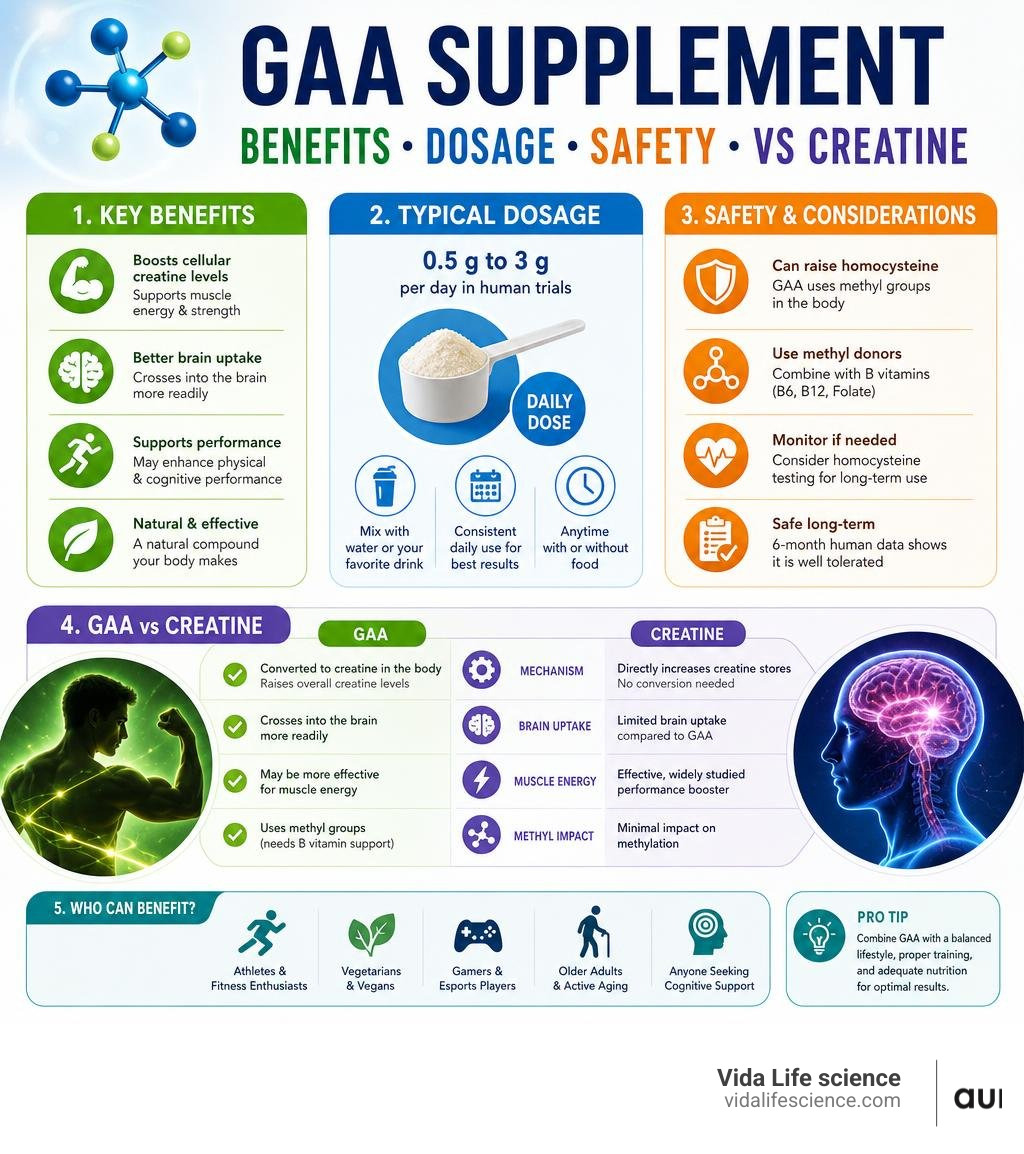
A GAA supplement — short for guanidinoacetic acid — is gaining serious attention as a smarter alternative (or companion) to standard creatine. Here's a quick summary before we dive deep:
What you need to know about GAA supplements at a glance:
| Question |
Quick Answer |
| What is GAA? |
A natural compound your body makes to produce creatine |
| Better than creatine? |
May outperform creatine for muscle energy and brain uptake |
| Main benefit |
Boosts cellular creatine levels, including in the brain |
| Key risk |
Can raise homocysteine if taken without methyl donors |
| Safe long-term? |
Yes, especially when combined with creatine (6-month data) |
| Who benefits most? |
Athletes, vegetarians, gamers, older adults |
| Typical dose studied |
0.5 g to 3 g per day in human trials |
Most people have heard of creatine. Fewer know that your body never actually makes creatine directly — it first makes GAA, then converts it. That single biochemical fact is what makes GAA so interesting as a supplement.
Research suggests GAA may be more effective than an equal dose of creatine at raising muscle energy levels. It also appears to cross into the brain more readily than creatine alone — a major reason researchers are now studying it for cognitive performance and esports.
But GAA is not without trade-offs. Its conversion to creatine consumes methyl groups in the body, which can raise homocysteine levels — a known cardiovascular risk marker — if the supplement is not used correctly.
This guide covers everything: the science, the benefits, the risks, the right doses, and who should (and shouldn't) consider it.
At Vida Lifescience, we specialize in advanced liposomal nutrient delivery and have carefully evaluated the research behind GAA supplements to help you make an informed decision. As the exclusive US distributor of Aurora Nutrascience's cutting-edge liposomal formulas, we bring that same scientific rigor to everything we recommend.
Understanding the gaa supplement: What It Is and How It Differs from Creatine
To understand why a gaa supplement is generating so much buzz in the sports nutrition and wellness spaces, we have to look at how our bodies produce energy.
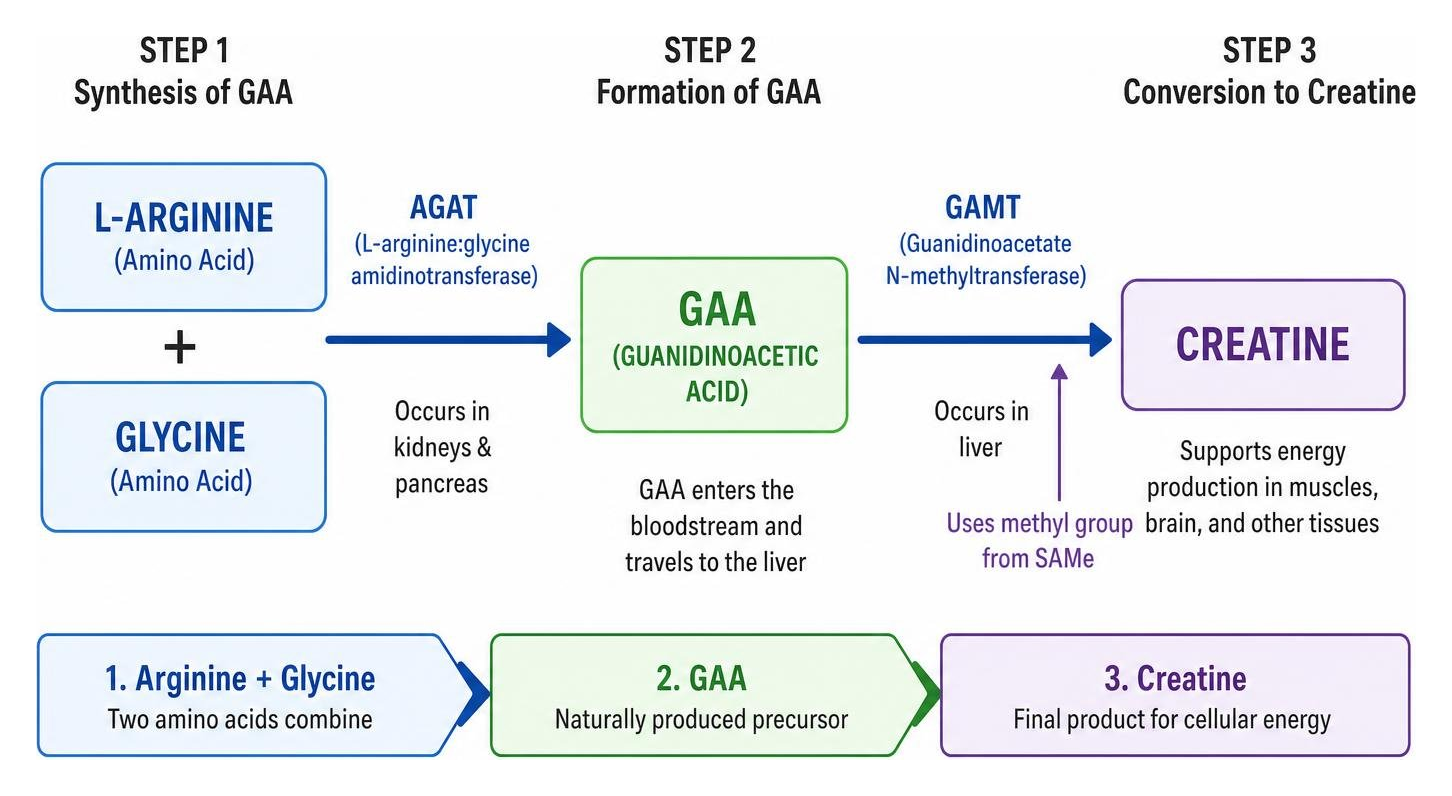
Guanidinoacetic acid (GAA), historically known in the medical world as glycocyamine, is a naturally occurring amino acid derivative. It is synthesized endogenously from two non-essential amino acids: L-arginine and glycine. This reaction is catalyzed by the enzyme L-arginine:glycine amidinotransferase (AGAT), which primarily occurs in the kidneys and pancreas.
Once GAA is created, it travels through the bloodstream to the liver. There, an enzyme called guanidinoacetate N-methyltransferase (GAMT) transfers a methyl group from S-adenosylmethionine (SAMe) to GAA, transforming it directly into creatine.
While creatine is famous for its role in rapidly regenerating cellular energy, supplementing with its direct precursor, GAA, offers a completely different physiological dynamic. When you take standard creatine, your body’s natural synthesis pathway shuts down via negative feedback on the AGAT enzyme.
However, supplementing with GAA does not trigger this same negative feedback loop on its own production pathway. This means a gaa supplement can work alongside your body's natural processes, offering a highly efficient way to maximize cellular energy stores. You can read more about this biochemical pathway in the Scientific research on GAA as a novel food.
Comparing Stability, Bioavailability, and Cost of a gaa supplement
One of the biggest headaches with standard creatine monohydrate is its physical limitations. Creatine is notoriously unstable in liquid; it degrades rapidly into creatinine (a waste product) when mixed with water. This is why you cannot buy pre-mixed liquid creatine drinks that actually work, and why you have to shake up those gritty powders immediately before drinking.
GAA, on the other hand, is a metabolic superhero when it comes to stability. It exhibits exceptional thermal stability (decomposing only at a scorching 190°C) and remains completely stable in water with a shelf life of up to two years.
Furthermore, GAA has twice the water solubility of standard creatine supplements and is roughly 40% lower in manufacturing costs. This makes it an incredibly attractive option for creating highly bioavailable, stable liquid or granulated formulas.
| Feature |
GAA (Guanidinoacetic Acid) |
Creatine Monohydrate |
| Primary Role |
Direct creatine precursor |
Cellular energy buffer |
| Water Solubility |
High (twice as soluble as creatine) |
Low (prone to settling) |
| Liquid Stability |
Up to 2 years in water |
Degrades quickly into creatinine |
| Manufacturing Cost |
~40% lower |
Standard |
| Primary Transporters |
SLC6A8, SLC6A6, SLC6A13, passive diffusion |
SLC6A8 (Creatine transporter only) |
Once inside your cells, GAA is rapidly methylated into creatine, which then binds with phosphate to form phosphocreatine. During short bursts of high-intensity activity—like lifting weights, sprinting, or even intense cognitive processing—your cells use up Adenosine Triphosphate (ATP) rapidly. Phosphocreatine steps in as a molecular first responder, donating its phosphate group to instantly regenerate ATP and keep your cells powered.
However, GAA does more than just act as a passive precursor. It has several distinct mechanisms of action that set it apart:
-
Arginine Sparing: Because your body requires arginine to synthesize its own GAA, supplementing with exogenous GAA spares your body's internal arginine pool. This freed-up arginine can then be used for other critical biological functions, such as nitric oxide production (which improves blood flow and muscle pumps) and protein synthesis.
-
Insulinotropic Properties: GAA has been shown to stimulate insulin secretion. This temporary, mild elevation in insulin helps shuttle nutrients—including glucose and amino acids—into skeletal muscle cells more effectively, promoting faster glycogen replenishment and recovery.
-
Myostatin Downregulation: On a genetic level, GAA and its metabolized creatine help downregulate the expression of the MSTN gene, which encodes myostatin. Because myostatin is a protein that naturally acts as a brake on muscle growth, lowering its levels helps unlock greater potential for skeletal muscle development.
Synergistic Effects of Combining Creatine with a gaa supplement
If GAA is so great, why not just take it by itself? While GAA is highly effective, combining it with creatine monohydrate creates an incredible metabolic synergy.
The human brain is a massive energy consumer, requiring a constant supply of creatine to function optimally. However, getting standard creatine into the brain is incredibly difficult. The blood-brain barrier relies almost exclusively on a single transporter channel, SLC6A8, to pull creatine from the blood into brain tissue. This transporter has a very limited capacity and easily becomes saturated, which is why standard creatine supplementation often fails to show major cognitive improvements.
GAA completely bypasses this bottleneck. It does not rely solely on the SLC6A8 transporter; it can also cross cellular membranes using taurine transporters (SLC6A6), GABA transporters (SLC6A13), and even simple passive diffusion. By combining creatine with a gaa supplement, you target multiple transport pathways simultaneously. Creatine saturates the standard muscle pathways, while GAA utilizes alternative transport routes to directly cross the blood-brain barrier and maximize brain creatine uptake.

Whether you are looking to build physical strength or sharpen your mental focus, the combined power of GAA and creatine delivers remarkable real-world results.
In terms of physical performance, GAA stimulates skeletal muscle development by activating the AKT/mTOR/S6K pathway—the primary cellular runway for protein synthesis and muscle growth. Furthermore, because of its insulinotropic properties, GAA is exceptionally good at restoring muscle glycogen. In comparative clinical trials, a GAA-creatine mixture elevated muscle glycogen content by 0.98%, compared to just 0.32% for standard creatine alone.
This unique hydration dynamic also means you can avoid the dreaded "creatine bloat." Standard creatine loading typically causes rapid intracellular water retention inside muscle cells, leading to sudden, watery weight gain in the first week.
Because GAA distributes water differently across both intracellular and extracellular compartments, combining it with creatine mitigates this rapid bloating effect while still delivering full bioenergetic benefits. You can explore these hydration dynamics further in this Research on body composition changes.
On the cognitive front, the benefits are even more striking. Because the brain-targeted transport of GAA increases cerebral energy stores, it has emerged as a premier cognitive and esports performance enhancer.
In a landmark four-week study on experienced male gamers playing Dota 2, co-administering creatine with GAA led to a 30.1% average improvement in esports performance scores following the final game. The players also demonstrated significant improvements in reaction time, mental accuracy, and executive control under stress.
Impact of GAA on Different Populations
The physiological effects of GAA can vary quite a bit depending on who is taking it:
-
Men vs. Women: Hydration and body composition changes from GAA co-supplementation appear to be highly sex-specific. Healthy young men experience significant shifts in extracellular mass and glycogen storage, whereas women experience more subtle, gradual changes in hydration indices.
-
Older Adults: As we age, we naturally lose muscle mass and cognitive sharpness (sarcopenia and cognitive decline). Because GAA targets both skeletal muscle pathways and brain energy metabolism, it is a highly promising tool for older adults looking to maintain physical independence and mental clarity.
-
Vegetarians: Because dietary creatine and GAA are almost exclusively found in meat (and even then, meat only contains about 10 mg of GAA per kilogram), vegetarians have severely depleted natural stores. Supplementing with GAA is an excellent, animal-free way to completely restore the body's cellular energy pools.
-
Animal Development: The power of GAA is so fundamental to growth that it is heavily utilized in animal husbandry to improve muscle development and stress resilience. For instance, dietary GAA has been shown to improve feed conversion ratios and weight gain in broiler chickens, especially under cyclic heat stress. Similarly, you can read about how it bridges nutritional gaps in early-life development in this Research on calf development.
While GAA is a highly effective physiological tool, it does have one notable metabolic drawback that must be managed.
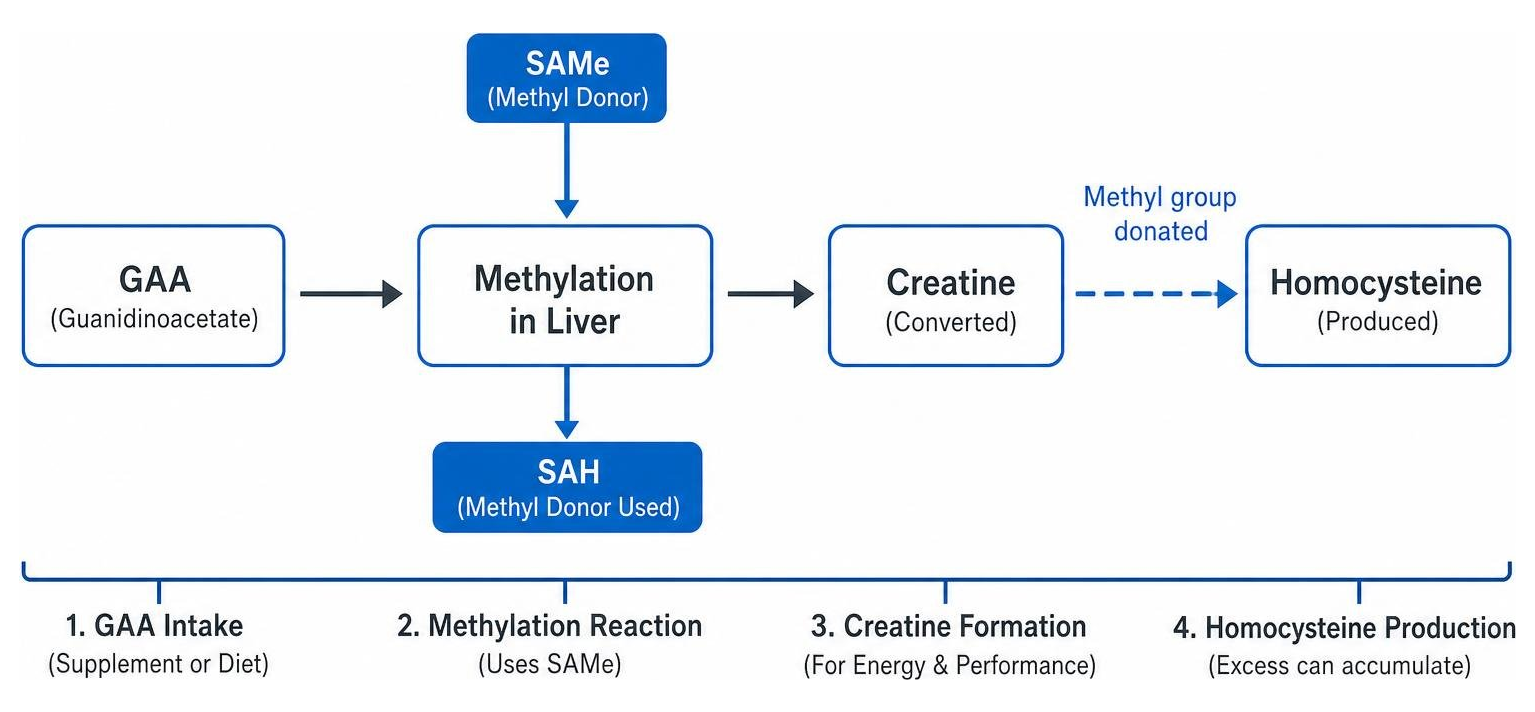
Because the liver must methylate GAA to turn it into creatine, this process consumes a massive amount of S-adenosylmethionine (SAMe)—the body's primary methyl donor. In fact, synthesizing creatine naturally consumes up to 50% of your body's entire methyl group pool.
If you flood your system with high doses of exogenous GAA, your liver goes into overdrive converting it to creatine. This can deplete your methyl donors, limit DNA/RNA methylation, and lead to an increase in total plasma homocysteine levels. Elevated homocysteine (hyperhomocysteinemia) is a recognized risk factor for cardiovascular and neurological issues.
Fortunately, this risk is easily mitigated. If you take a combined creatine-GAA supplement, the pre-existing creatine reduces your body’s need to synthesize its own creatine from scratch. This "spares" your methyl groups and prevents the rise in homocysteine.
In fact, a 6-month post-marketing surveillance study on healthy adults taking a combined creatine-GAA supplement showed that total plasma homocysteine levels actually decreased over the course of the study, while hyperhomocysteinemia risk dropped from 10.5% to just 5.3%. You can view the full safety data in this Long-term safety study of GAA.
Optimal Dosage, Duration, and Mitigation Strategies
To get the absolute most out of GAA while keeping your cardiovascular health perfectly safe, it is important to follow established scientific guidelines:
-
Avoid Pure, High-Dose GAA Alone: Do not take high doses of pure GAA without balancing it.
-
Combine with Creatine: Look for formulas that combine GAA directly with creatine monohydrate. This synergistic pairing protects your methyl pools.
-
Pair with Methyl Donors: Always ensure your diet or supplement regimen includes healthy methyl donors like choline, betaine (trimethylglycine), or active B-vitamins (folate, B12, and B6) to support the methylation cycle.
-
Optimal Dosage: Human clinical trials typically use a safe, highly effective range of 1.5 g to 3 g of GAA per day, usually divided into morning and evening doses taken with meals.
-
Check Your Labels: Be cautious when buying supplements. An Analysis of GAA in dietary supplements revealed that 72% of products containing GAA do not disclose the exact dosage on the label, hiding it instead inside "proprietary blends." Always choose transparent, high-quality brands that list exact ingredient amounts.
Limitations of Current GAA Research and Future Directions
While the science supporting GAA is incredibly exciting, we must also look at the limitations of the current research. Many of the existing clinical trials on humans have featured relatively small sample sizes or open-label designs without placebo control groups. Additionally, a large portion of the mechanistic data on muscle growth and tissue accumulation comes from animal models.
To fully establish GAA as a mainstream therapeutic agent, we need larger, multi-center, double-blind randomized controlled trials (RCTs) in diverse human populations, including older adults and female athletes.
Another major frontier is nutrient delivery. Standard GAA powders can still face absorption hurdles in the gastrointestinal tract. This is where advanced nutrient delivery systems, such as the liposomal technology pioneered by Aurora Nutrascience and distributed by us at Vida Lifescience, represent the future.
By wrapping GAA and creatine in protective, natural phospholipid bilayers (liposomes), we can shield these vital nutrients from digestive acids and deliver them directly to your cells, maximizing absorption and completely bypassing traditional digestive limitations.
Frequently Asked Questions about GAA
Does GAA cause water retention or bloating?
Unlike standard creatine monohydrate, which often causes rapid intracellular water retention (muscle bloating) during the first week of use, a combined GAA and creatine supplement distributes water more evenly across both intracellular and extracellular compartments. This offers the same strength and energy benefits without the sudden, bloated weight gain on the scale.
Can I take GAA instead of creatine?
Yes, GAA is highly effective on its own and actually has superior water stability and solubility compared to creatine. However, the scientific consensus is that combining GAA with creatine monohydrate is the absolute best approach, as it targets multiple cellular transport pathways and protects your body's methylation cycle.
Is GAA safe for long-term daily use?
Yes, clinical data up to 6 months shows that combining GAA with creatine is highly tolerable and safe for healthy adults, with only a tiny percentage of users (around 5.3%) experiencing mild, transient nausea in the first couple of weeks. To ensure long-term safety, always take it in combined formulas or alongside methyl donors like choline or betaine.
Conclusion
The science is clear: a gaa supplement is a highly stable, bioavailable, and incredibly efficient way to supercharge your cellular energy, boost athletic performance, and sharpen cognitive focus. By working as a direct precursor to creatine and utilizing alternative cellular transport pathways, GAA goes where standard creatine simply cannot reach.
At Vida Lifescience, we are proud to offer cutting-edge nutritional solutions through our partnership with Aurora Nutrascience. By utilizing advanced liposomal encapsulation, we protect these vital energy precursors through the digestive system, ensuring maximum cellular delivery and performance.
To explore more about how advanced nutrient absorption can optimize your cellular health, Read more about cellular health and glutathione and discover the power of liposomal science today.


A Practical Guide to GAA Supplement Effectiveness
Is a GAA Supplement Worth It? Here's What the Science Says
A GAA supplement — short for guanidinoacetic acid — is gaining serious attention as a smarter alternative (or companion) to standard creatine. Here's a quick summary before we dive deep:
What you need to know about GAA supplements at a glance:
Most people have heard of creatine. Fewer know that your body never actually makes creatine directly — it first makes GAA, then converts it. That single biochemical fact is what makes GAA so interesting as a supplement.
Research suggests GAA may be more effective than an equal dose of creatine at raising muscle energy levels. It also appears to cross into the brain more readily than creatine alone — a major reason researchers are now studying it for cognitive performance and esports.
But GAA is not without trade-offs. Its conversion to creatine consumes methyl groups in the body, which can raise homocysteine levels — a known cardiovascular risk marker — if the supplement is not used correctly.
This guide covers everything: the science, the benefits, the risks, the right doses, and who should (and shouldn't) consider it.
At Vida Lifescience, we specialize in advanced liposomal nutrient delivery and have carefully evaluated the research behind GAA supplements to help you make an informed decision. As the exclusive US distributor of Aurora Nutrascience's cutting-edge liposomal formulas, we bring that same scientific rigor to everything we recommend.
Understanding the gaa supplement: What It Is and How It Differs from Creatine
To understand why a gaa supplement is generating so much buzz in the sports nutrition and wellness spaces, we have to look at how our bodies produce energy.
Guanidinoacetic acid (GAA), historically known in the medical world as glycocyamine, is a naturally occurring amino acid derivative. It is synthesized endogenously from two non-essential amino acids: L-arginine and glycine. This reaction is catalyzed by the enzyme L-arginine:glycine amidinotransferase (AGAT), which primarily occurs in the kidneys and pancreas.
Once GAA is created, it travels through the bloodstream to the liver. There, an enzyme called guanidinoacetate N-methyltransferase (GAMT) transfers a methyl group from S-adenosylmethionine (SAMe) to GAA, transforming it directly into creatine.
While creatine is famous for its role in rapidly regenerating cellular energy, supplementing with its direct precursor, GAA, offers a completely different physiological dynamic. When you take standard creatine, your body’s natural synthesis pathway shuts down via negative feedback on the AGAT enzyme.
However, supplementing with GAA does not trigger this same negative feedback loop on its own production pathway. This means a gaa supplement can work alongside your body's natural processes, offering a highly efficient way to maximize cellular energy stores. You can read more about this biochemical pathway in the Scientific research on GAA as a novel food.
Comparing Stability, Bioavailability, and Cost of a gaa supplement
One of the biggest headaches with standard creatine monohydrate is its physical limitations. Creatine is notoriously unstable in liquid; it degrades rapidly into creatinine (a waste product) when mixed with water. This is why you cannot buy pre-mixed liquid creatine drinks that actually work, and why you have to shake up those gritty powders immediately before drinking.
GAA, on the other hand, is a metabolic superhero when it comes to stability. It exhibits exceptional thermal stability (decomposing only at a scorching 190°C) and remains completely stable in water with a shelf life of up to two years.
Furthermore, GAA has twice the water solubility of standard creatine supplements and is roughly 40% lower in manufacturing costs. This makes it an incredibly attractive option for creating highly bioavailable, stable liquid or granulated formulas.
Mechanisms of Action: How GAA Powers Energy Metabolism
Once inside your cells, GAA is rapidly methylated into creatine, which then binds with phosphate to form phosphocreatine. During short bursts of high-intensity activity—like lifting weights, sprinting, or even intense cognitive processing—your cells use up Adenosine Triphosphate (ATP) rapidly. Phosphocreatine steps in as a molecular first responder, donating its phosphate group to instantly regenerate ATP and keep your cells powered.
However, GAA does more than just act as a passive precursor. It has several distinct mechanisms of action that set it apart:
Synergistic Effects of Combining Creatine with a gaa supplement
If GAA is so great, why not just take it by itself? While GAA is highly effective, combining it with creatine monohydrate creates an incredible metabolic synergy.
The human brain is a massive energy consumer, requiring a constant supply of creatine to function optimally. However, getting standard creatine into the brain is incredibly difficult. The blood-brain barrier relies almost exclusively on a single transporter channel, SLC6A8, to pull creatine from the blood into brain tissue. This transporter has a very limited capacity and easily becomes saturated, which is why standard creatine supplementation often fails to show major cognitive improvements.
GAA completely bypasses this bottleneck. It does not rely solely on the SLC6A8 transporter; it can also cross cellular membranes using taurine transporters (SLC6A6), GABA transporters (SLC6A13), and even simple passive diffusion. By combining creatine with a gaa supplement, you target multiple transport pathways simultaneously. Creatine saturates the standard muscle pathways, while GAA utilizes alternative transport routes to directly cross the blood-brain barrier and maximize brain creatine uptake.
Physical and Cognitive Performance Benefits of GAA
Whether you are looking to build physical strength or sharpen your mental focus, the combined power of GAA and creatine delivers remarkable real-world results.
In terms of physical performance, GAA stimulates skeletal muscle development by activating the AKT/mTOR/S6K pathway—the primary cellular runway for protein synthesis and muscle growth. Furthermore, because of its insulinotropic properties, GAA is exceptionally good at restoring muscle glycogen. In comparative clinical trials, a GAA-creatine mixture elevated muscle glycogen content by 0.98%, compared to just 0.32% for standard creatine alone.
This unique hydration dynamic also means you can avoid the dreaded "creatine bloat." Standard creatine loading typically causes rapid intracellular water retention inside muscle cells, leading to sudden, watery weight gain in the first week.
Because GAA distributes water differently across both intracellular and extracellular compartments, combining it with creatine mitigates this rapid bloating effect while still delivering full bioenergetic benefits. You can explore these hydration dynamics further in this Research on body composition changes.
On the cognitive front, the benefits are even more striking. Because the brain-targeted transport of GAA increases cerebral energy stores, it has emerged as a premier cognitive and esports performance enhancer.
In a landmark four-week study on experienced male gamers playing Dota 2, co-administering creatine with GAA led to a 30.1% average improvement in esports performance scores following the final game. The players also demonstrated significant improvements in reaction time, mental accuracy, and executive control under stress.
Impact of GAA on Different Populations
The physiological effects of GAA can vary quite a bit depending on who is taking it:
Safety, Side Effects, and Metabolic Drawbacks of GAA
While GAA is a highly effective physiological tool, it does have one notable metabolic drawback that must be managed.
Because the liver must methylate GAA to turn it into creatine, this process consumes a massive amount of S-adenosylmethionine (SAMe)—the body's primary methyl donor. In fact, synthesizing creatine naturally consumes up to 50% of your body's entire methyl group pool.
If you flood your system with high doses of exogenous GAA, your liver goes into overdrive converting it to creatine. This can deplete your methyl donors, limit DNA/RNA methylation, and lead to an increase in total plasma homocysteine levels. Elevated homocysteine (hyperhomocysteinemia) is a recognized risk factor for cardiovascular and neurological issues.
Fortunately, this risk is easily mitigated. If you take a combined creatine-GAA supplement, the pre-existing creatine reduces your body’s need to synthesize its own creatine from scratch. This "spares" your methyl groups and prevents the rise in homocysteine.
In fact, a 6-month post-marketing surveillance study on healthy adults taking a combined creatine-GAA supplement showed that total plasma homocysteine levels actually decreased over the course of the study, while hyperhomocysteinemia risk dropped from 10.5% to just 5.3%. You can view the full safety data in this Long-term safety study of GAA.
Optimal Dosage, Duration, and Mitigation Strategies
To get the absolute most out of GAA while keeping your cardiovascular health perfectly safe, it is important to follow established scientific guidelines:
Limitations of Current GAA Research and Future Directions
While the science supporting GAA is incredibly exciting, we must also look at the limitations of the current research. Many of the existing clinical trials on humans have featured relatively small sample sizes or open-label designs without placebo control groups. Additionally, a large portion of the mechanistic data on muscle growth and tissue accumulation comes from animal models.
To fully establish GAA as a mainstream therapeutic agent, we need larger, multi-center, double-blind randomized controlled trials (RCTs) in diverse human populations, including older adults and female athletes.
Another major frontier is nutrient delivery. Standard GAA powders can still face absorption hurdles in the gastrointestinal tract. This is where advanced nutrient delivery systems, such as the liposomal technology pioneered by Aurora Nutrascience and distributed by us at Vida Lifescience, represent the future.
By wrapping GAA and creatine in protective, natural phospholipid bilayers (liposomes), we can shield these vital nutrients from digestive acids and deliver them directly to your cells, maximizing absorption and completely bypassing traditional digestive limitations.
Frequently Asked Questions about GAA
Does GAA cause water retention or bloating?
Unlike standard creatine monohydrate, which often causes rapid intracellular water retention (muscle bloating) during the first week of use, a combined GAA and creatine supplement distributes water more evenly across both intracellular and extracellular compartments. This offers the same strength and energy benefits without the sudden, bloated weight gain on the scale.
Can I take GAA instead of creatine?
Yes, GAA is highly effective on its own and actually has superior water stability and solubility compared to creatine. However, the scientific consensus is that combining GAA with creatine monohydrate is the absolute best approach, as it targets multiple cellular transport pathways and protects your body's methylation cycle.
Is GAA safe for long-term daily use?
Yes, clinical data up to 6 months shows that combining GAA with creatine is highly tolerable and safe for healthy adults, with only a tiny percentage of users (around 5.3%) experiencing mild, transient nausea in the first couple of weeks. To ensure long-term safety, always take it in combined formulas or alongside methyl donors like choline or betaine.
Conclusion
The science is clear: a gaa supplement is a highly stable, bioavailable, and incredibly efficient way to supercharge your cellular energy, boost athletic performance, and sharpen cognitive focus. By working as a direct precursor to creatine and utilizing alternative cellular transport pathways, GAA goes where standard creatine simply cannot reach.
At Vida Lifescience, we are proud to offer cutting-edge nutritional solutions through our partnership with Aurora Nutrascience. By utilizing advanced liposomal encapsulation, we protect these vital energy precursors through the digestive system, ensuring maximum cellular delivery and performance.
To explore more about how advanced nutrient absorption can optimize your cellular health, Read more about cellular health and glutathione and discover the power of liposomal science today.