Why So Many People Have Low Vitamin D — And Don't Know It

The most common cause low vitamin D levels in people comes down to a surprisingly short list of factors:
| Cause |
Example |
| Limited sun exposure |
Living at high latitudes, staying indoors, using sunscreen |
| Low dietary intake |
Not eating fatty fish, egg yolks, or fortified foods |
| Malabsorption diseases |
Crohn's disease, celiac disease, cystic fibrosis |
| Kidney or liver dysfunction |
Chronic kidney disease, liver failure |
| Certain medications |
Antiepileptics, statins, lipase inhibitors |
| Darker skin tone |
Higher melanin reduces UV absorption |
| Age |
Skin produces less vitamin D as you get older |
| Obesity |
Fat tissue traps vitamin D, keeping it out of the bloodstream |
Around 1 billion people worldwide have vitamin D deficiency. In the United States alone, roughly 35% of adults are deficient — and many have no obvious symptoms at all.
Yet vitamin D is not just about bones. It plays a direct role in immune function, muscle strength, and even mood. When levels drop too low, the effects ripple through almost every system in the body.
What makes this especially tricky is that many of the conditions that cause low vitamin D — like Crohn's disease, celiac disease, and chronic kidney disease — are also worsened by low vitamin D. It becomes a cycle that's hard to break without understanding the root cause first.
At Vida Life Science, we specialize in advanced liposomal nutrient delivery — a technology designed to address the exact absorption challenges that cause low vitamin D to persist even when people are supplementing. In the sections below, we break down every major cause so you can take targeted, informed action.
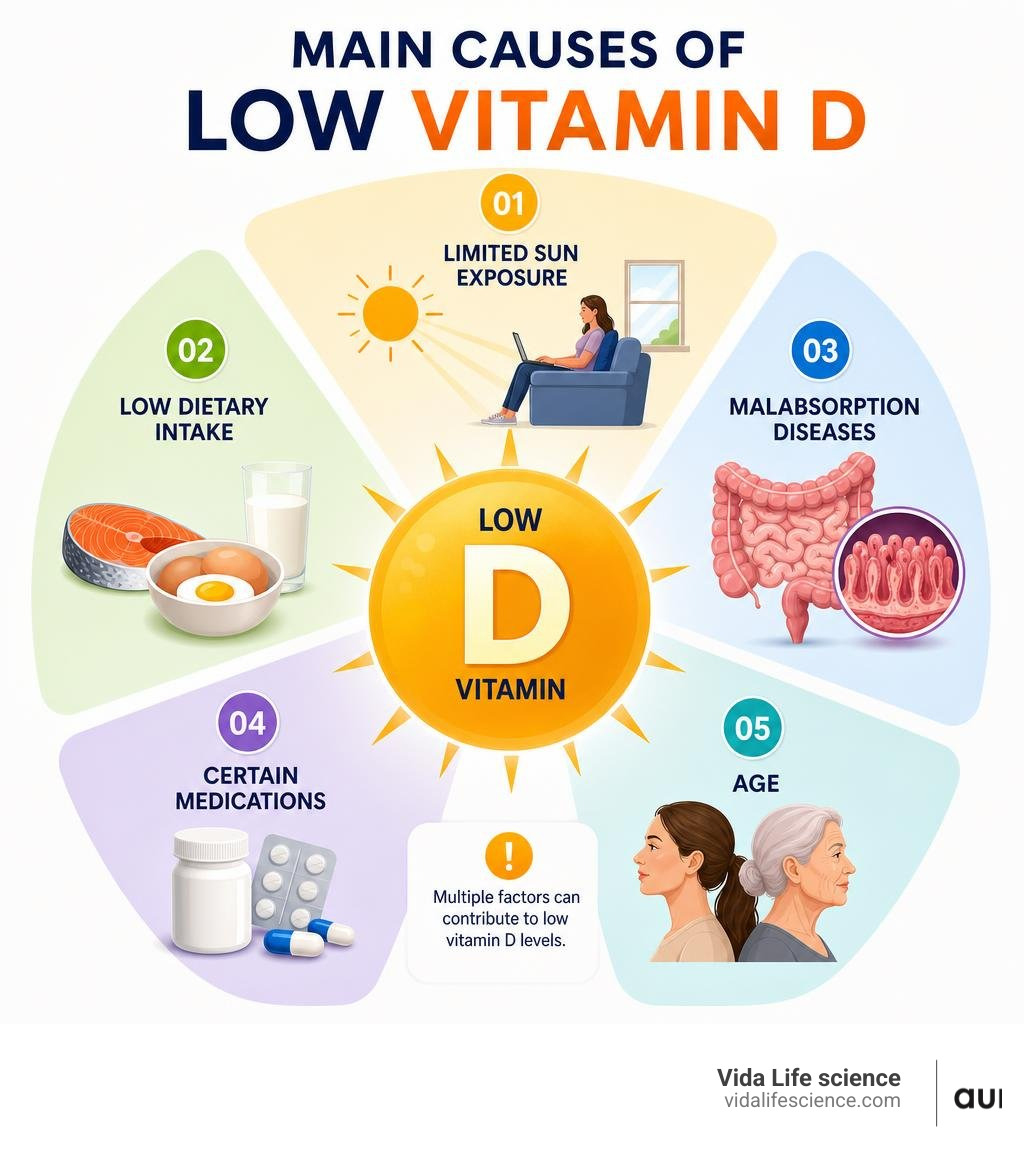
The Primary Factors That Cause Low Vitamin D
When we look at what can cause low vitamin D, it helps to understand that this nutrient isn't actually a typical vitamin. It functions more like a hormone, synthesized by our bodies through a complex pathway that starts with bare skin and sunlight. Because our bodies are designed to manufacture it rather than rely solely on food, any disruption in our daily habits, environments, or biology can quickly deplete our stores.

The global prevalence of this issue is staggering. Beyond the 1 billion people worldwide dealing with clinical deficiency, another 50% of the global population lives with vitamin D insufficiency. In North America, the numbers remain stubbornly high despite widespread food fortification programs. According to Cleveland Clinic's overview of deficiency, about 35% of adults in the United States do not have enough of this crucial nutrient in their systems.
To understand why this happens, we have to look at the two primary ways we naturally acquire vitamin D: the sun above us and the food on our plates.
How Limited Sun Exposure Can Cause Low Vitamin D
Your body is designed to produce vitamin D3 (cholecalciferol) when ultraviolet B (UVB) radiation from the sun hits your skin, triggering the conversion of a cholesterol compound into pre-vitamin D. However, modern life has largely moved indoors, creating a perfect storm for deficiency.
Several environmental and biological factors dictate how much vitamin D you can synthesize from sunlight:
-
Geographic Latitude and Season: If you live in Canada or the northern half of the United States, the angle of the sun during the winter months is too oblique for UVB rays to penetrate the atmosphere effectively. For several months of the year, it is virtually impossible to synthesize vitamin D from sunlight in these regions, no matter how long you stand outside.
-
Skin Melanin Content: Melanin acts as a natural sunscreen. People with darker skin tones have higher melanin levels, which protect the skin from UV damage but also significantly reduce the rate of vitamin D synthesis. Consequently, vitamin D deficiency is highly prevalent among Black, Hispanic, and Indigenous populations in North America.
-
Sunscreen and Clothing: While sunscreen is vital for preventing skin cancer, an SPF of 30 reduces vitamin D synthesis in the skin by more than 95%. Similarly, wearing clothing that covers most of the skin—whether due to climate, personal comfort, or cultural practices—limits the surface area available for UVB absorption.
Dietary Deficiencies That Cause Low Vitamin D
Relying solely on your diet to maintain healthy vitamin D levels is incredibly difficult because very few foods naturally contain therapeutic amounts of it.
The primary natural dietary sources include:
- Fatty fish (such as salmon, mackerel, and sardines)
- Beef liver
- Egg yolks
- Certain wild mushrooms exposed to UV light
To bridge this gap, many commercial foods in the US and Canada—such as liquid cow's milk, plant-based milk alternatives, orange juice, and breakfast cereals—are fortified with vitamin D. However, if your diet is highly processed, lacks healthy fats (which are required to absorb this fat-soluble vitamin), or if you follow a strict vegan diet without intentional supplementation, you are highly likely to experience a deficiency.
Additionally, breastfed infants are at a particularly high risk. Human breast milk contains very little vitamin D. Without daily pediatric drops from birth, infants can quickly develop severe deficiencies, leading to developmental delays or bone-softening conditions.
Medical Conditions and Medications That Impair Absorption
Sometimes, the cause low vitamin D levels isn't a lack of sunlight or a poor diet. You could be spending time outdoors and eating fatty fish every day, yet your blood tests still show dangerously low numbers. In these cases, the culprit is often an underlying medical condition or a medication that interferes with how your body absorbs, converts, or metabolizes the nutrient.
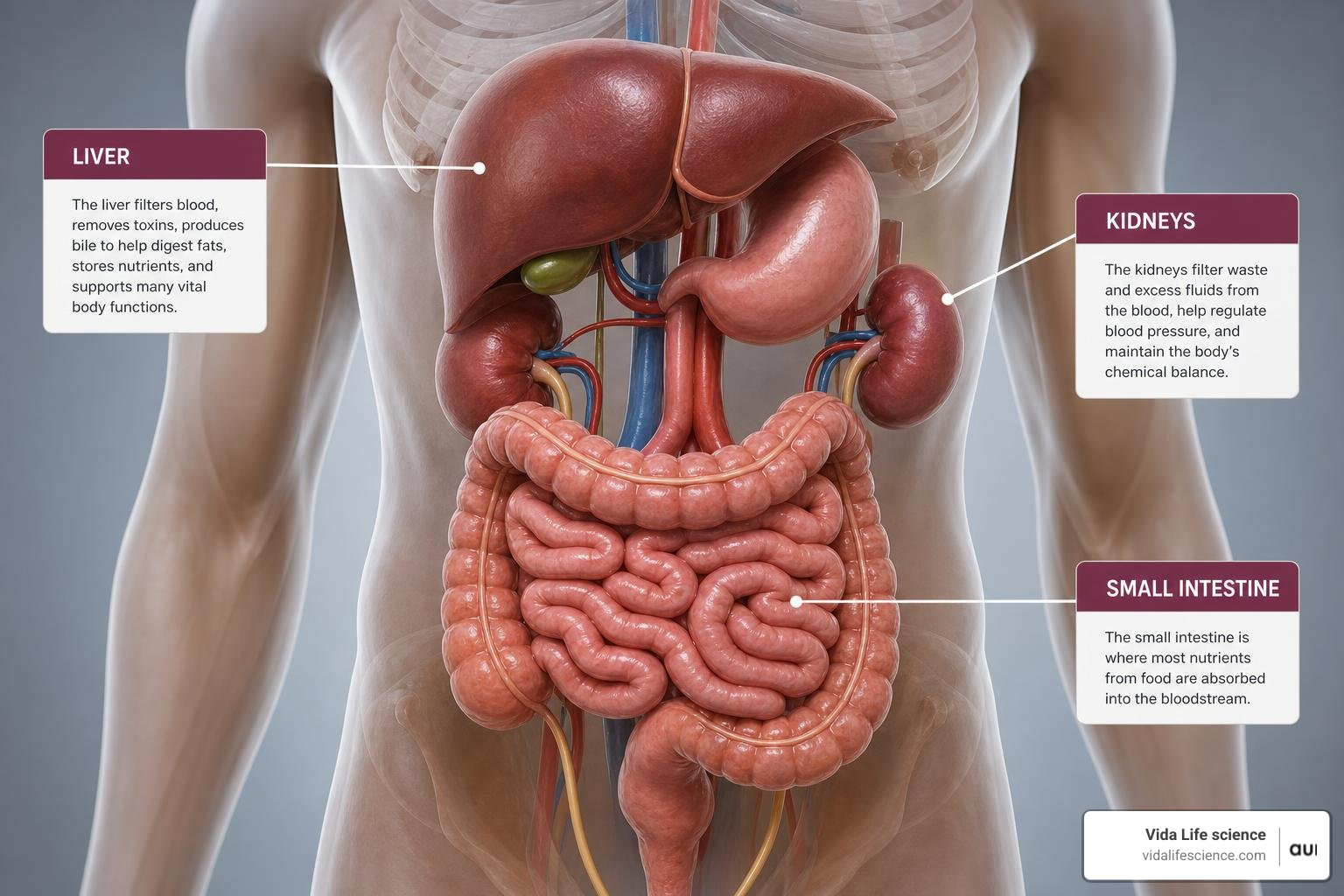
Because vitamin D is fat-soluble, its absorption depends entirely on a healthy, functional digestive system, followed by chemical conversions in both the liver and the kidneys. If any part of this biological assembly line is compromised, your vitamin D levels will plummet. As detailed in Yale Medicine's insights on malabsorption, identifying these systemic barriers is crucial for developing an effective treatment plan.
Gastrointestinal and Malabsorption Diseases
Any disease that inflames, damages, or shortens the small intestine will directly impair your ability to absorb fat-soluble vitamins.
-
Crohn's Disease and Celiac Disease: These inflammatory conditions damage the delicate lining of the gut. In celiac disease, gluten triggers an autoimmune response that flattens the microvilli in the small intestine—the very structures responsible for nutrient absorption. In Crohn's, chronic inflammation prevents the gut from properly processing fats, meaning vitamin D simply passes through the digestive tract unabsorbed.
-
Cystic Fibrosis: This genetic condition causes thick, sticky mucus to build up in various organs, including the pancreas. When the pancreas cannot release the digestive enzymes needed to break down dietary fats, fat malabsorption occurs, dragging vitamin D levels down with it.
-
Gastric Bypass and Bariatric Surgery: Weight-loss surgeries often involve bypassing a portion of the upper small intestine (the duodenum and jejunum), which is precisely where the majority of vitamin D absorption takes place. Patients who have undergone these procedures require lifetime monitoring and highly specialized, easily absorbable forms of nutrients.
Kidney and Liver Diseases
Once vitamin D enters your body—either from your skin or your diet—it is biologically inactive. It must undergo two successive chemical transformations (hydroxylation steps) catalyzed by cytochrome P450 enzymes:
-
The Liver: Converts vitamin D into 25-hydroxyvitamin D [25(OH)D], which is the standard form measured in blood tests.
-
The Kidneys: Converts 25(OH)D into 1,25-dihydroxyvitamin D [1,25(OH)2D], also known as calcitriol, which is the active hormone your body actually uses.
If you suffer from liver failure, cirrhosis, or chronic kidney disease, this activation process breaks down. The statistics are striking: approximately 85% to 99% of patients with chronic kidney disease, hemodialysis, concomitant liver disease, or a prior liver transplant have vitamin D deficiency. Without functioning kidneys or liver tissue, your body cannot activate the vitamin, leading to secondary hyperparathyroidism—a state where the parathyroid glands work overtime, extracting calcium directly from your bones to maintain blood levels.
A wide range of commonly prescribed medications can quietly deplete your vitamin D levels by altering how your body processes the nutrient. According to a comprehensive MDPI study on drug interactions, polypharmacy in older adults is a major, often overlooked driver of musculoskeletal decline.
Key drug classes that interfere with vitamin D include:
-
Statins: Medications like atorvastatin, simvastatin, and lovastatin are metabolized by the CYP3A4 enzyme. Because this same enzyme is involved in processing vitamin D, these drugs can compete with and disrupt normal vitamin D metabolism.
-
Antiepileptic Drugs (AEDs): Phenobarbital, carbamazepine, and phenytoin induce hepatic cytochrome P450 enzymes, which dramatically accelerates the degradation and clearance of vitamin D from your system, rapidly increasing fracture risks.
-
Lipase Inhibitors: Weight-loss drugs designed to block fat absorption in the gut inherently block the absorption of fat-soluble vitamins like vitamin D, leaving patients severely depleted.
Symptoms, Diagnosis, and Health Risks of Deficiency
Because vitamin D receptors are present in almost every tissue and cell type in the human body, a deficiency can manifest in diverse, often confusing ways. Many people shrug off the early signs as mere "aging" or daily stress, but ignoring these warnings can lead to severe long-term health risks.
If you are experiencing persistent, unexplained physical changes, consulting Healthline's guide on vitamin D deficiency symptoms can help you cross-reference what you are feeling with clinically recognized symptoms.
Recognizing the Symptoms and Complications
While many cases of low vitamin D are entirely asymptomatic in their early stages, prolonged depletion eventually makes itself known through a series of physical symptoms:
-
Chronic Fatigue and Brain Fog: Vitamin D plays a vital role in cellular energy production. Chronic, unyielding fatigue that doesn't improve with rest is one of the most common—yet frequently ignored—signs of deficiency.
-
Bone Loss and Back Pain: Because vitamin D is essential for calcium absorption, low levels prevent your body from depositing calcium into your skeleton. This leads to bone demineralization, presenting as persistent lower back pain, bone pain, or a general deep ache in the joints.
-
Muscle Weakness and Sarcopenia: Vitamin D receptors are deeply integrated into muscle tissue. Deficiency can cause muscle aches, weakness, and a loss of muscle mass (sarcopenia). In older adults, this combined loss of bone density and muscle strength (known as osteosarcopenia) drastically increases the risk of falls and devastating hip fractures.
-
Frequent Infections: Vitamin D is a potent immune modulator. If you find yourself catching every cold, flu, or respiratory infection that goes around, your immune system may be lacking the fuel it needs to fight off pathogens.
-
Critical Illness Vulnerability: The systemic importance of this nutrient is highlight by the fact that 85% to 99% of patients admitted to intensive care units (ICUs) are deficient in vitamin D. Low levels are strongly associated with higher rates of systemic inflammation and prolonged hospital stays.
How Vitamin D Deficiency is Diagnosed
Diagnosing a deficiency is simple, highly accurate, and requires only a routine blood draw.
Your doctor will order a 25-hydroxyvitamin D [25(OH)D] blood test. This is the most reliable marker because it reflects the total amount of vitamin D your body has stored from sun exposure, diet, and supplements.
To get a complete picture of your bone health and parathyroid function, your physician may also evaluate:
-
Parathyroid Hormone (PTH) Levels: When vitamin D is low, calcium absorption drops. The parathyroid glands respond by releasing more PTH to pull calcium out of your bones and into your blood. High PTH is a classic indicator of secondary hyperparathyroidism driven by vitamin D deficiency.
-
Serum Calcium and Phosphate Levels: To monitor the mineral balance required for bone mineralization.
Prevention and Treatment: Restoring Your Levels
Fixing a vitamin D deficiency requires a strategic, personalized approach. Simply taking a random over-the-counter pill may not be enough, especially if you have gut health issues or genetic factors that alter how you process nutrients. For a deep dive into clinical dosing and therapeutic protocols, you can consult the StatPearls clinical guidelines on treatment.
Recommended Daily Intakes by Age Group
To prevent deficiency and maintain basic bone health, health authorities in the United States and Canada recommend the following daily dietary allowances:
| Age Group |
Recommended Daily Intake (IU) |
Recommended Daily Intake (mcg) |
Tolerable Upper Limit (IU) |
| Infants (0 to 12 months) |
400 IU |
10 mcg |
1,000 to 1,500 IU |
| Children & Adults (1 to 70 years) |
600 IU |
15 mcg |
4,000 IU |
| Older Adults (71+ years) |
800 IU |
20 mcg |
4,000 IU |
| Pregnant & Lactating Women |
600 IU |
15 mcg |
4,000 IU |
Note: While these are the standard preventative recommendations, individuals who are already clinically deficient or have severe malabsorption issues often require much higher, therapeutic doses under medical supervision to safely restore their levels.
Effective Supplementation and Lifestyle Changes
When choosing a supplement to correct a deficiency, the form of the vitamin and how it is delivered make all the difference:
-
Choose Vitamin D3 over D2: Supplementation typically comes in two forms: Vitamin D2 (ergocalciferol, derived from plants) and Vitamin D3 (cholecalciferol, derived from animals). Clinical studies consistently show that Vitamin D3 is highly superior, as it is far more stable and much more effective at raising and maintaining serum 25(OH)D levels.
-
The Importance of Magnesium: The enzymes that synthesize, transport, and activate vitamin D in your liver and kidneys are entirely dependent on magnesium. If you are magnesium deficient, your body cannot utilize the vitamin D you take. Co-supplementing with magnesium is often the missing key to raising stubborn blood levels.
-
The Liposomal Advantage: Because standard vitamin D is a fat-soluble molecule, it relies on complex digestive processes, bile acids, and healthy intestinal walls to be absorbed. If you suffer from Crohn's, celiac disease, cystic fibrosis, or have had bariatric surgery, standard tablets and capsules will often pass straight through your system with minimal benefit.
Frequently Asked Questions about Vitamin D Deficiency
What is the most common cause of low vitamin D?
The absolute most common cause is a combination of limited direct sun exposure and a diet that lacks naturally vitamin D-rich or fortified foods. Because modern lifestyles keep us indoors, and high-latitude climates (like Canada and the northern US) block UVB rays for much of the year, our bodies simply do not get the environmental cues needed to manufacture this vital hormone.
Can you get too much vitamin D from sunlight?
No. Your body has an elegant, built-in safety mechanism. When your skin receives prolonged sun exposure, it naturally degrades any excess pre-vitamin D3, preventing toxicity. However, you can get too much vitamin D from high-dose supplements. Excessive supplementation can lead to vitamin D toxicity (hypercalcemia), causing calcium to build up in your blood, which can lead to kidney stones, nausea, weakness, and heart rhythm issues.
How long does it take to correct a vitamin D deficiency?
It typically takes between 6 to 12 weeks (with 10 weeks being the average clinical standard) of targeted therapeutic supplementation to safely restore your blood levels to a healthy range. The exact timeline depends on the severity of your initial deficiency, your body weight, your overall gut health, and the absorption efficiency of the supplement you choose. Follow-up blood testing is always recommended after 3 months to adjust your maintenance dose.
Conclusion
Understanding what can cause low vitamin D is the first step toward reclaiming your physical vitality, protecting your bones, and supporting your immune system. Whether your low levels are driven by a northern climate, a demanding indoor lifestyle, medication side effects, or a complex digestive condition like Crohn's or celiac disease, you don't have to stay stuck in a cycle of depletion.
At Vida Life Science, we believe that a supplement is only as good as your body's ability to absorb it. That is why we are the exclusive North American distributor of Aurora Nutrascience liposomal supplements.
By wrapping vital nutrients like Vitamin D3 in protective, organic liposomes—microscopic lipid spheres that mimic your body's own cell membranes—our formulas bypass the harsh digestive barriers of the stomach and the absorption limitations of an inflamed gut. This advanced technology delivers the nutrient directly into your bloodstream and cells, offering unparalleled bioavailability.
If you are ready to experience the difference that true cellular absorption can make, explore the science of liposomal nutrients and discover a smarter, highly effective way to support your daily wellness.


From Crohn's to Celiac: Diseases That Cause Low Vitamin D
Why So Many People Have Low Vitamin D — And Don't Know It
The most common cause low vitamin D levels in people comes down to a surprisingly short list of factors:
Around 1 billion people worldwide have vitamin D deficiency. In the United States alone, roughly 35% of adults are deficient — and many have no obvious symptoms at all.
Yet vitamin D is not just about bones. It plays a direct role in immune function, muscle strength, and even mood. When levels drop too low, the effects ripple through almost every system in the body.
What makes this especially tricky is that many of the conditions that cause low vitamin D — like Crohn's disease, celiac disease, and chronic kidney disease — are also worsened by low vitamin D. It becomes a cycle that's hard to break without understanding the root cause first.
At Vida Life Science, we specialize in advanced liposomal nutrient delivery — a technology designed to address the exact absorption challenges that cause low vitamin D to persist even when people are supplementing. In the sections below, we break down every major cause so you can take targeted, informed action.
The Primary Factors That Cause Low Vitamin D
When we look at what can cause low vitamin D, it helps to understand that this nutrient isn't actually a typical vitamin. It functions more like a hormone, synthesized by our bodies through a complex pathway that starts with bare skin and sunlight. Because our bodies are designed to manufacture it rather than rely solely on food, any disruption in our daily habits, environments, or biology can quickly deplete our stores.
The global prevalence of this issue is staggering. Beyond the 1 billion people worldwide dealing with clinical deficiency, another 50% of the global population lives with vitamin D insufficiency. In North America, the numbers remain stubbornly high despite widespread food fortification programs. According to Cleveland Clinic's overview of deficiency, about 35% of adults in the United States do not have enough of this crucial nutrient in their systems.
To understand why this happens, we have to look at the two primary ways we naturally acquire vitamin D: the sun above us and the food on our plates.
How Limited Sun Exposure Can Cause Low Vitamin D
Your body is designed to produce vitamin D3 (cholecalciferol) when ultraviolet B (UVB) radiation from the sun hits your skin, triggering the conversion of a cholesterol compound into pre-vitamin D. However, modern life has largely moved indoors, creating a perfect storm for deficiency.
Several environmental and biological factors dictate how much vitamin D you can synthesize from sunlight:
Dietary Deficiencies That Cause Low Vitamin D
Relying solely on your diet to maintain healthy vitamin D levels is incredibly difficult because very few foods naturally contain therapeutic amounts of it.
The primary natural dietary sources include:
To bridge this gap, many commercial foods in the US and Canada—such as liquid cow's milk, plant-based milk alternatives, orange juice, and breakfast cereals—are fortified with vitamin D. However, if your diet is highly processed, lacks healthy fats (which are required to absorb this fat-soluble vitamin), or if you follow a strict vegan diet without intentional supplementation, you are highly likely to experience a deficiency.
Additionally, breastfed infants are at a particularly high risk. Human breast milk contains very little vitamin D. Without daily pediatric drops from birth, infants can quickly develop severe deficiencies, leading to developmental delays or bone-softening conditions.
Medical Conditions and Medications That Impair Absorption
Sometimes, the cause low vitamin D levels isn't a lack of sunlight or a poor diet. You could be spending time outdoors and eating fatty fish every day, yet your blood tests still show dangerously low numbers. In these cases, the culprit is often an underlying medical condition or a medication that interferes with how your body absorbs, converts, or metabolizes the nutrient.
Because vitamin D is fat-soluble, its absorption depends entirely on a healthy, functional digestive system, followed by chemical conversions in both the liver and the kidneys. If any part of this biological assembly line is compromised, your vitamin D levels will plummet. As detailed in Yale Medicine's insights on malabsorption, identifying these systemic barriers is crucial for developing an effective treatment plan.
Gastrointestinal and Malabsorption Diseases
Any disease that inflames, damages, or shortens the small intestine will directly impair your ability to absorb fat-soluble vitamins.
Kidney and Liver Diseases
Once vitamin D enters your body—either from your skin or your diet—it is biologically inactive. It must undergo two successive chemical transformations (hydroxylation steps) catalyzed by cytochrome P450 enzymes:
If you suffer from liver failure, cirrhosis, or chronic kidney disease, this activation process breaks down. The statistics are striking: approximately 85% to 99% of patients with chronic kidney disease, hemodialysis, concomitant liver disease, or a prior liver transplant have vitamin D deficiency. Without functioning kidneys or liver tissue, your body cannot activate the vitamin, leading to secondary hyperparathyroidism—a state where the parathyroid glands work overtime, extracting calcium directly from your bones to maintain blood levels.
Medications That Interfere with Vitamin D Metabolism
A wide range of commonly prescribed medications can quietly deplete your vitamin D levels by altering how your body processes the nutrient. According to a comprehensive MDPI study on drug interactions, polypharmacy in older adults is a major, often overlooked driver of musculoskeletal decline.
Key drug classes that interfere with vitamin D include:
Symptoms, Diagnosis, and Health Risks of Deficiency
Because vitamin D receptors are present in almost every tissue and cell type in the human body, a deficiency can manifest in diverse, often confusing ways. Many people shrug off the early signs as mere "aging" or daily stress, but ignoring these warnings can lead to severe long-term health risks.
If you are experiencing persistent, unexplained physical changes, consulting Healthline's guide on vitamin D deficiency symptoms can help you cross-reference what you are feeling with clinically recognized symptoms.
Recognizing the Symptoms and Complications
While many cases of low vitamin D are entirely asymptomatic in their early stages, prolonged depletion eventually makes itself known through a series of physical symptoms:
How Vitamin D Deficiency is Diagnosed
Diagnosing a deficiency is simple, highly accurate, and requires only a routine blood draw.
Your doctor will order a 25-hydroxyvitamin D [25(OH)D] blood test. This is the most reliable marker because it reflects the total amount of vitamin D your body has stored from sun exposure, diet, and supplements.
To get a complete picture of your bone health and parathyroid function, your physician may also evaluate:
Prevention and Treatment: Restoring Your Levels
Fixing a vitamin D deficiency requires a strategic, personalized approach. Simply taking a random over-the-counter pill may not be enough, especially if you have gut health issues or genetic factors that alter how you process nutrients. For a deep dive into clinical dosing and therapeutic protocols, you can consult the StatPearls clinical guidelines on treatment.
Recommended Daily Intakes by Age Group
To prevent deficiency and maintain basic bone health, health authorities in the United States and Canada recommend the following daily dietary allowances:
Note: While these are the standard preventative recommendations, individuals who are already clinically deficient or have severe malabsorption issues often require much higher, therapeutic doses under medical supervision to safely restore their levels.
Effective Supplementation and Lifestyle Changes
When choosing a supplement to correct a deficiency, the form of the vitamin and how it is delivered make all the difference:
Frequently Asked Questions about Vitamin D Deficiency
What is the most common cause of low vitamin D?
The absolute most common cause is a combination of limited direct sun exposure and a diet that lacks naturally vitamin D-rich or fortified foods. Because modern lifestyles keep us indoors, and high-latitude climates (like Canada and the northern US) block UVB rays for much of the year, our bodies simply do not get the environmental cues needed to manufacture this vital hormone.
Can you get too much vitamin D from sunlight?
No. Your body has an elegant, built-in safety mechanism. When your skin receives prolonged sun exposure, it naturally degrades any excess pre-vitamin D3, preventing toxicity. However, you can get too much vitamin D from high-dose supplements. Excessive supplementation can lead to vitamin D toxicity (hypercalcemia), causing calcium to build up in your blood, which can lead to kidney stones, nausea, weakness, and heart rhythm issues.
How long does it take to correct a vitamin D deficiency?
It typically takes between 6 to 12 weeks (with 10 weeks being the average clinical standard) of targeted therapeutic supplementation to safely restore your blood levels to a healthy range. The exact timeline depends on the severity of your initial deficiency, your body weight, your overall gut health, and the absorption efficiency of the supplement you choose. Follow-up blood testing is always recommended after 3 months to adjust your maintenance dose.
Conclusion
Understanding what can cause low vitamin D is the first step toward reclaiming your physical vitality, protecting your bones, and supporting your immune system. Whether your low levels are driven by a northern climate, a demanding indoor lifestyle, medication side effects, or a complex digestive condition like Crohn's or celiac disease, you don't have to stay stuck in a cycle of depletion.
At Vida Life Science, we believe that a supplement is only as good as your body's ability to absorb it. That is why we are the exclusive North American distributor of Aurora Nutrascience liposomal supplements.
By wrapping vital nutrients like Vitamin D3 in protective, organic liposomes—microscopic lipid spheres that mimic your body's own cell membranes—our formulas bypass the harsh digestive barriers of the stomach and the absorption limitations of an inflamed gut. This advanced technology delivers the nutrient directly into your bloodstream and cells, offering unparalleled bioavailability.
If you are ready to experience the difference that true cellular absorption can make, explore the science of liposomal nutrients and discover a smarter, highly effective way to support your daily wellness.