Facial signs of B12 deficiency: the clues to notice
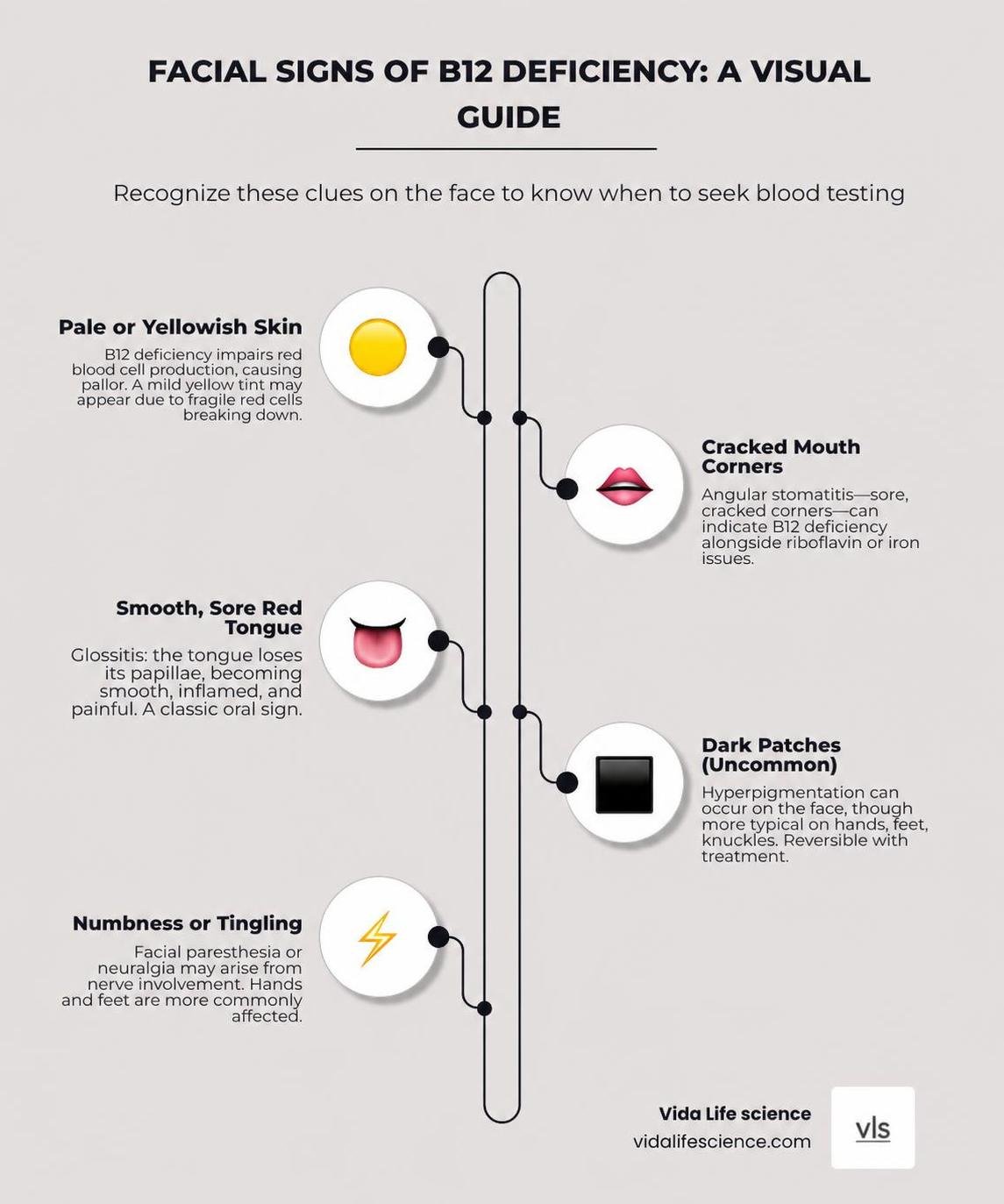
Possible facial signs of B12 deficiency include pale or slightly yellow skin, cracked mouth corners, and a smooth, sore, red tongue. Darker skin patches can occur, but facial patches are uncommon. Facial tingling or pain is also possible, though B12-related nerve symptoms more often affect the hands and feet.
These changes have many possible causes. If they persist, especially alongside fatigue, numbness, or trouble with balance, see a clinician for an assessment and blood tests. Your face alone cannot confirm a B12 deficiency.
At Vida Life Science, our experience is in nutritional supplements and nutrient absorption, not diagnosing skin conditions. We explain facial signs of b12 deficiency to help you recognize possible clues and know when to seek testing.
Facial signs of B12 deficiency: what to look for
Vitamin B12 (cobalamin) is an essential micronutrient responsible for red blood cell formation, neurological health, and DNA synthesis. When cellular levels plummet, the body often sends subtle distress signals long before severe clinical complications arise. Because the face is rich in active cell turnover, delicate mucosal linings, and complex nerve networks, it can reveal striking clues about your internal nutritional state.
Facial signs of B12 deficiency: pigmentation, pallor, and other skin changes
When B12 levels run critically low, red blood cell production falters. Without enough healthy, mature red blood cells to transport oxygen, the skin loses its vibrant undertone, presenting as marked facial pallor or an ashen complexion. As fragile, immature megaloblastic cells break down prematurely in the body, they release bilirubin, which can impart a faint yellowish, jaundiced tint to the skin and the whites of the eyes.
Dermatological research highlights that low B12 can also disrupt melanin synthesis. According to a comprehensive review of vitamin B12 in dermatology, up to 19% to 20% of deficient patients develop cutaneous hyperpigmentation. While this darkening typically appears on the hands, knuckles, and feet, it occasionally manifests across the face as diffuse, melasma-like patches around the cheekbones, temples, and forehead (Brescoll & Daveluy, 2015). In other cases, autoimmune mechanisms linked with B12 deficiency conditions may co-occur with vitiligo, creating localized depigmented white patches alongside hyperpigmented areas.
Facial signs of B12 deficiency across skin tones
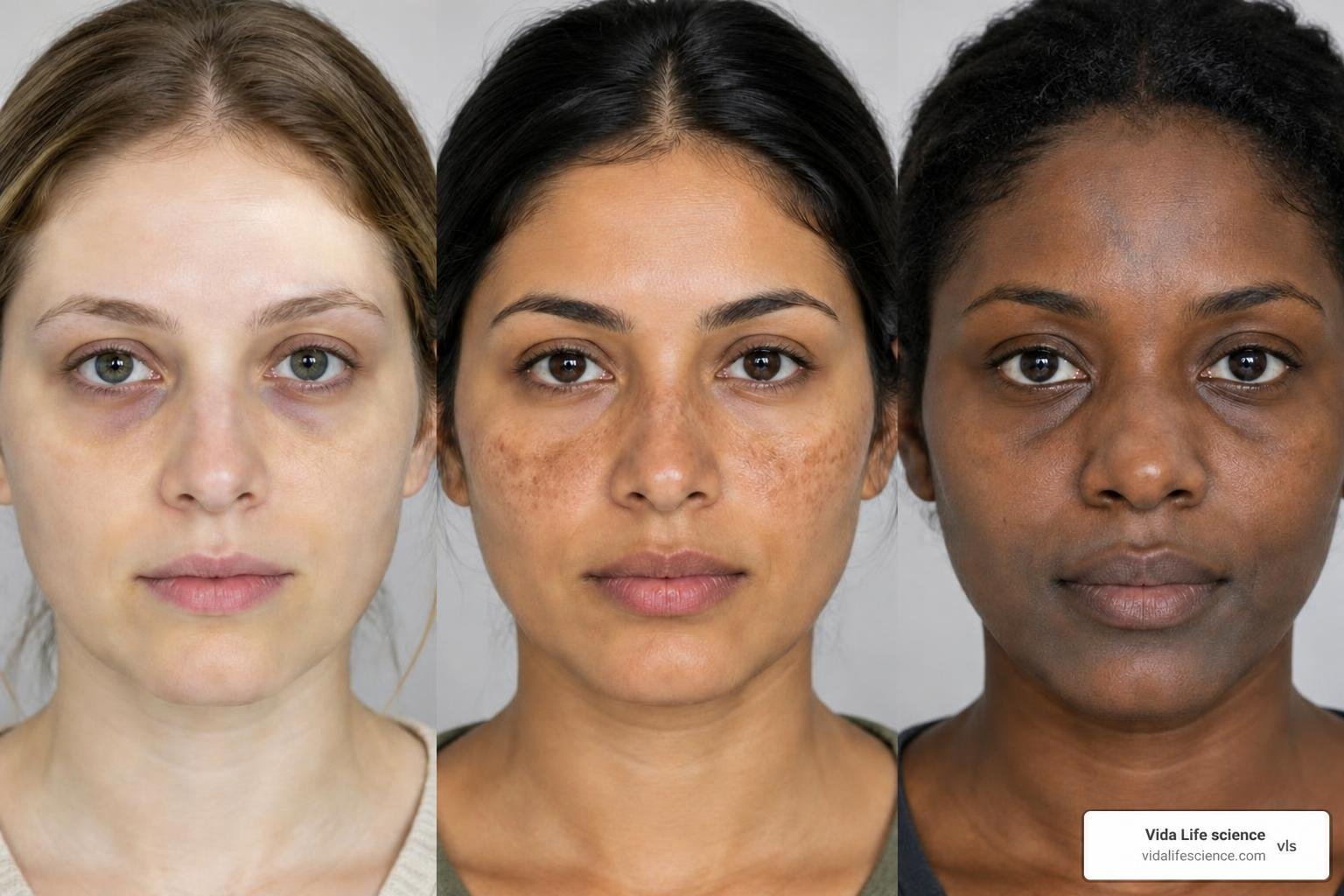
Skin tone plays a significant role in how visible these cutaneous changes are:
-
Fair Skin: Pallor is often the most prominent early sign, manifesting as a washed-out complexion, pronounced dark under-eye circles, and a faint lemon-yellow hue under natural light.
-
Medium to Olive Skin: Hyperpigmentation patterns and melasma-like patches tend to show up more noticeably, presenting as uneven brown or greyish patches across the bridge of the nose and cheeks.
-
Deep Skin Tones: Low B12 frequently presents as an ashen or greyish dullness, alongside heightened contrast in localized hyperpigmentation around the perioral area (the skin circling the mouth) and forehead.
Because ambient lighting and individual undertones vary, these signs should always be evaluated in context with systemic health rather than cosmetic appearance alone.
Mouth and tongue changes that can accompany facial signs
The oral cavity often displays the earliest and most unmistakable signs of low B12 (Jangda et al., 2022):
-
Angular Stomatitis (Cheilitis): Painful, dry, red cracks and fissures develop at the corners of the mouth. These sores can split during eating or speaking and often resist standard lip balms and moisturizers.
-
Atrophic Glossitis: The tongue becomes swollen, tender, bright red, and noticeably smooth or glossy. This occurs because the lingual papillae (the tiny texture-giving bumps on the tongue) waste away due to impaired cellular turnover.
-
Recurrent Aphthous Ulcers: Painful mouth ulcers can crop up along the inner cheeks, gums, and under the tongue, creating significant discomfort.
Facial numbness, tingling, or neuralgia
Vitamin B12 is indispensable for the synthesis and maintenance of myelin, the protective insulating sheath surrounding our nerve fibers. When myelin degrades, neurological symptoms emerge. While paresthesia (pins and needles, numbness, or burning) most commonly affects the peripheral nerves in the hands and feet, it can also manifest in the cranial nerves supplying the face.
In some clinical observations, patients with cobalamin deficiency develop isolated facial neuralgia—a burning, aching, or electric shock-like sensation along one side of the face. Unlike classical trigeminal neuralgia, which is often triggered by light touch or chewing, B12-related facial nerve pain is frequently accompanied by patchy sensory numbness and elevated functional deficiency markers like methylmalonic acid.
Why B12 deficiency may affect the face—and what else can look similar
How B12 deficiency may cause pigmentation changes
The biological pathway connecting B12 deficiency to skin darkening involves altered melanin regulation. A deficiency in cobalamin leads to decreased intracellular levels of reduced glutathione, which normally inhibits tyrosinase—the rate-limiting enzyme in melanin production. When tyrosinase activity rises unchecked, melanocytes synthesize excess pigment.
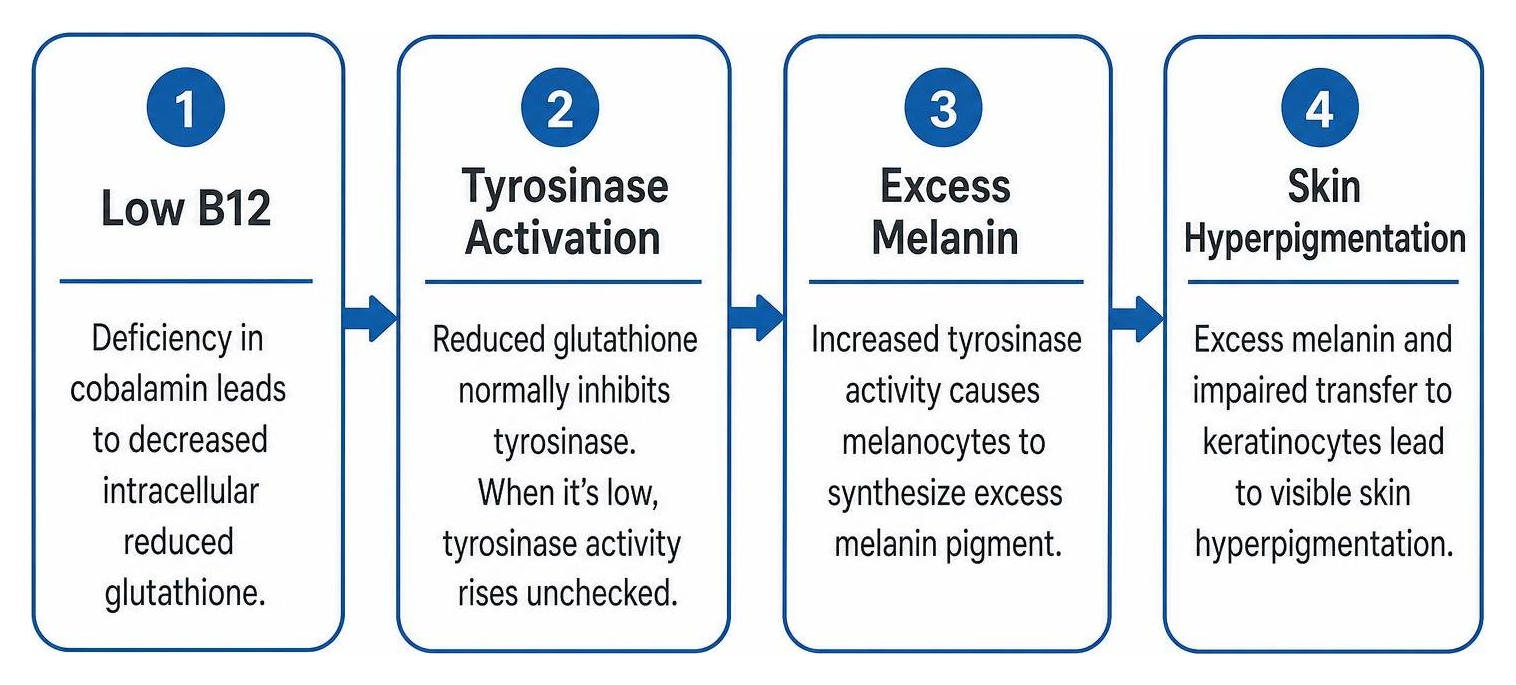
Furthermore, megaloblastic changes in the epidermis impair the orderly transfer of melanin granules from melanocytes to keratinocytes. While this hyperpigmentation predominantly targets friction points, knuckles, palmar creases, and flexural areas, clinical reports document that reversible facial hyperpigmentation can emerge as an initial, visible sign of pernicious anemia (Tayem et al., 2017).
Other conditions that can mimic facial signs
Many common dermatological and systemic issues present with features nearly identical to B12-related facial changes.
| Possible B12 Sign |
Clinical Appearance |
Common Lookalike Conditions |
Key Distinguishing Factors |
| Facial Pallor / Jaundice |
Washed-out, faint lemon-yellow skin tone |
Iron deficiency anemia, liver dysfunction, general fatigue |
Iron deficiency causes pale conjunctiva without jaundice; liver disease produces deeper golden jaundice. |
| Perioral Cracking |
Split, red, inflamed mouth corners (angular cheilitis) |
Candida fungal infection, riboflavin (B2) deficiency, cold sores |
Cold sores present as fluid-filled herpes blisters; fungal cheilitis shows white maceration. |
| Facial Darkening |
Diffuse, uneven brown or greyish patches |
Melasma, sun damage, Addison's disease, post-inflammatory marks |
Melasma is strictly UV/hormone-driven; Addison's disease causes generalized bronzing with low blood pressure. |
| Smooth, Sore Tongue |
Beefy red, glossy tongue (atrophic glossitis) |
Folate deficiency, geographic tongue, oral thrush |
Geographic tongue displays migratory bare patches; thrush exhibits wipeable white plaques. |
| Facial Tingling / Pain |
Burning, pins-and-needles, or localized ache |
Trigeminal neuralgia, Bell's palsy, shingles prodrome |
Shingles develops a dermatomal blistering rash; Bell's palsy causes unilateral motor weakness and facial drooping. |
Who has a higher risk of B12 deficiency
Vitamin B12 deficiency affects an estimated 3% to 5% of the general population and up to 5% to 20% of adults aged 65 and older. Because plants do not produce cobalamin, those consuming a strict vegan or vegetarian diet without fortified foods or supplements face significant dietary risk.
Beyond dietary intake, absorption is the most vulnerable link in the B12 chain. Groups at increased risk include:
- Individuals with autoimmune gastritis (pernicious anemia), where the immune system destroys parietal cells, eliminating intrinsic factor production.
- Patients with gastrointestinal disorders such as coeliac disease or Crohn's disease, which damage the absorptive surface of the terminal ileum.
- People who have undergone bariatric surgery, partial or total gastrectomy, or ileal resections.
- Long-term users of medications that reduce stomach acid (proton pump inhibitors, H2 blockers) or alter intestinal uptake (metformin).
- Individuals exposed to recreational nitrous oxide, which directly oxidizes and inactivates cobalamin.
When to seek care, what testing involves, and what treatment may change
When facial symptoms should prompt medical assessment
Skin or mucosal changes that fail to heal after a couple of weeks warrant a medical evaluation. You should schedule a prompt clinical assessment if you notice:
- Persistent, unexplained facial pallor or jaundiced skin.
- Painful mouth cracks and a swollen, burning tongue that interfere with eating.
- Unexplained hyperpigmentation across the cheeks, forehead, or hands.
- Any facial numbness, prickling sensations, or burning nerve discomfort.
Seek immediate medical attention if facial changes are accompanied by severe neurological warning signs, such as difficulty walking, unsteadiness, progressive limb weakness, profound brain fog, or vision disturbances. Left untreated, neurological deficits from B12 deficiency can risk becoming permanent.
Tests a clinician may consider
Diagnosing a B12 deficiency requires a structured laboratory approach. According to the NICE guidelines on B12 deficiency, practitioners should not rule out a deficiency simply because a patient does not present with anemia or elevated mean corpuscular volume (macrocytosis) (NBK603365).
Standard diagnostic evaluations include:
-
Serum Total B12: Measures circulating B12. Levels below 200 pg/mL typically indicate deficiency, while 200–300 pg/mL is borderline.
-
Active B12 (Holotranscobalamin): Measures the biologically available fraction of B12 delivering cobalamin to tissues.
-
Methylmalonic Acid (MMA) & Homocysteine: Functional metabolic markers. Elevated MMA provides sensitive confirmation of tissue-level B12 deficiency when serum levels are borderline.
-
Complete Blood Count (CBC) & Folate: Evaluates red blood cell size and rules out co-existing folate deficiency.
-
Anti-Intrinsic Factor Antibodies: Diagnostic marker used to confirm autoimmune gastritis.
Treatment and the timeline for improvement
Treatment must be tailored to the underlying cause. If deficiency is rooted in severe malabsorption or marked neurological involvement, clinicians typically initiate intramuscular hydroxocobalamin or cyanocobalamin injections to bypass the digestive tract entirely. For dietary deficiencies, high-dose oral supplementation is frequently prescribed.
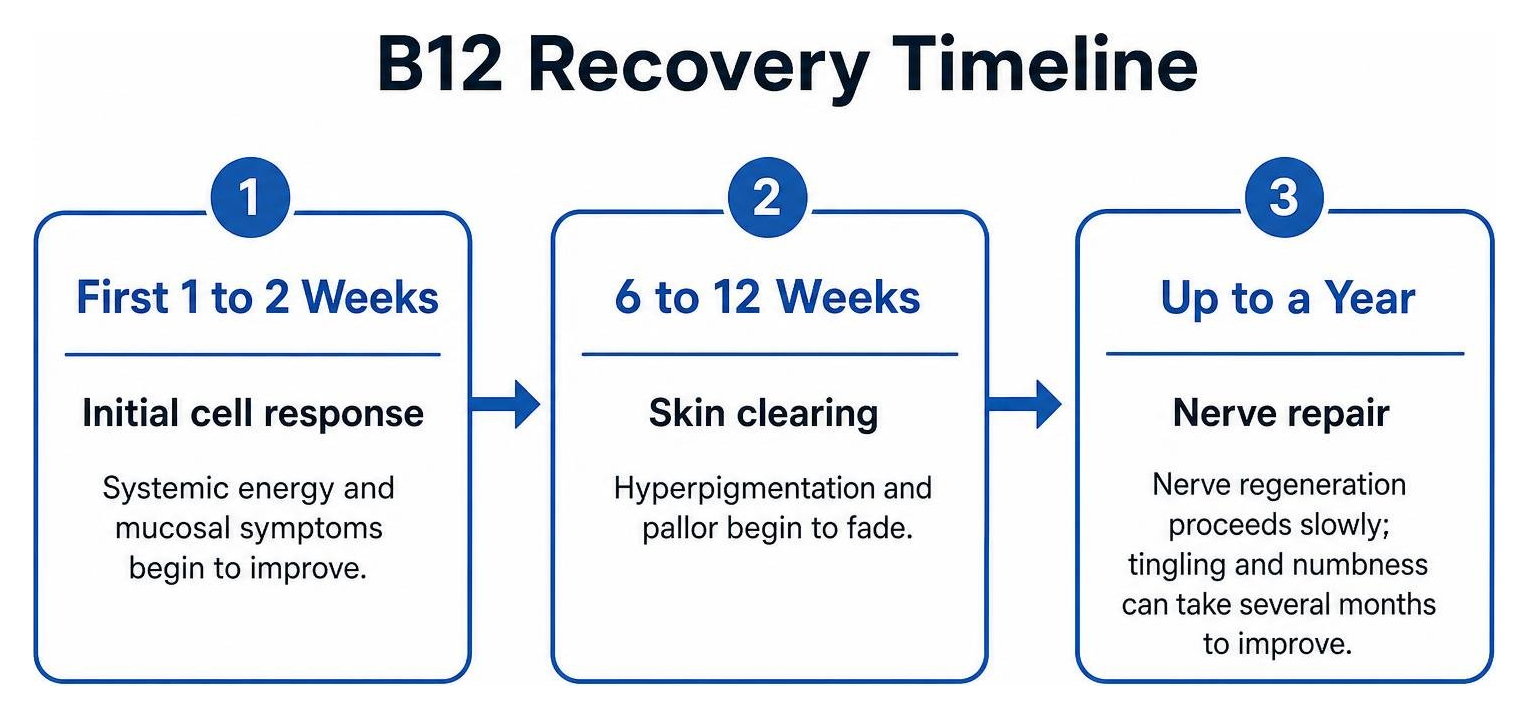
Understanding the timeline of recovery helps set realistic expectations:
-
First 1 to 2 Weeks: Systemic energy and mucosal symptoms (such as mouth ulcers and tongue soreness) often begin to improve rapidly as red blood cell production revives.
-
6 to 12 Weeks: Cutaneous hyperpigmentation and facial pallor typically begin to fade, with many documented cases achieving full resolution within three months of normalized serum levels.
-
3 to 12 Months: Nerve regeneration proceeds at a much slower pace. Paresthesia and facial tingling can take several months to improve, emphasizing the vital importance of early detection and sustained management.
To explore how these indicators fit into broader nutritional health, review our guide on the systemic signs of vitamin deficiencies.
Frequently asked questions about facial signs of B12 deficiency
Can B12 deficiency cause acne, red patches, or facial sensitivity?
While low B12 is well-documented to cause pallor, hyperpigmentation, and angular stomatitis, classic inflammatory acne and red facial patches are rarely a direct standalone sign of deficiency. In fact, excessively high supplemental doses of B12 can paradoxically trigger acneiform breakouts in some sensitive individuals by modulating facial skin bacteria. If you experience sudden redness, facial flushing, or acne, consulting a dermatologist to rule out rosacea, contact dermatitis, or barrier disruption is recommended.
Yes, the vast majority of dermatological and mucosal signs—including hyperpigmentation, atrophic glossitis, pallor, and angular cheilitis—are completely reversible with appropriate vitamin replacement. Skin pigmentation often begins clearing within a few weeks and typically resolves fully between 6 and 12 weeks. Neurological symptoms such as facial tingling or burning nerve pain also resolve, though nerve repair takes significantly longer.
Can facial signs alone confirm B12 deficiency?
No. Many skin conditions, from sun-induced melasma to fungal infections and iron deficiency, present with features that mimic low cobalamin. A definitive diagnosis requires a clinical evaluation and laboratory blood tests measuring serum B12, MMA, and complete blood counts. Never attempt to self-treat complex facial symptoms without consulting a healthcare provider.
Conclusion
The face provides an invaluable window into internal physiological health. From the striking pallor and lemon-yellow cast of immature red cell breakdown to perioral cracking, a glossy sore tongue, and melasma-like hyperpigmentation, recognizing these clues early can prevent long-term complications.
Because facial signs alone cannot confirm a deficiency, obtaining a professional medical evaluation and routine blood panel is the safest, most effective next step. At Vida Life Science, we remain committed to providing science-backed education on nutrient absorption and cellular vitality. If you suspect your nutritional foundation needs support, speak with your physician and explore our comprehensive guides to discover how targeted nutritional strategies can help you maintain lifelong wellness.
Scientific References
Brescoll J, Daveluy S. "A review of vitamin B12 in dermatology.." American journal of clinical dermatology, 2015. PMID 25559140.
Jangda A, Voloshyna D, Ramesh K, Bseiso A, Shaik TA, Al Barznji S, Usama M, Saleem F, Ghaffari MAZ. "Hyperpigmentation as a Primary Symptom of Vitamin B12 Deficiency: A Case Report.." Cureus, 2022. PMCID PMC9551622.
Tayem L, Litaiem N, Jones M, Zeglaoui F. "Reversible Facial Hyperpigmentation Associated With Vitamin B12 Deficiency.." Nutrition in clinical practice : official publication of the American Society for Parenteral and Enteral Nutrition, 2017. PMID 27702910.
NBK603365.


Hyperpigmentation, Pale Skin, and Facial Pain: What Low B12 Looks Like
Facial signs of B12 deficiency: the clues to notice
Possible facial signs of B12 deficiency include pale or slightly yellow skin, cracked mouth corners, and a smooth, sore, red tongue. Darker skin patches can occur, but facial patches are uncommon. Facial tingling or pain is also possible, though B12-related nerve symptoms more often affect the hands and feet.
These changes have many possible causes. If they persist, especially alongside fatigue, numbness, or trouble with balance, see a clinician for an assessment and blood tests. Your face alone cannot confirm a B12 deficiency.
At Vida Life Science, our experience is in nutritional supplements and nutrient absorption, not diagnosing skin conditions. We explain facial signs of b12 deficiency to help you recognize possible clues and know when to seek testing.
Facial signs of B12 deficiency: what to look for
Vitamin B12 (cobalamin) is an essential micronutrient responsible for red blood cell formation, neurological health, and DNA synthesis. When cellular levels plummet, the body often sends subtle distress signals long before severe clinical complications arise. Because the face is rich in active cell turnover, delicate mucosal linings, and complex nerve networks, it can reveal striking clues about your internal nutritional state.
Facial signs of B12 deficiency: pigmentation, pallor, and other skin changes
When B12 levels run critically low, red blood cell production falters. Without enough healthy, mature red blood cells to transport oxygen, the skin loses its vibrant undertone, presenting as marked facial pallor or an ashen complexion. As fragile, immature megaloblastic cells break down prematurely in the body, they release bilirubin, which can impart a faint yellowish, jaundiced tint to the skin and the whites of the eyes.
Dermatological research highlights that low B12 can also disrupt melanin synthesis. According to a comprehensive review of vitamin B12 in dermatology, up to 19% to 20% of deficient patients develop cutaneous hyperpigmentation. While this darkening typically appears on the hands, knuckles, and feet, it occasionally manifests across the face as diffuse, melasma-like patches around the cheekbones, temples, and forehead (Brescoll & Daveluy, 2015). In other cases, autoimmune mechanisms linked with B12 deficiency conditions may co-occur with vitiligo, creating localized depigmented white patches alongside hyperpigmented areas.
Facial signs of B12 deficiency across skin tones
Skin tone plays a significant role in how visible these cutaneous changes are:
Because ambient lighting and individual undertones vary, these signs should always be evaluated in context with systemic health rather than cosmetic appearance alone.
Mouth and tongue changes that can accompany facial signs
The oral cavity often displays the earliest and most unmistakable signs of low B12 (Jangda et al., 2022):
Facial numbness, tingling, or neuralgia
Vitamin B12 is indispensable for the synthesis and maintenance of myelin, the protective insulating sheath surrounding our nerve fibers. When myelin degrades, neurological symptoms emerge. While paresthesia (pins and needles, numbness, or burning) most commonly affects the peripheral nerves in the hands and feet, it can also manifest in the cranial nerves supplying the face.
In some clinical observations, patients with cobalamin deficiency develop isolated facial neuralgia—a burning, aching, or electric shock-like sensation along one side of the face. Unlike classical trigeminal neuralgia, which is often triggered by light touch or chewing, B12-related facial nerve pain is frequently accompanied by patchy sensory numbness and elevated functional deficiency markers like methylmalonic acid.
Why B12 deficiency may affect the face—and what else can look similar
How B12 deficiency may cause pigmentation changes
The biological pathway connecting B12 deficiency to skin darkening involves altered melanin regulation. A deficiency in cobalamin leads to decreased intracellular levels of reduced glutathione, which normally inhibits tyrosinase—the rate-limiting enzyme in melanin production. When tyrosinase activity rises unchecked, melanocytes synthesize excess pigment.
Furthermore, megaloblastic changes in the epidermis impair the orderly transfer of melanin granules from melanocytes to keratinocytes. While this hyperpigmentation predominantly targets friction points, knuckles, palmar creases, and flexural areas, clinical reports document that reversible facial hyperpigmentation can emerge as an initial, visible sign of pernicious anemia (Tayem et al., 2017).
Other conditions that can mimic facial signs
Many common dermatological and systemic issues present with features nearly identical to B12-related facial changes.
Who has a higher risk of B12 deficiency
Vitamin B12 deficiency affects an estimated 3% to 5% of the general population and up to 5% to 20% of adults aged 65 and older. Because plants do not produce cobalamin, those consuming a strict vegan or vegetarian diet without fortified foods or supplements face significant dietary risk.
Beyond dietary intake, absorption is the most vulnerable link in the B12 chain. Groups at increased risk include:
When to seek care, what testing involves, and what treatment may change
When facial symptoms should prompt medical assessment
Skin or mucosal changes that fail to heal after a couple of weeks warrant a medical evaluation. You should schedule a prompt clinical assessment if you notice:
Seek immediate medical attention if facial changes are accompanied by severe neurological warning signs, such as difficulty walking, unsteadiness, progressive limb weakness, profound brain fog, or vision disturbances. Left untreated, neurological deficits from B12 deficiency can risk becoming permanent.
Tests a clinician may consider
Diagnosing a B12 deficiency requires a structured laboratory approach. According to the NICE guidelines on B12 deficiency, practitioners should not rule out a deficiency simply because a patient does not present with anemia or elevated mean corpuscular volume (macrocytosis) (NBK603365).
Standard diagnostic evaluations include:
Treatment and the timeline for improvement
Treatment must be tailored to the underlying cause. If deficiency is rooted in severe malabsorption or marked neurological involvement, clinicians typically initiate intramuscular hydroxocobalamin or cyanocobalamin injections to bypass the digestive tract entirely. For dietary deficiencies, high-dose oral supplementation is frequently prescribed.
Understanding the timeline of recovery helps set realistic expectations:
To explore how these indicators fit into broader nutritional health, review our guide on the systemic signs of vitamin deficiencies.
Frequently asked questions about facial signs of B12 deficiency
Can B12 deficiency cause acne, red patches, or facial sensitivity?
While low B12 is well-documented to cause pallor, hyperpigmentation, and angular stomatitis, classic inflammatory acne and red facial patches are rarely a direct standalone sign of deficiency. In fact, excessively high supplemental doses of B12 can paradoxically trigger acneiform breakouts in some sensitive individuals by modulating facial skin bacteria. If you experience sudden redness, facial flushing, or acne, consulting a dermatologist to rule out rosacea, contact dermatitis, or barrier disruption is recommended.
Are B12-related facial changes reversible, and how quickly might they improve?
Yes, the vast majority of dermatological and mucosal signs—including hyperpigmentation, atrophic glossitis, pallor, and angular cheilitis—are completely reversible with appropriate vitamin replacement. Skin pigmentation often begins clearing within a few weeks and typically resolves fully between 6 and 12 weeks. Neurological symptoms such as facial tingling or burning nerve pain also resolve, though nerve repair takes significantly longer.
Can facial signs alone confirm B12 deficiency?
No. Many skin conditions, from sun-induced melasma to fungal infections and iron deficiency, present with features that mimic low cobalamin. A definitive diagnosis requires a clinical evaluation and laboratory blood tests measuring serum B12, MMA, and complete blood counts. Never attempt to self-treat complex facial symptoms without consulting a healthcare provider.
Conclusion
The face provides an invaluable window into internal physiological health. From the striking pallor and lemon-yellow cast of immature red cell breakdown to perioral cracking, a glossy sore tongue, and melasma-like hyperpigmentation, recognizing these clues early can prevent long-term complications.
Because facial signs alone cannot confirm a deficiency, obtaining a professional medical evaluation and routine blood panel is the safest, most effective next step. At Vida Life Science, we remain committed to providing science-backed education on nutrient absorption and cellular vitality. If you suspect your nutritional foundation needs support, speak with your physician and explore our comprehensive guides to discover how targeted nutritional strategies can help you maintain lifelong wellness.
Scientific References
Brescoll J, Daveluy S. "A review of vitamin B12 in dermatology.." American journal of clinical dermatology, 2015. PMID 25559140. Jangda A, Voloshyna D, Ramesh K, Bseiso A, Shaik TA, Al Barznji S, Usama M, Saleem F, Ghaffari MAZ. "Hyperpigmentation as a Primary Symptom of Vitamin B12 Deficiency: A Case Report.." Cureus, 2022. PMCID PMC9551622. Tayem L, Litaiem N, Jones M, Zeglaoui F. "Reversible Facial Hyperpigmentation Associated With Vitamin B12 Deficiency.." Nutrition in clinical practice : official publication of the American Society for Parenteral and Enteral Nutrition, 2017. PMID 27702910. NBK603365.