Turmeric vs. Curcumin: Why Focus on Curcumin Supplements?
Curcumin supplements are concentrated extracts of curcumin — the active compound in turmeric — designed to deliver therapeutic doses that food alone simply cannot provide.
Quick answer: What are curcumin supplements good for?
-
Joint pain and inflammation — shown to work as well as ibuprofen in some clinical trials
-
Blood sugar control — linked to lower fasting glucose, HbA1c, and insulin resistance
-
Antioxidant defense — neutralizes free radicals that damage cells
-
Heart and brain health — supports healthy circulation and cognitive function
-
Immune support — helps regulate inflammatory pathways at the cellular level
The catch: Standard curcumin is notoriously hard to absorb. Without the right delivery method, only about 2–3% may actually reach your bloodstream.
Turmeric is one of the most researched plants on earth. It has been used in Ayurvedic medicine for thousands of years. But modern science has revealed something important: the spice itself — the golden powder you shake into a curry — contains very little of the compound that actually does the work.
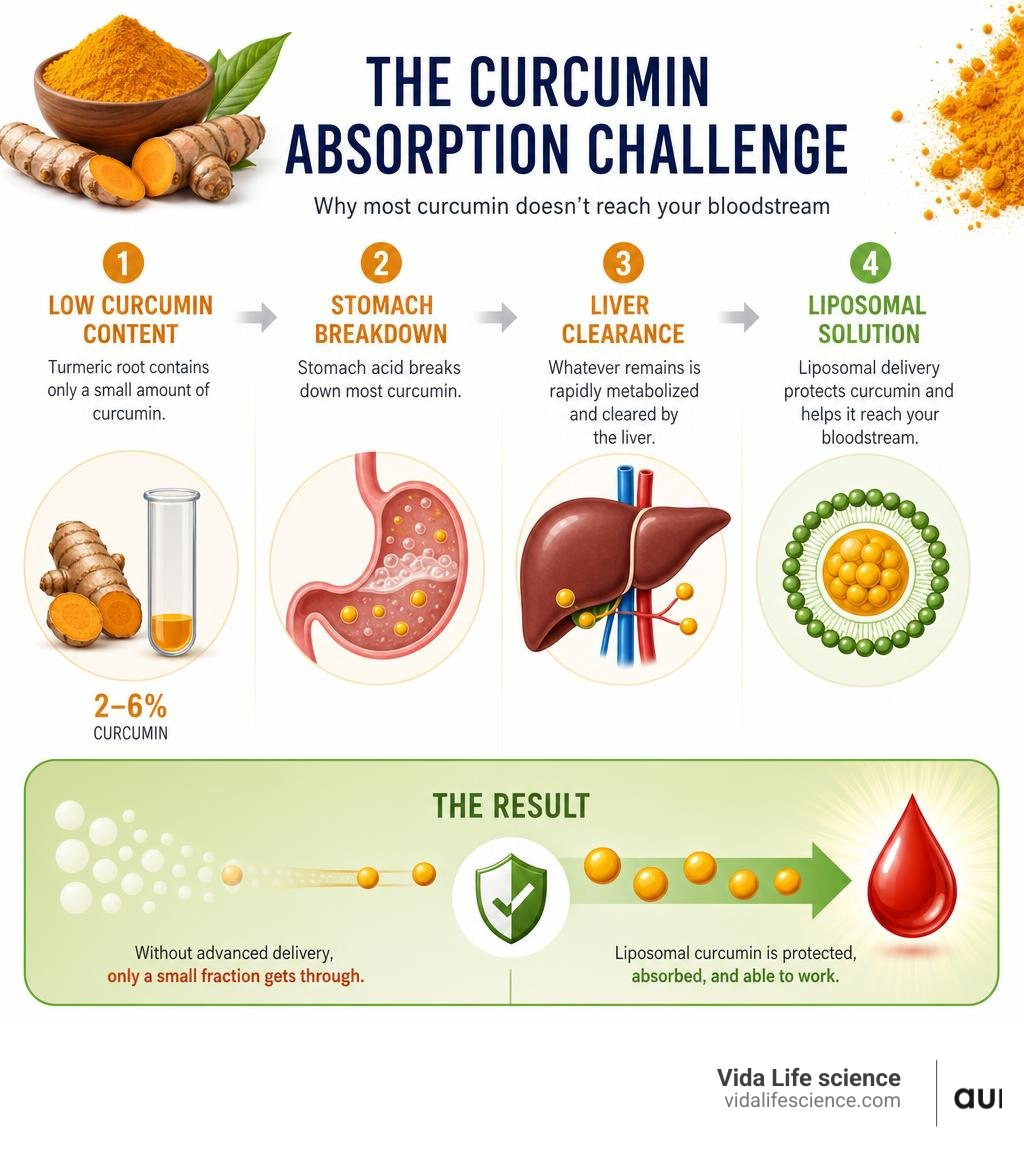
Turmeric root is only about 2–6% curcumin by weight. And even that small amount faces a brutal gauntlet: stomach acid, rapid metabolism, and liver clearance that strips most of it away before it can do anything useful.
That's the core problem curcumin supplements are designed to solve. And not all of them solve it equally well.
This guide breaks down the science clearly — what curcumin actually does, what the research says, how much to take, and what separates a supplement that works from one that doesn't.
At Vida Lifescience, we specialize in advanced liposomal delivery technology — the same science that pharmaceutical companies use to get nutrients past the digestive barrier — and we've spent years evaluating curcumin supplements through that lens. We'll share exactly what we've learned so you can make a confident, informed choice.
If you walk down the health food aisle in USA or Canada, you will see bottles labeled "Turmeric," others labeled "Curcumin," and some that say "Turmeric Curcumin." It is easy to get confused.
To understand why high-quality curcumin supplements are the gold standard for therapeutic use, we have to look at the botanical relationship between the whole root and its active components. Turmeric (Curcuma longa) is a rhizome belonging to the ginger family. It is the whole spice, boasting hundreds of naturally occurring compounds. Curcumin, on the other hand, is the primary active polyphenol extracted directly from that root. It is the compound responsible for turmeric’s vibrant golden hue and, more importantly, almost all of its documented health benefits.
When you purchase standard Turmeric Supplements, you are often getting ground-up root powder. While wonderful for culinary depth, this raw powder does not contain enough active ingredients to shift the needle on systemic inflammation. Standardized curcumin supplements isolate and concentrate these active molecules so your body receives a reliable, therapeutic dose.
The Low Curcumin Content in Whole Turmeric
The primary reason culinary turmeric fails to deliver therapeutic results is simple math. Raw turmeric powder contains a remarkably low concentration of actual curcumin, averaging just 3.14% by weight (ranging from a meager 0.3% to about 8.6% depending on soil quality and agricultural practices).
To put this in perspective, if you wanted to consume a clinically backed dose of 1,000 mg of active curcuminoids from raw turmeric, you would have to swallow roughly 30 to 33 grams of raw spice every single day. That is about 5 to 6 tablespoons of raw, earthy powder. Doing so would not only ruin your tastebuds but would also likely cause severe digestive distress. Concentrated extracts bypass this issue entirely.
Why Culinary Turmeric is Insufficient for Chronic Inflammation
Beyond the low concentration, cooking with turmeric presents biological challenges. Curcumin is highly hydrophobic, meaning it does not dissolve in water. When you consume it in food, your digestive tract struggles to break it down.
Furthermore, the heat, drying, and processing involved in cooking can degrade curcumin. While heating fresh turmeric rhizomes at 80 °C for 30 minutes can preserve curcuminoids by inactivating polyphenol oxidase (the enzyme that causes browning), traditional sun-drying and prolonged boiling significantly reduce its potency.
Once consumed, any free curcumin that manages to survive the cooking process is rapidly metabolized by your liver and digestive tract through a process called glucuronidation. Within minutes, it is converted into inactive metabolites and excreted. To combat chronic, systemic inflammation, the active compound must reach your bloodstream intact. This is why targeted supplementation is essential.
Scientifically Supported Health Benefits of Curcumin

Modern clinical research has vindicated what ancient herbalists knew intuitively. As of July 2026, thousands of peer-reviewed studies have explored how curcumin interacts with human cellular pathways. Curcumin behaves as a natural systemic modulator. Instead of turning a single biological switch "on" or "off" the way synthetic drugs do, it gently balances multiple inflammatory and oxidative pathways at once.
Managing Arthritis and Joint Discomfort with Curcumin Supplements
For millions of Canadians and Americans living with joint pain, finding safe, long-term relief is a top priority. Curcumin has emerged as a premier natural option for joint and inflammation support.
At a molecular level, curcumin works by blocking inflammatory cytokines and enzymes like COX-2 (cyclooxygenase-2). This is the exact same biological target as common over-the-counter pain relievers and prescription anti-inflammatories, but without the associated gastrointestinal or cardiovascular risks.
The clinical evidence is compelling:
-
Osteoarthritis (OA): A comprehensive 2021 review of 15 randomized controlled trials found that curcumin relieved OA pain and joint stiffness as well as, or even better than, nonsteroidal anti-inflammatory drugs (NSAIDs) like ibuprofen and celecoxib.
-
Rheumatoid Arthritis (RA): In a small, double-blind randomized controlled trial, patients taking twice-daily doses of either 250 mg or 500 mg of curcumin experienced significant reductions in RA disease activity and objective inflammatory markers compared to a placebo.
Whether you are looking for Curcumin Supplements on Amazon Canada or shopping locally, targeting standardized extracts is key to achieving these joint-comfort milestones.
Blood Sugar Management and Diabetes Prevention
One of the most extraordinary discoveries in modern curcumin research is its profound impact on metabolic health. Clinical trials have shown that curcumin supplementation can significantly reduce Fasting Blood Glucose (FBG), HbA1c (your three-month average blood sugar), and insulin resistance (measured via HOMA-IR).
The most famous demonstration of this occurred in a landmark 9-month clinical study evaluating prediabetic individuals. Over the course of the study, 16.4% of the participants in the placebo group progressed to developing full Type 2 diabetes mellitus. In stark contrast, 0% of the participants in the curcumin-treated group developed diabetes. The active compounds successfully protected the pancreatic beta-cells, which produce insulin, from oxidative damage and chronic low-grade inflammation.
Cardiovascular and Cognitive Support
Curcumin's systemic benefits extend directly to your blood vessels and brain. It supports endothelial function — the inner lining of your blood vessels — which helps regulate blood pressure and healthy circulation. By defending against systemic oxidative stress, it prevents LDL cholesterol from oxidizing and damaging arterial walls.
To learn more about how to pair these mechanisms for ultimate cardiovascular defense, read our guide on Supporting Heart Health with CoQ10 and Curcumin Supplements.
Cognitively, curcumin is one of the few natural compounds capable of crossing the blood-brain barrier under the right conditions. Once in the brain, its antioxidant properties help neutralize free radicals, support brain-derived neurotrophic factor (BDNF), and clear cellular debris that can accumulate over time.
Overcoming the Bioavailability Barrier: How to Maximize Absorption
We must address the elephant in the room: bioavailability. If you take a standard, unformulated curcumin capsule, only about 2% to 3% of the active ingredient actually makes it into your bloodstream. The rest is simply wasted.
Because curcumin is hydrophobic (fat-soluble) and highly unstable in the digestive tract, your body views it as a foreign substance to be filtered out as quickly as possible. To get the health benefits you are paying for, you must use a supplement designed to bypass this biological barrier.
Traditional Absorption Enhancers: Piperine and Dietary Fats
The supplement industry has traditionally relied on two methods to improve absorption:
-
Dietary Fats: Because curcumin is fat-soluble, taking it alongside healthy fats (like avocado, olive oil, or yogurt) helps the body package it into micelles for absorption.
-
Piperine (Black Pepper Extract): The most common commercial solution is pairing curcumin with piperine, the active compound in black pepper. Patented black pepper extracts have been clinically proven to increase curcumin's bioavailability by up to 2000%.
Piperine works by temporarily disabling the liver enzymes responsible for glucuronidation, allowing the active curcumin to slip into the bloodstream. While highly effective, this method has a downside: disabling those liver enzymes can also alter how your body processes other daily medications, potentially leading to unwanted drug interactions. Additionally, high doses of black pepper extract can cause stomach lining irritation for sensitive individuals.
Advanced Delivery Systems: The Superiority of Liposomal Encapsulation
To solve the absorption problem without relying on liver-blocking additives, nutritional science developed liposomal encapsulation.
A liposome is a microscopic, double-layered bubble made from phospholipids — the exact same material that makes up your own cellular membranes. By wrapping the hydrophobic curcumin molecule inside this protective lipid bubble, we shield it from the harsh, acidic environment of the stomach.
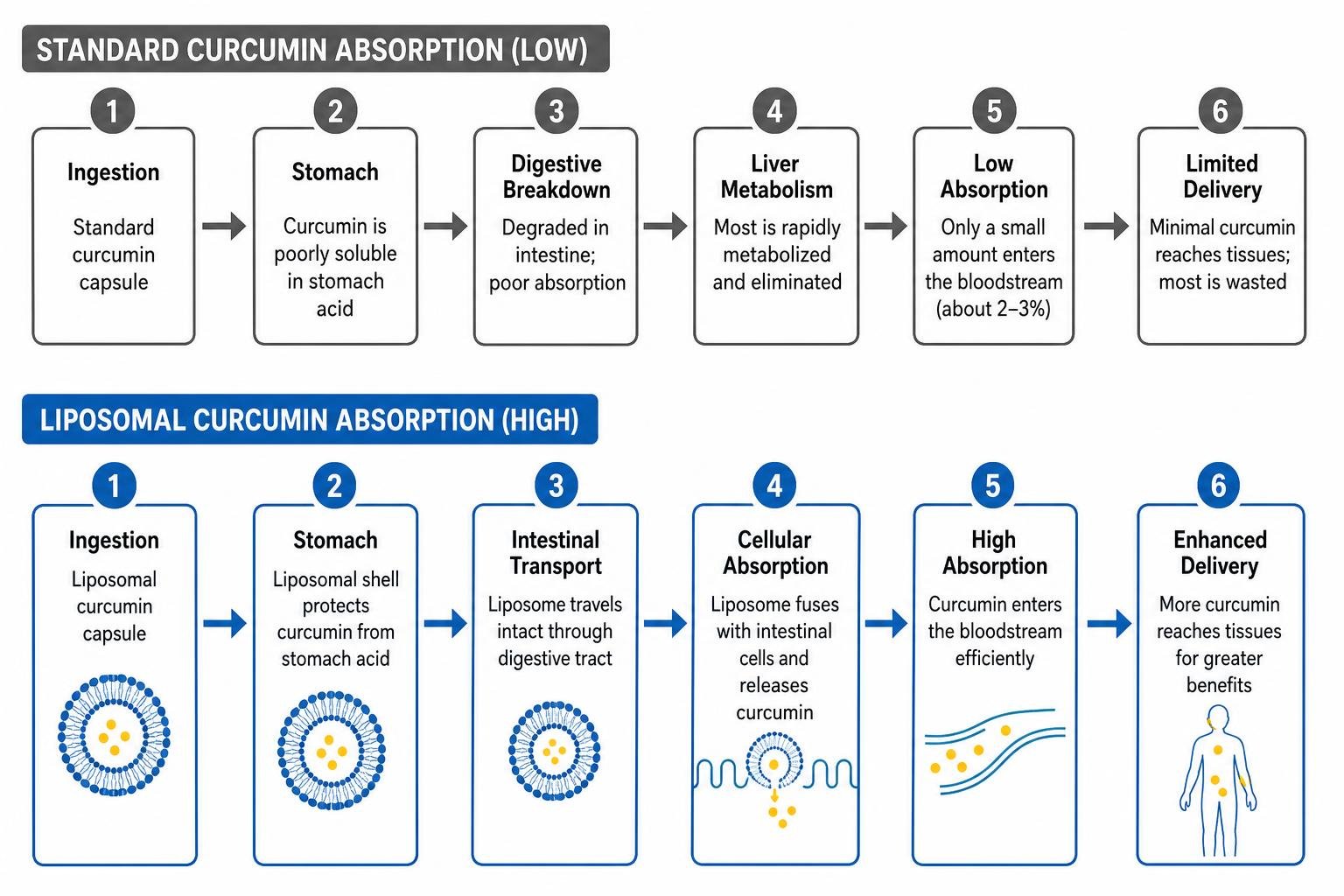
Instead of relying on unstable digestive pathways, liposomal curcumin mimics your body's natural cellular structure. This allows it to glide smoothly through the digestive tract and fuse directly with the cells lining your small intestine, releasing active curcumin directly into the bloodstream.
Clinical evaluations show that liposomal curcumin can be over 200 times more bioavailable than standard oral curcumin powder. It stays in your system longer, delivers therapeutic levels directly to your tissues, and is incredibly gentle on the stomach. At Vida Lifescience, we proudly distribute Aurora Nutrascience's True Liposomal supplements across USA and Canada because they utilize this exact, highly validated encapsulation process to deliver maximum clinical efficacy.
| Formulation Type |
Bioavailability Increase |
Mechanism of Action |
Potential Drawbacks |
| Standard Raw Powder |
Baseline (2-3% absorption) |
Simple passive diffusion |
Extremely low absorption, rapidly metabolized by the liver |
| Curcumin + Piperine |
Up to 2,000% (20x) |
Temporarily blocks liver metabolism enzymes |
Can interfere with prescription medications; may irritate sensitive stomachs |
| Micellar / Liquid-Filled |
Equivalent to ~12 standard caps |
Encapsulated in water-loving spheres |
Often relies on synthetic emulsifiers like polysorbate 80 |
| Liposomal Encapsulation |
Over 20,000% (200x+) |
Fuses directly with cell membranes |
Requires specialized, high-quality manufacturing |
Recommended Dosage, Safety, and Potential Risks
Finding the right dose depends heavily on the specific formulation you choose and the health goals you are targeting. Because advanced delivery systems absorb so much more efficiently, they require much lower physical doses than raw powders to achieve the same therapeutic effect.
Finding the Right Dosage of Curcumin Supplements for Your Needs
In clinical trials using standard, unformulated curcumin, researchers often have to use massive doses — ranging from 1,000 mg to 1,500 mg daily — to see results for conditions like osteoarthritis.
However, if you are using a highly bioavailable or liposomal formulation, the required physical dose drops dramatically. For general wellness, antioxidant defense, and mild joint support, a daily dose of 200 mg to 500 mg of a highly bioavailable form is highly effective. For active inflammatory conditions, clinical studies show that twice-daily doses of 500 mg of standardized, high-absorption curcumin are the sweet spot.
Always check your product's label. If you are taking a clean, liquid liposomal formulation from Aurora Nutrascience, follow the recommended serving size on the bottle, typically taken shortly after breakfast to align with your body's natural metabolic rhythm.
Potential Side Effects and Drug Interactions
Curcumin is exceptionally safe and well-tolerated, even at doses up to 8,000 mg per day in clinical trials. However, because of its powerful biological activity, it can interact with certain medications:
-
Blood Thinners (Anticoagulants): Curcumin has mild natural antiplatelet (blood-thinning) properties. If you are taking prescription blood thinners like warfarin, aspirin, or daily NSAIDs, consult your physician first, as curcumin can compound these effects.
-
Chemotherapy Agents: Curcumin can interact with certain chemotherapy drugs, such as doxorubicin or cyclophosphamide. Always discuss supplement use with your oncologist.
-
Immunosuppressants: Curcumin can increase the absorption and side effects of certain immunosuppressive medications, such as tacrolimus (Prograf).
-
Common Pain Relievers: Extremely high doses of unformulated curcumin can sometimes reduce the therapeutic effectiveness of everyday pain relievers like acetaminophen or ibuprofen.
Because turmeric is a root crop, it easily absorbs elements from the soil. Unfortunately, the global turmeric supply has faced quality control challenges. In recent years, 13 commercial brands of turmeric have been recalled due to lead contamination. Unscrupulous suppliers sometimes add toxic lead chromate to low-grade turmeric powder to give it a brighter yellow color.
Furthermore, turmeric is naturally high in soluble oxalates. If you have a personal or family history of calcium-oxalate kidney stones, consuming large amounts of raw turmeric powder can significantly increase your urinary oxalate excretion, raising your risk of developing stones. Standardized, purified curcumin extracts contain virtually no oxalates, making them a much safer choice for those prone to kidney stones.
How to Choose a High-Quality Curcumin Supplement
With so many products available on the market, you must know how to read supplement labels to ensure you are getting a clean, effective product.
Standardized Curcuminoids and Third-Party Testing
When shopping for a curcumin supplement, look for the word "standardized." A high-quality extract should be standardized to 95% total curcuminoids. This ensures that the capsule contains concentrated active ingredients rather than just raw, ground-up root. This 95% complex should specifically include all three primary bioactive curcuminoids:
- Curcumin
- Demethoxycurcumin
- Bisdemethoxycurcumin
Additionally, make sure the brand utilizes third-party testing (by independent labs like ConsumerLab, NSF, or USP) to verify that the product is completely free of heavy metals, lead, solvents, and pesticides. At Vida Lifescience, all our distributed Aurora Nutrascience products are manufactured in NSF-certified, cGMP facilities to guarantee absolute purity.
Avoiding Harmful Additives and Fillers
Many cheap curcumin capsules contain unnecessary binders, flow agents, and potential allergens. Avoid products that list magnesium stearate, silicon dioxide, or artificial colors on the ingredient panel. If you are choosing a liquid or liposomal formulation, check to make sure it is gluten-free, non-GMO, and organic.
Some liquid formulations on the market use synthetic emulsifiers like polysorbate 80 to keep the curcumin suspended in water. Opt instead for clean, natural lipid carriers like organic sunflower lecithin, which naturally creates stable liposomes without introducing harsh chemicals to your digestive tract.
Frequently Asked Questions about Curcumin
Can curcumin supplements help with weight loss?
While curcumin is not a magic weight-loss pill, it is an excellent tool for supporting metabolic health. Chronic, low-grade inflammation in adipose (fat) tissue is a primary driver of metabolic dysfunction and insulin resistance. By reducing this systemic inflammation, curcumin can help improve insulin sensitivity and support your body’s natural metabolic pathways, making healthy weight management easier when paired with a balanced diet and exercise.
Is it safe to take curcumin supplements every day?
Yes, daily consumption of curcumin is widely recognized as safe. Clinical studies spanning several months to years have shown no toxic accumulation or serious adverse effects from daily use. If you are taking it daily for general wellness, a highly bioavailable liposomal form is ideal because it delivers consistent, therapeutic benefits without putting a heavy metabolic load on your digestive system.
Can I take curcumin if I have a history of kidney stones?
If you are prone to calcium-oxalate kidney stones, you should avoid raw turmeric powder because of its high oxalate content. However, standardized curcumin extracts are highly purified and contain negligible amounts of oxalates. Choosing a purified, highly absorbable liposomal curcumin supplement allows you to enjoy the anti-inflammatory benefits without worrying about kidney stone formation. As always, keep your hydration levels high and consult your urologist or primary care physician.
Conclusion
Curcumin is undoubtedly one of nature's most potent anti-inflammatory and antioxidant compounds. From protecting your joints and soothing sore muscles to supporting healthy blood sugar levels and cognitive clarity, its systemic benefits are backed by robust, modern science.
However, the key to unlocking these benefits lies entirely in absorption. Standard turmeric powders and low-grade capsules simply cannot bypass your body's digestive barriers efficiently.
By utilizing advanced liposomal encapsulation, we can protect these sensitive molecules and deliver them directly to your cells where they can go to work. If you are ready to experience the difference that true, science-backed absorption can make in your daily wellness routine, explore our complete line of premium, Canadian-manufactured liposomal supplements at Vida Lifescience.
For more tips on optimizing your cellular health, read our guide on Supporting Heart Health with CoQ10 and Curcumin Supplements and take your first step toward a healthier, more vibrant life today.


An Essential Guide to Curcumin Supplement Benefits
Turmeric vs. Curcumin: Why Focus on Curcumin Supplements?
Curcumin supplements are concentrated extracts of curcumin — the active compound in turmeric — designed to deliver therapeutic doses that food alone simply cannot provide.
Quick answer: What are curcumin supplements good for?
Turmeric is one of the most researched plants on earth. It has been used in Ayurvedic medicine for thousands of years. But modern science has revealed something important: the spice itself — the golden powder you shake into a curry — contains very little of the compound that actually does the work.
Turmeric root is only about 2–6% curcumin by weight. And even that small amount faces a brutal gauntlet: stomach acid, rapid metabolism, and liver clearance that strips most of it away before it can do anything useful.
That's the core problem curcumin supplements are designed to solve. And not all of them solve it equally well.
This guide breaks down the science clearly — what curcumin actually does, what the research says, how much to take, and what separates a supplement that works from one that doesn't.
At Vida Lifescience, we specialize in advanced liposomal delivery technology — the same science that pharmaceutical companies use to get nutrients past the digestive barrier — and we've spent years evaluating curcumin supplements through that lens. We'll share exactly what we've learned so you can make a confident, informed choice.
If you walk down the health food aisle in USA or Canada, you will see bottles labeled "Turmeric," others labeled "Curcumin," and some that say "Turmeric Curcumin." It is easy to get confused.
To understand why high-quality curcumin supplements are the gold standard for therapeutic use, we have to look at the botanical relationship between the whole root and its active components. Turmeric (Curcuma longa) is a rhizome belonging to the ginger family. It is the whole spice, boasting hundreds of naturally occurring compounds. Curcumin, on the other hand, is the primary active polyphenol extracted directly from that root. It is the compound responsible for turmeric’s vibrant golden hue and, more importantly, almost all of its documented health benefits.
When you purchase standard Turmeric Supplements, you are often getting ground-up root powder. While wonderful for culinary depth, this raw powder does not contain enough active ingredients to shift the needle on systemic inflammation. Standardized curcumin supplements isolate and concentrate these active molecules so your body receives a reliable, therapeutic dose.
The Low Curcumin Content in Whole Turmeric
The primary reason culinary turmeric fails to deliver therapeutic results is simple math. Raw turmeric powder contains a remarkably low concentration of actual curcumin, averaging just 3.14% by weight (ranging from a meager 0.3% to about 8.6% depending on soil quality and agricultural practices).
To put this in perspective, if you wanted to consume a clinically backed dose of 1,000 mg of active curcuminoids from raw turmeric, you would have to swallow roughly 30 to 33 grams of raw spice every single day. That is about 5 to 6 tablespoons of raw, earthy powder. Doing so would not only ruin your tastebuds but would also likely cause severe digestive distress. Concentrated extracts bypass this issue entirely.
Why Culinary Turmeric is Insufficient for Chronic Inflammation
Beyond the low concentration, cooking with turmeric presents biological challenges. Curcumin is highly hydrophobic, meaning it does not dissolve in water. When you consume it in food, your digestive tract struggles to break it down.
Furthermore, the heat, drying, and processing involved in cooking can degrade curcumin. While heating fresh turmeric rhizomes at 80 °C for 30 minutes can preserve curcuminoids by inactivating polyphenol oxidase (the enzyme that causes browning), traditional sun-drying and prolonged boiling significantly reduce its potency.
Once consumed, any free curcumin that manages to survive the cooking process is rapidly metabolized by your liver and digestive tract through a process called glucuronidation. Within minutes, it is converted into inactive metabolites and excreted. To combat chronic, systemic inflammation, the active compound must reach your bloodstream intact. This is why targeted supplementation is essential.
Scientifically Supported Health Benefits of Curcumin
Modern clinical research has vindicated what ancient herbalists knew intuitively. As of July 2026, thousands of peer-reviewed studies have explored how curcumin interacts with human cellular pathways. Curcumin behaves as a natural systemic modulator. Instead of turning a single biological switch "on" or "off" the way synthetic drugs do, it gently balances multiple inflammatory and oxidative pathways at once.
Managing Arthritis and Joint Discomfort with Curcumin Supplements
For millions of Canadians and Americans living with joint pain, finding safe, long-term relief is a top priority. Curcumin has emerged as a premier natural option for joint and inflammation support.
At a molecular level, curcumin works by blocking inflammatory cytokines and enzymes like COX-2 (cyclooxygenase-2). This is the exact same biological target as common over-the-counter pain relievers and prescription anti-inflammatories, but without the associated gastrointestinal or cardiovascular risks.
The clinical evidence is compelling:
Whether you are looking for Curcumin Supplements on Amazon Canada or shopping locally, targeting standardized extracts is key to achieving these joint-comfort milestones.
Blood Sugar Management and Diabetes Prevention
One of the most extraordinary discoveries in modern curcumin research is its profound impact on metabolic health. Clinical trials have shown that curcumin supplementation can significantly reduce Fasting Blood Glucose (FBG), HbA1c (your three-month average blood sugar), and insulin resistance (measured via HOMA-IR).
The most famous demonstration of this occurred in a landmark 9-month clinical study evaluating prediabetic individuals. Over the course of the study, 16.4% of the participants in the placebo group progressed to developing full Type 2 diabetes mellitus. In stark contrast, 0% of the participants in the curcumin-treated group developed diabetes. The active compounds successfully protected the pancreatic beta-cells, which produce insulin, from oxidative damage and chronic low-grade inflammation.
Cardiovascular and Cognitive Support
Curcumin's systemic benefits extend directly to your blood vessels and brain. It supports endothelial function — the inner lining of your blood vessels — which helps regulate blood pressure and healthy circulation. By defending against systemic oxidative stress, it prevents LDL cholesterol from oxidizing and damaging arterial walls.
To learn more about how to pair these mechanisms for ultimate cardiovascular defense, read our guide on Supporting Heart Health with CoQ10 and Curcumin Supplements.
Cognitively, curcumin is one of the few natural compounds capable of crossing the blood-brain barrier under the right conditions. Once in the brain, its antioxidant properties help neutralize free radicals, support brain-derived neurotrophic factor (BDNF), and clear cellular debris that can accumulate over time.
Overcoming the Bioavailability Barrier: How to Maximize Absorption
We must address the elephant in the room: bioavailability. If you take a standard, unformulated curcumin capsule, only about 2% to 3% of the active ingredient actually makes it into your bloodstream. The rest is simply wasted.
Because curcumin is hydrophobic (fat-soluble) and highly unstable in the digestive tract, your body views it as a foreign substance to be filtered out as quickly as possible. To get the health benefits you are paying for, you must use a supplement designed to bypass this biological barrier.
Traditional Absorption Enhancers: Piperine and Dietary Fats
The supplement industry has traditionally relied on two methods to improve absorption:
Piperine works by temporarily disabling the liver enzymes responsible for glucuronidation, allowing the active curcumin to slip into the bloodstream. While highly effective, this method has a downside: disabling those liver enzymes can also alter how your body processes other daily medications, potentially leading to unwanted drug interactions. Additionally, high doses of black pepper extract can cause stomach lining irritation for sensitive individuals.
Advanced Delivery Systems: The Superiority of Liposomal Encapsulation
To solve the absorption problem without relying on liver-blocking additives, nutritional science developed liposomal encapsulation.
A liposome is a microscopic, double-layered bubble made from phospholipids — the exact same material that makes up your own cellular membranes. By wrapping the hydrophobic curcumin molecule inside this protective lipid bubble, we shield it from the harsh, acidic environment of the stomach.
Instead of relying on unstable digestive pathways, liposomal curcumin mimics your body's natural cellular structure. This allows it to glide smoothly through the digestive tract and fuse directly with the cells lining your small intestine, releasing active curcumin directly into the bloodstream.
Clinical evaluations show that liposomal curcumin can be over 200 times more bioavailable than standard oral curcumin powder. It stays in your system longer, delivers therapeutic levels directly to your tissues, and is incredibly gentle on the stomach. At Vida Lifescience, we proudly distribute Aurora Nutrascience's True Liposomal supplements across USA and Canada because they utilize this exact, highly validated encapsulation process to deliver maximum clinical efficacy.
Recommended Dosage, Safety, and Potential Risks
Finding the right dose depends heavily on the specific formulation you choose and the health goals you are targeting. Because advanced delivery systems absorb so much more efficiently, they require much lower physical doses than raw powders to achieve the same therapeutic effect.
Finding the Right Dosage of Curcumin Supplements for Your Needs
In clinical trials using standard, unformulated curcumin, researchers often have to use massive doses — ranging from 1,000 mg to 1,500 mg daily — to see results for conditions like osteoarthritis.
However, if you are using a highly bioavailable or liposomal formulation, the required physical dose drops dramatically. For general wellness, antioxidant defense, and mild joint support, a daily dose of 200 mg to 500 mg of a highly bioavailable form is highly effective. For active inflammatory conditions, clinical studies show that twice-daily doses of 500 mg of standardized, high-absorption curcumin are the sweet spot.
Always check your product's label. If you are taking a clean, liquid liposomal formulation from Aurora Nutrascience, follow the recommended serving size on the bottle, typically taken shortly after breakfast to align with your body's natural metabolic rhythm.
Potential Side Effects and Drug Interactions
Curcumin is exceptionally safe and well-tolerated, even at doses up to 8,000 mg per day in clinical trials. However, because of its powerful biological activity, it can interact with certain medications:
Risks of Contamination and Heavy Metals
Because turmeric is a root crop, it easily absorbs elements from the soil. Unfortunately, the global turmeric supply has faced quality control challenges. In recent years, 13 commercial brands of turmeric have been recalled due to lead contamination. Unscrupulous suppliers sometimes add toxic lead chromate to low-grade turmeric powder to give it a brighter yellow color.
Furthermore, turmeric is naturally high in soluble oxalates. If you have a personal or family history of calcium-oxalate kidney stones, consuming large amounts of raw turmeric powder can significantly increase your urinary oxalate excretion, raising your risk of developing stones. Standardized, purified curcumin extracts contain virtually no oxalates, making them a much safer choice for those prone to kidney stones.
How to Choose a High-Quality Curcumin Supplement
With so many products available on the market, you must know how to read supplement labels to ensure you are getting a clean, effective product.
Standardized Curcuminoids and Third-Party Testing
When shopping for a curcumin supplement, look for the word "standardized." A high-quality extract should be standardized to 95% total curcuminoids. This ensures that the capsule contains concentrated active ingredients rather than just raw, ground-up root. This 95% complex should specifically include all three primary bioactive curcuminoids:
Additionally, make sure the brand utilizes third-party testing (by independent labs like ConsumerLab, NSF, or USP) to verify that the product is completely free of heavy metals, lead, solvents, and pesticides. At Vida Lifescience, all our distributed Aurora Nutrascience products are manufactured in NSF-certified, cGMP facilities to guarantee absolute purity.
Avoiding Harmful Additives and Fillers
Many cheap curcumin capsules contain unnecessary binders, flow agents, and potential allergens. Avoid products that list magnesium stearate, silicon dioxide, or artificial colors on the ingredient panel. If you are choosing a liquid or liposomal formulation, check to make sure it is gluten-free, non-GMO, and organic.
Some liquid formulations on the market use synthetic emulsifiers like polysorbate 80 to keep the curcumin suspended in water. Opt instead for clean, natural lipid carriers like organic sunflower lecithin, which naturally creates stable liposomes without introducing harsh chemicals to your digestive tract.
Frequently Asked Questions about Curcumin
Can curcumin supplements help with weight loss?
While curcumin is not a magic weight-loss pill, it is an excellent tool for supporting metabolic health. Chronic, low-grade inflammation in adipose (fat) tissue is a primary driver of metabolic dysfunction and insulin resistance. By reducing this systemic inflammation, curcumin can help improve insulin sensitivity and support your body’s natural metabolic pathways, making healthy weight management easier when paired with a balanced diet and exercise.
Is it safe to take curcumin supplements every day?
Yes, daily consumption of curcumin is widely recognized as safe. Clinical studies spanning several months to years have shown no toxic accumulation or serious adverse effects from daily use. If you are taking it daily for general wellness, a highly bioavailable liposomal form is ideal because it delivers consistent, therapeutic benefits without putting a heavy metabolic load on your digestive system.
Can I take curcumin if I have a history of kidney stones?
If you are prone to calcium-oxalate kidney stones, you should avoid raw turmeric powder because of its high oxalate content. However, standardized curcumin extracts are highly purified and contain negligible amounts of oxalates. Choosing a purified, highly absorbable liposomal curcumin supplement allows you to enjoy the anti-inflammatory benefits without worrying about kidney stone formation. As always, keep your hydration levels high and consult your urologist or primary care physician.
Conclusion
Curcumin is undoubtedly one of nature's most potent anti-inflammatory and antioxidant compounds. From protecting your joints and soothing sore muscles to supporting healthy blood sugar levels and cognitive clarity, its systemic benefits are backed by robust, modern science.
However, the key to unlocking these benefits lies entirely in absorption. Standard turmeric powders and low-grade capsules simply cannot bypass your body's digestive barriers efficiently.
By utilizing advanced liposomal encapsulation, we can protect these sensitive molecules and deliver them directly to your cells where they can go to work. If you are ready to experience the difference that true, science-backed absorption can make in your daily wellness routine, explore our complete line of premium, Canadian-manufactured liposomal supplements at Vida Lifescience.
For more tips on optimizing your cellular health, read our guide on Supporting Heart Health with CoQ10 and Curcumin Supplements and take your first step toward a healthier, more vibrant life today.