Why B12 Deficiency and Blood Pressure Can Be Connected
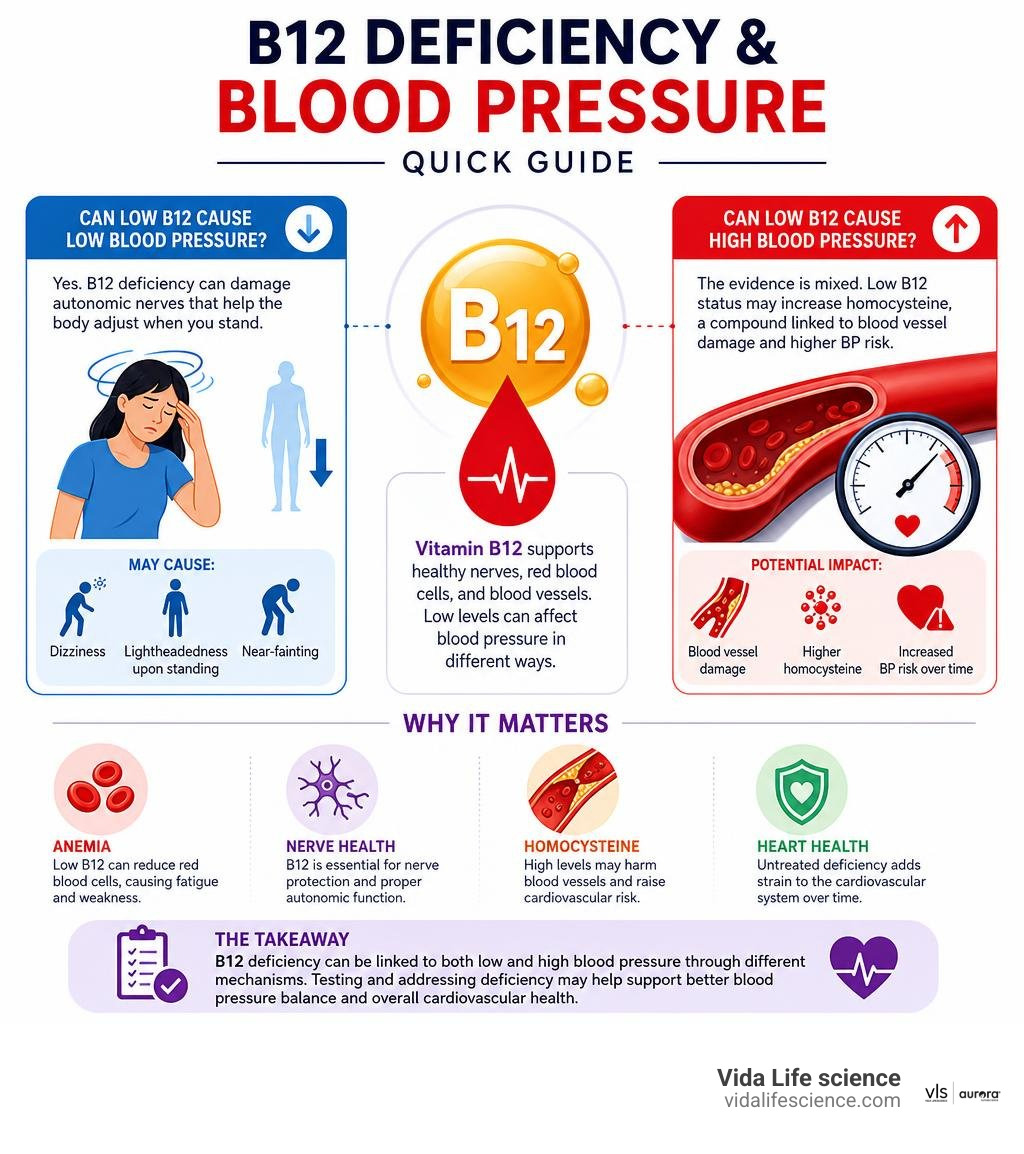
B12 deficiency and blood pressure can be connected, but not in one simple direction. Low B12 may contribute to postural low blood pressure by damaging nerves that help the body adjust when you stand. It may also raise cardiovascular risk over time by increasing homocysteine, a compound linked with blood-vessel damage and hypertension.
| Quick answer |
What it means |
| Can low B12 cause low blood pressure? |
Yes. In some people, B12-related autonomic nerve dysfunction can cause orthostatic hypotension, dizziness, or near-fainting after standing. |
| Can low B12 cause high blood pressure? |
The evidence is mixed. Observational studies link low B12 intake or status with hypertension in some groups, but they do not prove that B12 deficiency directly causes high blood pressure. |
| Why does it matter? |
Untreated B12 deficiency can cause anemia, nerve symptoms, elevated homocysteine, and added cardiovascular strain. |
A case report illustrates why this connection is easy to miss: a 90-year-old woman with repeated near-fainting had B12 of 208 pg/mL, technically within a low-normal lab range. After B12 replacement, her postural symptoms resolved. That does not mean every blood pressure problem is caused by B12, but it shows that testing can matter when dizziness, fatigue, tingling, or anemia are part of the picture.
We are Vida Life Science, a U.S.-based distributor focused on high-grade nutritional supplements and phosphatidylcholine-based liposomal delivery technology. Our work in nutrient absorption and bioavailability informs this guide to b12 deficiency and blood pressure, starting with what the science can - and cannot - tell us.
Understanding the Link Between B12 Deficiency and Blood Pressure
To understand how b12 deficiency and blood pressure interact, we first need to look at what cobalamin (vitamin B12) actually does in the human body. Vitamin B12 is an indispensable micronutrient involved in cellular energy metabolism, DNA synthesis, red blood cell production, and the preservation of the myelin sheath that protects our nerves.
When B12 levels fall too low, two primary physiological systems take a hit: the circulatory system and the autonomic nervous system.
First, severe B12 deficiency causes megaloblastic anemia. Without enough B12, red blood cells cannot divide properly, producing large, abnormally shaped cells that cannot carry oxygen efficiently. To compensate for reduced oxygen delivery across tissues, your heart must pump faster and harder (tachycardia) to maintain cardiac output. This compensatory mechanism places immense mechanical stress on your heart and vascular system.
Second, B12 is essential for maintaining vascular homeostasis—the healthy balance of blood vessel dilation and constriction. Without sufficient B12, metabolic waste products build up, blood vessels stiffen, and nerve signals regulating dynamic blood pressure changes break down. Research on B-vitamin intake and blood pressure shows that B-vitamin intake influences vascular health across different life stages, reinforcing that micronutrient status directly shapes cardiovascular performance.
Low Blood Pressure: How B12 Deficiency and Blood Pressure Drops Cause Hypotension
Can low B12 make your blood pressure plunge? Absolutely. The most distinct clinical connection between low vitamin B12 and low blood pressure is a condition known as orthostatic hypotension (or postural hypotension).
Orthostatic hypotension is defined as a drop in systolic blood pressure of at least 20 mmHg or diastolic blood pressure of at least 10 mmHg within three minutes of standing up. Normally, when you move from a lying down or sitting position to standing, 500 to 1,000 milliliters of blood pool in your lower limbs and abdomen due to gravity. Your body rapidly counteracts this through the baroreceptor reflex—specialized sensors in your arteries signal your autonomic nervous system to constrict blood vessels and bump up your heart rate, keeping blood flowing smoothly to your brain.
However, vitamin B12 deficiency can cause autonomic peripheral neuropathy. When the autonomic nerves governing blood vessel constriction are damaged by a lack of B12, the baroreceptor reflex falters. As a result, when you stand up, your blood pressure drops, leaving you dizzy, lightheaded, or on the verge of fainting (near-syncope).
A dramatic case report on B12-induced orthostatic hypotension highlighted a 90-year-old woman whose sitting blood pressure was 170/74 mmHg but plummeted to 110/70 mmHg upon standing, causing daily near-fainting episodes. Her serum B12 was 208 pg/mL (a low-normal range that often gets overlooked). Following daily B12 replacement therapy, her autonomic function recovered and her postural low blood pressure fully resolved.
High Blood Pressure: Can B12 Deficiency and Blood Pressure Spikes Lead to Hypertension?
While B12 deficiency is notorious for causing postural drops in blood pressure, can it also drive blood pressure up?
The relationship between B12 deficiency and essential hypertension (chronic high blood pressure) is complex and often indirect. While severe B12 deficiency anemia can trigger compensatory high cardiac output that stresses the arterial walls, the primary driver linking low B12 to hypertension is vascular damage.
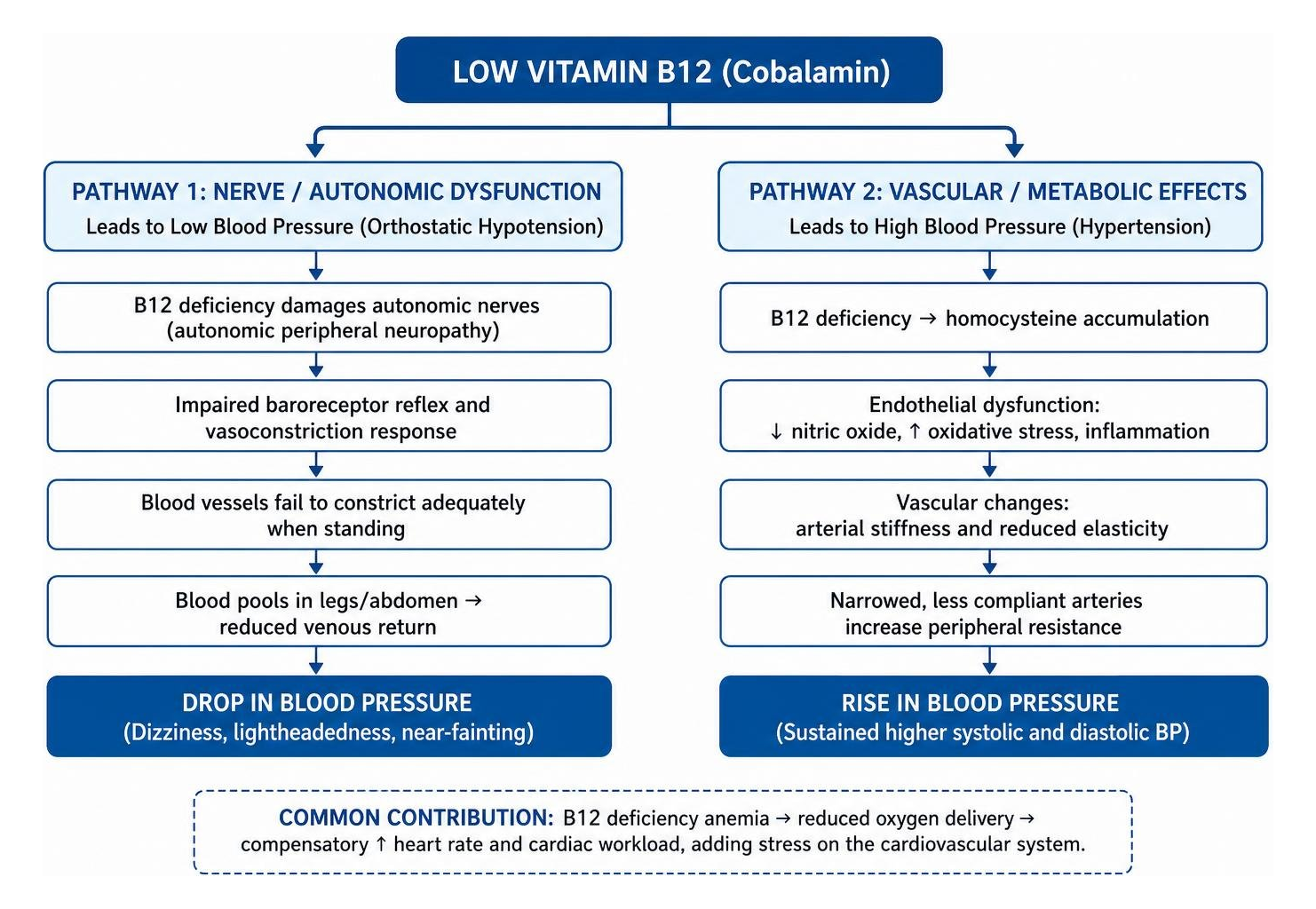
When B12 is deficient, an amino acid called homocysteine builds up in the bloodstream. High homocysteine damages the endothelial lining of blood vessels, decreases nitric oxide production (which is needed for vessels to relax), and causes arterial stiffness. Stiffer, narrowed arteries force the heart to exert higher pressure to circulate blood, increasing both systolic and diastolic blood pressure over time.
A scientific study on plasma B12 and hypertension evaluated adult cohorts and revealed significant correlations between elevated homocysteine, low B-vitamin status, and increased risk of essential hypertension. Furthermore, clinical studies comparing hypertensive patients against normotensive individuals have repeatedly found that those with high blood pressure exhibit lower average circulating levels of serum B12. Learning to spot early signs of vitamin deficiencies can help you address nutrient shortfalls before long-term vascular changes occur.
Key Biological Mechanisms: Homocysteine, Nerves, and Endothelial Health
How exactly does a missing vitamin lead to arterial stiffness or erratic blood pressure control? The biological pathways connecting b12 deficiency and blood pressure involve three main targets: endothelial cells, nerve axons, and metabolic cycles.
| Mechanism |
Primary Cause |
Impact on Blood Pressure |
Clinical Manifestation |
| Autonomic Neuropathy |
Myelin degradation around autonomic nerves |
Failure of arterial constriction upon standing |
Orthostatic hypotension, postural lightheadedness, syncope |
| Endothelial Dysfunction |
Hyperhomocysteinemia & reduced nitric oxide |
Arterial stiffness, loss of vasodilation capacity |
High blood pressure (hypertension), elevated vascular resistance |
| Severe Anemic Stress |
Impaired red blood cell synthesis (macrocytosis) |
Low oxygen delivery forcing elevated cardiac output |
Tachycardia, high pulse pressure, cardiovascular strain |
The Homocysteine Connection and Cardiovascular Disease Risk
The primary biochemical pathway linking B12 status to vascular health is the remethylation pathway within one-carbon metabolism. In a healthy body, vitamin B12 acts as an essential cofactor for the enzyme methionine synthase, which converts toxic homocysteine into the essential amino acid methionine.
When vitamin B12 levels are insufficient, this conversion halts, leading to hyperhomocysteinemia—an accumulation of homocysteine in the blood.
Homocysteine is toxic to blood vessels. Specifically, high levels of homocysteine:
- Induce oxidative stress by generating reactive oxygen species (ROS).
- Inhibit endothelial nitric oxide synthase (eNOS), drastically reducing nitric oxide levels (the molecule responsible for relaxing blood vessels).
- Promote smooth muscle cell proliferation in vessel walls, causing thickening and reduced arterial elasticity.
- Activate pro-inflammatory pathways that accelerate plaque build-up (atherogenesis).
Research shows that for every 5-μmol/L increase in serum homocysteine above 10 μmol/L, the risk of circulatory and vascular health problems jumps by 20%. According to research on cardiovascular risk in vegetarians, elevated homocysteine levels due to unaddressed B12 deficiency can undermine the protective cardiovascular advantages typically seen with plant-based diets.
Interacting Nutrients: The Synergy of B12, Folate, and Vitamin B6
Vitamin B12 does not work in isolation. It operates as part of a closely coordinated enzymatic trio alongside folate (vitamin B9) and vitamin B6.
While B12 and folate manage the remethylation pathway (converting homocysteine back to methionine), vitamin B6 handles the transsulfuration pathway (converting excess homocysteine into cysteine). If any single one of these three nutrients is missing, homocysteine metabolism stalls, leaving blood vessels vulnerable to oxidative damage and stiffness.
Furthermore, studies in pediatric and adult populations indicate that combined deficiencies in folic acid and vitamin B12 significantly impact blood pressure regulation by altering lipid profiles—specifically lowering protective HDL cholesterol while increasing triglycerides and apolipoprotein A. Understanding most common vitamin deficiencies and how to address them ensures that you balance all essential B-complex cofactors rather than relying on isolated nutrients.
While anyone can develop a vitamin deficiency, specific population groups face a substantially higher risk for B12-related blood pressure dysregulation due to dietary constraints or reduced intestinal absorption.
Vegetarians, Vegans, and Plant-Based Diets
Vitamin B12 is synthesized exclusively by microorganisms; plants do not produce or store it. Consequently, individuals following strict vegetarian or vegan diets without supplementation are at high risk for dietary B12 deficiency.
This creates a peculiar clinical paradox. Plant-based diets are widely celebrated for lowering traditional cardiovascular risk factors—such as reducing body mass index, lowering total cholesterol, and decreasing baseline blood pressure. However, studies show that mean homocysteine concentrations exceeding 10 μmol/L are reported in 32 out of 34 major studies on vegetarians due to undetected B12 deficiency.
Without supplemental B12, vegetarians may suffer from macrocytosis (enlarged red blood cells) and elevated red blood cell distribution width (RDW). An increase of just 1% in RDW is associated with an 8% increased risk of fatal coronary events and a 20% increased risk of stroke. Tailoring supplementation is critical for both sexes; explore targeted insights on essential supplements for women and essential supplements for men to keep baseline micronutrients balanced.
Dietary lack is not the only route to B12 deficiency; malabsorption is equally common, particularly as we age. Absorbing dietary B12 requires a multi-step process involving stomach acid, digestive enzymes, and a protein called intrinsic factor produced by parietal cells in the stomach lining.
High-risk categories for absorption-related B12 deficiency include:
-
Older Adults: Up to 20% of adults over age 60 suffer from atrophic gastritis—a thinning of the stomach lining that reduces stomach acid secretion, preventing B12 from separating from food proteins.
-
Metformin Users: Metformin, a foundation medication for type 2 diabetes, interferes with calcium-dependent B12 absorption in the ileum. Studies show that up to 15% to 30% of long-term metformin users develop reduced B12 levels. Since diabetes and hypertension frequently co-exist, metformin-induced B12 deficiency represents a hidden risk for blood pressure instability.
-
Proton Pump Inhibitor (PPI) Users: Chronic use of acid-suppressing heartburn medications blocks gastric acid, halting efficient B12 breakdown.
-
Pernicious Anemia Patients: An autoimmune condition where the body attacks parietal cells or intrinsic factor directly, rendering oral B12 absorption through standard passive pathways extremely inefficient.
Clinical Symptoms, Screening, and Diagnostic Testing
Because b12 deficiency and blood pressure issues share clinical symptoms with many traditional cardiovascular disorders, identifying the root cause requires careful attention to subtle warning signs and comprehensive diagnostic blood panels.
Diagnostic Screening and Essential Blood Tests
If you experience postural lightheadedness, unexpected blood pressure fluctuations, or chronic fatigue, relying solely on a basic standard blood count is insufficient. A complete diagnostic evaluation should include:
-
Serum Vitamin B12 Test: Measures total circulating cobalamin. While levels under 200 pg/mL indicate overt deficiency, 5% to 10% of individuals with "low-normal" levels (200 to 400 pg/mL) still suffer functional neurological and vascular issues.
-
Methylmalonic Acid (MMA): A sensitive biomarker. MMA levels rise when cellular B12 stores are depleted, serving as the gold-standard test for early or occult B12 deficiency.
-
Total Plasma Homocysteine: Evaluates functional B-vitamin metabolism and cardiovascular vascular risk. Levels should ideally remain below 10 μmol/L.
-
Complete Blood Count (CBC) & MCV: Measures red blood cell size. An elevated Mean Corpuscular Volume (MCV > 100 fL) indicates macrocytosis, an early sign of megaloblastic anemia.
When Blood Pressure Symptoms Mimic Other Cardiovascular Conditions
B12 deficiency symptoms can easily be mistaken for standalone heart conditions. For instance:
-
Heart Palpitations & Tachycardia: Driven by anemic tissue oxygen deprivation, these are frequently misdiagnosed as primary arrhythmia.
-
Postural Dizziness: Frequently misidentified as vestibular dysfunction or dehydration rather than autonomic neuropathy.
-
Shortness of Breath & Fatigue: Often mistaken for early heart failure.
In severe cases, long-standing B12-deficiency anemia forces the heart to maintain an elevated output for so long that cardiac enlargement and high-output heart failure can develop, severely compromising the body's ability to maintain stable blood pressure. Alongside addressing fundamental B-vitamin levels, exploring options for supporting heart health with CoQ10 and curcumin supplements can provide added antioxidant support for damaged vascular tissue.
Frequently Asked Questions About B12 and Blood Pressure
No, taking a vitamin B12 supplement will not cause an immediate spike in blood pressure in the way that caffeine or salt intake might. If low blood pressure is caused by B12-deficiency autonomic neuropathy, restoring blood pressure stability requires repairing nerve fibers and rebuilding red blood cell counts. This process typically takes several weeks of consistent supplementation. B12 supplementation is designed to restore normal autonomic regulation rather than force an artificial increase in blood pressure.
Is Vitamin B12 supplementation safe for people with high blood pressure?
Yes, Vitamin B12 is exceptionally safe for individuals with high blood pressure. B12 is a water-soluble nutrient with no known upper tolerable intake level (UL), as excess amounts are safely excreted through urine. In fact, for hypertensive individuals with elevated homocysteine levels, restoring adequate B12 alongside folate can support endothelial health and help reduce arterial stiffness. As always, consult your physician before altering your supplement routine if you take prescription antihypertensive medications.
How quickly do blood pressure issues resolve after starting B12 treatment?
The timeline for recovery depends on whether symptoms stem from anemia or autonomic neuropathy:
-
Hematologic Recovery: Red blood cell synthesis begins improving within days, with noticeable improvements in anemic fatigue, heart rate stabilization, and tissue oxygenation occurring within 2 to 4 weeks.
-
Neurological & Autonomic Recovery: Nerve fiber repair occurs much more slowly. Clinical case reports show that postural low blood pressure and orthostatic dizziness typically improve within 6 to 12 weeks of consistent daily B12 replacement therapy, though severe or long-neglected nerve damage may take longer to heal.
Conclusion
The intricate link between b12 deficiency and blood pressure serves as a powerful reminder of how deeply micronutrient balance impacts our cardiovascular system. Whether manifesting as dizzying postural drops from autonomic neuropathy or driving vascular inflammation through elevated homocysteine, running low on vitamin B12 puts unnecessary pressure on your heart and blood vessels.
Early detection is essential. Simple blood tests evaluating serum B12, MMA, and homocysteine can uncover hidden deficiencies long before irreversible nerve or vascular damage occurs. If you follow a plant-based diet, take long-term acid suppressants or metformin, or are navigating your senior years, proactive B12 monitoring should be part of your routine health care.
Because standard oral B12 supplements can struggle with low absorption rates in the digestive tract, choosing the right delivery system matters. At Vida Life Science, we distribute high-potency Aurora Nutrascience liposomal supplements engineered with protective phosphatidylcholine liposomes. This advanced technology encapsulates nutrient molecules, bypassing harsh digestive enzymes to facilitate superior cellular uptake and systemic absorption.
Take control of your vascular wellness today—learn more about identifying signs of vitamin deficiencies and give your cardiovascular system the optimal nutritional support it needs to stay balanced under pressure.


Under Pressure: How B12 Deficiency Affects Your Blood Pressure
Why B12 Deficiency and Blood Pressure Can Be Connected
B12 deficiency and blood pressure can be connected, but not in one simple direction. Low B12 may contribute to postural low blood pressure by damaging nerves that help the body adjust when you stand. It may also raise cardiovascular risk over time by increasing homocysteine, a compound linked with blood-vessel damage and hypertension.
A case report illustrates why this connection is easy to miss: a 90-year-old woman with repeated near-fainting had B12 of 208 pg/mL, technically within a low-normal lab range. After B12 replacement, her postural symptoms resolved. That does not mean every blood pressure problem is caused by B12, but it shows that testing can matter when dizziness, fatigue, tingling, or anemia are part of the picture.
We are Vida Life Science, a U.S.-based distributor focused on high-grade nutritional supplements and phosphatidylcholine-based liposomal delivery technology. Our work in nutrient absorption and bioavailability informs this guide to b12 deficiency and blood pressure, starting with what the science can - and cannot - tell us.
Understanding the Link Between B12 Deficiency and Blood Pressure
To understand how b12 deficiency and blood pressure interact, we first need to look at what cobalamin (vitamin B12) actually does in the human body. Vitamin B12 is an indispensable micronutrient involved in cellular energy metabolism, DNA synthesis, red blood cell production, and the preservation of the myelin sheath that protects our nerves.
When B12 levels fall too low, two primary physiological systems take a hit: the circulatory system and the autonomic nervous system.
First, severe B12 deficiency causes megaloblastic anemia. Without enough B12, red blood cells cannot divide properly, producing large, abnormally shaped cells that cannot carry oxygen efficiently. To compensate for reduced oxygen delivery across tissues, your heart must pump faster and harder (tachycardia) to maintain cardiac output. This compensatory mechanism places immense mechanical stress on your heart and vascular system.
Second, B12 is essential for maintaining vascular homeostasis—the healthy balance of blood vessel dilation and constriction. Without sufficient B12, metabolic waste products build up, blood vessels stiffen, and nerve signals regulating dynamic blood pressure changes break down. Research on B-vitamin intake and blood pressure shows that B-vitamin intake influences vascular health across different life stages, reinforcing that micronutrient status directly shapes cardiovascular performance.
Low Blood Pressure: How B12 Deficiency and Blood Pressure Drops Cause Hypotension
Can low B12 make your blood pressure plunge? Absolutely. The most distinct clinical connection between low vitamin B12 and low blood pressure is a condition known as orthostatic hypotension (or postural hypotension).
Orthostatic hypotension is defined as a drop in systolic blood pressure of at least 20 mmHg or diastolic blood pressure of at least 10 mmHg within three minutes of standing up. Normally, when you move from a lying down or sitting position to standing, 500 to 1,000 milliliters of blood pool in your lower limbs and abdomen due to gravity. Your body rapidly counteracts this through the baroreceptor reflex—specialized sensors in your arteries signal your autonomic nervous system to constrict blood vessels and bump up your heart rate, keeping blood flowing smoothly to your brain.
However, vitamin B12 deficiency can cause autonomic peripheral neuropathy. When the autonomic nerves governing blood vessel constriction are damaged by a lack of B12, the baroreceptor reflex falters. As a result, when you stand up, your blood pressure drops, leaving you dizzy, lightheaded, or on the verge of fainting (near-syncope).
A dramatic case report on B12-induced orthostatic hypotension highlighted a 90-year-old woman whose sitting blood pressure was 170/74 mmHg but plummeted to 110/70 mmHg upon standing, causing daily near-fainting episodes. Her serum B12 was 208 pg/mL (a low-normal range that often gets overlooked). Following daily B12 replacement therapy, her autonomic function recovered and her postural low blood pressure fully resolved.
High Blood Pressure: Can B12 Deficiency and Blood Pressure Spikes Lead to Hypertension?
While B12 deficiency is notorious for causing postural drops in blood pressure, can it also drive blood pressure up?
The relationship between B12 deficiency and essential hypertension (chronic high blood pressure) is complex and often indirect. While severe B12 deficiency anemia can trigger compensatory high cardiac output that stresses the arterial walls, the primary driver linking low B12 to hypertension is vascular damage.
When B12 is deficient, an amino acid called homocysteine builds up in the bloodstream. High homocysteine damages the endothelial lining of blood vessels, decreases nitric oxide production (which is needed for vessels to relax), and causes arterial stiffness. Stiffer, narrowed arteries force the heart to exert higher pressure to circulate blood, increasing both systolic and diastolic blood pressure over time.
A scientific study on plasma B12 and hypertension evaluated adult cohorts and revealed significant correlations between elevated homocysteine, low B-vitamin status, and increased risk of essential hypertension. Furthermore, clinical studies comparing hypertensive patients against normotensive individuals have repeatedly found that those with high blood pressure exhibit lower average circulating levels of serum B12. Learning to spot early signs of vitamin deficiencies can help you address nutrient shortfalls before long-term vascular changes occur.
Key Biological Mechanisms: Homocysteine, Nerves, and Endothelial Health
How exactly does a missing vitamin lead to arterial stiffness or erratic blood pressure control? The biological pathways connecting b12 deficiency and blood pressure involve three main targets: endothelial cells, nerve axons, and metabolic cycles.
The Homocysteine Connection and Cardiovascular Disease Risk
The primary biochemical pathway linking B12 status to vascular health is the remethylation pathway within one-carbon metabolism. In a healthy body, vitamin B12 acts as an essential cofactor for the enzyme methionine synthase, which converts toxic homocysteine into the essential amino acid methionine.
When vitamin B12 levels are insufficient, this conversion halts, leading to hyperhomocysteinemia—an accumulation of homocysteine in the blood.
Homocysteine is toxic to blood vessels. Specifically, high levels of homocysteine:
Research shows that for every 5-μmol/L increase in serum homocysteine above 10 μmol/L, the risk of circulatory and vascular health problems jumps by 20%. According to research on cardiovascular risk in vegetarians, elevated homocysteine levels due to unaddressed B12 deficiency can undermine the protective cardiovascular advantages typically seen with plant-based diets.
Interacting Nutrients: The Synergy of B12, Folate, and Vitamin B6
Vitamin B12 does not work in isolation. It operates as part of a closely coordinated enzymatic trio alongside folate (vitamin B9) and vitamin B6.
While B12 and folate manage the remethylation pathway (converting homocysteine back to methionine), vitamin B6 handles the transsulfuration pathway (converting excess homocysteine into cysteine). If any single one of these three nutrients is missing, homocysteine metabolism stalls, leaving blood vessels vulnerable to oxidative damage and stiffness.
Furthermore, studies in pediatric and adult populations indicate that combined deficiencies in folic acid and vitamin B12 significantly impact blood pressure regulation by altering lipid profiles—specifically lowering protective HDL cholesterol while increasing triglycerides and apolipoprotein A. Understanding most common vitamin deficiencies and how to address them ensures that you balance all essential B-complex cofactors rather than relying on isolated nutrients.
Who Is Most at Risk for B12-Related Blood Pressure Complications?
While anyone can develop a vitamin deficiency, specific population groups face a substantially higher risk for B12-related blood pressure dysregulation due to dietary constraints or reduced intestinal absorption.
Vegetarians, Vegans, and Plant-Based Diets
Vitamin B12 is synthesized exclusively by microorganisms; plants do not produce or store it. Consequently, individuals following strict vegetarian or vegan diets without supplementation are at high risk for dietary B12 deficiency.
This creates a peculiar clinical paradox. Plant-based diets are widely celebrated for lowering traditional cardiovascular risk factors—such as reducing body mass index, lowering total cholesterol, and decreasing baseline blood pressure. However, studies show that mean homocysteine concentrations exceeding 10 μmol/L are reported in 32 out of 34 major studies on vegetarians due to undetected B12 deficiency.
Without supplemental B12, vegetarians may suffer from macrocytosis (enlarged red blood cells) and elevated red blood cell distribution width (RDW). An increase of just 1% in RDW is associated with an 8% increased risk of fatal coronary events and a 20% increased risk of stroke. Tailoring supplementation is critical for both sexes; explore targeted insights on essential supplements for women and essential supplements for men to keep baseline micronutrients balanced.
Older Adults, Metformin Users, and Absorption Impairment
Dietary lack is not the only route to B12 deficiency; malabsorption is equally common, particularly as we age. Absorbing dietary B12 requires a multi-step process involving stomach acid, digestive enzymes, and a protein called intrinsic factor produced by parietal cells in the stomach lining.
High-risk categories for absorption-related B12 deficiency include:
Clinical Symptoms, Screening, and Diagnostic Testing
Because b12 deficiency and blood pressure issues share clinical symptoms with many traditional cardiovascular disorders, identifying the root cause requires careful attention to subtle warning signs and comprehensive diagnostic blood panels.
Diagnostic Screening and Essential Blood Tests
If you experience postural lightheadedness, unexpected blood pressure fluctuations, or chronic fatigue, relying solely on a basic standard blood count is insufficient. A complete diagnostic evaluation should include:
When Blood Pressure Symptoms Mimic Other Cardiovascular Conditions
B12 deficiency symptoms can easily be mistaken for standalone heart conditions. For instance:
In severe cases, long-standing B12-deficiency anemia forces the heart to maintain an elevated output for so long that cardiac enlargement and high-output heart failure can develop, severely compromising the body's ability to maintain stable blood pressure. Alongside addressing fundamental B-vitamin levels, exploring options for supporting heart health with CoQ10 and curcumin supplements can provide added antioxidant support for damaged vascular tissue.
Frequently Asked Questions About B12 and Blood Pressure
Can taking B12 supplements immediately raise low blood pressure?
No, taking a vitamin B12 supplement will not cause an immediate spike in blood pressure in the way that caffeine or salt intake might. If low blood pressure is caused by B12-deficiency autonomic neuropathy, restoring blood pressure stability requires repairing nerve fibers and rebuilding red blood cell counts. This process typically takes several weeks of consistent supplementation. B12 supplementation is designed to restore normal autonomic regulation rather than force an artificial increase in blood pressure.
Is Vitamin B12 supplementation safe for people with high blood pressure?
Yes, Vitamin B12 is exceptionally safe for individuals with high blood pressure. B12 is a water-soluble nutrient with no known upper tolerable intake level (UL), as excess amounts are safely excreted through urine. In fact, for hypertensive individuals with elevated homocysteine levels, restoring adequate B12 alongside folate can support endothelial health and help reduce arterial stiffness. As always, consult your physician before altering your supplement routine if you take prescription antihypertensive medications.
How quickly do blood pressure issues resolve after starting B12 treatment?
The timeline for recovery depends on whether symptoms stem from anemia or autonomic neuropathy:
Conclusion
The intricate link between b12 deficiency and blood pressure serves as a powerful reminder of how deeply micronutrient balance impacts our cardiovascular system. Whether manifesting as dizzying postural drops from autonomic neuropathy or driving vascular inflammation through elevated homocysteine, running low on vitamin B12 puts unnecessary pressure on your heart and blood vessels.
Early detection is essential. Simple blood tests evaluating serum B12, MMA, and homocysteine can uncover hidden deficiencies long before irreversible nerve or vascular damage occurs. If you follow a plant-based diet, take long-term acid suppressants or metformin, or are navigating your senior years, proactive B12 monitoring should be part of your routine health care.
Because standard oral B12 supplements can struggle with low absorption rates in the digestive tract, choosing the right delivery system matters. At Vida Life Science, we distribute high-potency Aurora Nutrascience liposomal supplements engineered with protective phosphatidylcholine liposomes. This advanced technology encapsulates nutrient molecules, bypassing harsh digestive enzymes to facilitate superior cellular uptake and systemic absorption.
Take control of your vascular wellness today—learn more about identifying signs of vitamin deficiencies and give your cardiovascular system the optimal nutritional support it needs to stay balanced under pressure.